Plastic Pollution: A Growing Threat to Marine Ecosystems, Human Health and the Planet – 2 Articles
❈ ❈ ❈
How Microplastics Threaten Marine Ecosystems and the Food Chain
Erica Cirino
Introduction
Microplastics, plastic particles smaller than 5 millimeters, can be found in land, air, and water, and have infiltrated our food chain, resulting in far-reaching health consequences for humans and nonhumans alike. In 2020, scientists discovered the “highest level of microplastic ever recorded on the seafloor,” revealing the extent of their impact on the marine ecosystem.
The lead author of the study, Ian Kane from the University of Manchester, said:
Almost everybody has heard of the infamous ocean ‘garbage patches’ of floating plastic, but we were shocked at the high concentrations of microplastics we found in the deep-seafloor.
These microplastics enter the marine ecosystem directly and indirectly, for example, from landfills, where they are carried by wind into rivers and seas. “It is estimated that 8 million tonnes of plastics enter the seas and oceans each year,” stated a 2021 study published in MDPI.
Mussels can act as sentinels to assess and monitor microplastic pollution. Globally distributed in both freshwater and saltwater ecosystems as filter feeders, mussels are both sensitive to environmental pollution and play a key role in engineering aquatic ecosystems by processing huge quantities of water.
With serious concerns about microplastic contamination of food, particularly seafood, and human bodies growing, mussels will inevitably serve as an increasingly important bioindicator of microplastic pollution from the present into the future.
The Impacts of Plastic Disintegration
Manmade, fossil fuel-based plastics don’t biodegrade like natural materials; instead, they break up into increasingly tiny plastic particles. Scientists categorize these particles by size: those 5—10 millimeters are called “mesoplastics,” those between 1 nanometer and 5 millimeters (about the diameter of a pencil eraser) are called “microplastics,” and those 1 nanometer (a human hair is 80,000-100,000 times nanometers wide) and smaller are “nanoplastics.” While nanoplastics are too small to be seen, microplastics and mesoplastics are fairly visible.
Microplastics that are “intentionally produced” for inclusion in cosmetics or exfoliating products, such as soap scrubs and toothpastes, are typically manufactured as tiny beads or flat pieces of glitter. These ready-made microplastics are called “primary” microplastics. Primary microplastics also include nurdles—small pellets of plastic melted down into the plastic products we are familiar with. Nurdles are often discharged into waterways through industrial wastewater runoff from plastic production facilities, and during shipping fires and spills from cargo ships. About 445,970 tons of nurdles are estimated to directly pollute the environment globally every year, especially aquatic ecosystems.
Plastic particles that form due to the disintegration of plastic materials are called “secondary” microplastics. These particles may be pieces of plastic film, fibers (from textiles and rope), foam, hard or soft fragments, and lines (such as from fishing gear). They break down from plastic packaging, synthetic textiles, paint, and other plastic materials used in our homes. Plastic’s breakdown is accelerated by sunlight, extreme temperatures, exposure to bacteria, fungi, and water, and by weathering.
These particles were first documented in marine ecosystems in the early 1970s and have since been found in indoor and outdoor air, drinking water, fresh and processed foods, fresh waters, household dust, plants and trees, oceans, soils, and in animals—including humans.
Plastics are not only harmful to our health but also impose significant economic costs. “Estimates suggest that plastic pollution causes about $75 billion per year in environmental damages, with $13 billion of this tied to marine ecosystems. For example, plastic pollution can deplete fish stocks and impact coastal tourism by littering popular beaches. It can damage infrastructure like urban drainage systems. It can even de-operationalize or sink ships by entangling propellers or clogging water intake systems responsible for cooling their engines,” pointed out the World Resources Institute.
Microplastics Threaten Marine Life
While plastic particles have virtually contaminated the entire Earth due to their constant movement through the biosphere, marine ecosystems in particular are a major repository for mesoplastics, microplastics, and nanoplastics. Freshwater systems empty into the oceans, and populous coastal areas—especially those that have been industrialized—are major sources of microplastic pollution in marine ecosystems. About 80 percent of plastics in the oceans are estimated to have traveled there via rivers and other freshwater systems. Flooding and weather events can push microplastics into rivers in significant quantities.
A 2021 report by the UN Environment Program (UNEP) stated that plastic accounts for 85 percent of marine litter, and by 2040, we can expect the volume of plastic pollution to nearly triple if we don’t take preventative measures.
Fish and other marine animals are exposed to microplastics in waters and sediments, from the sea surface to the seafloor. Many animals, including some fish species that people eat, consume nurdles and other round microplastics because they resemble their usual food sources, such as fish eggs and other plankton. Some fish species and marine animals are attracted to the smell of weathered plastic particles. Even relatively small amounts of plastic can be deadly to marine wildlife. For example, a 2025 study in the Proceedings of the National Academy of Sciences suggests consuming the equivalent volume of less than one sugar cube of plastic can kill one in two Atlantic puffins; less than half a baseball’s size in plastics can kill one in two Loggerhead turtles; and the amount of plastic in less than a sixth of a soccer ball can kill one in two harbor porpoises.
Microplastic consumption has been linked to adverse health effects in marine animals, including mussels. “Circulatory system of fish is impacted by the microplastic bioaccumulation in their tissues, influencing a number of hematological indices that are connected with immunity, osmotic pressure, blood clotting, molecular transport and fat metabolism,” stated a 2024 study in Toxicology Reports. Microplastics and plastic chemicals have also been linked to gastrointestinal blockages, neurological issues, starvation, toxicity, and reproductive issues in marine life.
Filter feeders, including mussels, have limited abilities to sort and reject plastic particles as they siphon water for food. Mussels pull in about one-fourth cup of sea water per minute, a huge volume for a small animal. Studies have shown mussels from different regions with varying quantities and types of microplastics in their soft tissues and digestive systems. Mussels and other filter-feeding shellfish ingest greater amounts of microplastics than other marine creatures. Like other pollutants, microplastics bioaccumulate up the food web, concentrating inside the bodies of predators as they consume prey.
Ingestion of polyester plastic fibers has been shown to stunt the growth of young blue mussels by more than one-third. Smaller mussels with lower growth rates and stressors like inflammation can reduce the survival of mussels, and thus the overall availability of food sources for animals that prey on them, from birds to crabs, starfish, whelks, and, of course, people. Microplastics have also been linked to cellular and molecular damage in mussels.
What’s more, chemicals commonly manufactured into plastics, such as heavy metals, phthalates, and PFAS, have also been shown to bioaccumulate in the marine food web.
Marine Microplastic Pollution Raises Human Health Concerns
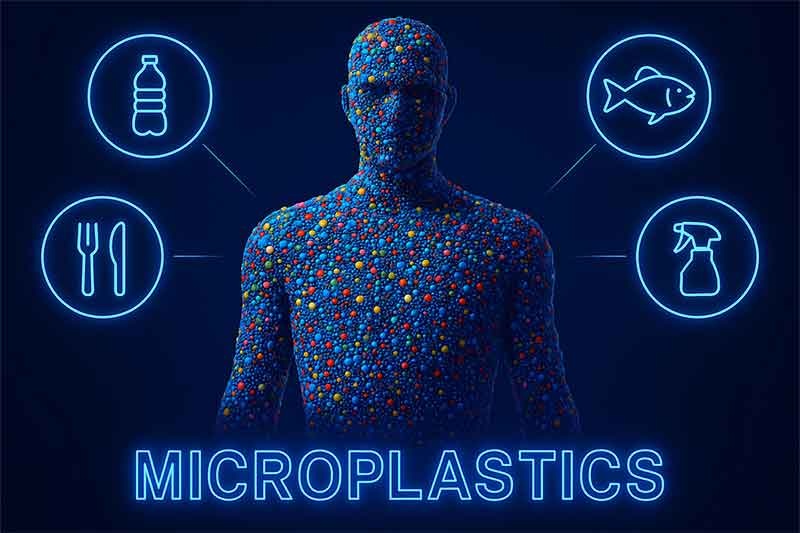
Microplastics have been detected throughout the human body, in people’s bloodstreams, bones, bone marrow, brains, breast milk, urine and feces of adults and infants, hair, hearts, kidneys, livers, lungs, penises, placentas, saliva and sputum, semen, skin, spleens, stomachs, testes, throat and airways, uteruses, and veins.
The presence of microplastics in people has been linked to Alzheimer’s disease, dementia (in mice), Parkinson’s disease, and other neurodegenerative disorders; inflammation, heart attack, stroke, and death; they have been found in samples of bladder cancer; and are suspected to harm human fertility and reproductive health. Exposure to microplastic particles is also linked to cell damage and death.
Exactly how and why microplastics cause harm is under investigation. But scientists do know that microplastic particles can contain any number of 16,000 plastic chemicals, at least 4,200 of which have already been linked to adverse human health effects, including causing cancer and disrupting hormones.
In fish, microplastics tend to accumulate in the gills and digestive system, so it would seem that eviscerating fish before human consumption would minimize exposure. However, gilling and gutting fish does not necessarily eliminate microplastics. What’s more, some seafood, including some bivalves, crustaceans, and oilfish like sardines, are typically eaten whole, and it’s not always possible or practical to excise microplastic hotspots in their bodies. Seafood may contain more microplastics during certain seasons due to changes in ocean currents, rainfall and runoff, flooding, and other factors that increase pollution.
“Researchers estimate that adults in the United States may ingest nearly 4 million microplastic particles per year from protein sources alone,” stated EarthDay.org.
Scientists are still determining the full range of risks linked to human consumption of microplastics. Recommendations on the frequency and type of seafood consumption, based on age, sex, and pregnancy status, currently exist in the United States and Europe to minimize exposure to chemicals like PCBs and mercury. However, pollutants on which such guidelines have been developed do not necessarily include microplastics.
The Way Forward
The fact that seafood—and other major sources of nutrition, including fresh fruits and vegetables—are increasingly polluted with microplastics is a serious concern for human health. Billions of people around the world depend on seafood as a key source of nourishment (not to mention their livelihoods).
Scientists continue to search for microplastics inside the flesh, gills, and guts of marine animals eaten as seafood, including mussels. Researchers have found microplastics in all of the most-eaten mussel species purchased from markets, with an average of 0.13 to 2.45 microplastic particles per gram of mussel meat. The most contaminated organisms were found in the North Atlantic and South Pacific. In another 2024 study, researchers found that 99 percent of seafood samples purchased in stores and collected from fishing vessels on the U.S. West Coast contained microplastics, with shrimp being the most contaminated type of seafood studied.
The study and understanding of how microplastics affect food safety is still in its “infancy.” Advanced analytical methods can help ensure more accurate detection of microplastic levels in certain foods, thereby enhancing monitoring. Governments, meanwhile, need to step up regulations and ensure “specific practices in food production, processing, and packaging to minimize the introduction and spread of microplastics,” according to an article in Smart Food Safe. Greater Industrial and international cooperation to address the issue can lead to consistent standards to make the food chain safer from microplastics. Moreover, “Regularly updating methodologies and standards based on new scientific findings ensures that strategies remain effective and aligned with the latest knowledge,” added the article.
California is leading the U.S. in monitoring microplastics in the marine environment. In 2022, it established its Statewide Microplastics Strategy, focusing on identifying microplastic pollution trends, risks, and sources. Academics continue to focus on monitoring microplastics, increasingly in sentinel species like mussels, often with the help of community scientists.
Mitigating Plastic Pollution Needs to Start at the Source
Pressure from consumers and strong policies, such as bans and taxes on single-use plastic products, can help eliminate plastic that inevitably breaks down into secondary microplastics. These actions are necessary to force businesses to move away from plastic and adopt plastic-free practices and products. Other laws, like the European Parliament’s 2025 legally binding regulation implementing mandatory prevention measures relating to “pellet loss” and the U.S. Microbead-Free Waters Act of 2015, which “prohibits the manufacturing, packaging, and distribution of rinse-off cosmetics containing plastic microbeads,” further help address the issue of primary sources of microplastic pollution upstream.
Litigation is also another tool utilized by communities and organizations to hold polluters accountable. Some cases successfully target downstream pollution resulting from microplastics. Others are working to address longstanding systemic issues like racism that perpetuate the unjust targeting of underserved communities as “sacrifice zones” for industrial polluters. While some others are challenging polluters’ use of false and misleading marketing claims around their plastic products labeled as “sustainable” or “healthy.”
The key to mitigating plastic pollution is starting at the source, with fossil fuel extraction and plastic production. Ultimately, society needs to shift its reliance on fossil fuels and plastics toward safe, plastic-free reuse and regenerative solutions at a systemic level.
Plastic recycling is not a solution in and of itself; it actually can perpetuate plastic production and requires virgin (new) plastic and plastic additives, as plastic diminishes in quality with each round of recycling.
“Fossil fuel and other petrochemical companies have used the false promise of plastic recycling to exponentially increase virgin plastic production over the last six decades, creating and perpetuating the global plastic waste crisis and imposing high costs on communities that are left to pay for the consequences… As of 2021, the U.S. recycling rate for plastic is estimated to be only 5-6 percent,” according to a 2024 report by the Center for Climate Integrity.
Plastic and fossil fuel corporations have long pushed recycling as a solution to plastic pollution, when in reality, ceasing plastic production is the core solution. Inevitably, some recycling may be required in the future to address the plastic already in circulation, but recycling practices might be improved to prevent further harm. Similarly, while cleanups cannot solve the problem, they will inevitably be needed in the future to reduce the risks posed by microplastics.
Microplastics are a systemic pollution problem requiring a coordinated global response, such as a strong Global Plastics Treaty that addresses plastic pollution throughout its toxic life cycle. While negotiations on the treaty continue, countries need to take steps to reduce plastic production and use, and consumers need to make better choices to drive change at the individual level. These steps are necessary to mitigate the damage already caused by the unchecked plastic use and to ensure a more sustainable future.
[Erica Cirino is a writer, artist, and author who explores the intersection of the human and more-than-human worlds. Courtesy: Earth • Food • Life, a project of the Independent Media Institute. Independent Media Institute (IMI) is a nonprofit organization that educates the public through a diverse array of independent media projects and programs.]
❈ ❈ ❈
Plastics: The “Terrible Debris of Progress”
Pat Hynes
Microplastics, those miniscule particles smaller than 5 millimeters which plastics physically break down into, have now infiltrated every part of the planet – from the highest point of the Himalayas; to the deepest depths of the sea; to the snow of Antarctica. They penetrate all layers of ocean and are often mistaken for zooplankton and consumed by fish. Consequently, people of coastal countries and islands who are highly dependent on the sea for food are consuming microplastic contaminated fish.
Scientists have recently detected microplastics in human blood, breast milk, heart arteries, lungs, testicles, brains and placentas, foreboding serious human health consequences.
A 2024 study found that 99 percent of seafood samples in stores and West Coast fishing boats were contaminated with microplastics. Plastics, made from oil and gas and toxic chemicals and manufactured largely in poor, communities of color in Texas and Louisiana, are a major source of greenhouse emissions and air pollution. Plastic recycling is a master myth, given 5-6 percent are actually recycled in the U.S. as of 2021, despite a century of existence.
When I first learned that plastic flakes filled my lightweight winter jacket, I thought “great” – recycling plastic rather than throwing it away. But I have since learned what Judith Enck, author of The Problem with Plastics, and other critics prescribe: the best thing we can do is Reduce the use of plastic in our lives, if we are ever to bring our planet back from this runaway pollution. Yes, we can re-use as much as certain plastic allows, which is not back to itself like wood, paper, metal, and glass. It is “down-cycled” at best, like the filling in my jacket, before disposed in a landfill, or incinerated, or dumped unconscionably in a poor, developing country.
Invented a century ago, plastic is now ubiquitous, having increased from about 2 million tons annually in 1950 to one half billion tons a year today, and projected to triple by 2060. Plastics are derived from fossil fuels, which are converted into chemical components such as ethylene and propylene – the building blocks for plastics. They were first manufactured as nylon and PVC, then boosted by use in WWII and subsequently Increased by the middle-class love affair with single-use products, such as straws, coffee cups, and water bottles. Agricultural fields are polluted with plastic through the use of plastic-contaminated sewage sludge. irrigation water, and plastic films to suppress weeds. These then decompose into microplastic and enter streams, rivers and, ultimately, the ocean.
With the growth of renewable technologies replacing fossil fuels, oil and gas corporations are aggressively promoting plastics, such that greenhouse gases from plastics are poised to surpass those of coal. Because of the plethora of toxic chemicals added to it, plastics are now associated with the rise of non-communicable diseases such as diabetes, reproductive cancer and cardiodiseases.
The plastics industry aims to account for one-half of oil and gas demand by 2050, unless (and that is a questionable unless) the world’s countries can reverse the failed 2025 Plastics Convention.
What we can do
Stop using single-use plastics, which constitute some 40 percent of plastics today. This would immediately reduce throwaway plastic, greenhouse gas emissions, our exposure to hundreds of toxic chemicals in plastic, and diminish ocean pollution. Further, critics advocate never using plastic to package food because research shows that chemicals can migrate from plastic food packaging into food.
One thousand strategies with tens of thousands of people in the lead advocating for city, state and federal bans on single-use plastics are needed. Surveys indicate that the public (both Republicans and Democrats) support ‘a pause’ in new manufacturing facilities and legislation to protect oceans from further plastic pollution.
Beyond Plastics provides a guide for Meals on Wheels, restaurants and dry cleaners to reduce use of throwaway plastics and also invites organized groups to join them as an affiliate and to use the model legislation they provide.
Women lead the charge against plastics. Author Judith Enck recounts the story of nearly a dozen women, some from Cancer Alley and the Gulf Coast, whose unstinting activism has blocked plastic industries from their neighborhoods.
For decades the US and higher-income countries have exported much of their plastic waste to low-income countries – an environmental injustice on a massive scale. Researchers found that poor people living in more than 25 developing countries burn the flammable plastic waste to cook and heat their home, making plastic pollution a “daily health and survival issue.” Women in poor countries., responsible for all the household chores and childcare, inhale disproportionately these toxic plastic fumes. Additionally, smoke from chimneys in packed slum neighborhoods contaminates everything: people, water sources, soil and crops.
Plastics, “the terrible debris of progress,” is an immense environmental injustice. We must stop this juggernaut.
[Pat Hynes is an ardent feminist who has worked for environmental justice for communities of color and women’s rights for years. An environmental engineer, she was Professor of Environmental Health at Boston University’s School of Public Health and author of 6 books, among them The Recurring Silent Spring, which was nominated for the 1990 Gustavus Myers Center for the Study of Human Rights Award and A Patch of Eden: Community Gardens in Inner Cities which won the 1997 National Arbor Day Foundation Award. She is a member of the Traprock Center for Peace and Justice, which she directed for 11 years. Courtesy: LA Progressive, a California (USA) based online news and commentary portal, founded by Dick Price and Sharon Kyle, whose mission is to provide a platform for progressive thought, opinion and perspectives on current events.]