❈ ❈ ❈
Rainbow Representation Reaches India: A New Moment in Democratic Politics
Disha
For decades, LGBTQ rights in India have been shaped in courtrooms rather than legislatures. That may now be beginning to change. The election of senior Supreme Court advocate Menaka Guruswamy to the Rajya Sabha by the All India Trinamool Congress marks a historic moment in the evolution of political representation in India. Guruswamy, who emerged as one of the most prominent constitutional lawyers in the country during the legal challenge to Section 377, has become the first openly LGBTQ member of Parliament in India.
The significance of this development extends far beyond the biography of a single public figure. It situates India within a broader transformation occurring across democratic politics worldwide. Over the past two decades, openly LGBTQ politicians have begun to appear in increasing numbers across legislatures, cabinets, and national governments, reflecting shifts in social attitudes toward sexuality, minority rights, and democratic representation. The rise of such leaders has prompted scholars of political representation to ask whether the presence of minority identities in positions of authority merely reflects social change or whether it can actively reshape the institutions of power themselves.
The history of LGBTQ participation in electoral politics has been marked by slow progress, social stigma, and institutional barriers that kept queer individuals largely absent from positions of political authority for much of the twentieth century. One of the earliest widely recognised moments when an openly gay politician gained public office in the United States occurred when Harvey Milk was elected to the San Francisco Board of Supervisors in 1977. Milk’s election represented a breakthrough in democratic visibility, although his assassination the following year also underscored the intense hostility that LGBTQ public figures often faced during that period.
Although openly queer politicians gradually began to appear in municipal governments and regional legislatures in several Western democracies, national leadership remained elusive for decades. Political scientists frequently note that minority candidates face structural challenges in national elections because political parties often prioritise perceived electoral safety when selecting candidates for high-level positions. The emergence of openly LGBTQ leaders at the national level therefore required both cultural transformation and institutional openness within political systems.
A decisive turning point occurred in 2009 when Jóhanna Sigurðardóttir became the world’s first openly lesbian head of government. Her leadership followed Iceland’s financial collapse and occurred during a moment of political crisis that demanded urgent economic reform. Sigurðardóttir’s government played a significant role in stabilising the country’s economy while also overseeing the passage of legislation that legalised same-sex marriage in Iceland in 2010. Her election demonstrated that voters could evaluate political competence independently of sexual orientation and it established an important precedent for future LGBTQ leaders.
In the years that followed, several other openly queer politicians assumed national leadership roles in parliamentary democracies. Leo Varadkar served as Ireland’s prime minister after a political career that included roles as health minister and social protection minister. Xavier Bettel led Luxembourg’s government for nearly a decade, while Ana Brnabić became one of the few openly lesbian heads of government in Europe. In 2023, Latvia elected Edgars Rinkēvičs as its president, making him the European Union’s first openly gay head of state.
Despite these milestones, openly LGBTQ leaders remain relatively rare at the highest levels of government. Yet the broader pattern of political participation among queer communities has expanded significantly. According to the LGBTQ Victory Institute’s Out for America report, there were at least 1,334 openly LGBTQ elected officials serving in the United States in 2025, representing nearly a two hundred percent increase since systematic tracking began in 2017.
Even this growth highlights the persistent gap between population representation and political representation because LGBTQ individuals still constitute a small fraction of elected officials relative to their share in the population. Earlier data from the same organisation estimated that only about 0.1 percent of elected officials in the United States were openly LGBTQ even though surveys suggested that roughly five percent of Americans identified as LGBTQ.
Political research suggests that minority representation can influence policymaking through several mechanisms that extend beyond symbolic visibility. Legislators who belong to historically marginalised communities often introduce policy debates on issues that might otherwise remain peripheral within legislative agendas. Studies on descriptive representation indicate that the presence of LGBTQ lawmakers increases the likelihood that equality legislation, anti-discrimination policies, and public debates around minority rights will emerge within political institutions.
However, representation does not necessarily guarantee progressive outcomes because political leaders operate within the constraints of party ideology, institutional structures, and national political cultures. The case of Serbia illustrates this complexity. While Ana Brnabić’s leadership was widely celebrated internationally as a milestone for LGBTQ visibility, Serbia continues to face challenges regarding social acceptance and legal protections for queer communities. Identity therefore interacts with political context rather than automatically determining policy direction.
Nevertheless, the cultural impact of representation remains profound because visible minority leaders reshape public perceptions of political possibility. Political institutions that include diverse identities signal to citizens that democratic participation is not restricted by gender, sexuality, or cultural background. For younger generations in particular, the presence of openly LGBTQ politicians provides a powerful symbol that political leadership can reflect the diversity of modern societies.
India’s experience with LGBTQ rights has followed a distinctive trajectory shaped largely by judicial intervention rather than electoral politics. In 2018, the Supreme Court delivered a landmark ruling in the case commonly known as Navtej Singh Johar v. Union of India, striking down the colonial-era provision of Section 377 that criminalised consensual same-sex relations. The case represented a major constitutional moment in which the court affirmed that equality, dignity, and privacy are fundamental rights that extend to sexual minorities.
Despite these legal transformations, openly LGBTQ representation within India’s electoral politics has remained extremely limited. National elections have rarely featured openly queer candidates, and no openly LGBTQ individual had previously served as a member of Parliament prior to her election. The election of Menaka Guruswamy therefore represents an unusual bridge between legal activism and parliamentary politics because she emerged as a central figure in the courtroom struggle that helped reshape the constitutional understanding of sexual orientation in India. Her presence in Parliament could now begin to shape debates on anti-discrimination law, civil unions, and broader welfare protections for LGBTQ citizens—issues that have so far remained largely outside legislative priorities.
A related constitutional debate emerged more recently in Supriyo v. Union of India, in which the Supreme Court considered petitions seeking legal recognition of same-sex marriages. In October 2023, the court declined to recognise marriage equality. While the court acknowledged discrimination faced by queer couples and urged the state to address their concerns, it stopped short of extending marital rights, emphasising that Parliament would have to enact any such reform. In that context, the entry of Menaka Guruswamy into the Rajya Sabha acquires an additional layer of significance. Having been closely associated with the legal struggle that decriminalised homosexuality, her presence in the legislature could symbolically represent the next phase of the LGBTQ rights movement in India, where the debate may shift from constitutional litigation to parliamentary lawmaking.
The significance of Guruswamy’s entry into Parliament lies not only in the symbolism of representation but also in the deeper question it raises about the evolution of India’s democratic institutions. Across the world, the gradual rise of openly LGBTQ leaders has demonstrated that political legitimacy no longer depends on conformity to older norms of identity that once excluded sexual minorities from public life. In many democracies, the expansion of representation has followed social change rather than leading it, yet once minority voices enter legislative institutions, they begin to reshape the moral boundaries of political discourse. With Guruswamy’s election to the Rajya Sabha, this moment represents more than the arrival of India’s first openly queer parliamentarian. It marks a shift in where the struggle for LGBTQ rights is likely to unfold—from the courtroom to the legislature. The question is no longer whether LGBTQ Indians belong within the Constitution, but whether they will help shape the laws that govern it.
[Disha is a Ph.D. Scholar and Senior Research Fellow at Dr. K. R. Narayanan Centre for Dalit and Minorities Studies, Jamia Millia Islamia, New Delhi. She is also an independent commentator, writing on a wide range of themes that move between scholarship and everyday life. Courtesy: Countercurrents.org, an India-based news, views and analysis website, that describes itself as non-partisan and taking “the Side of the People!” It is edited by Binu Mathew.]
❈ ❈ ❈
The History of LGBTQIA+ Leaders
Faisal C.K.
The recent election of Rob Jetten as the Netherlands’ first openly gay prime minister represents the zenith of the country’s a century-long LGBTQIA+ movement – spanning from decriminalisation in 1911 to marriage equality in 2001. Parallelly, the election of queer activist Menaka Guruswamy as India’s first LGBTQIA+ Member of Parliament signals a global dismantling of “homo-ostracism” within the highest corridors of power.
For decades, the “corridors of power” were designed as heteronormative labyrinths. To enter them, queer individuals were forced to carry a “lavender shield” – a facade of traditional domesticity, often manifesting in “lavender marriages” of convenience. Today, that shield is being dismantled, replaced by an unapologetic visibility that refuses to trade identity for influence.
The cultural anxiety regarding queer identity in high-stakes politics was poignantly captured in the 2023 film Red, White & Royal Blue. The narrative follows Alex Claremont-Diaz, the son of the US President, and Prince Henry of the United Kingdom, as they navigate a soulful but secret love affair. Their desperation to conceal their relationship is born of a “high political background” where personal truth is viewed as a liability to national stability.
When their private correspondence is leaked, the fictional King James III issues a decree that echoes centuries of institutional prejudice: their relationship is “incompatible with royal tradition and the expectations of the public.” This cinematic conflict is a direct reflection of the “political glass ceiling” that has historically marginalised LGBTQIA+ people.
While history remembers openly gay Roman emperors like Hadrian or Elagabalus, the rise of medieval ecclesiastical rigidity and the subsequent shadow of Victorian morality drove the queer community out of the capitols and into the fringes.
The Jetten precedent
The trajectory of Rob Jetten in the Netherlands offers a masterclass in how this trend is reversing. Jetten’s 2026 February inauguration was not framed as a “gay victory,” but as a victory for a leader who happened to be gay. By treating his sexuality as incidental to his policy-driven mandate, Jetten effectively killed the “political shield.”
The traditional “political wife” trope, long used to project stability and “family values,” was replaced by the authentic presence of his partner, Argentine athlete Nicolás Keenan. Their viral social media presence, including TikToks during the heat of the campaign, didn’t alienate the electorate; rather, it signalled a new era of transparency. In modern Western democracies, queer identity is evolving from a potential liability into a symbol of progressive integrity. The message to the voter is clear: if a leader is honest about their private life, they are more likely to be honest about public policy.
From courtroom to parliament
While Jetten represents the Western peak of this movement, Menaka Guruswamy’s March 12, 2026 election to the Rajya Sabha marks a watershed moment for the Global South. For years, the struggle for queer equality in India was confined to the marble halls of the Supreme Court. As a legal architect behind the historic 2018 decriminalisation of Section 377, Guruswamy moved the needle of justice through litigation. Her transition to a lawmaker institutionalises the queer voice in a legislature that has historically operated under a “culture of silence.”
This shift is crucial. It moves the LGBTQIA+ narrative from being a “legal issue” to be adjudicated, to a “political reality” to be represented. In a region where colonial-era morality often dictates social norms, Guruswamy’s presence in parliament challenges the very foundations of Indian homo-ostracism. It proves that political power is no longer strictly contingent on adhering to a narrow, heteronormative archetype.
The pioneers of the ‘lavender presence’
These modern successes stand on the shoulders of pioneers who dared to breach the barricades of the state. Jóhanna Sigurðardóttir, who served as Iceland’s Prime Minister from 2009 to 2013, provided the first profound “watershed moment.” By marrying her partner, Jónína Leósdóttir, in 2010 – the very day same-sex marriage became legal in Iceland – she transitioned LGBTQIA+ identity from a “political secret” to a state standard. She maintained institutional legitimacy even as she navigated the brutal 2008 financial collapse, proving that a leader’s orientation does not diminish their crisis-management capabilities.
Similarly, Xavier Bettel of Luxembourg and Gabriel Attal of France have solidified what we might call a “post-lavender” political landscape. Bettel famously integrated his husband, Gauthier Destenay, into the rigid protocols of international diplomacy. The 2017 NATO “spouses’ photo,” featuring Destenay alongside the wives of world leaders, was a visual manifesto for a new world order. In 2024, Gabriel Attal’s appointment as France’s youngest and first openly gay Prime Minister was treated not as a “revelation,” but as a footnote to his popularity. The “lavender shield” has been replaced by a “lavender presence” – where a same-sex partner at a state dinner is standard protocol rather than a career-ending anomaly.
The 2017 election of Leo Varadkar as Ireland’s Taoiseach (Prime Minister) offers another layer of complexity to this narrative. Varadkar’s ascent was a profound irony: the son of an Indian immigrant doctor leading a center-right party in a country that only decriminalised homosexuality in 1993. Varadkar shattered the “Emerald Isle” archetype – white, Catholic, and heteronormative. Crucially, Varadkar refused to be a “single-issue” politician. He functioned as a bridge for a conservative society to modernise itself, proving that a leader could be fiscally traditional while being a social pioneer. His victory was not just about his sexuality; it was about the birth of a more pluralistic “New Ireland.”
The agony and ecstasy of ‘butterfly’
Perhaps no story is as poignant as that of the late Mangala Samaraweera of Sri Lanka. He occupied a unique, often lonely place in South Asian history as the region’s first openly gay senior politician. Throughout a thirty-year career as Finance and Foreign Minister, Samaraweera faced the brunt of institutionalised prejudice in a nation where same-sex activity remains criminalised.
He was frequently targeted with homophobic slurs in Parliament, most notably being called a “Samanalaya” (butterfly). With nerves of steel, Samaraweera famously reclaimed the insult, responding: “Yes, indeed I am.” By refusing to hide behind a lavender marriage and advocating for LGBTQIA+ rights alongside ethnic reconciliation, he proved that one could be authentically queer while commanding the highest offices of state, even in the face of religious extremism. His legacy is the antithesis of the “culture of shame” that has long plagued South Asian politics.
The unfinished mission
In the triumphant climax of Red, White & Royal Blue, Prince Henry’s sister, Princess Beatrice, points to the crowds gathered outside Buckingham Palace – thousands of citizens cheering for a queer prince and his partner. It is a beautiful, cinematic image of the “Rainbow blooming” in the realm of high politics.
However, in the real world, and specifically in India, the mission is far from a “clean sweep.” While Menaka Guruswamy’s election is a giant leap, the legislative and social hurdles remain immense. In his 2023 book, Over the Rainbow: India’s Queer Heroes, Aditya Tiwari wrote: “After being criminalised since 1860, when Section 377 was codified in the Indian Penal Code, remaining untouched even after Independence, it is about time that the consensual partnerships of same-sex couples are recognised.
Urging the Supreme Court for a positive declaration, Arundhati and Menaka might be at the precipice of helping make more history that will redefine the future of queer Indians and bring them dignity.” But the Supreme Court refused to recognise same-sex marriage. It has shifted the battlefield from the judiciary to the legislature. For Menaka Guruswamy, legalising same-sex unions now sits at the pinnacle of her parliamentary agenda, marking a transition from seeking judicial declarations to crafting national law.
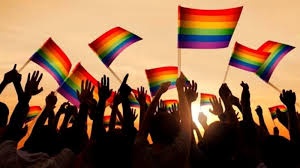
The transition of the “Rainbow” from the streets to the corridors of power – from activists like Guruswamy to Prime Ministers like Jetten – is the defining political evolution of our decade. It signals that the “lavender shield” is no longer a requirement for entry into the halls of statecraft. As these leaders take their seats at the table, they bring with them an intellectual capital and an authentic visibility that doesn’t just represent a community, but strengthens the very fabric of democracy itself.
The melting of homo-ostracism is not just a victory for the LGBTQIA+ community; it is a victory for the principle that in a true democracy, the only thing that should be “incompatible with tradition” is the exclusion of its own citizens.
[Faisal C.K. is Deputy Law Secretary to the Government of Kerala and author of the book The Supreme Codex: A Citizen’s Anxieties and Aspiration on the Indian Constitution. Courtesy: The Wire, an Indian nonprofit news and opinion website. It was founded in 2015 by Siddharth Varadarajan, Sidharth Bhatia and M. K. Venu.]