❈ ❈ ❈
Noose Tightens, Alarmingly, Around Our Digital Freedoms
Sushovan Patnaik
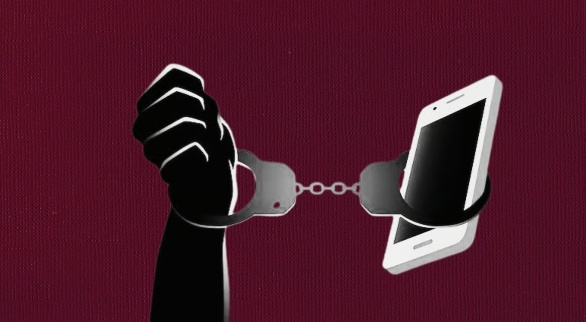
There is a noose tightening around all our throats – dismantling our ability to express, disagree, revolt, and satirise our lived realities on the internet. This noose, actually, has been tightening for a while now through the slow-burn emergence of a type of ‘digital authoritarianism’ in India.
But something has slowly changed about this chokehold – now there is an architecture to this madness, an abusive bending of the IT Act that has evolved not overnight, but through layers upon layers coagulating for several years now. Free speech observers and internet experts have been warning that the sand beneath our feet has been constantly shifting – stand up comedians, independent journalists and fact-checkers, satirists, voices from the margins who have consolidated a space on the internet to question the regime, have increasingly lost that space. Yesterday, the Union government proposed draconian amendments to the IT Rules, which, among other things, create a sweeping power for the IT Ministry to issue binding instruments not anchored in law, like clarifications, advisories, and SOPs, which intermediaries have to follow if they don’t want to lose their ‘safe harbour’ protection under Section 79. It even expands blocking power to users who are not “publishers” but post news and current affairs online — a death knell for independent journalists, or just…alert citizens. Reading the proposal, I could feel that grip becoming stronger, but I saw it, also, as only an embellishment, like a cherry on the icing, of a larger, very intricate structure that has already settled in.
Last week, the Home Ministry released a harrowing data point – between 2024 and 2025, until March 31 last year, its nodal agency, the Indian Cybercrime Coordination Centre (‘I4C’) had blocked 1,11,185 “suspicious online content” under Section 79(3)(b) of the IT Act – that is 290 takedown notices every single day. Last year, The Hindu had reported that nearly a third of 66 takedown notices sent to X by the I4C sought to remove content critical of the Union government and its ministers. These numbers show a slow shift into the kind of terrain Erdogan’s Turkey occupies today as the harshest regime when it comes to social media takedowns (we have a great despatch this week by human rights advocate Rengin Ergul from Turkey about how State-sanctioned erasure and judicial persecution there is dismantling citizenship identities of the Kurdish people). But the data on these ‘take down’ instructions is only going to worsen from here.
It has worsened because in the last few years the government has almost entirely shifted to abusing Section 79(3)(b) to issue ‘take down’ orders, instead of the standard route of invoking Section 69A read alongside the Blocking Rules 2009. The latter route imagined a ‘Designated Officer’ at the Union government level who would employ a judicial and independent application of mind before issuing take down orders. Section 79(3)(b) has always had a very different purpose – meant to remove the immunity intermediaries exercise from what users post if they don’t take down problematic posts even after the government has asked them to. In Shreya Singhal (2015), the Supreme Court noted that blocking, technically, can only be done through Section 69A, and where Section 79(3)(b) was invoked, intermediaries were only to act after they received ‘actual knowledge’ of a court order directing content removal. These systematic, built-in, safeguards have been slowly thrown into disarray by expanding powers under Section 79(3)(b) and creating what Manu Sebastian calls a “parallel blocking route”. And this is why things are going to worsen further.
There has been a sort of diffusion – where once it was the Union government solely wielding the real power for issuing take-downs, the government has appointed an increasing number of nodal agencies, nodal officers and other posts to permeate deeply into regional internet spaces and censor more and more. In December 2024, for example, a notification by Delhi’s lieutenant governor designated the Delhi police as a nodal agency to issue ‘take downs’ – a state-level police force, an executive wing that has no capability to apply ‘judicial application of mind’, becoming both judge and executioner of what Delhi’s citizens can and cannot post. In January last year, 23 senior policemen were empowered to block content. Delhi and the national capital region also saw the most enormous number of ‘take down’ requests as per the Home Ministry’s report last week.
And this was just one of the embellishments, only one piece of the puzzle of digital authoritarianism in India. And it’s a relentlessly tightening grip, a constantly maturing framework of content blocking – like a portal for smoother coordination between all these emerging authorities with Section 79(3)(b) blocking powers and intermediaries, or an amendment to give exactly three hours to social media platforms to act on government requests or lose immunity, or the proposed amendments yesterday threatening intermediaries to comply with everything the government puts out – not just laws, but even ‘clarifications’.
As exasperating the sheer intricateness of this danger seems, legal challenges are being mounted constantly against these overreaches. But as the sand shifts underneath, it shifts faster and faster every time.
[Sushovan Patnaik is a lawyer, journalist, and Associate Editor at The Leaflet, writing extensively on constitutional law, the judiciary, and civil liberties. Courtesy: The Leaflet, an independent platform for cutting-edge, progressive, legal & political opinion, founded by Indira Jaising and Anand Grover.]
❈ ❈ ❈
Is the Freedom to Express Oneself in India Going Down the Toilet?
Sidharth Bhatia
On March 30, a giant toilet in gold, approximately ten feet tall, appeared in Washington D.C. near the Lincoln Memorial, a hallowed spot for Americans. It was discovered that the toilet was placed there, surreptitiously, by a shadowy group called The Secret Handshake as a satirical comment on the renovations of the White House. It was called a Throne Fit for a King and visitors were invited to sit on it and take photos.
The toilet is a pop-up installation which the group is known for. Their previous one showed Trump and convicted sex offender Jeffrey Epstein in the classic pose of Jack and Rose in the Titanic, implying their proximity.
Such installations are quickly removed by the authorities as will the toilet soon. No one is usually arrested or charged.
It is worth speculating what if something like this had happened in India. Think of a publicly placed statue of Narendra Modi and say, Gautam Adani near India Gate.
The following would have happened:
A large police contingent would have surrounded it, civic workers would have demolished it brutally, investigations would have been launched, the perpetrators – or some suspects, it doesn’t matter – would have been arrested and charged under the Unlawful Activities (Prevention) Act (UAPA) and their homes demolished by a bulldozer. All within 24 hours.
It didn’t matter if those arrested eventually turned out to be innocent. The police had to show it had done ‘something’ and the idea was to send out a message – that the PM was beyond any criticism and satire.
Then, any tweets or Instagram posts about either the installation or the demolition would be taken down, as would satirical cartoons or animations. The government would send out orders and the platforms would have no option but to comply.
After all, the Ministry of Home Affairs itself orders daily take-downs of approximately 290 posts per day, and the Modi government obviously has a very efficient team which is very vigilant about anything that it finds critical of the prime minister, which would soon be termed anti-national or seditious.
Of late the government has been targeting cartoons, animation videos, comedians and any and everything that mocks and satirises the prime minister. The Wire’s entire Instagram account was blocked for a few hours because the government disapproved of an animated cartoon. Now Dr Nimo Yadav, an X account known for jokey tweets that mock the government, has been blocked.
But the government now wants to go further. The new draft amendments to the IT Rules released on March 30 are viewed by experts and activists as extremely problematic. You can read the analysis by the Internet Freedom Foundation here, but to put it simply, the new rules, if and when greenlit, will make every one – news organisations, content creators and even common citizens – liable to having their posts taken down or issuing an apology if they pass critical (or even humorous) comments against the prime minister. If you say something that some government babu finds offensive, you could be silenced or worse.
The chilling effect of this is obvious. Citizens are going to become very careful about what they say and may stop commenting on politics, politicians or the government altogether. Any comment deemed adverse or implying a failure on the part of the administration would be shut down.
In the US nightly shows by comedians are full of sharp jokes and comments against Trump. Trump frets and calls them names and one of them, Stephen Colbert, even had his show cancelled by his network. But no arrests, no one jailed, no homes razed to the ground.
Satire is one thing that strongmen cannot deal with. Ridicule is not tolerated. Till now, political criticism was just about accepted, but even that door is closing. With the economy in trouble, foreign policy a mess and a general sense of drift in the country, the Modi government wants to shut down any and all dissenting voices.
The media, especially television channels, were compromised a long time ago. Similarly, the Hindi film industry has also capitulated. Social media was one avenue where genuine dissent could be expressed. Now there is an attempt to shut that down too. The critical question is – is our freedom to joke about and criticise the government, going down the toilet?
[Sidharth Bhatia is a journalist and writer based in Mumbai and is a Founding Editor of The Wire. Courtesy: The India Cable – a premium newsletter from The Wire. The Wire is an Indian nonprofit news and opinion website. It was founded in 2015 by Siddharth Varadarajan, Sidharth Bhatia and M. K. Venu]