❈ ❈ ❈
Iran Declares ‘Historic Victory’ Over US
Press TV
April 7, 2026: Iran has declared a “historic and crushing defeat” of the United States and the Israeli regime after 40 days of war, announcing that Washington has been forced to accept a 10-point Iranian proposal that includes a permanent ceasefire, the lifting of all sanctions, and the withdrawal of US combat forces from the region.
In a statement addressed to the “noble, great, and heroic nation of Iran,” the Supreme National Security Council said the enemy had suffered an undeniable defeat and now saw “no way forward but to submit to the will of the great nation of Iran and the honorable Axis of Resistance.”
The announcement comes on Day 40 of the US-Israeli war of aggression on Iran, which began with the assassination of Leader of the Islamic Revolution Ayatollah Seyyed Ali Khamenei and top-ranking commanders on February 28.
According to the statement, the United States has agreed to a 10-point proposal that fundamentally commits Washington to:
- No new aggression against Iran
- Continued Iranian control over the Strait of Hormuz
- Acceptance of enrichment
- Removal of all primary sanctions
- Removal of all secondary sanctions
- Termination of all UN Security Council resolutions
- Termination of all Board of Governors resolutions
- Payment of compensation to Iran
- Withdrawal of US combat forces from the region
- Cessation of war on all fronts, including against the heroic Islamic Resistance of Lebanon
“Iran has achieved a great victory and has forced criminal America to accept its own 10-point proposal,” the statement read.
The statement by the top security body described the past 40 days as one of the “heaviest combined battles in history,” in which Iran and its allies in Lebanon, Iraq, Yemen, and occupied Palestine inflicted blows that “the historical memory of the world will never forget.”
“Iran and the Resistance have almost completely destroyed the American military machine in the region,” it stated. “They have inflicted crushing and deep blows on the vast infrastructure and capabilities that the enemy had built and deployed around the region over many years for this war against Iran.”
The statement added that within the occupied territories, Resistance forces had dealt “devastating and crushing blows to the enemy’s forces, infrastructure, facilities, and assets.”
It further stated that the United States understood as early as 10 days into the war that it could not win.
“Not only did none of the enemy’s main objectives materialize, but the enemy realized from about 10 days after the start of the war that it would have no ability to win this war,” the statement said. “For this reason, through various channels and methods, the enemy began efforts to establish contact with Iran and request a ceasefire.”
The top security body further said the enemy had initially imagined a quick military victory, believing Iran’s missile and drone capabilities would be “quickly extinguished,” and noted that the “vile global Zionism” had convinced the “ignorant President of the United States” that the war would finish Iran.
While declaring victory, the top security body also urged continued vigilance.
“We congratulate all the people of Iran on this victory,” the statement read, “and emphasize that until the details of this victory are finalized, there remains a need for the resilience and prudence of officials and the preservation of unity and solidarity among the people of Iran.”
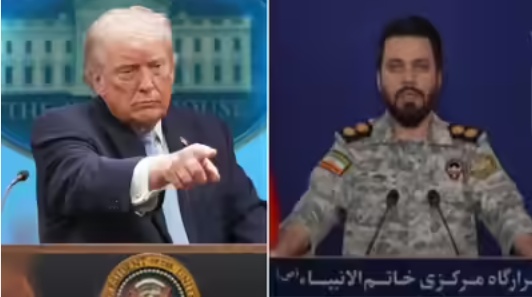
The Iranian announcement came hours after Trump said he had agreed to a two-week suspension of bombing and attacks on Iran, subject to Tehran reopening the Strait of Hormuz.
In a post on his Truth Social platform, Trump said he would “suspend the bombing and attack of Iran for a period of two weeks” — a decision he described as a “double-sided CEASEFIRE.”
Trump said the suspension is “subject to the Islamic Republic of Iran agreeing to the COMPLETE, IMMEDIATE, and SAFE OPENING of the Strait of Hormuz.”
Earlier on Tuesday, he had warned that “a whole civilization will die tonight” if Iran failed to meet his demands, an inflammatory war rhetoric that triggered backlash worldwide.
Many condemned the bluster as genocidal and said it amounts to a horrendous war crime.
Pope Leo XIV called the threat “truly unacceptable,” while US lawmakers decried Trump’s rhetoric as “pure evil,” with many of them calling for the invocation of the 25th Amendment to remove Trump from office.
The Strait of Hormuz, which carries approximately one-fifth of the world’s oil, has been effectively blocked by Iran since the US and Israel launched their unprovoked and illegal war of aggression against the Islamic Republic of Iran on February 28.
Iranian officials had categorically stated that the strategic waterway will not be reopened unless its demands are met, which include the permanent cessation of US-Israeli attacks.
In line with the directive of the Leader of the Islamic Revolution, Ayatollah Seyyed Mojtaba Khamenei and the approval of the Supreme National Security Council, and given Iran and the resistance’s upper hand on the battlefield, the enemy’s inability to carry out its threats despite all its claims, and the official acceptance of all the legitimate demands of the Iranian people, it has been decided that negotiations will be held in Islamabad to finalize the details.
This will take place within a maximum of 15 days, so that the details of Iran’s victory on the battlefield may also be solidified in political negotiations.
The negotiations will begin on Friday in Islamabad. Iran will allocate two weeks for these negotiations and the timeframe may be extended by mutual agreement of the two sides.
The top security body said it is essential that during this period, complete national unity is maintained and victory celebrations continue with strength.
These negotiations, it asserted, are a national negotiation and an extension of the battlefield, so all people and political groups must trust and support this process, which is under the supervision of the Leader of the Islamic Revolution.
“If the enemy’s surrender on the battlefield is transformed into a decisive political achievement in the negotiations, we will celebrate this great historic victory together. Otherwise, we will fight side by side on the battlefield until all the demands of the Iranian people are met,” the statement noted.
“Our hands are on the trigger, and the moment the slightest mistake is made by the enemy, it will be answered with full force.”
[Courtesy: Press TV, a 24-hour English-language news channel launched in 2007 and operated by Iran’s state broadcaster, aimed at a global audience.]
❈ ❈ ❈
US, Iran Reach Temporary Truce as Trump Accepts Tehran’s 10-Point Plan as ‘Basis’ for Talks
The Cradle
April 8, 2026: Iran and the US agreed to a two-week ceasefire on 8 April, after President Donald Trump accepted a 10-point plan from Tehran as a basis for further negotiations.
A round of negotiations in Islamabad, Pakistan, has been planned for Friday.
“Thanks to the sacrifices of their sons and their historic presence on the battlefield, the enemy has, for over a month, been pleading for a halt to the intense fire launched by Iran and the Axis of Resistance,” Iran’s Supreme National Security Council said in a statement early Wednesday.
“Accordingly, after rejecting all proposals submitted by the enemy, Iran has prepared a 10-point plan and presented it to the American side via Pakistan … The Prime Minister of Pakistan has informed Iran that the American side, despite its public threats, has accepted these principles as a basis for negotiations and yielded to the will of the Iranian people,” it added.
The statement stressed that Iran will enter talks for two weeks and will resume fighting if its terms are not met. Iran’s Foreign Minister Abbas Araghchi reiterated the same thing and added that safe passage through the Strait of Hormuz will take place over the next week in coordination with Iran’s forces.
Iran’s 10-point plan includes a US non-aggression commitment, Iranian control over the Strait of Hormuz, acceptance of uranium enrichment, full sanctions removal, compensation to Iran, withdrawal of all US combat forces from the region, and cessation of war on all fronts, including Lebanon.
“With the greatest humility, I am pleased to announce that the Islamic Republic of Iran and the United States of America, along with their allies, have agreed to an immediate ceasefire everywhere including Lebanon and elsewhere, EFFECTIVE IMMEDIATELY,” Pakistani Prime Minister Shehbaz Sharif said.
Trump said early Wednesday that he agreed to the two-week ceasefire contingent on the opening of the Strait of Hormuz. Tehran has yet to open the strait, but says it is ready to allow safe passage conditional on coordination with Iranian forces.
Trump also said China helped facilitate the agreement.
Israel has announced its acceptance of the two-week ceasefire, but is refusing to include Lebanon.
“Israel supports President Trump’s decision to suspend strikes against Iran for two weeks subject to Iran immediately opening the straits and stopping all attacks on the US, Israel and countries in the region. Israel also supports the US effort to ensure that Iran no longer poses a nuclear, missile, and terror threat to America, Israel, Iran’s Arab neighbors, and the world,” Prime Minister Benjamin Netanyahu said, adding that the deal “does not include Lebanon.”
The ceasefire agreement was announced as Iranian missile strikes targeted multiple areas across Israel, forcing millions into shelters.
Tel Aviv has since continued to attack Lebanon and issue new forced displacement orders for residents of the country’s south.
[Courtesy: The Cradle, an online news magazine covering the geopolitics of West Asia from within the region.]