❈ ❈ ❈
The Indus Waters Treaty and the Political Ethics of Survival
Ranjan Solomon
The Indus Waters Treaty (IWT) is a 1960 water-sharing agreement between India and Pakistan, brokered by the World Bank, governing the use of the six-river Indus System. It allocates the three Eastern Rivers (Ravi, Beas, Sutlej) to India and the three Western Rivers (Indus, Jhelum, Chenab) to Pakistan, creating a lasting framework for irrigation and hydroelectric development, though it has come under severe strain recently, with India temporarily suspending participation in April 2025 following militant attacks.
As of May 2026, Pakistan has approached the UN Security Council (UNSC) urging the restoration of the 1960 Indus Waters Treaty, which India suspended in April 2025 following a major terror attack in Pahalgam, Kashmir. India maintains that the treaty will remain in abeyance until Pakistan takes action against terrorism, declaring that “blood and water cannot flow together”.
Currently, India has maintained the suspension of the treaty for over a year, following the April 23, 2025, decision.
Pakistan’s UN ambassador has submitted a formal letter to the UNSC President, seeking intervention against what it terms “water coercion” and urging the restoration of the pact. India has rejected the attempts to resume the treaty, accusing Pakistan of being a “global epicentre of terror” and violating the agreement’s spirit through ongoing violence.
In June 2025, a Court of Arbitration stated that the treaty did not provide for unilateral suspension, a finding that India has rejected, calling the court “illegal”. The issue is highlighting a shift from bilateral resolution to international scrutiny, with Pakistan aiming to increase diplomatic pressure on India to reverse the suspension. This situation represents the most severe disruption in the 1960 treaty’s history, highlighting deep geopolitical tensions between the two nations. India has always taken the position that external arbitration is not acceptable. Waters belong to the commons and, therefore, India’s position is not tenable in the international arena and in the scope of law.
The crisis surrounding the Indus Waters Treaty is often discussed in strategic and legal terms: river allocations, arbitration clauses, dam construction, security doctrines, and diplomatic leverage. Yet beneath the language of statecraft lies something more fundamental — the question of whether justice in international relations can exist without humanity. Water is not merely an instrument of policy. It is survival itself. Any debate about controlling, suspending, or weaponizing access to it inevitably becomes a moral debate as much as a legal one.
In recent months, tensions between India and Pakistan over the treaty have intensified, with Pakistan seeking international attention, including appeals to the United Nations Security Council. The dispute has triggered familiar nationalist rhetoric on both sides. In India, many voices frame the treaty as an outdated concession that should be reconsidered in light of cross-border terrorism and security concerns. In Pakistan, the issue is increasingly portrayed as existential, touching directly upon agriculture, drinking water, and national survival. Between these narratives stands a difficult truth: states may speak the language of sovereignty, but ordinary people bear the consequences of escalation.
The Indus Waters Treaty itself has long been regarded as one of the most resilient agreements in modern diplomacy. Signed in 1960 with the support of the World Bank, it survived wars, military crises, and decades of political hostility. The treaty divided usage rights over the rivers of the Indus basin, granting India primary control over the eastern rivers while recognizing Pakistan’s primary rights over the western rivers, subject to certain Indian developmental uses. Its durability was often celebrated as evidence that cooperation could survive even where broader peace had failed.
That durability now appears fragile.
India’s increasingly hardline posture reflects a broader transformation in regional politics. Security concerns dominate strategic thinking in New Delhi, particularly after repeated militant attacks linked to Pakistan-based groups. From the Indian government’s perspective, treaties cannot exist in a vacuum detached from persistent violence. Many Indian nationalists argue that continuing the treaty unchanged while suffering attacks amounts to rewarding hostility. They believe India has been excessively restrained and should use every available lever, including water diplomacy, to pressure Pakistan.
Yet there is another perspective – one that sees this logic as profoundly dangerous. Water is unlike trade tariffs or diplomatic access. It is tied directly to civilian life. The rivers governed by the treaty sustain millions of farmers, families, and ecosystems across Pakistan. Even the suggestion that water access might become conditional on political or military disputes creates fear far beyond elite diplomatic circles. International humanitarian principles emerged precisely to prevent essential resources from becoming tools of coercion.
Critics of India’s position therefore argue that the treaty cannot simply be treated as another negotiable arrangement subject to political moods. They point out that the agreement contains no straightforward unilateral exit mechanism and was designed specifically to survive periods of conflict. From this perspective, attempts to suspend or undermine it weaken the credibility of international commitments more broadly. If treaties endure only during moments of goodwill, then they cease to function as safeguards against crisis.
This argument becomes especially compelling when viewed through a humanitarian lens. International law is often criticized for being selective and unevenly enforced. Powerful states invoke legal principles when convenient and reinterpret them when strategic priorities shift. Yet the alternative – abandoning legal restraint altogether — risks normalizing collective vulnerability. Water insecurity can rapidly transform into food insecurity, economic collapse, migration pressures, and social unrest. The moral concern is therefore not abstract idealism but practical human survival.
To say this is not to deny India’s legitimate security concerns. States do possess a right to defend themselves against violence and militancy. Pakistan’s own record regarding extremist networks has long drawn international criticism. However, acknowledging these realities does not automatically justify linking civilian water access to geopolitical conflict. There remains a difference between confronting armed groups and destabilizing systems upon which millions of civilians depend.
The global response to the dispute also reveals how international institutions operate less through pure justice than through competing strategic interests. China’s position, for example, cannot be understood solely through legal interpretation. China maintains close ties with Pakistan while simultaneously competing with India across multiple fronts, including border disputes and regional influence. Any Chinese stance at the Security Council would likely reflect this broader rivalry as much as concern for treaty law. Similarly, Russia has historically enjoyed deep relations with India but increasingly balances its diplomacy according to changing geopolitical realities.
This is the uncomfortable reality of international law: morality alone rarely determines outcomes. Great powers often interpret principles according to strategic convenience. Smaller states appeal to norms because norms provide some protection against raw power. Institutions such as the United Nations can amplify pressure and shape narratives, but they do not exist outside geopolitics. Justice in the international arena is therefore always incomplete, constrained by the unequal distribution of power among states.
And yet humanity still matters.
Public opinion, moral pressure, and cross-border empathy influence politics more than governments admit. During moments of nationalist escalation, dissenting voices often become especially important. To criticize one’s own country is frequently portrayed as betrayal, particularly during international disputes. But democratic societies depend upon the existence of citizens willing to place ethical concerns above tribal loyalty. An Indian who sympathizes with Pakistan’s humanitarian concerns is not necessarily rejecting India itself. Rather, such a position may reflect a belief that patriotism should not require moral silence.
Indeed, one of the tragedies of South Asian politics is how effectively historical trauma has been transformed into permanent suspicion. The legacy of partition, wars, militancy, and propaganda has encouraged populations on both sides to see each other primarily through the lens of threat. In that environment, empathy becomes politically difficult. Citizens are encouraged to think strategically before they think humanely.
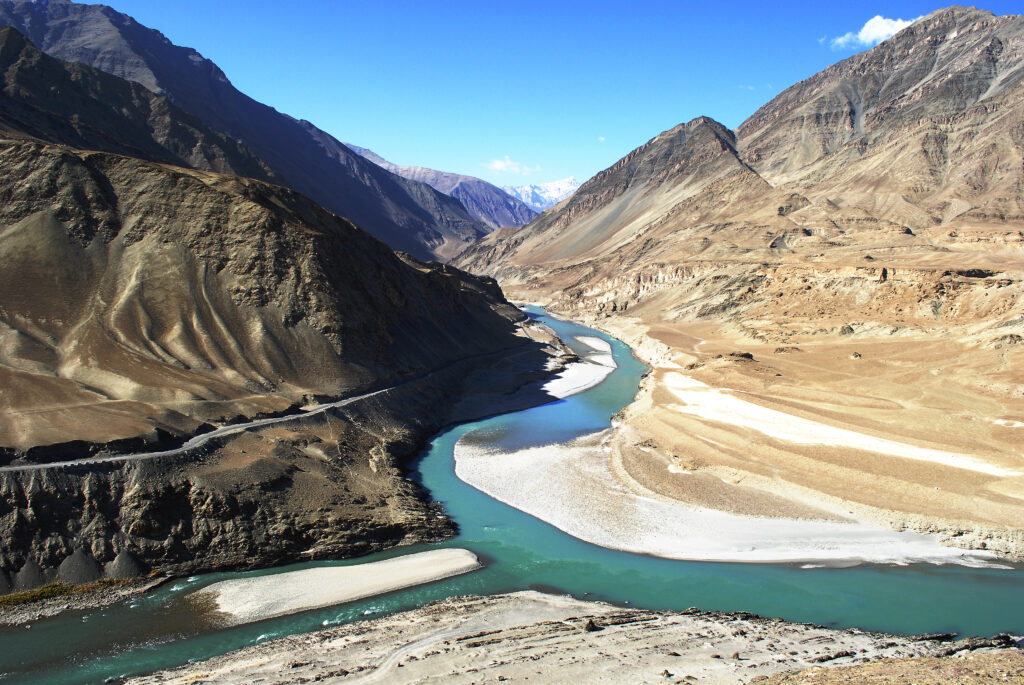
But water resists these divisions. Rivers cross borders without regard for nationalism. Ecological systems do not recognize military narratives. Climate change will only intensify these realities, making cooperation increasingly necessary. The Indus basin faces mounting environmental stress, glacier melt, population growth, and resource pressure. In the long term, neither India nor Pakistan can secure stability through confrontation over shared water systems.
The real challenge, then, is whether South Asia can preserve a framework in which even hostile states continue cooperating over essential human needs. The treaty’s greatest significance may not lie in technical clauses or arbitration procedures but in the principle, it represents: that some forms of interdependence must survive political conflict.
Law without humanity becomes sterile power. But humanity without law risks becoming powerless sentiment. The tension between the two defines not only the Indus dispute but international politics itself. A just approach requires both moral imagination and institutional restraint — the ability to recognize the humanity of those across the border while still navigating the realities of security and sovereignty.
In the end, the question is larger than India or Pakistan alone. It concerns what kind of world states wish to build: one where essential resource become instruments of pressure whenever conflict emerges, or one where even one adversary can accept certain limits in the name of shared human survival.
Between security, sovereignty, and shared humanity, South Asia confronts a dangerous question: Can water ever be treated as a weapon without endangering civilization itself?
[Ranjan Solomon has worked in social justice movements since he was 19 years of age. After an accumulated period of 58 years working with oppressed and marginalized groups locally, nationally, and internationally, he has now turned author-researcher-freelance writer focussed on questions of global and local/national justice. Courtesy: Countercurrents.org, an India-based independent online journal founded in 2002, publishing articles on peace, democracy, social justice, ecology, secularism, and people’s movements. Edited by Binu Mathew, it is known for giving space to progressive, grassroots, and alternative voices often ignored by mainstream media.]
❈ ❈ ❈
Water Is Becoming the Next India-Pakistan Flashpoint
Saima Afzal
India’s decision to accelerate work on the Chenab-Beas Link Tunnel in Himachal Pradesh may become the first major geopolitical consequence of the effective collapse of the Indus Waters Treaty (IWT). More than a conventional infrastructure project, the initiative signals the emergence of a more assertive Indian approach toward river-water utilization, strategic infrastructure development, and long-term hydrological leverage in South Asia.
The proposed project aims to divert surplus water from the Chandra River in Lahaul-Spiti through an 8.7-kilometer underground tunnel beneath the Pir Panjal range into the Beas basin. The tunnel, estimated to cost over ₹2,350 crore, will be supported by a 19-meter barrage and additional hydraulic infrastructure, taking the total projected expenditure close to ₹2,600 crore. If completed, the project could significantly expand hydropower generation in Himachal Pradesh while strengthening irrigation and water-management systems across northern India.
Yet the project’s significance extends far beyond economics or hydropower generation. It reflects how India is gradually redefining the strategic meaning of the western rivers under the framework or increasingly outside the political assumptions of the Indus Waters Treaty.
The End of the Old Treaty Mindset
For decades, the IWT represented one of the world’s most durable water-sharing arrangements despite wars, military crises, and prolonged hostility between India and Pakistan. Under the treaty, the three eastern rivers-Ravi, Beas, and Sutlej were allocated to India, while the western rivers Indus, Jhelum, and Chenab were largely reserved for Pakistan, with India retaining limited rights for hydropower and non-consumptive use.
However, the strategic environment surrounding the treaty has changed dramatically. The deterioration in bilateral relations, repeated terrorist attacks, and India’s growing emphasis on strategic autonomy have steadily transformed water infrastructure from a developmental issue into an instrument of statecraft.
The Chenab-Beas diversion project demonstrates that New Delhi no longer appears willing to approach the treaty framework with the same degree of political restraint that characterized earlier decades.
Why the Tunnel Matters Strategically
Importantly, the project itself is unlikely to trigger an immediate water crisis for Pakistan. The Chenab carries enormous annual flows, and the proposed diversion remains limited relative to the river’s total discharge. Hydrologically, the impact may remain modest and seasonal rather than catastrophic.
But the strategic significance lies elsewhere.
The project forms part of a broader infrastructure architecture designed to maximize India’s utilization of waters that remained underexploited for decades because of treaty sensitivities, political caution, and bureaucratic delays. Viewed alongside other accelerated Chenab basin projects including Ratle, Pakal Dul, Kiru, and Kwar-the tunnel becomes part of a cumulative strategic shift rather than an isolated engineering initiative.
In practical terms, India appears to be moving toward a doctrine of full-spectrum upstream utilization.
Pakistan’s Emerging Vulnerability
This matters because Pakistan’s agricultural economy remains heavily dependent on the Indus river system. The Chenab in particular is central to irrigation flows into Pakistani Punjab. Even if individual Indian projects do not immediately threaten downstream agriculture, the cumulative effect of diversions, storage facilities, sediment management systems, and flow-regulation infrastructure could gradually increase India’s leverage over seasonal timing and water management.
That leverage matters most during periods of political or military crisis.
In future India-Pakistan confrontations, upstream hydraulic infrastructure may increasingly function as a tool of strategic signaling, coercive pressure, and escalation management short of direct military confrontation. Water itself may not become a weapon in the traditional sense, but control over timing, storage, and seasonal regulation could gradually become embedded within broader crisis diplomacy between the two nuclear-armed neighbors.
India is unlikely to attempt outright water blockade strategies, which would carry enormous diplomatic and environmental consequences. Instead, the more plausible trajectory is the gradual expansion of technical control over upstream flows while remaining within legally defensible or operationally justifiable limits. In that sense, the strategic value lies less in stopping water and more in creating future bargaining leverage.
This approach resembles broader global trends where upstream states increasingly treat river systems as instruments of geopolitical influence. China’s management of Mekong flows, Turkey’s control over the Euphrates, and Ethiopia’s Nile dam strategy have all demonstrated how hydraulic infrastructure can alter regional power dynamics without crossing into open confrontation.
South Asia now appears to be entering a similar phase.
Infrastructure as Strategic Statecraft
The Chenab-Beas tunnel also reflects a wider geopolitical reality: infrastructure itself has become an instrument of national power. Around the world, states increasingly use ports, pipelines, rail corridors, energy grids, digital systems, and water networks not merely for development but for strategic positioning and long-term influence.
For India, inter-basin river transfers now intersect with multiple objectives simultaneously: energy security, climate adaptation, Himalayan infrastructure expansion, renewable energy growth, and strategic signaling toward Pakistan.
Supporters of the project argue that it could help generate nearly 4,000 MW of additional hydroelectric capacity in Himachal Pradesh while strengthening water resilience across northern India. Indian political leaders have framed the initiative as part of a broader push toward national self-reliance in water and energy security.
The Ecological Risks Beneath the Himalayas
Yet the environmental risks are equally substantial.
The Himalayan ecosystem remains highly vulnerable to seismic instability, glacial retreat, landslides, and climate-induced hydrological disruption. Lahaul-Spiti sits within one of the most environmentally fragile mountain systems in the world. Large-scale tunneling, barrage construction, and river-flow modification could produce long-term ecological consequences that remain insufficiently studied.
Environmental experts are likely to raise concerns regarding glacial systems, downstream ecological flows, sediment transport, and the cumulative effects of expanding hydropower infrastructure across Himalayan river basins. As climate change accelerates glacial melt and increases the frequency of extreme weather events, the pursuit of hydrological control may increasingly collide with ecological realities.
Water and the Future Balance of Power in South Asia
The politics surrounding the project are therefore likely to evolve along two parallel tracks.
The first is geopolitical: how India and Pakistan navigate the future of the Indus Waters Treaty amid deepening mistrust and intensifying strategic competition.
The second is environmental: whether Himalayan infrastructure expansion can proceed without triggering severe ecological destabilization in one of Asia’s most climate-sensitive regions.
Both questions are now becoming inseparable.
Ultimately, the Chenab-Beas Link Tunnel is not simply a water-diversion project. It reflects the emergence of a new phase in South Asian geopolitics—one where hydrology, infrastructure, energy security, and strategic leverage are becoming increasingly interconnected.
For decades, the Indus Waters Treaty symbolized the idea that technical cooperation could survive geopolitical hostility. Today, that assumption is weakening. Water is gradually becoming part of the wider strategic competition shaping the future balance of power in South Asia.
The tunnel beneath the Pir Panjal may therefore carry more than diverted river flows. It may carry the first visible signs of a transformed regional order.
[Saima Afzal is a researcher specializing in South Asian security, counterterrorism, and broader geopolitical dynamics across the Middle East, Afghanistan, and the Indo-Pacific. Her work examines strategic affairs and evolving patterns of regional conflict. She is currently a Research Scholar at Justus Liebig University, Germany. Courtesy: CounterPunch, a U.S.-based independent left-wing magazine known for sharp commentary on war, imperialism, labour, environment, and civil liberties. It was co-founded by Alexander Cockburn and is currently led editorially by Jeffrey St. Clair and Joshua Frank.]