The Iran War is in a stalemate. Maybe a “deal” will be reached. Maybe not. Maybe fighting will break out again soon. Then maybe not.
After all, we are dealing with a fickle TACO in the White House. Who may or may not suffer from cognitive and mental deficiency.
Since it’s impossible to guess what’s on Trump’s mind, perhaps we can look back at history to find some patterns and lessons.
A good example, at least for the Chinese, is the Korean War, which is aptly described as the “forgotten war” by the Americans. One wonders why.
For the Chinese, it is remembered as the watershed war after the founding of the People’s Republic. It is a defining moment of military victory and national rejuvenation.
It is the first time in history someone has defeated the advances of the mighty US military and fought it to a standstill.
After the war, China became the 3rd center of global power, after the US and USSR, despite its lagging economy and crushing poverty. The world knew China wouldn’t be pushed around.
What happened in the war and how the two sides negotiated the armistice are highly relevant for the Iran War today.
So are the strategic consequences.
The Korean War
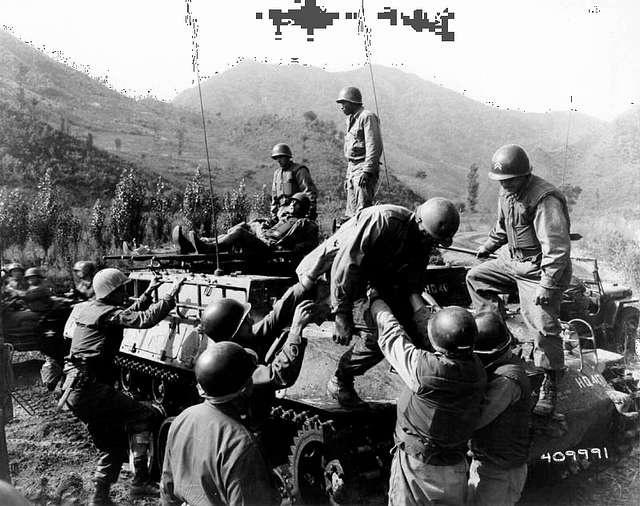
The Korean War broke out on June 25, 1950, when North Korean forces crossed the 38th parallel to invade South Korea for national reunification.
North Korea was initially successful and captured most of South Korea quickly, including the capital city of Seoul.
However, the US came to South Korea’s rescue with the landing of US-led UN forces in Incheon on September 15, 1950.
This surprise amphibious invasion was officially called Operation Chromite. It was planned by US General Douglas MacArthur.
The successful operation turned the tide by cutting off North Korean supply lines and allowing the US-led forces to recapture Seoul.
By October 1950, UN forces under General MacArthur had crossed the 38th parallel and were rapidly advancing northward.
American and South Korean troops entered Pyongyang on October 19, 1950, and some troops even reached the Yalu River by late October 1950. That is the border river between Korea and China.
The war North Korea launched was blessed by Joseph Stalin but without consultation with China. Chairman Mao and the Chinese leadership had intense debates whether to intervene.
On one hand, North Korea was a member of the Communist bloc and shares a land border with China. Its defeat would leave China exposed directly under US military threat.
On the other hand, the new People’s Republic was just established in October 1949 after 8 years of brutal war against Japanese invasion and 4 years civil war, which wasn’t finished yet after Chiang Kai-shek fled to Taiwan.
The country lost between 20 to 25 million people during the war with Japan.
It was depleted economically and impoverished with its economy accounting for less than 3% of the US GDP. Per capital GDP was less than 1% of the US.
The new republic had no air force, no navy, and no armored ground forces. Its military was basically a light infantry force.
In contrast, the US was at its post-WW2 peak of global power – its economy was roughly 50% global GDP. It had the war’s most powerful and advanced military. It had nuclear weapons.
When the US forces reached Yalu River, they bombed Chinese fishing boats as well as Chinese villages.
This advance directly threatened China’s national security and prompted Chairman Mao’s decision to intervene.
The Chinese People’s Volunteer Army, led by Marshal Peng Dehuai, crossed the Yalu River on October 19, 1950, to defend North Korea and push American forces back.
China deployed approximately 260,000 troops in complete secrecy, marching at night and hiding during daylight to avoid aerial detection.
Marshal Peng allowed US forces to advance northward while Chinese forces took up concealed positions in the mountainous terrain.
On October 25, Chinese forces launched their first attacks against South Korean units in the Unsan area. The South Korean 6th Division was destroyed.
Between November 25 and December 24, 1950, Chinese forces launched a massive offensive that sent UN forces into full retreat, recapturing Pyongyang.
This was the famous “Chosin Reservoir” campaign and the most critical campaign during the war.
At this start of this campaign, General MacArthur, still underestimating Chinese strength, launched his “Home by Christmas” offensive on November 24, 1950.
UN forces advanced in two main columns: the Eighth Army in the west and the X Corps in the east.
Peng Dehuai had massed approximately 380,000 Chinese troops, far more than US intelligence estimated.
The Chinese strategy was to attack the weaker South Korean units first, create gaps in the UN line, then pour through to envelop American forces.
In the west, the Chinese 38th and 42nd Armies struck the South Korean 2nd Corps on November 25, shattering it within hours.
This created a massive gap in the UN line. Chinese forces then turned westward to hit the American Eighth Army’s flank.
The American 2nd Infantry Division suffered heavy casualties trying to withdraw through a narrow pass called “The Gauntlet.” Turkish forces sent to plug the gap were overrun.
In the east, the most famous battle occurred at the Chosin Reservoir.
The Chinese 9th Army Group, approximately 120,000 troops from units accustomed to China’s southern warm climate, attacked the US 1st Marine Division and elements of the 7th Infantry Division in subzero temperatures that reached minus 30 degrees Fahrenheit.
The Marines fought their way out in a fighting withdrawal to the port of Hungnam, but the Chinese 9th Army was virtually destroyed as an effective fighting force, suffering an estimated 30,000 casualties from combat and cold. Thousands were frozen to death.
Despite the heavy Chinese losses in the east, the overall strategic result was decisive.
UN forces were in full retreat by early December. General Walton Walker, commander of the Eighth Army, was killed during the withdrawal.
Pyongyang fell to Chinese and North Korean forces on December 5, 1950. By December 24, UN forces had withdrawn south of the 38th parallel.
Chinese and North Korean forces captured Seoul on January 4, 1951.
Subsequently, US forces under General Matthew Ridgway launched Operation Thunderbolt and Operation Killer, pushing Chinese forces back northward.
By late March 1951, UN forces had recaptured Seoul and reached the 38th parallel.
After this campaign, the front stabilized roughly along the 38th parallel, the original dividing line between north and south Korea, where it remained until the armistice in 1953.
During the 3 years, the Truman and Eisenhower administrations faced growing domestic pressure to limit the war due to the high American casualties.
Eventually, over 36,000 US soldiers were killed in Korea. China lost over 180,000. Between 2 to 3 million Koreans, mostly civilians, died in the war, accounting for 10% of the pre-war total population.
MacArthur’s defeat and advocacy for expanding the war into China led to his dismissal in April 1951.
The negotiations
The Korean War, from China’s perspective, lasted approximately two years and nine months.
The Chinese People’s Volunteer Army crossed the Yalu River on October 19, 1950, and the war concluded with the signing of the Korean Armistice Agreement on July 27, 1953.
The armistice negotiations were extraordinarily prolonged, lasting two years and seventeen days, or roughly 747 days, from July 10, 1951, to July 27, 1953.
Premier Zhou Enlai once summarized this period: “We fought for three years in Korea and negotiated for two.”
The negotiation process was fraught with interruptions. Talks were suspended for 63 days when the American side bombed the Chinese and North Korean delegation’s quarters in August 1951.
Trying to kill the other side’s negotiators is not an Israeli invention.
The venue changed twice, moving from Kaesong to Panmunjom.
Throughout this period, there were 5 major suspensions of talks, 58 full delegation meetings, and 733 smaller sessions.
The fundamental reason for this extraordinary delay was that the US could not accept a stalemate.
American negotiators repeatedly made unreasonable demands, such as requiring Chinese and North Korean forces to withdraw 38 to 68 kilometers to “compensate” for American air and naval superiority.
Simultaneously, they launched major military offensives including the Summer Offensive, Autumn Offensive, and Operation Strangle to exert military pressure on the negotiating table.
It was only in 1953, when the US realized it could gain no advantage either on the battlefield or at the negotiating table, that it finally agreed to sign the armistice.
The most famous and brutal battle during the negotiations was the Battle of Shangganling, fought from October 14 to November 25, 1952.
American forces committed over 60,000 troops, more than 300 artillery pieces, over 170 tanks, and 3,000 aircraft sorties, firing over 1.9 million shells.
Both sides contested two hill positions covering just 3.7 square kilometers. The hilltops were blasted down by two meters, rock pulverized into powder.
Chinese volunteer soldiers held their positions for 43 days. The American side suffered over 25,000 casualties and was forced to halt its offensive.
This battle utterly destroyed American hopes for a breakthrough and significantly softened the American negotiating position.
After Shangganling, American negotiators no longer pressed their unreasonable demands.
The battle established both China’s national prestige and military credibility, and more importantly, it secured the initiative at the negotiating table.
The final major engagement was the Jincheng Campaign, fought from July 13 to July 27, 1953.
By this point, negotiations were nearing agreement. However, South Korean President Syngman Rhee suddenly sabotaged the process by forcibly detaining North Korean prisoners of war in an attempt to derail the armistice.
Sound familiar with what’s happening in Lebanon?
Chinese volunteer forces launched the Jincheng Campaign to strike a severe blow against South Korean forces.
They broke through South Korean defensive lines, eliminated over 53,000 enemy troops, recovered 148 square kilometers of territory, and compelled the US to restrain Syngman Rhee.
The victory directly facilitated the final signing of the armistice agreement on July 27, 1953.
Other notable operations included the Operation Strangle, where Chinese forces resisted an American biological warfare, during which the US, in violations of international conventions, dropped biological weapons over North Korea and Northeast China in 1953.
These battles collectively embodied the Chinese strategic principle of promoting talks through fighting.
The victory on the battlefield earned China equality at the negotiating table. Without these military successes, there would have been no armistice agreement in 1953.
The strategic outcome
Despite heavy losses, the Chinese intervention achieved its core strategic objectives.
What began as an American advance to the Yalu River was transformed into a stalemate at the 38th parallel.
China preserved North Korea as a buffer state, preventing American forces from reaching the Chinese border.
Furthermore, China became the 3rd center of global power besides the US and USSR after the war.
Before the war, China was considered a Soviet satellite or a regional footnote by the US and much of the world.
Yet it delivered the first real military defeat of the US in its history. The war transformed how the world understood China.
Although China was still a member in the Soviet bloc, it became an independent sovereign that cannot be pushed around by anyone.
Chairman Mao famously told his colleagues in the discussion whether to intervene that “the intervention is to prevent a hundred punches coming your way by throwing one punch at your enemy”.
The war perfectly achieved that goal. China earned a reputation and respect that a nation can only acquire on the battlefield.
This directly led to a window of decades of peaceful development without external threats.
So, the question now is “will Iran rise to become the 4th center of power besides China, the US, and Russia after the 2026 war?”
I think it is very likely.
Lessons for Iran
Iran needs to understand the structural patterns of bad faith in American foreign policy.
The historical pattern of fighting while negotiating, and the apparent willingness to break commitments, reflects deeper structural characteristics of American foreign policy rather than isolated incidents.
Both Truman and Eisenhower administrations pursued opportunistic attacks while negotiations were ongoing and “ceasefire” was officially in place.
The Iran nuclear agreement negotiated under President Obama was unilaterally abandoned by Trump, who launched surprise attacks on Iran during “negotiations” – twice, in 2025 and 2026.
The Trump regime continues to violate the temporary ceasefire reached in early April. So does its partner in crime – Israel.
International agreements lack institutional constraints on the American executive.
American foreign policy discourse is saturated with references to a rules-based international order, yet American practice exempts itself from those rules.
The paradox is that America is both the primary architect of international rules and its most frequent violator.
This American exceptionalism, the belief that America’s special character places it above ordinary constraints, enables this systematic self-exemption.
Trump’s foreign policy style has amplified these characteristics to an extreme degree, embodying a transactional approach to international relations.
In this framework, all international relationships are “deals”, and all commitments are bargaining chips.
Concessions made in negotiations can be withdrawn the moment they are deemed unfavorable or when a display of toughness is politically expedient.
The 2026 strike against Iran reflects transactional thinking at its purest: using military pressure to improve negotiating position, or using negotiations as cover for military aggression.
The deep ideological root of the US foreign policy is hegemony, the conviction that American interests are above those of other nations and there is no equal nation state with the US.
This ideology produces two consequences. First, it creates unlimited objectives. There is no standard of “good enough.”
The goal is always to fundamentally transform the other party’s regime or behavior – i.e. to yield to the US.
Second, it instrumentalizes all means. Negotiations, agreements, and international law are merely tools to achieve objectives, not constraints with intrinsic value.
Fundamentally, it reflects the combination of hegemonic ideology with exceptionalist self-perception, making it difficult for America to genuinely accept a framework of equal and mutual benefits.
This stands in sharp contrast to China’s negotiating position during the Korean War.
Chinese objectives were clear and limited: an armistice along the thirty-eighth parallel, without seeking to occupy South Korea or overthrow the Syngman Rhee regime.
This clarity of bottom-line produced consistency in negotiation.
The American side constantly shifted its demands, unwilling to accept a draw and always seeking through negotiations to obtain what it could not win on the battlefield.
The 2026 decapitation strike against Iran represents the latest manifestation of this logic: launching war while negotiations are ongoing, substituting assassination for diplomacy, and replacing multilateral rules with unilateral hegemonic action.
During the Korean War, America at least maintained the façade of multilateral framework of UN forces and the mechanism of armistice negotiations.
The 2026 Iran War represents naked hegemonic unilateralism, abandoning even the pretence of international law.
This signals a transition from hegemony constrained by rules to unconstrained domination.
History teaches us when a nation deals with a bully and a hegemonic power, you don’t back down. You fight. And fight some more.
The only way to get the hegemon to the negotiating table is to give it a bloody nose, preferably a broken one.
[Hua Bin is a retired business executive and geopolitical commentator who writes Hua’s Substack. Courtesy: Hua’s Substack.]