❈ ❈ ❈
The Battle Between Hindutva and Dravidian Nationalism Is Ideological, Not Electoral
Sarayu Pani
The Union government’s latest attempt to deny funds to Tamil Nadu under the RTE Act for their failure to comply with the “three language formula” and introduce Hindi in schools is a fascinating reminder of how linguistic politics in Tamil Nadu remains a thorn in the side of Hindutva – unlike many other linguistic and regional assertions in the country that have dovetailed quite neatly into Hindu majoritarianism.
In the 1980s, the Gokak agitations in neighbouring Karnataka were the largest protest against the three language formula at the time. Beginning in intellectual circles, and led by the leading Kannada writers of the time, the movement attained mass status once it was supported by the Kannada film industry. And yet, Gokak did not really create a change in the nature of Kannadiga identity that outlived the movement. Without this grounding, the mass politics aspects of the language movement in Karnataka were soon reduced to being a convenient tool to wield against any group being politically targeted at the time.
By the early 1990s, for example, the same linguistic politics that had driven the Gokak agitation were being used both communally, in the form of the 1994 anti-Urdu riots and to protest Cauvery water allocations. In Maharashtra, the Shiv Sena began with the politics of Marathi linguistic assertion, before shifting towards Hindutva.
Scholars agree that identities are not an automatic or inevitable outcome of cultural differences. This is true for linguistic identity as well. The objective fact of sharing a language is not usually sufficient to create an identity. The creation of a linguistic identity involves an element of choice – sufficient members of the group must be seen speaking that particular language as essential or critical to their identity. The movements that create this consensus, and the terms on which such consensus is created, then become the politics of that identity.
Linguistic or regional assertions within the subcontinent therefore differ quite widely from each other, based on how the identity in question came into being in its modern form. These differences also shape how these movements respond when they come into contact with larger nationalist ideologies – whether Nehruvian nationalism or more recently, Hindutva.
Understanding why Tamil linguistic assertion remains both successful against Hindi imposition (Tamil Nadu remains the only state that has never included Hindi in schools) and relatively immune to the pull of Hindutva lies in its roots – Dravidian nationalism organised around the twin rejections of Brahmanism and the related linguistic influence of Sanskrit.
Dravidian movement
When the South Indian Liberation Federation (later named the Justice Party) was founded in 1916 in the Madras Presidency, its stated aim was to render social justice to the non-Brahmin caste groups. But while the Dravidian movement is often spoken of today as an anti-caste movement, it is perhaps better understood as nationalist movement. And while the demand for separate nation was dropped in the 1950s, the essential thrust of Dravidian politics, including a recent claim about the origins of the Iron Age, remain civilisational distinctness from what is described as the Aryan north. Both the linguistic and the caste justice aspects of this movement are intricately linked to this.
In the Dravidian narrative, non-Brahmins in Tamil Nadu were identified racially and culturally as Dravidian while Brahmins were seen as Aryan, and originating in north India. The caste system was therefore challenged as an Aryan imposition and Dravidians were asked to disregard caste based notions of pollution, segregation and rank. Further, sanskritic scriptural tradition was challenged and the role of Brahmins in rituals like marriages or funerals was rejected in favour of ceremonies solemnised by community elders.
Like all budding nationalisms of the time, the Dravidian movement also focussed on first declaring its sovereignty in the cultural domain, specifically in the domain of language. And if Sanskrit, and its modern north Indian derivative, Hindi, were seen as the languages of the Aryan, Tamil was portrayed as the ancient (and uncorrupted) language of the Dravidian. By the end of the 19th century, several ancient Tamil texts began to appear in print. These classics, including the legend of Kannagi, a Tamil goddess of chastity, and texts like Thirukkural provided the foundations for a literary tradition that would lay claim to an ancient culture, independent of Sanskrit, whose custodians would be non-Brahmins.
Hindi imposition in this ideological framework (first attempted in 1937) was seen as an extension of the sanskritic scriptural tradition and consequently as a form of religious and political bondage to the politics of northern India, and its Brahmanism.
Mass intellectualism
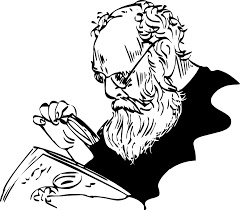
While the Dravidian movement under the Justice Party was originally filled with somewhat elite and wealthy non-Brahmins, E.V. Ramaswamy (“Periyar”) was to change that. Periyar attracted non-Brahmins from a far more diverse class spectrum, who were drawn to his promise of restoring pride and dignity to the non-Brahmin youth.
The politics of Periyar’s Self Respect Union was not limited to criticisms of Brahmanism. It involved the organisation and dissemination of an independent Tamil history and culture untouched by Sanskrit. The Self Respect Union became a training ground for an entire generation of thinkers, writers and public speakers who would then go on to articulate a comprehensive system of Tamil thought, myth, morality, ritual and values culled from the ancient Tamil texts, and communicate this system to the masses – initially through their hugely popular public speeches and writing, and later through the medium of film.
The masses in this form of Tamil cultural education were not limited to being passive recipients of information. For example, primary school teachers, who were themselves often literate only in Tamil, were at the forefront of spreading Dravidian ideology in the villages. This long tradition has meant that unlike linguistic assertions in many other states, the ideological commitment to Tamil runs well beyond specific triggers or flashpoints, like migration.
Decolonisation, language and Hindutva
Understanding the Dravidian movement as a nationalist movement with roots as old as anti-colonial nationalism is important to decipher why the argument of Hindi as essential to decolonisation repeatedly fails to land in Tamil Nadu.
Elsewhere in the subcontinent, overall control of the anti-colonial national movement remained quite predominantly upper caste. Indian nationalists saw replacing English with Hindi as essential to cultural decolonisation. While there were some internal differences between nationalists on the type of Hindi (or Hindustani) to be enforced, or the method of its enforcement, it was pretty generally agreed that dispensing with English as a link language was critical to decolonisation.
While this thinking found some takers in other southern Indian regions, in the Dravidian movement, liberation from Brahmin hegemony (and its linguistic tool, Sanskrit) took precedence over liberation from British colonialism, which was seen as something that could be dealt with after the dismantling of Brahmin hegemonies. In 1937, when Congress chief minister C. Rajagopalachari attempted to make Hindi compulsory in schools, Periyar himself organised the opposition. This gained the Dravidian movement considerable support from the student community.
Post independence, the Nehruvian approach to Hindi imposition (often handicapped by his own technocratic approach to governance, which was far more easily accomplished in English) was to make repeated (and often ignored) suggestions, reflected in a series of education policies dating back to the 1960s. Regional assertions were quelled and absorbed back into the nationalist fold with a policy of ad hoc linguistic concessions (such as the reorganisation of states) and generally letting sleeping issues lie.
This most recent Bharatiya Janata Party (BJP) attempt to hammer Hindi into Tamil Nadu using financial pressure demonstrates a far greater urgency and also a tacit recognition by the BJP that Dravidian nationalism and Hindutva cannot electorally co-exist.
While the electoral base of Hindutva today has unquestionably moved beyond its original upper caste bastions to include OBCs and Dalits, its ideologies remain distinctly Brahmanical. The focus on sanskritic civilisation, on cow slaughter prohibitions and on upper caste practices like vegetarianism and ritual purity – is core to the ideology. While the oppressed castes are allowed to participate as enforcers of these values – as voters, as members of cow slaughter vigilante groups or to enact “love jihad” vendettas against Muslims or Dalits – the ideology is still set and located in what Christophe Jaffrelot terms upper-caste orthopraxy.
This is the ideological battle which is being enacted in Tamil Nadu today. While it seems clear that the BJP, for all their bluster, does not expect Hindi in schools to be a winning electoral platform in the near future, their willingness to put it on the agenda indicates that they see that the long term future of Hindutva in Tamil Nadu depends on the dismantling of Dravidian nationalism. Hindi is only the first salvo.
[Sarayu Pani is a lawyer by training. Courtesy: The Wire, an Indian nonprofit news and opinion website. It was founded in 2015 by Siddharth Varadarajan, Sidharth Bhatia and M. K. Venu.]
❈ ❈ ❈
Why Dravidianism Is Needed in a Hindutva Polarising Society?
Jeeva Anbalagan
Across the world, the fundamental conflict is labour versus capital. Do the capitalists swindle profits and amass wealth? Yes. Do they exploit labour? Definitely!
In India, this capital primarily propagates through existing caste structures (Brahminical hegemony), linguistic supremacy (Hindi imposition), and religious nationalism (Hindu Rashtra). ‘Hindutva’ ideology – being the intersection of all the three-oppression forming a cultural hegemony. B.R. Ambedkar rightly identified ‘Brahminism and Capitalism’ as the two enemies for the Indian society and gave frameworks to fight them. Periyar E.V Ramasamy, precisely coined this oppression as ‘Hindu-Hindi-India’. Both giants worked tirelessly building movements to fight against it. Of them, Dravidian movement, spearheaded by Periyar who had mutual respect and approval from Ambedkar, was built with a shared mission to collectively oppose Brahminism – the caste hierarchy.
Dravidianism as ‘Social Mobility’
Dravida Munnetra Kazhagam or DMK, the electoral brainchild of the Dravidian movement, was founded in 1949 by CN Annadurai along with his brethren after having differences with Periyar, has consistently worked to weaken these structures of oppression systemically. The recent example being ‘naan mudhalvan’, the dream scheme of the former Chief minister MK Stalin, which enables marginalised to become civil service officers that renders them political power to frame policies for social upliftment. Periyar Ninaivu Samathuvapuram, a scheme introduced in 1998 by the then DMK President and Tamil Nadu CM M Karunanidhi that gives the social experience for integrated living as neighbours from diverse social location (including castes, and differently abled people) and share basic civic amenities.
The Anna Dravida Munnetra Kazhagam or ADMK, the split away populist faction from DMK, founded in 1972 by MG Ramachandran, despite flaunting Hindutva tendencies, has also contributed to expanding the schemes for marginalised emancipation. Latest example, implemented in 2020 by the then CM and ADMK Chief Edappadi K Palanisamy, being 7.5% reservation (affirmative action) in higher education for the predominantly socially backward government school students.
There is a long trail of social-democratic schemes on the reservation policies by Dravidian electoral majors, more specifically DMK, ever since the first communal government order in 1921 that was passed by the ‘Justice party’(SILF) in the then Madras Presidency. Most notably to include the most marginalised within the classification:
Arundhatiyars among Scheduled Castes (2009), Most Backward Castes (1989) and Muslims and Christians (2007) among Backward Castes, through internal affirmative action apart from obtaining constitutional validity (1993) on the scale of reservation up to 69% – a record high among the large Indian states. The first three are credited to M Karunanidhi’s chief ministership tenure and the last in 1993 to J Jayalalithaa’s administration.
Dravidian majors have made continuous efforts in building essential shared living spaces that facilitated social mobility. For instance, hostels for the marginalised students (ST, SC, MBC, BC), when they venture out of their home for higher studies. The first initiative in Tamil Nadu transcends ever since 1923, to the Justice party times, the ‘precursor’ Dravidian electoral organisation that Annadurai, founder of the DMK fondly calls as Pattanaar katchi. The recent addition to such shared living space is the Thozhi hostels launched by DMK president and the then CM MK Stalin in July 2023, catering to the housing needs of working-class women moving to a city. He launched similar scheme called Thozhiyar hostel, a dedicated hostel for the trans-community.
These are seen as the continuation of the DMK’s long list of women emancipation policies with the landmark legislation in 1989 by M Karunanidhi implemented (Equal Property Rights for Women – the Hindu Succession Tamil Nadu Amendment Act), granting women equal rights to ancestral property, a cause championed by Ambedkar and Periyar.
This all looks merrily social-democratic and less challenging to the existing Hindutva cultural dominance. Where has it threatened the hegemony the most? To know, one must understand what Dravidianism means!
Dravidianism as ‘Cultural agency’
According to Periyar, Dravidianism is a revolutionary social, political and philosophical framework to liberate the marginalised and build an egalitarian (oppression free) society.[1]
First, Dravidian ideologues initiated cultural reclamation as a fundamental project to instil ‘self-respect’ and rational thought. Self-respect is the fundamental philosophical pillar of Dravidianism, which means recognizing one’s own agency, rejecting subordination, and actively fighting for one’s own rights and self-worth.
Periyar conceptualised ‘Self-respect’ marriages, an egalitarian marriage legalised by CN Annadurai through self-respect marriage act in 1967, that involves no Brahminical priestly intervention and religious rituals to weaken caste hierarchy and reject linguistic imposition (Sanskrit if you wonder what language).
Second, Dravidian leaders principally deployed philosophical deconstruction of the Hindu mythological texts like ‘Periyapuranam’ and ‘Kamba Ramayanam’ for invoking rationality in the society. Thee Paravattum – Let the fire spread (published in 1953) is the compilation of Annadurai’s public debate that happened in 1943, where he exposes how hegemonic dominance propagates through art, devotion, and mythology.
Dravidian ideologues utilised popular mediums like cinema, theatre and music Sabha turning them into a cultural space where ideas are pitched, debated and taken home among the working class to their reading rooms, tea shops, and hair salons. To illustrate, a dialogue in the movie Parasakthi (1952) penned by M Karunanidhi, “When did Ambal (the Goddess) speak?” captured the cultural nerve to invoke rationality among the audience. Later in 2007, during the Sethusamuduram canal project, he brought similar logical arguments – “Who is this Ram? Which engineering college did he graduate from to become a civil engineer?”, that nudged the minds of people including the detractors.
Third, inclusive identity creation was part of the mechanism for affirmative social recognition and to reclaim indigenous roots. In fact, the word ‘Dravidian’ was coined by Pandit Iyothee Dass to build a distinct, non-Hindu, and casteless identity for marginalized communities. In public addresses, Dravidian leaders attribute egalitarianism quoting the Sangam era, a primitive commune period in Tamil history where the society had the then advancements in technology, art, literature and established trade relationship with the Roman society. In recent times there are material evidence to substantiate it in the archaeological excavation sites of Keeladi, Porunai.
More specifically to cater contemporary needs, for inclusive identity creation, M Karunanidhi has continually updated the Tamil glossary for widowed women as ‘Kaimpen’, transgenders as ‘Thirunar’, differently abled as ‘maatru-thiranaali’ (differently skilled) that gave affirmative social recognition. During M K Stalin’s chief ministership tenure 2021-26, his convention for naming social transformation projects embodied inclusivity and affirmative social recognition. To name a few: he named his universal basic income scheme as Kalaignar Magalir urimai thogai – Women’s rightful entitlement, his skill development program as naan mudhalvan – I am the first that helps students to build leadership and excellence in their chosen field, his free public transport for women and transpeople as Vidiyal Payanam – Journey to Dawn (emancipation), incentive for university students as Puthumai pen – modern women, and Tamil Puthalvan -Tamil’s son to emphasise being educated is the core of Tamil modernity.
Of all, the Hindutva forces fear the most, is the cultural agency that Dravidianism brings into the social discourse as it is not just diametrically opposite to their cultural project but detrimental to their hegemony. Since assimilation of the Dravidian ideology is a herculean project, as it offers social mobility and cultural agency (read as equality, liberty and fraternity) to the marginalised, Hindutva forces try to attenuate, counter by creating and appropriating multiple variants of right-populist proxy organisation. Notably, Naam Tamilar Katchi and Tamilaga Vetri Kazhagam are the latest electoral parties to join the right-populist proxy club.
In short, cultural reclamation, inclusive identity creation, affirmative social recognition for the marginalised along with social transformation policies are challenging the hegemonic dominance.
Key Takeaway – ‘Being Dravidian’
Periyar chose rationalism, and self-respect as an agency for fighting the oppressive caste system and for the very same reason, Ambedkar adopted Navayana Buddhism.
Just like how farce is to reduce Ambedkarite liberation movement as a mere ‘Dalit Identity politics or to Buddhist spiritualism’, so is to reduce Dravidian Movement as mere ‘politics of governance’. Both the movements are radical giants of its own and together, in comparison – two sides of the same coin.
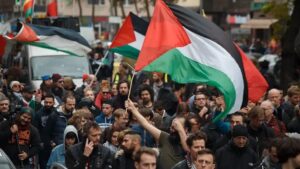
To best put in Periyar’s words, reminiscing his tour of north Indian states addressing the working class, “all those who are oppressed throughout the Indian sub-continent are Dravidians and Adi Dravidians.” In Viduthalai, the official organ of the Dravidar Kazhagam, when Palestine was bifurcated to deprive livelihoods and basic rights of the Arabs, he addresses them as ‘Arab Dravidians.’[2] In corollary, Dravidian Identity is never a given based on birth (like the varna system) nor just determined based on the language that one speaks, it is more of a conscious contention of working towards social liberation. So, the subaltern intellectuals, practitioners and activists in political movements, electoral organisations, independent progressives must ruminate and employ methods, engage popular mediums to ignite rational thoughts actively work towards marginalised liberation.
FYI – CN Annadurai deconstructed Hindu canonical texts two decades earlier than it was found as a philosophical method in 1960s by French Philosopher Jacques Derrida. Like Annadurai, he radically critiqued Western metaphysics, language, and meaning deeply transformed literary theory, philosophy, law, and architecture. On hindsight, if one must name what Annadurai and other Dravidian Ideologues did for cultural reclamation and inclusive identity creation, it can be termed as philosophical deconstruction.
[The writer is an independent political observer who happens to be an engineer. Courtesy: Newsclick, an Indian news website founded by Prabir Purkayastha in 2009, who also serves as the Editor-in-Chief.]