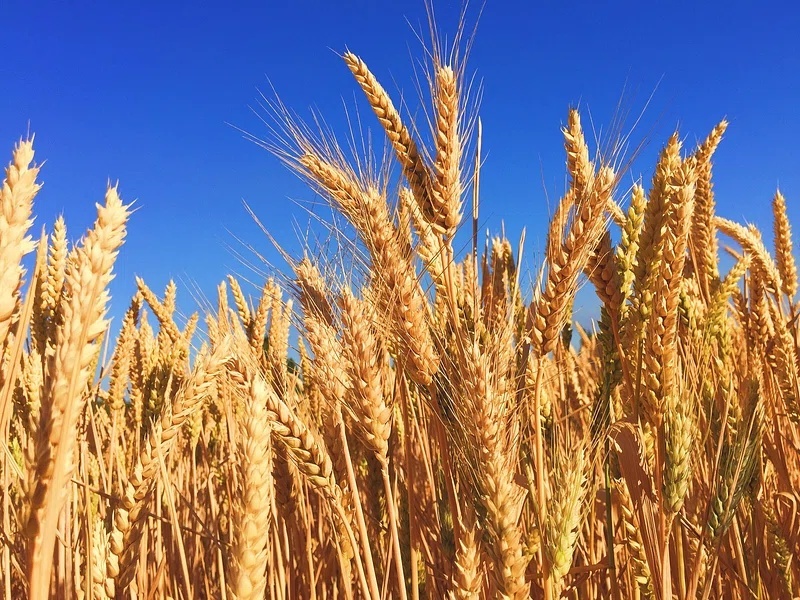
It seems like many of the warnings of an imminent food crisis are coming true. From the Super El Niño to the Iran war, it seems like the effects are beginning to show. Most shocking was a recent United States Department of Agriculture (USDA) prediction on wheat.
The report forecasts reduced global wheat production and wheat trade. The FAO, endorsing the view, predicts lesser production of cereals this year too and global wheat production to be lower than last year.
Along with the USDA’s prediction, the Iran war, fuel, fertiliser shortages, and El Niño have all led to wheat prices sharply rising high since the past four months. The US was also rocked by a major winter drought, adding to farmers’ distress.
If we look at global wheat prices, they have risen significantly since January 2026. According to the St. Louis Fed, the global price per metric ton increased from $169.25 in January 2026 to $220.88 in May 2026, a rise of 51.63 points (30.5%).
The lower global wheat production and trade forecast will further push wheat prices on the higher side, especially as the UN agencies like the FAO are also suggesting a drop in cereal production globally. Major producers of wheat like China, India, and Russia, etc., are all impacted.
Wheat season is still a little down this year for India, but Russia is already reporting delays and gaps in wheat sowing on account of erratic weather. This could potentially offset the surpluses of Russian wheat available to the world. With the conflict with Ukraine only escalating, agrarian produce is vital for the military.
Both Russia and Ukraine’s agricultural production capacities have also taken a beating, and hence domestic wheat and other food materials will be needed for domestic demands. Ukraine is far from pre-conflict levels of production of wheat, etc., and has added to the global hunger.
China, the world’s top wheat producer, has also been hit with heavy rains before harvest season and now is considering importing wheat to cover losses. The Indian subcontinent, which is a major wheat-producing region, could also witness a Rabi season marred by heatwaves, fertiliser shortages, and erratic rain, due to El Niño’s winter course.
And one shouldn’t be too surprised if our wheat production also dwindles by a few million tonnes. The Indian government won’t shy from banning wheat exports, like they have between 2021-2025.
Thinking south, Australia is in a bad position due to El Niño and is expecting a 26% below-average wheat crop. Plus, it’s not wheat alone; legumes to canola are expected to fall by 35% and 20% respectively.
On the other side of the Pacific, Argentina is set to experience a heavy 25% loss to wheat and 7% to corn production this year as per the USDA. Argentina is also one of the major producers of wheat and other food commodities.
Canada is the only silver lining with the least predicted damages, as per reports, will nonetheless see a decline in wheat production in 2026–27. Projected output stands at 35,014 thousand tonnes, down from 39,955 thousand tonnes in 2025–26, according to the April 2026 report.
Speaking of our region, wheat and agrarian production for the subcontinent and even as far as Thailand and Vietnam will hit with erratic rainfall potentially damaging the crops due to El Niño developing and staying till November.
Bangladesh last month was reportedly hit by an extreme heatwave and pre-monsoon rain. It is reported to have caused major losses to rice production. Farmers and experts are expecting lower production and high food costs. Food inflation has become the main driver of 9.42% inflation in May.
Gauging the wind, rice and food prices have already started to jump in the major rice-producing countries too: Thailand (20% in May), Vietnam, Bangladesh, and Pakistan.
It becomes obvious that mostly all of the major production regions are impacted, fuelled by the Iran conflict and El Niño. Hence, a food security crisis is almost a certainty.
The World Food Programme (WFP) already estimated that 363 million people are currently suffering from acute hunger, whereas 45 million are at further risk due to the Middle East conflict. So we are experiencing lower production, high inflation, and “record numbers” of people hungry in the world at the same time.
This makes vulnerable countries like India, which are 102 out of 135 on the Hunger Index, more at risk. Indians are already battered by the Iran war, suffering high inflation, and paying huge prices for gas and fuel.
Privatise Right to Food?
Didn’t the government see this food crisis emerging? After all, India has been battling with erratic weather and multiple farm issues, including high food inflation, shortages, etc., in the past five years. Plus, the government has an additional responsibility of feeding 800 million Indians on government rations.
So how is our government treating this crisis? The answer may not come as a surprise – privatisation of food reserves. Not long ago, right after our farmers’ protests helped rescind Modi’s farm laws, India’s strategic food reserves started depleting. By 2024, the country had plunged to a seven-year low.
The government naturally moved to increase production and procurement. The Food Corporation of India (FCI) even had a 20,000 crore food silo programme. The government didn’t shy from banning wheat exports from 2021-25.
Recently, the Modi government even proudly declared it had procured over 35 million tonnes, up 17% from nearly 30 million tonnes higher than 2025.
But there is more to it. India still has an active Essential Commodities Act, which regulates the supply and pricing of essential commodities like wheat, sugar, oil and gas, etc. The Modi government has often used to crack down on illegal hoarding including recently for oil and gas rationing.
Nevertheless, the central government had intended to remove the Essential Commodities Act through the farm laws. It said it would “liberalise” the food stocking mechanism in the country. But that was just a way to allow for vast stocking of food grains by private players. The government couldn’t succeed at removing the clause through legislation, so it tried a different strategy.
FCI, instead of building public capacity or public food warehousing infrastructure, allegedly contracted almost the entire storage through the “Hub and Spoke” silo scheme to two companies, namely Adani Agri Logistics Ltd and Leap India Food & Logistics Private Limited.
Together, they bagged 110 out of the 135 silos and a contract of Rs 16,500 crore. They are now the keepers and potentially masters of 46.5 lakh metric tonnes of grain, especially at a time when a global food security crisis is imminent.
With this one move, the Modi third agriculture law on unlimited hoarding of food grains is active. The farmers’ unions’ opposition to Adani has been vindicated. This portends a grim future for the hungry in the country, where ultimately the government, under political pressure and climatic chaos, will need to feed more than 800 million mouths.
Sadly, at that time, private corporations and traders, middlemen, will control more grain than the government or the farmers. Our right to food is already deeply threatened; privatisation and weather will increase the burden on our country and profits for the hoarders and corporations.
[Indra Shekhar Singh is an independent agri-policy analyst and writer. Courtesy: The India Cable – a premium newsletter from The Wire. The Wire is an Indian nonprofit news and opinion website. It was founded in 2015 by Siddharth Varadarajan, Sidharth Bhatia and M. K. Venu.]