❈ ❈ ❈
World War Trump
Nick Turse
“It’s got no anything,” President Donald Trump said of Somalia in a recent xenophobic rant. “All they do is run around shooting each other.”
As is true of so much with this administration, every accusation is also a confession.
U.S. troops have been shooting Somalis since the early 1990s, after lame duck President George H. W. Bush launched an ostensibly humanitarian intervention there that would be embraced by his successor, Bill Clinton. By June 1993, U.S. and U.N. troops had begun attacking various targets in Somalia’s capital, Mogadishu, linked to warlord Mohamed Farrah Aidid, who had helped overthrow dictator Mohamed Siad Barre.
The next month, in a major escalation, U.S. helicopter gunships attacked a house in that city where a group of Somali clan leaders was meeting. The International Committee of the Red Cross said 54 people were killed and 161 wounded. Aidid claimed that 73 Somalis had died, including women and children, and more than 200 had been wounded. U.S. forces suffered no casualties whatsoever.
And it wasn’t long before — in the early 2000s, under Bush’s son, George W., as part of what became known as the Global War on Terror — American troops began slaughtering Somalis again. In addition to major conflicts in Afghanistan and Iraq, Bush, the younger, launched early drone wars from Pakistan to Yemen, including in Somalia. His successor, President Barack Obama, upped the Forever War ante, becoming an assassin-in-chief in Somalia and beyond. Obama’s vice president, Joe Biden, continued the drone war there, too, when he entered the White House.
However, for all those years of slaughter in Somalia, no American president has ever attacked Somalis with the persistence and at the rate of President Donald J. Trump, especially in his second term in office.
The second Bush administration conducted 11 airstrikes in Somalia, killing as many as 144 people — including possibly 55 civilians, according to the think tank New America. Obama presided over 48 strikes during his eight years in office that killed as many as 553 people. Trump’s first term saw a massive escalation in such drone strikes. Over his first four years, Trump carried out 219 attacks, a 271% increase over the 16 years of the George W. Bush and Obama presidencies. But even that spike has paled in comparison to the relentless rate of attacks during Trump’s second term in office. While Biden exceeded Obama’s total in half the time — 51 strikes in four years — Trump is already set to eclipse his own infamous first-term record in less than a year and a half. He has presided over at least 190, if not more, air strikes in Somalia.
Trump’s killing spree in Somalia is just a small part of his wider war on the world. It’s no exaggeration to say that he has the U.S. military “run[ning] around shooting” people on an epic scale. During his two terms in office, Trump has overseen armed interventions and military operations — including air strikes, commando raids, proxy conflicts, so-called 127e programs, and full-scale wars — in Afghanistan, the Central African Republic, Cameroon, Ecuador, Egypt, Iran, Iraq, Kenya, Lebanon, Libya, Mali, Niger, Nigeria, North Korea, Pakistan, the Philippines, Somalia, Syria, Tunisia, Venezuela, Yemen, and an unspecified country in the Indo-Pacific region, as well as attacks on civilians in boats in the Caribbean Sea and the eastern Pacific Ocean. His second term has, in fact been a furious blitz of global war-making, only half-noticed by the American news media. In March, for example, the United States made war on three continents during just three days, conducting attacks in Africa, Asia, and South America. During that span, the U.S. also struck a civilian boat in the eastern Pacific Ocean.
Less than a year and a half into Trump’s second term, the U.S. has already killed more than 2,000 civilians from Latin America to the Middle East and Africa. “This is unprecedented in terms of the sheer number of theaters where harm to civilians has been reported within such a short space of time,” said Megan Karlshoej-Pedersen, a policy specialist with Airwars, a British-based organization that tracks civilian harm globally. She also pointed to attacks in the Caribbean Sea, the eastern Pacific Ocean, Iran, Nigeria, Somalia, Syria, Venezuela, and Yemen.
A War on Children
Since the U.S. began conducting air strikes in Somalia back in 2007, as many as 170 civilians have been killed, according to Airwars. The U.S. military has, however, only admitted to six of those deaths and 11 other injuries — and has never publicly apologized to any families of the victims or those who survived its attacks.
In one April 2018 attack in Somalia during Trump’s first term, a U.S. drone strike killed at least three (and possibly five) civilians. A woman and child were among the dead, according to formerly secret U.S. military investigation documents, but the same report concluded that their identities might never be known. A 2023 investigation I undertook for The Intercept, however, exposed the details of that disastrous attack. The woman and child — 22-year-old Luul Dahir Mohamed and her 4-year-old daughter, Mariam Shilow Muse — survived the initial strike but were killed by a double-tap attack as they fled for their lives. Abdi Dahir Mohamed, one of Luul’s brothers, said of the Americans who killed his sister and niece: “They know innocent people were killed, but they’ve never told us a reason or apologized. No one has been held accountable.”
More recently, President Trump has been responsible for the slaughter of scores, if not hundreds, of children in his war of choice in Iran. “U.S.-Israeli airstrikes have killed at least 2,362 civilians, including 383 children, and injured over 32,314 civilians, according to official figures,” Raha Bahreini, a regional researcher with Amnesty International’s Iran Team, told this reporter and other journalists during a recent press briefing. The deaths include more than 150 children killed in a Tomahawk missile strike on the Shajarah Tayyebeh elementary school in southern Iran. The preliminary findings of a U.S. military investigation into that attack acknowledged that the United States was indeed responsible, contradicting assertions by President Trump that Iran struck the school. Publicly, however, the Pentagon continues to evade responsibility. “This incident is currently under investigation,” Secretary of War Pete Hegseth recently told lawmakers, refusing to answer questions about the attack during testimony on Capitol Hill.
The administration has also been responsible for a steady drumbeat of attacks on civilians in the waters surrounding Latin America. Under Operation Southern Spear, the Trump administration has conducted around 60 attacks on so-called drug boats in the Caribbean Sea and Eastern Pacific Ocean, killing close to 200 civilians since last September. Trump officials have insisted that the victims are members of one of at least 24 or more cartels and criminal gangs with whom it claims to be at war but refuses to name. Experts in the laws of war and members of Congress from both parties insist that the strikes are illegal extrajudicial killings because the military is not permitted to deliberately target civilians — even suspected criminals — who do not pose an imminent threat of violence.
Trump has also killed and wounded many people in Yemen, including dozens of Ethiopian civilians killed in an attack on an immigrant detention center there last year. “The Trump administration’s Yemen campaign, and this attack in particular, should have set off alarm bells for anyone invested in how the U.S. military operates, and the amount of care or disdain it shows for civilian life,” Kristine Beckerle, Amnesty International’s deputy regional director for the Middle East and North Africa, said recently. “One year on, not only has there been no discernible progress towards justice and reparation, but we’re still lacking basic information about what happened in the Yemen attack, why it happened and what steps if any the U.S. military has taken to address it.”
In the spring of 2025, Airwars tracked reports of at least 224 civilians in Yemen killed by U.S. airstrikes during the Trump administration’s campaign of air and naval strikes (codenamed Operation Rough Rider) against that country’s Houthi government. The Yemen Data Project put the death toll at a minimum of 238 civilians, with another 467 civilians injured.
Such deaths are just part of a long butcher’s bill in Yemen stretching back to the very beginning of Trump’s first term. A report by the Yemen-based group Mwatana for Human Rights examined 12 U.S. attacks in Yemen between January 2017 and January 2019, 10 of them “counterterrorism airstrikes.” The authors found that at least 38 Yemeni civilians — 19 men, six women, and 13 children — were killed and seven others injured in the attacks. Among them was a raid by Navy SEALs on a Yemeni village just days after Trump took office for the first time in which women and children died. A year later, the U.S. fired a missile into a sports utility vehicle near the village of Al Uqla. Three of the men inside were killed instantly. Another died days later in a local hospital. The only survivor, Adel Al Manthari, was gravely wounded and forced to turn to a GoFundMe campaign in 2022 to save his life.
“The Attack Was Horrible and Their Response Was Horrible. I Lost a Wife and a Child”
“It’s a horrible place,” Trump said of Somalia during that same racist rant. “Everything is horrible over there.”
Horrible is a word I also recall from my trip to Somalia to meet the family of Luul Dahir Mohamed and Mariam Shilow Muse in 2023.
The U.S. attack that killed the mother and daughter was the product of faulty intelligence as well as rushed, imprecise targeting by a Special Operations strike cell whose members, according to the military investigation conducted later, considered themselves inexperienced. That inquiry led to an admission that civilians were killed and a strong suggestion of confirmation bias (a psychological phenomenon that leads people to cherry-pick information confirming their preexisting beliefs). Despite that, the investigation exonerated the team involved.
“The strike complied with the applicable rules of engagement,” according to that investigation. “[N]othing in the strike procedures caused this inaccurate [redacted] call.” Luul’s husband and Mariam’s father, Shilow Muse Ali, was stunned as he tried to process those words. “The attack was horrible and their response was horrible. I lost a wife and a child,” he told me. “But I cannot understand the explanation in the investigation. How can you admit that you killed two civilians and also say the rules were followed?”
Trump had, in fact, secretly issued loosened rules for counterterrorism “direct action” operations, including for drone strikes in places like Somalia, according to a partially redacted copy of the document. By the end of March 2017, the number of U.S. airstrikes in Somalia had skyrocketed. “The burden of proof as to who could be targeted and for what reason changed dramatically,” retired Brigadier General Donald Bolduc, who led Special Operations Command Africa at the time, recalled. During the Obama administration, by contrast, strikes required high-level approval, according to a drone pilot and strike cell analyst, who served in Somalia the year Luul and Mariam were killed. “Giving strike authority down to a ground commander was a massive difference,” he explained. “It had a big effect.” Attacks in Somalia tripled after Trump once again relaxed targeting principles and (all too predictably) U.S. military and independent estimates of civilian casualties across multiple U.S. war zones spiked.
“They have nothing but crime,” President Trump — himself a convicted felon 34 times over — said of Somalia, as he raged on about that country.
To date, no one has ever been held accountable for the deaths of Luul or Mariam – or any other civilians killed in Trump’s war in Somalia. Nor has anyone been held responsible for those killed in the strike in Yemen that gravely wounded Adel Al Manthari. Or those slain in the raid on a Yemeni village by Navy SEALs. Or the innocents who died in the attack on an immigrant detention center in that country. Or in the strikes on drug boats in the Caribbean Sea. Or for the attack on Shajarah Tayyebeh elementary school in Iran.
Some of those attacks could well have been categorized as crimes of war. Others are certainly extrajudicial killings — or, simply put, outright murders. Those deaths and so many others can be traced back to Donald Trump and his contempt for the lives of people across this planet.
“It’s filthy dirty, disgusting dirty,” Trump said of Somalia, but in truth, that’s a more apt description for the soul of the country that exports slaughter, year after year, and is led by a man who revels in it. “It’s a horrible place,” he continued about Somalia.
And once again, every accusation of his should be considered a confession, too.
[Nick Turse is a senior reporter at The Intercept and a fellow at the Type Media Center. He is the author most recently of Next Time They’ll Come to Count the Dead: War and Survival in South Sudan and of the bestselling Kill Anything That Moves. Courtesy: TomDispatch, a US based web-based publication, founded and edited by Tom Engelhardt, an American editor, journalist and author. It is aimed at providing “a regular antidote to the mainstream media”, by presenting critical perspectives often missing from corporate news outlets.]
❈ ❈ ❈
From Asia to the Middle East, US Bombs Are a Failed Foreign Policy Choice
Christine Ahn
The U.S.-Israeli war on Iran opened not with a declaration, not with diplomacy exhausted, but with airstrikes.
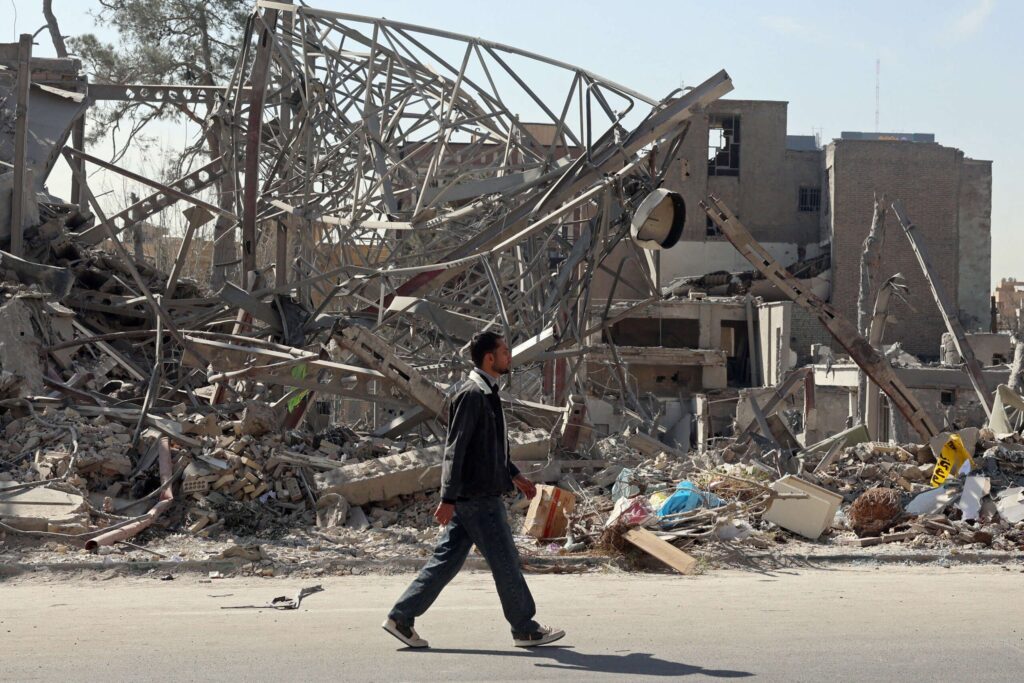
Among the first confirmed casualties were more than a hundred schoolchildren killed in a strike on their elementary school in southern Iran. Within a month, 850 U.S.-made Tomahawk missiles were used to strike Iran. President Donald Trump has delivered on his promise to bomb Iran “back to the Stone Ages,” with U.S. and Israeli missiles targeting bridges, pharmaceutical and steel plants, and civilian infrastructure like schools and hospitals. The bombing campaign has struck civilian oil infrastructure in Tehran, engulfing a city of 10 million people in toxic black rain. Thousands of Iranians and Lebanese have been killed, and hundreds of thousands of workers have lost their jobs as factories and basic infrastructure have been destroyed.
Washington calls this national security. The historical record calls it something else entirely.
For more than 75 years, the United States has reached for airpower as its preferred instrument of foreign policy — a tool that promises decisive results without the political costs of ground occupation; the illusion that enough bombs, dropped with enough precision, can produce the outcomes that diplomacy did not. Korea, Vietnam, Laos, Cambodia, Afghanistan, Iraq, and now Iran: the targets have changed, the doctrine has not.
The Failure of U.S. Doctrine
As a Korean American, Cathi Choi of Women Cross DMZ knows this history personally. From 1950 to 1953, during the Korean War, U.S. forces dropped 635,000 tons of bombs and 32,000 tons of napalm, burning 80 percent of North Korean cities to the ground. One year into the war, U.S. Maj. Gen. Emmett O’Donnell testified in the Senate, “There are no more targets in Korea.” More than 4 million people were killed, the overwhelming majority of them Korean civilians. Choi, whose grandfather fled the north during the war, is among millions of Koreans from separated families. The division of the peninsula left an estimated 10 million Koreans cut off from relatives on the other side, unable to exchange phone calls or letters or reunite, with the exception of a few state-sponsored family reunions during periods of détente. Seventy-three years later, the war has only ended in a ceasefire, not a treaty, and the peninsula has remained in a stalemate ever since.
“The Korean War didn’t just leave its mark on the peninsula,” Choi explained. “It left deep scars among divided families, inaugurated the U.S. military-industrial complex, quadrupled the Pentagon budget in three years, and set a course from which Washington has never turned back.” Today, the Trump administration is proposing a $1.5 trillion Pentagon budget while slashing investments in diplomacy, development, and domestic programs like Medicaid and food stamps. Meanwhile, 1.2 million land mines are still buried across the world’s most militarized border, keeping Korean families — like Choi’s — separated, and both sides heavily militarized while on the precipice of nuclear war.
Danae Hendrickson, chief of mission advancement and communications at the advocacy group Legacies of War, has spent years documenting what the United States left behind in Laos, Cambodia, and Vietnam — not as history, but as present danger. From 1964 to 1973, U.S. pilots flew 580,000 bombing missions over Laos alone — the equivalent of a planeload of bombs every eight minutes, around the clock, for nine straight years. An estimated 80 million unexploded cluster munitions remain in the soil. Less than 10 percent has been cleared. During Hendrickson’s 2025 visit to Laos, five boys digging for crabs struck a cluster munition. One was completely blinded. Another lost his hand. Hendrickson visited a fourth-grade classroom where children asked her: “Why did the U.S. drop the bombs? Why is it taking so long to clean them up? Do you think Laos will ever be bomb-free?” The war, for them, is not over.
In Afghanistan, two decades of bombing produced not stability but the conditions for its opposite. The Taliban were ousted in 2001 and returned to power in 2021, inheriting a country whose institutions had been hollowed out by an occupation that killed tens of thousands of civilians — and that, according to the Congressional Research Service, cost U.S. taxpayers over $146 billion. Halema Wali, the co-founder of Afghans For A Better Tomorrow, watched this unfold with a clarity that Washington never mustered. “The war started with the United States saying we needed to free Afghan people,” she said, “and the war ended by saying, ‘Your freedom’s over.’” The peace deal was negotiated directly with the Taliban, excluded Afghan civil society, and handed power back to the very force the bombs were supposed to have defeated.
Iraq followed the same arc. “The 2003 invasion of Iraq did not find weapons of mass destruction because they never existed,” writes Dena Al-Adeeb, an Iraqi-born scholar twice driven into exile by U.S.-backed wars. “What it found was Iraq itself — and it proceeded to destroy it: perhaps a million dead, millions more displaced, buildings bombed and museums looted, a society torn apart along sectarian lines. Two decades later, Iraq still hasn’t recovered.”
Iran Trap
The U.S. war in Iran is following the same script. Airstrikes cannot weaken a government sufficiently to produce regime change. As University of Pennsylvania international relations scholar Farah N. Jan notes in The Conversation, “decades of research on rally-around-the-flag effects — the tendency of populations to unite behind their government when attacked by a foreign power — confirms that external attacks fuse regime and nation, even when citizens despise their leaders.” Force does not topple governments. It consolidates them.
The Iranian state has grown more repressive, not less. Young dissidents are being executed on charges of being foreign agents. The 2022 “Woman, Life, Freedom” uprising — a genuinely powerful, internally generated movement for political transformation — has been set back by years. U.S. military escalation handed the Iranian government exactly the external enemy it needed. As organizer Hoda Katebi writes in Jacobin, “This unjustifiable war on the Iranian people has undermined decades of social uprisings and peoples’ struggles in Iran, and our revolutionary struggles have been interrupted and replaced with a nationalism that has emboldened hardliners.”
This is the reliable product of U.S. airpower: hardened adversaries, devastated civilian populations and infrastructure, and the suppression of the very internal movements that might otherwise produce genuine change.
The War Comes Home
The costs of this doctrine are not confined to the countries being bombed. Katebi put it plainly to Truthout: “The war is actually already at home. Every single weapon that Israel is using to be dropped on young kids in Gaza, Lebanon, Iran, Yemen — is built by people who live in this country. Transported by people who live in this country. Designed by people who live in this country.”
The Pentagon’s own briefing to Congress put the cost of the first days of the U.S. war on Iran at nearly $2 billion a day. As vital programs face cuts, immigration agents are targeting communities of color, and a security state is turning inward with the same logic it turns outward. You cannot sustain a permanent war economy abroad without it reshaping your politics at home. The diaspora leaders I work alongside are not simply critics of U.S. foreign policy. They are architects of an alternative — one grounded in the actual conditions for peace rather than the illusion that force can substitute for it.
Diaspora-led peace organizations — such as Women Cross DMZ, Afghans For A Better Tomorrow, Legacies of War, and the National Iranian American Council — share a premise: that genuine security is built through relationships, accountability, and political resolution — not through bombardment.
Katebi offers the clearest frame for what it would mean to orient U.S. foreign policy differently: “We should not be viewing the State of Iran as our ally when it is the people of Iran with whom we should be building solidarity,” she told Truthout. This is not naïveté. The alternative to domination is not weakness — it is the harder, slower, more durable work of diplomacy, investment in civil society, and engagement with the people inside repressive states who are already working toward liberation.
The United States faces a genuine choice. It can continue to reach for airpower each time it confronts a government it dislikes, perpetuating a cycle in which bombs kill civilians, harden regimes, destroy internal movements, and leave behind unexploded ordnance for generations of children to find. Or it can reckon honestly with what 75 years of this doctrine have produced, and begin building a foreign policy grounded not in the fantasy of force, but in the reality of what peace actually requires.
The historical record is not ambiguous: Bombs don’t build peace. They never have. The question is whether Washington is willing to read it. The diaspora communities bearing the longest memory of what this doctrine costs already know the answer. The time is now to ensure their voices and analysis form the basis of a new U.S. foreign policy.
[Christine Ahn is a fellow at the Institute for Policy Studies. Courtesy: Truthout, a US nonprofit news organization dedicated to providing independent reporting and commentary on a diverse range of social justice issues. Its editor-in-chief is Negin Owliaei, an Iranian American journalist, editor, and researcher known for her work on inequality, labor, and social justice issues.]