❈ ❈ ❈
Congo’s Cobalt Feeds Big Tech. Its People Face Ebola
Gary Wilson
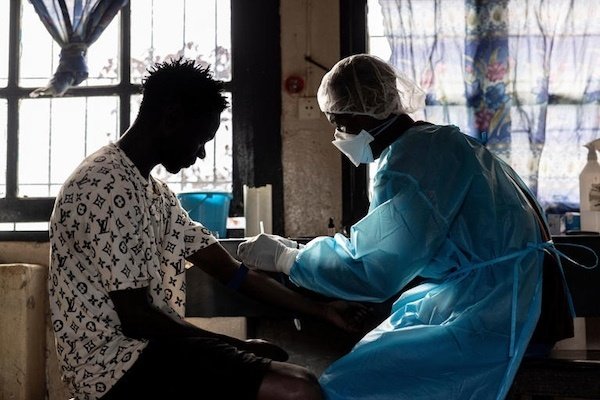
On April 30, health workers in Bunia tested patient samples for Ebola. The result came back negative. But the test could not detect Bundibugyo — a rare and highly fatal Ebola species with no approved vaccine or treatment. The false negative gave the virus two more weeks to spread through mining communities and displacement camps.
It was the kind of failure that looks like a technical glitch. It wasn’t. It was the result of what five centuries of colonial violence and imperialist plunder had left behind — and left out. The virus exposed a capitalist decision: some lives are protected by laboratories, vaccines and treatment. Others are left with nothing.
What plunder destroyed
When Portuguese ships reached the Congo River in 1483, they did not find an empty land. They found the Kingdom of Kongo — a centralized, sophisticated state with law, diplomacy and government across much of Central Africa. Portugal came with ships, guns and priests. Behind them came slave traders. What followed was seizure and plunder.
Over the next four centuries, the transatlantic slave trade ravaged Kongolese society and tore the Kingdom of Kongo apart. The Portuguese, and later the Dutch, British and others, organized the violence. People were kidnapped. Families were shattered. Villages were emptied. Fields went untilled. The kingdom’s political order was weakened until it could no longer defend its people.
Central Africa became the single largest source of enslaved people transported to the Americas. Scholars estimate that between 5 million and 6 million people were taken from the Congo-Angola region alone over the course of the trade.
The form of plunder changed. The target remained the same: labor, land and wealth.
Belgium’s King Leopold II held the Congo as his personal property from 1885 until 1908. Under his rubber extraction regime, Congolese workers who failed to meet quotas had their hands and sometimes feet cut off. Villages that resisted were burned. Forced labor, starvation, disease and murder killed an estimated 5 million to 10 million people. Some historians rank it among the largest colonial massacres in recorded history. When Belgium took formal colonial control, it continued to extract copper, diamonds, uranium and rubber for decades while investing little in fundamental welfare. Belgian colonial policy built almost no public education system. Education was dominated by missionary schools, which trained Congolese people for manual and agricultural labor while restricting “book learning” to basic literacy and math.
The Congo won formal independence on June 30, 1960. Belgian colonial rule had produced only about 30 Congolese university graduates in the entire country. Patrice Lumumba, the country’s first elected prime minister, called for control over Congo’s own resources and for a united Africa free from colonial domination. Washington saw that program as a threat. The U.S. feared that Soviet support for anti-colonial movements and independent African development could help Congo break out of Western control.
Katanga held roughly 60 percent of the world’s cobalt supply — a strategic mineral essential for jet engine turbines and aerospace rocket nozzles — alongside vast deposits of industrial diamonds and the uranium that had fueled the Manhattan Project.
Cobalt. Uranium. Diamonds. Lumumba was a threat to all of it. On Jan. 17, 1961, he was murdered. The CIA, operating on authorization from the Eisenhower administration, plotted his assassination. Belgium and the mining company Union Minière played their own roles. Mobutu seized total power in a U.S.-backed coup in 1965.
Washington then backed three decades of Mobutu Sese Seko’s dictatorship. Mobutu looted the treasury and channeled the wealth to Western banks, crushed political opposition and drove public health into ruin. When armed resistance threatened the mineral pipeline directly — as in 1978, when a rebellion in the Kolwezi mining hub sent global cobalt prices surging — France and Belgium sent paratroopers and the U.S. provided transport planes to crush it.
When the Soviet Union collapsed in 1991, Mobutu’s usefulness to Washington ended. The U.S. cut off financial support. The regime fractured, and Mobutu fell in 1997. The wars that followed were not caused by “ancient hatreds” or local chaos. They were wars for minerals, driven by imperialist mining interests and enforced through proxy forces, cross-border interventions and armed groups tied to the mineral trade. They have killed more than 6 million people, most of them from disease and starvation rather than combat. Eastern Congo was turned into a killing floor.
Cobalt goes into batteries and jet-engine superalloys. Uranium fuels reactors and nuclear weapons. Industrial diamonds cut rock, metal and semiconductor wafers. Coltan, cassiterite and wolframite become tantalum, tin and tungsten for electronics and military equipment. Gold provides corrosion-resistant plating for micro-connectors, SIM cards and processor bonding wires.
Tech monopolies — Apple, Nvidia, Google, Microsoft and Intel — depend on mineral supply chains that run through eastern Congo. So do the weapons manufacturers and the financial institutions that hold their stock. The minerals leave. The fighting, hunger and displacement stay behind. This is monopoly capital’s “innovation”: clean devices, cloud servers and weapons systems at one end; displacement, hunger and disease at the other.
Ebola spreads through what imperialism made
In Ituri Province today, armed groups and smuggling networks fight over gold routes. More than 100,000 people were newly displaced in Ituri in the months before the outbreak was confirmed. Nearly 1 million people have been displaced by conflict in Ituri in total. Seven million people are internally displaced across eastern DRC. Twenty-seven million face acute hunger.
In parts of North Kivu, people survive on just over six liters of water a day and share one latrine among more than 100 people. These are not conditions in which Ebola, cholera or measles can be contained. Cholera, measles, mpox, polio and drug-resistant infections are spreading through camps where vaccination, sanitation and primary care have collapsed.
That is how Ebola gets its opening. Displacement, land destruction, mining and military supply lines push people deeper into forest zones where Ebola can jump from animals to humans.
In late April, deaths began mounting around Mongbwalu, a mining area northwest of Bunia. At first, health workers did not recognize the outbreak as Bundibugyo Ebola. Cases later appeared in Bunia and Rwampara, where people had gone seeking care. By the time the disease was confirmed, funerals, family care and hospital exposure had already given the virus weeks to spread. When the WHO was alerted on May 5, officials were not yet calling it Ebola. They were reporting a “high-mortality outbreak of unknown illness.” An estimated 50 people were already dead.
Confirming the diagnosis required genomic sequencing at the Institut National de Recherche Biomédicale in Kinshasa — more than 1,000 miles from the outbreak zone, roughly the distance from Tulsa, Oklahoma, to Washington, D.C. Results came back May 14. The DRC and Uganda declared the outbreak May 15. WHO determined on May 17 that the outbreak constituted a public health emergency of international concern and announced it publicly the next day.
By then, the virus had been spreading for at least six weeks. Hundreds of suspected cases had appeared across three health zones. The outbreak had crossed into Uganda and reached Kampala, the capital. By May 25, it had passed 1,000 suspected and confirmed cases, with more than 230 deaths reported in the DRC and confirmed cases in Uganda.
By combined suspected and confirmed cases, this is now the third-largest Ebola outbreak in history. Former CDC Director Robert Redfield noted that Ebola outbreaks are normally caught at five to 10 cases. This one was not confirmed until past 100.
Ituri had no local sequencing capacity. Early detection takes laboratories, clinics, trained staff and supplies. Congo was denied them. The wealth that could have built them was looted instead.
Designed to fail
Bundibugyo Ebola has struck before: Uganda in 2007 and the DRC in 2012. Both outbreaks killed between 30% and 50% of those infected. The pharmaceutical industry had the technical capacity to develop a vaccine after either one. Merck and Johnson & Johnson saw no profitable market in saving Congolese and Ugandan lives, so no approved vaccine was made and no approved treatment developed.
Bundibugyo killed people in central Africa, not in countries where governments and insurers would pay monopoly prices. The existing Ebola vaccines and therapies target Zaire ebolavirus and are not approved for Bundibugyo. They should not be assumed to protect against it. Candidate vaccines are being fast-tracked, but WHO officials have said doses of the most promising vaccine may not be ready for six to nine months. The treatment gap is the pharmaceutical industry functioning as designed — organized around profit, patents and monopoly pricing, not human need.
The final nail
In previous Ebola outbreaks, U.S.-funded programs helped keep parts of Congo’s disease-surveillance system functioning. They supported local health workers, testing, training, handwashing stations and protective equipment. But this was not a public health system built for and controlled by the Congolese people. It was an emergency layer funded from Washington.
The Trump administration removed it.
U.S. foreign assistance to the DRC fell from $1.4 billion in 2024 to about $430 million in 2025, with only about $21 million allocated for fiscal 2026. The International Rescue Committee, which had operated USAID-funded surveillance programs in Ituri Province — the outbreak’s epicenter — was forced to scale back, eliminating surveillance operations, handwashing stations and distribution of protective equipment.
The STOP Spillover program, built specifically to catch deadly diseases in this region, was terminated. USAID itself was dismantled and its remaining programs folded into the State Department with a fraction of the staff.
Elon Musk boasted that USAID had been fed into a “wood chipper,” then later acknowledged that Ebola prevention had been among the programs canceled.
Community health workers with direct experience from previous outbreaks lost their positions when USAID programs shut down. Dr. Daniel Bausch, a former CDC medical officer, described where they went: “Now they’re driving a taxi in Kinshasa or selling fruit somewhere. So this cadre of reasonably trained people that you can employ just isn’t around.”
The CDC lost 3,400 positions — 25% of its workforce — and has no permanent director. The U.S. withdrew from and defunded the WHO. A gag order severed the CDC’s ties to its international counterparts.
“What we’ve lost is speed, which is the most important thing in an outbreak like this,” said Nicholas Enrich, former acting assistant administrator for global health at USAID.
Washington’s alibi
Secretary of State Marco Rubio told reporters on May 22 that the WHO was “a little late” in identifying the outbreak. WHO Director-General Tedros Adhanom Ghebreyesus rejected the claim the following day. The WHO had deployed a team to Ituri within days of the May 5 alert. That team’s initial tests came back negative because the diagnostics were built to detect Zaire ebolavirus, the Ebola species targeted by existing vaccines and treatments, not Bundibugyo. Confirmation required sending samples to Kinshasa. That delay came from the lack of local testing and sequencing capacity. In the same province, USAID-funded surveillance programs had just been cut. Washington’s alibi turns cause into accusation: first it helps produce the lack of capacity, then it blames others when that lack costs lives.
Rubio then pointed to a $23 million response package, with only $13 million for direct health aid, and a plan to open 50 clinics in the affected areas. Uganda’s health ministry said as of May 22 it had “not been engaged” by the U.S. on the treatment centers. The U.S. commitment during the 2014 Ebola outbreak exceeded $5.4 billion.
Still moving
The virus has reached Kampala, a capital city with an international airport. It has been detected in Goma, a crossroads city on the Rwanda border with major transit corridors. Cases have been reported across hundreds of miles. Transmission chains remain unaccounted for.
Aid groups on the ground say they lack basic supplies. Julienne Lusenge, president of Women’s Solidarity for Inclusive Peace and Development, which operates a small hospital near Bunia, described conditions: “We only have hand sanitiser and a few masks for the nurses.”
Dr. Herbert Luswata, a physician at Bwera Hospital in Kasese, Uganda, described conditions on May 21: “We are really very scared. We are not safe at all. The response is too slow and inadequate, not anywhere close to the standards that are required in a response for an epidemic like Ebola, which we know has a very high fatality rate. We are too exposed as health workers.”
The outbreak is moving through a region where the first defenses against disease were destroyed long before Bundibugyo was named. Health workers are treating patients without protective equipment. Communities are burying their dead without body bags. Yet the people holding the line are the same people imperialism has written off: nurses, doctors, burial teams, women’s organizations and community health workers fighting the outbreak with almost nothing.
The people of Congo and Uganda are paying the price for what was done to their countries. Not by nature — but by imperialist powers, banks, mining monopolies, drug companies and the capitalist governments that serve them.
[Gary Wilson is a retired computer network engineer and long-time socialist agitator currently working as co-editor of Struggle-La Lucha. Courtesy: Struggle-La Lucha, a US-based socialist publication dedicated to the struggles of working-class and oppressed people. It provides news and political analysis from an anti-capitalist and anti-imperialist perspective, challenging the narratives of the US corporate media. Its managing editor is Gary Wilson.]
❈ ❈ ❈
Ebola and Imperialism
John Clarke
In responding to a lethal Ebola outbreak in the Democratic Republic of Congo (DRC), the World Health Organisation (WHO) and Western media outlets have stressed local factors that are impeding the work of containing the outbreak. These considerations are not irrelevant, but an understanding of the proliferation of infectious diseases in Africa and the vulnerability of populations to it requires that the legacy of colonialism and the present nature of global imperialism be properly considered.
The BBC ran an article on 27 May headlined ‘Ebola-hit DR Congo faces “catastrophic collision” of disease and conflict, WHO warns.’ It quoted the organisation’s director-general, Tedros Adhanom Ghebreyesus, as saying that it was impossible to ‘build community trust or isolate the sick while bombs are falling.’ He was pointing to the fact that the Ituri region, where the outbreak has been centred, has been under military rule since 2021 and is the site of major conflicts.
An article in the Guardian also stressed the issue of behaviour within the local population that stood in the way of effective measures. It points out that, during a visit to the DRC, Ghebreyesus stated that: ‘We can stop this Ebola and anyone who has it can also recover. But the rule … is this thing is everybody’s business and every citizen should be involved.’
The WHO director-general was referring to protests that have been taken up against public-health measures that include ‘restrictions on handling victims’ bodies [that] violate local burial rites. He also stressed that, while there is no vaccine for the ‘Bundibugyo virus, the strain behind the current outbreak,’ it is survivable if treatment is begun rapidly after symptoms develop.
There is no doubt that the present outbreak is an enormously dangerous development. The US Centers for Disease Control and Prevention (CRC) notes that there have already been 42 confirmed deaths in the DRC, with 282 confirmed and a further 220 suspected cases. Nine more cases and an additional death are also reported in neighbouring Uganda.
These lethal developments and the very real risk that the situation could get much worse are enormously concerning, but they raise questions about the emergence of the Ebola threat and why it has taken place in Sub-Saharan Africa that go well beyond the attitudes of the local population.
Vulnerability factors
The WHO issued a fact sheet last April that explained that Ebola has an average fatality rate of 50%, with ‘early intensive support care’ able to increase the prospects for survival significantly. However, it needs to be stressed that such medical intervention is, of course, much less readily available in Africa than in Western countries.
Ebola first emerged in 1976, in two separate outbreaks in what is now South Sudan and the DRC. It is now understood that the ‘virus can get into the human population when people have close contact with the blood, secretions, organs or other bodily fluids of infected animals’ but, once it has spread into a human population, it can be transferred by person-to-person contact.
Any serious examination of the vulnerability factors at work leads to a rejection of the notion that unenlightened attitudes and ‘cultural practices’ are the chief culprit when it comes to the proliferation of Ebola and the repeated outbreaks that have occurred in several African countries.
In 2021, the National Library of Medicine in the US issued a report on ‘A Snapshot of Poverty, Diseases and War – the Democratic Republic of the Congo.’ It noted that ‘DRC’s fight with the EVD (Ebola Virus Disease) was just settling when WHO declared COVID-19 to be a Public Health Emergency of International Concern (PHEIC) on March 12, 2020. DRC’s economic growth decelerated from its pre-COVID level of 4.4% in 2019 to an estimated 0.8% in 2020. This has caused concomitant setbacks in the treatment and control of major health issues like HIV, tuberculosis, measles, rift valley fever and malaria in the country.’
The report paid considerable attention to the great inadequacies of the public healthcare system in the DRC. It bemoaned a very serious lack of resources that were available for medical treatment, disease containment, preventative measures and public education on health threats. It issued a rather futile call for the strengthening and scaling up of existing public health systems, and suggested that helping countries ‘respond to public health threats quickly and effectively within their borders is critical to preventing the spread of diseases regionally, and around the world.’
In 2024, The Peoples’ Health Movement took a rather more candid look at some of these same considerations on a global scale. It noted that the WHO Constitution declares that the ‘enjoyment of the highest attainable standard of health is one of the fundamental rights of every human being without distinction of race, religion, political belief, economic or social condition.’
However, despite these noble sentiments, the report drew the conclusion that ‘the right to health is breached on a daily basis for many millions, perhaps billions, of people today.’ It backed up this assertion with a detailed exploration of eight ‘ways in which capitalism and imperialism drive health inequity.’ These include such factors as austerity, privatisation of healthcare, food systems designed to maximise corporate profits and war and conflict.
Healthcare financialisation
Given that the capacity of local healthcare systems is such a critical question in a situation like the present Ebola outbreak in the DRC, it is worth paying attention to a paper that was written in 2024 by Julia Ngozi Chukwuma, María José Romero and Elisa Van Waeyenberge that explores ‘the role of the World Bank Group in promoting public-private partnerships [PPPs] in health in Africa.’
The paper finds that the World Bank has been a ‘lead actor’ in promoting PPPs, and that these initiatives ‘act as vehicles of healthcare financialisation, posing significant threats to equitable healthcare delivery.’ Moreover, ‘PPPs (including in health) often draw on public (domestic and international) resources to support the transformation of public services into private assets … This occurs to the detriment of alternative practices and notions of strengthening public social service delivery systems framed by the imperatives of access and quality for all.’
If degraded and grossly inadequate public healthcare opens the way for infectious diseases, the organisation of global production under the imperialist system also plays a decisive role in generating them in the first place. In an effort to survive, impoverished people are pushing ever deeper into forested areas, often to produce crops that major Western companies require.
In 2014, The Conversation looked at the spread of Ebola in Africa that was occurring at that time and noted that it ‘is poverty that drives villagers to encroach further into the forest, where they become infected with the virus when hunting and butchering wildlife, or through contact with body fluids from bats.’
The article shows how ‘deep-cutting into forests for agricultural development has breached natural barriers to the evolution and spread of specific pathogens.’ It is not surprising that we find the same players at work in driving this process that are accelerating the privatisation of healthcare systems in the Global South.
With regard to the emergence of such forms of agricultural development in Guinea, we find that it is ‘identified by the World Bank as [having] the highest investment potential for industrial agriculture.’ In this situation, ‘farmers with small land holdings are faced with a choice: either sell off or scale up to meet the competition. Forests are one of the first casualties.’
To simply attribute the lethal spread of Ebola to unenlightened attitudes among the threatened population is both inaccurate and deeply offensive. It plays into longstanding and thoroughly racist assumptions that can be used to conceal the real driving forces that are at work.
The spread of disease and the threat of pandemics are being generated by a system of global capitalism that displays an unsustainable disregard for the natural world and for the human populations that live within it. The link between yet another outbreak of Ebola in the DRC and the imperialist world order under which it occurs is undeniable, and meaningful solutions are impossible without acknowledging this and acting upon it.
[John Clarke became an organiser with the Ontario Coalition Against Poverty when it was formed in 1990 and has been involved in mobilising poor communities under attack ever since. Courtesy: Counterfire, a British socialist online publication and activist platform. Founded by members of the British left, it aims to provide radical, anti-capitalist analysis of politics, economics, and global events.]