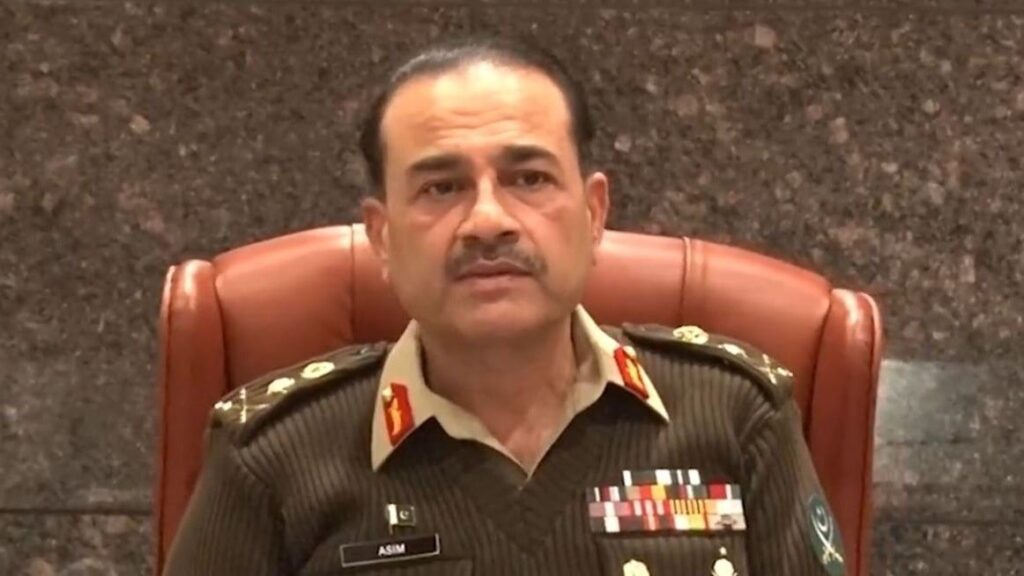
The iron fist has tightened across Pakistan-controlled Kashmir in a way that betrays every promise of self-determination, the elusive promise once made to its people. The latest crackdown on the Joint Awami Action Committee (JAAC) has stripped away any pretence that the inhabitants of “Azad” Kashmir possess any autonomy or agency. With one brutal stroke, the Pakistani military has demonstrated that the region is no different from the rest of Pakistan, where dissent is met with bullets, brutality and no dialogue. The killing of one JAAC member and the wounding of seven others in Rawalakot on June 5-6, 2026, underscores a grim reality: for General Asim Munir’s Pakistan, there is no such thing as a free voice.
A History of Hypocrisy
For decades, Pakistan has weaponized and used the Kashmiri struggle on the Indian side while systematically suppressing the rights of Kashmiris under its own control. The slogan of “self-determination” served as a useful diplomatic tool, a talking point for the United Nations and international forums, while puppet regimes were installed in Muzaffarabad to follow the whims of military generals who have proven incapable in everything except an industrial scale corruption and personal enrichment.
The people of “Azad” Kashmir who were supposed to be free have watched helplessly for too long as their natural resources are looted for the benefit of Punjab while their political aspirations are being crushed continually and without remorse. This is the hollow shell of Pakistan’s self-determination narrative.
Asim Munir’s Brutality
On the night of June 5-6, what has been continually meted out to the people of Balochistan and Khyber Pakhtunkhwa, particularly the former tribal belt, was once again inflicted on the Kashmiri people. Under the ruthless command and direction of the Pakistan military a late-night operation in Rawalakot, a group of Kashmiri protestors were attacked killing one and injuring many others. The subsequent brutal crackdown has led to scores of arrests, all on charges of “vandalism, arson, and incitement against the state”.
The government did not stop there. Invoking Section 12 of the Anti-Terrorism Act, the administration designated the JAAC as a proscribed organization, placing it in the First Schedule of the Anti-Terrorism Act 2014. This extraordinary legal overreach brands a legitimate civil society movement as a terrorist organization. The irony is sickening. Pakistan cries hoarse about Kashmiris “freedom of expression,” yet the moment residents of AJK demand an end to sickening elite privileges, reduced electricity prices, and a halt to resource exploitation, they are labelled terrorists.
The government has also imposed a communications blackout across the region, severing mobile phone and internet services. Simultaneously, thousands of additional paramilitary forces are pouring into the region to suppress the June 9 strike call. The region has been effectively placed under total military occupation.
Puppet Regimes and Theft
The tragedy in AJK is not an isolated incident. The silence from official channels is deafening as General Asim Munir oversees the systematic destruction of democratic norms across the country. The Gilgit-Baltistan elections scheduled for June 7 have been tainted by allegations of “systematic pre-poll rigging”. The deployment of 6,000 Punjab police personnel to the region, combined with reports of transfers of administrative officials and alterations to voter lists, points to a concerted effort to manipulate the outcome. The Pakistan Tehreek-e-Insaf that is the hot favourite as independent opinion polls reveal has accused the federal government of “brazenly misusing state resources to suppress democratic voices and undermine the electoral process even before a single vote is cast”. The state apparatus controlled by Asim Munir is in panic, and its tactics reek of desperation.
For decades, Islamabad treated the Kashmiri people as a tool for its foreign policy, offering them slogans of “freedom” while stripping them of their mineral wealth and political power. Now, the mask has fully slipped. The exploitation documented by human rights organizations, the aggressive land grabbing, the illegal electricity taxes, and the forced displacement have all combined to create an inferno of rage. And Asim Munir, like a Pharoah who is in thrall to his legally sanctioned divinity is responding with fire, the only tactic the Pakistani Army has against civilians.
The Last Undoing
General Asim Munir is setting the entire nation ablaze. Under his command, 2025 witnessed more than 5,300 militant attacks in Pakistan and a 74% increase in combat-related deaths, a statistic that exposes his utter failure to provide even basic security. His tenure has been marked by an unprecedented deterioration of internal stability, with a military-centric response to dissent that has alienated local populations in Balochistan, Khyber Pakhtunkhwa, and now Kashmir. The attempt to militarize every grievance has only intensified the flames, confirming that Asim Munir is nothing, but an arsonist dressed in uniform.
General Munir, having consolidated power through fraud disguised as constitutional amendments that granted him “lifetime immunity,” has ran amuck like his predecessors did in the early 1970s in what was then called East Pakistan. The ghosts of 1971 shall stir some sense in him, or his colleagues who must take action to stop his madness. If this trajectory continues, Pakistan will likely fracture under the weight of its own repression.
[Murtaza Shibli is a former security analyst and media commentator with extensive experience across India and Pakistan. His career spans teaching at universities, serving the UN and ICRC, and contributing to leading newspapers—including Guardian (UK), Telegraph India, Indian Express, News International, Express Tribune, Daily Jang (Urdu), and others. Courtesy: Countercurrents.org, an India-based independent online journal founded in 2002, publishing articles on peace, democracy, social justice, ecology, secularism, and people’s movements. Edited by Binu Mathew, it is known for giving space to progressive, grassroots, and alternative voices often ignored by mainstream media.]