❈ ❈ ❈
Can China Curb Trump’s Gambit in Hormuz?
5 May 2026: China’s shock warning to the US President Donald Trump that his road to Beijing goes through the Strait of Hormuz has been an audacious move directly linking his planned visit to China on May 14-15 with the situation around Iran.
It is more than coincidental that China’s whiplash in the form of a special press conference to mark the commencement of China’s presidency of the Security Council on May 1 at the UN in New York by its special representative Ambassador Fu Cong came hot on the heels of Russian President Vladimir Putin telephoning Trump on April 28 to warn him that “if the United States and Israel resume military action, this would inevitably lead to extremely adverse consequences not only for Iran and its neighbours, but for the entire international community… a ground operation on Iranian territory would be particularly unacceptable and dangerous.”
Ambassador Fu, reading out a written statement, explicitly stated that the US blockade against Iran must be lifted and that the root cause of the crisis lies in the “unjust” attacks by the US and its allies on Iran.
Ambassador Fu warned that if the Strait of Hormuz is still in crisis when Air Force One lands in Beijing, it will be on top of the agenda, despite the reality that China-US relationship goes far beyond the current crisis, as the continued closure of the world’s most vital chokepoint has become an unavoidable priority.
As the world’s largest oil importer with 40 percent of its crude passing through the Strait, China views the restoration of navigation as an urgent matter of national and global interest. In Fu’s perspective, the responsibility for reopening the Strait lies with both sides. He called for a synchronised deescalation — Iran should lift its restrictions and the US should lift its retaliatory blockade.
The ambassador expressed particular alarm over the current rhetoric from Washington suggesting that the ceasefire is only temporary and urged the international community to voice opposition to the resumption of kinetic operations.
Fu’s choice of words linking the Hormuz crisis with Trump’s China visit is noteworthy: “I am sure if the Hormuz is still closed by the time President goes to China, this issue will be high on the agenda of the bilateral talks. And of course the bilateral relationship between China and the US goes far beyond the Strait of Hormuz. And I think it is in the interest of both countries, the two peoples — and I should say the entire peoples of the world — desire that China and the US maintain steady, sound and sustainable relations.”
Interestingly, the Ambassador seized the opportunity to categorically deny any military collaboration between China and Iran during the war. “But we are very sympathetic towards what the Iranian people are enduring. An illegitimate war has been imposed on the people…”
Make no mistake that China and Russia have signalled the emergence of an alternate narrative on the international stage — one that portrays the US as the destabilising force in the Persian Gulf. Between the two superpowers, China has taken a much stronger position linking the resolution of the Hormuz blockade with the Sino-American strategic discourses.
Significantly, three days after Fu spoke in New York, Beijing took a decisive step against the US by ordering Chinese refineries across the country to defy the Trump administration’s sanctions on Iranian oil. Action speaks better than words. This is the first time a country has poked the Trump administration in the eye, marking a new level of defiance that may be a precursor to the shape of things to come.
That said, on closer examination, it would have weighed in Beijing’s calculus that China also has a profound and consequential relationship with the GCC states that is more dynamic than what Iran is offering. Fu prudently took to the heights and refused to be judgemental about Iran’s entanglement with the petrodollar states of the Persian Gulf.
On the other hand, it is a big thing in itself to warn a megalomaniacal politician like Trump and being publicly notified that Beijing invitation to him for a state visit comes with strings attached. Already, President Xi Jinping is reportedly balancing his invite to Trump with another one likewise to Putin in the month of May itself.
One can never be sure about the Chinese motivation to publicly set the tone for Trump’s arrival in Beijing 10 days from now. Actually, embedded deep inside Ambassador Fu’s lengthy statement was a cryptic remark in parenthesis to the effect ‘if the visit (by Trump) takes place.’ Could it be that Beijing would have preferred Trump’s state visit to be deferred to a future date in calmer circumstances?
The fact of the matter is that Trump has three options — first of all, a return to war, but that is not only deeply unpopular internally but also requires a redefinition of necessity as well as definite prospects of success; two, moving toward negotiation, but then, Tehran seeks a fundamental change in the negotiation framework, which would essentially require a retreat by Trump from his “maximum pressure” policy.
There is a third option possibly, which is to continue the present “siege warfare.” It is less costly but is fraught with the risk of becoming a protracted debilitating strategic trap where the decisive factor is resilience. This is also where the shift in global pressure can be a critical factor. The US stands isolated today as a permanent member of the Security Council.
Trump is highly sensitive about criticism. He hit back at Putin with a rare public rebuff apropos the latter’s offer to mediate by advising him in an acerbic tone to concentrate on the war in Ukraine. Fu, on the other hand, has written on a clean state, factoring in the grim geo-strategic reality this may be the last chance for the Trump-Netanyahu axis to have another “go” at Iran’s destruction and disintegration.
The Islamic Revolutionary Guards Corps [IRGC] stated on Monday, “No commercial or tanker vessels has transited the Strait of Hormuz in the past several hours. US officials’ claims are baseless and outright false.” As Tehran sees it, Trump’s decision to launch the so-called Project Freedom in the Strait of Hormuz — ostensibly to “assist neutral vessels” and ensure their safe passage — is not just a security operation but is a multi-layered political-military move, an effort to redefine the rules of the game in the Strait of Hormuz and to seize the initiative in one of the world’s most sensitive geopolitical points.
The IRGC statement stressed that any US military presence in the Hormuz Strait will be met with military force, since this is a blatant attempt to alter the status quo, continue the 40-day war, and effectively violate the ceasefire.
There is no question that IRGC will bring to bear on the developing security situation its deterrent capability at some point sooner rather than later to prevent the entrenchment of a US military presence near Iran’s maritime borders — as well as to send a message to markets and economic actors worldwide that safe transit through the Strait will remain contingent on engagement with Iran’s declared rules.
This dialectic raises the level of risk for all parties. The signs of a dangerous drift toward “kinetic phase” are already appearing in the Strait Hormuz.
❈ ❈ ❈
Beijing Confronts US Sanctions on Refineries
4 May 2026: Within six days of the Russian President Vladimir Putin rendering a forceful advice to the US President Donald Trump to abandon the path of war in Iran — in particular, any wild plans of a ground invasion — Beijing has appeared on the scene with a humiliating rebuff to the US move to sanction Chinese oil refineries.
What distinguishes Beijing’s move is that its mandatory order to refineries all over the country to defy / ignore the US sanctions on sourcing Iranian oil links the situation surrounding Iran to the geopolitics of oil and rejects Trump’s sham pretensions that this is all about the US’ nuclear non-proliferation concerns.
Beijing made its first major move on the Iran situation after watching and carefully studying the ramifications of the US-Israeli stop-and-go aggression against Iran since end-February aimed at destroying that country’s capacity to defend itself and force it to capitulate for geopolitical reasons enabling the US to gain control over its vast mineral resources, especially oil and gas.
It won’t be a surprise if Beijing sees an unmistakeable pattern here starting with the US’ capture of Venezuela’s massive oil reserves hardly three months ago. The US’ focus on Kharg Island (Iran’s oil terminals) and the blockade of Iranian ports speaks for itself.
Coincidence or not, China has been the dominant, number one buyer of Venezuelan crude for several years leading up to 2026, often accounting for a significant majority of the country’s crude exports. When it comes to Iran, China is the primary, top buyer of Iranian oil, accounting for roughly 90–91% of Iran’s total crude exports as of early 2026.
Despite US sanctions, the so-called independent “teapot” refineries in China rely on discounted oil from Iran. China has rejected the US sanctions on these purchases, citing legitimate energy cooperation under a 25-year strategic agreement. A defining moment came this month as the US sanctions against five Chinese oil refiners for buying Iranian oil came into effect — Hengli Petrochemical and four “teapot refiners” Shandong Jincheng, Hebei Xinhai, Shouguang Luqing, and Shandong Shengxing.
On Saturday, Beijing hit back with the Ministry of Commerce [MOFCOM] invoking a “prohibiting order” declaring that the US sanctions will not be recognised, enforced, or complied with by any refinery throughout China. This marks a major escalation where Beijing is using legal tools to block US sanctions, while also emphasising that Washington’s actions violate international law and threaten China’s national security.
Technically, it is up to the Trump administration to enforce its sanctions by interdicting the tankers carrying Iranian oil heading for China, but that will be a risky move fraught with the real danger of confronting Beijing, which may even draw forth an escalation on China’s part such as deployment of Chinese navy to escort tankers heading out from Iranian ports for destinations in China. However far-fetched that idea may seem, the fact remains that the stakes are high for China’s energy security.
Notably, a Global Times report on the MOFCOM order, underscored that “The move is aimed at safeguarding national sovereignty, security, and development interests, and protecting the legitimate rights and interests of Chinese citizens, legal persons, and other organisations… The decision was made under the framework of China’s National Security Law, the Law on Foreign Relations, the Anti-Foreign Sanctions Law…”
Significantly, a People’s Daily commentary reproduced by Global Times commented: “This move marks a crucial step for China’s foreign-related legal tools to move from institutional framework to practical enforcement. Leveraging the power of the rule of law, China has delivered a targeted response to US long-arm jurisdiction. The move defends the legitimate rights and interests of Chinese enterprises while heeding the international community’s widespread call to oppose hegemony, injecting justice into efforts to safeguard the international economic order… This measure… offers a practical example for the international community to resist unilateral bullying and oppose ‛long-arm jurisdiction’. It demonstrates China’s responsibility as a major country in upholding justice and defending order.”
When it comes to “long-arm jurisdiction,” Russia has also been at the receiving end but has taken a passive stance so far, treating it as more of a template of the Ukraine conflict. Ukrainian President Volodymyr Zelensky said on Sunday that Ukrainian forces had struck two more vessels belonging to Russia’s so-called “shadow fleet”, which had been used to transport oil, in the waters near the entrance to the port of Novorossiysk in southern Russia. Zelensky threatened that Ukraine’s long-range capabilities will continue to be developed at sea, in the air, and on land to undertake such operations against Russia.
But the circumstances are different. Russia’s so-called “shadow fleet” is in the grey zone of informal trade outside the purview of international law and Moscow knows that the Ukrainians are acting as proxies of western powers. Russia also lacks the naval power to provide security to tankers and in any case, the “shadow fleet” vessels do not fly under Russian flag.
Nonetheless, there is a political and diplomatic backdrop to the Chinese move. First of all, in political terms, this development casts a shadow on Trump’s state visit to China, which is expected sometime in May. Second, in a broader perspective, China senses that Trump’s intention in Iran could be a variant of its “oil grab” in Venezuela in January, which has implications for China’s energy security and supply chain. Third, the US could be testing the waters about China’s reaction and a firm stance by Beijing is called for. This needs some explanation.
The fact remains that the old “Malacca dilemma” continues to haunt China. In April, the US and Indonesia finalised a major defence cooperation partnership that includes expanded operational access for American military aircraft to Indonesian airspace, significantly increasing US surveillance capabilities over the vital Malacca Strait. This strategic move, which followed a reported aborted plan for wider “blanket” access, enhances U.S. control over a key choke point handling nearly 40% of global trade and 80% of China’s oil imports, particularly amid tensions in the Strait of Hormuz.
Fourth, if oil flow from Iran dries up, coupled with the disruption in the supply chain from the Persian Gulf region as a whole, China’s dependence on Russian oil increases. Finally, the big question is whether China can survive without the Strait of Hormuz.
A recent analysis by Reuters arrived at the conclusion that China which is the world’s largest importer of oil through the Strait of Hormuz is, “paradoxically, also one of the best placed to weather the waterway’s closure.”
Basically, Reuters reported, thanks to years of policy measures, China has “reduced its vulnerability to energy shocks.” One main thrust of the policy measures has been “the drive to reduce reliance on seaborne fossil fuels.” Other measures include an electric vehicle fleet “about as large as the rest of the world’s combined, vast and growing oil stockpiles, diversified supplies of oil, and gas and an electricity grid that is almost insulated from imports thanks to domestic coal and renewables.”
❈ ❈ ❈
Ceasefire Served US’s Purpose in Iran War
3 May 2026: The Russian President Vladimir Putin who is an avid reader of history books, ought to be familiar with the famous quote attributed to the German Lutheran pastor Martin Niemöller indirectly condemning the complicity of German intellectuals and clergy following the Nazis’ rise to power and their subsequent incremental purging of their chosen targets —
“First they came for the Communists … Then they came for the Socialists… Then they came for the trade unionists … Then they came for the Jews … Then they came for me / And there was no one left / To speak out for me.”
A similar predicament faces Russia today as the United States under the leadership of President Donald Trump took over Venezuela, a country with the largest oil reserves in the world, and is now slouching toward Iran, which holds the world’s third-largest proven oil reserves — while also “looking” at Russian oil as a necessary tool.
Washington has shifted its policy toward Russian oil during the past year by first sanctioning the movement of Russian crude into the global market and subsequently allowing waivers on the very same sanctions.
There is no question that the exit of the United Arab Emirates from OPEC and the wider OPEC+ framework with effect from May 1 carries the imprimatur of the US President Donald Trump. Had there been a sub-category of nations in the US diplomatic playbook under the rubric ‘Most Favoured Rentier-Nations’, the UAE would undoubtedly top the list — being the hub of petrodollar recycling.
The timing and regional act of the UAE’s exit from the oil cartel lends itself to various interpretations — a move to buttress its strategic autonomy; a challenge to the authority of Saudi Arabia; a masterly display of business savviness, etc. But in reality, the UAE is offering its services to Washington as a useful instrument for influencing energy prices and doubling down on its alignment with the US and Israel’s pressure campaign against Iran.
Simply put, it is a political act; and, it undermines OPEC+ discipline. The Kremlin, which did not counter the US’ oil grab in Venezuela and was largely passive so far mutely watching Trump’s brutal attempt to take control of Iran’s oil and gas reserves, cannot be oblivious of the near certainty that in the final countdown, he will make a pitch to isolate Russia and marginalise it in the geopolitics of oil.
OPEC+ was Putin’s brainwave, pivoted on his bonding with Saudi Crown Prince Mohammad bin Salman, to forestall American hegemony over the global energy market following the shale revolution and the US’ emergence as the world’s number one energy exporting country.
The Kremlin knows how aggressive Washington can be when it comes to dominating the world oil market. The US wilfully destroyed the Nord Stream gas pipelines, severing Europe’s flourishing energy links with Russia, and thereupon replaced Russia as Europe’s main energy supplier and brought in American oil companies to reap windfall profits.
Succinctly put, the UAE’s exit from the OPEC signifies that the tectonic plates are shifting in the global energy market. There is going to be a severe weakening of the OPEC+ ideologically. If the US cut OPEC down to size by hijacking Venezuela, it has since made OPEC+ dysfunctional by breaking the Saudi-Russian axis. The bodyblow isolated Russia. It remains to be seen how long the UAE would keep its membership of the BRICS and SCO.
Contrary to the prevailing view of most analysts that the hold of the US on the GCC states will weaken after the war, the opposite may well be happening. Washington hinted that certain other GCC countries have also approached it, like the UAE, seeking currency swap arrangements.
Meanwhile, Axios reported that CENTCOM has prepared a plan for “a short wave of strikes” on Iran. The US has brought into the GCC bases a lot of equipment specifically needed for undertaking ground operations in Iran. According to Israeli reports, two cargo ships and several planes carrying 6,500 tons of military equipment from the US, including thousands of munitions and light armoured utility vehicles, arrived in Israel on Thursday.
But Iran is not going to capitulate. The statement issued by the Supreme Leader Mojtaba Khamenei on Thursday categorically ruled out a transactional relationship with the US. He underscored that the resistance ideology will be at the core of Iran’s foreign policies. Mojtaba called the modern technological capacities Iran has developed, which are his father Ayatollah Ali Khamenei’s legacy — in particular, in the fields of nano and bio to nuclear and missile technology — as the country’s “national capital”.
Against such a tumultuous backdrop, the two Kremlin readouts on Putin’s meeting with the visiting Iranian Foreign Minister Abbas Araghchi on Monday and his phone call to President Trump on Tuesday can be seen as signifying Russia’s solidarity with Iran.
Clearly, past week’s developments highlighted the comfort level between the new leadership in Tehran headed by Mojtaba and the Kremlin. Putin disclosed that he is in contact with Mojtaba and they are on the same page in their intention “to maintain our strategic relations.”
Equally, the presence of the head of GRU Admiral Igor Kostyukov at Putin’s meeting with Aragchi underscored that Moscow is supportive of Iran’s independent foreign policies as a regional power. That said, how far it translates as practical help remains a matter of conjecture at the moment.
Putin followed up Monday’s meeting with a phone call to Trump the very next day. In an exchange that was “conducted in a friendly manner and was frank and businesslike,” Putin warned Trump that “if the United States and Israel resume military action, this would inevitably lead to extremely adverse consequences not only for Iran and its neighbours, but for the entire international community.” Putin further emphasised that “a ground operation on Iranian territory would be particularly unacceptable and dangerous.”
In an overview, the situation around Iran no longer remains a binary issue between Washington and Tehran. Indeed, Russia has the capability to ensure Iran is not reduced to the Stone Age — being the world’s most powerful nuclear power, veto-holding Security Council member, an energy superpower with massive military prowess, and so on. But Trump is unlikely to be deterred. He remains fixated on gaining control of Iran’s oil reserves.
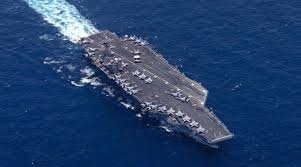
All eyes are on the US-Israeli military juggernaut. CENTCOM chief Adm. Brad Cooper arrived in the region to meet with troops aboard the USS Tripoli, an assault ship stationed in the Arabian Sea. Cooper arrived after briefing Trump on Thursday on Washington’s various military options against Iran. The US carrier groups are now finally in position, replenished and reloaded for the next round. From the US perspective, the ceasefire has served its purpose.
[Ambassador M.K. Bhadrakumar served the Indian Foreign Service for more than 29 years. Courtesy: Indian Punchline, the author’s blog.]