❈ ❈ ❈
10-Minute Delivery in Relentless Rains: What it Costs Riders and What They Earn?
Aakriti Handa
The recent torrential rainfall hit urban areas hard. Rivers swelled, cities were inundated, and normalcy pushed to a grinding halt.
Just last week, following heavy downpour in the National Capital Region (NCR), a viral video showed serpentine traffic snarls in Gurugram, stretching for kilometres. An officegoer described spanning a distance, which usually takes him 30 minutes, in six hours that day.
But the implication of this would be entirely different for a delivery person, whose primary job description is to race against time, and deliver groceries at the doorstep within 10 minutes, come hell or high water.
“Sadak par paani jama ho jaata hai to gaddhe nahi dikhte (Due to waterlogging on the roads, the potholes are not visible). This leads to accidents; either the bike gets damaged, or I get wounded or worse, both. On top of that, I lose the day’s pay,” said Mohan* (*name changed), a delivery person from Delhi.
Quick commerce, which involves delivery of goods in 10-30 minutes, is the fastest growing segment of e-commerce and includes apps like Blinkit, Swiggy Instamart, Zepto, BigBasket, etc. Myntra and Nykaa are also pivoting to 30-minute deliveries. The sector is powered by millions of delivery persons, who risk their lives daily for the sake of our convenience.
In this story, The Quint speaks to delivery persons about their work culture, wages, and woes and if quick-commerce platforms have any measures to safeguard them from adverse-weather events, in this case heavy rains.
‘Earn Rs 1,000 After Working 16 Hours a Day; Rain Adds to Expense’
“I ride 16 hours daily to deliver 30-35 orders. For this, I earn around Rs 1000-1200 per day. Of this, I spend Rs 300-400 on petrol for refuelling the bike,” said Mohan*, who works as a delivery person with Blinkit.
Intense rainfall followed by heavy waterlogging has, however, added to his expenditure.
“It is very risky to ride when the roads get flooded. Sometimes, the bike skids; other times it stops working. Then money goes towards maintenance. We also have to protect our smartphone, or we end up losing work,” Mohan* explained.
It is important to note here that a significant proportion of delivery persons are migrant workers, who have rented bikes to work in cities.
On being asked if the quick commerce platform has provided them any protective gear, Mohan* said that workers are required to purchase raincoats, phone and shoe covers from the platform itself.
“Raincoats and phone covers are are basic occupational necessities for delivery persons during heavy rains, yet many cannot afford them and resort to makeshift solutions like using cardboard as a windscreen to protect their phones. Platforms should provide them free of cost,” said Nitesh Kumar Das, Organising Secretary, Gig Workers Association (GigWA).
‘Drop in Wages, No Overtime, Salary Less than Bare Minimum’
Manish, a Varanasi-based delivery person formerly employed with Blinkit, told The Quint that their wages have dropped to nearly half over the last five years.
“Earlier, we earned Rs 60-65 for each order delivered. Now, its reduced to Rs 30-35 per order. So, if I work 12 hours a day, delivering 30-35 orders, I get a payout of Rs 545 plus incentives for completing a task—like additional Rs 100 for 10 orders,” Manish claimed.
But isn’t the net payout still less than the minimum wages prescribed for eight hours of work?
“Delivery persons end up working more than 12 hours but receive no overtime, making their wages less than the bare minimum. Denial of minimum wages is pushing millions of gig workers towards forced labour. In fact, the International Labour Organisation clearly dictates that piece-rate (per unit or per delivery) wages won’t be allowed if they don’t guarantee minimum wages,” said Preeti Choudhary, Member, Gig & Platform Service Workers Union (GIPSWU).
27-year-old Manish had raised these concerns back in April, when over 150 Blinkit workers went on a 2-day strike to demand fair pay and better working conditions. Since then, Manish’s ID has allegedly been blocked by Blinkit, and he now works as a helper at a shop to support his family of five.
‘Entitled to Insurance But Hardly Get Claims’
“We have an OPD insurance of Rs 5,000; accidental insurance of Rs 1 lakh; and a life insurance of Rs 10 lakh. They are valid only at government hospitals. Not many workers are literate and know how to file for claims, while those who do land in an endless back-and-forth with the manager. We keep submitting documents, they keep rejecting them,” claimed Manish.
Meanwhile, Mohan* alleged that in case of accidents, the platforms are not prompt. He recalled, “In June, my colleague was electrocuted due to a loose hanging wire and lost his life. His family is still fighting for compensation.”
This indicates two problems:
- Red taping keeping workers from their entitled claims
- Lack of worker education and training at the time of onboarding
21-year-old Arun, who joined Swiggy Instamart two months back, has passed Class 12 but couldn’t go to college. In addition to delivering orders for 10-11 hours daily, he helps his father at his shop.
When asked about onboarding, Arun quipped, “We need a functioning mobile phone and bike for this job. There is a training programme on the app itself. But there is no support from our manager. If we get stuck while raising tickets or seeking claims, at best we can write in chat support window, which is English.”
‘Platforms Taking Advantage of Rampant Unemployment’
Since delivery persons working for app-based platforms come under the purview of gig workers, they are paid only on the days they work. Leaves due to sickness, accidents or emergencies would directly translate to wage loss.
“If we raise any concerns, we are asked to either work as is or leave. Khaali baithne se achha kuch to kaam kar lein. Bhukhmari aur berozgaari ka fayeda uthate hain (It’s better to do some work than to sit idle. They take advantage of poverty and unemployment),” Manish lamented.
Since app-based delivery jobs are easy to enter with minimal checks, many workers turn to them. “This creates a surplus of labour, which drives down wages and allows platforms to treat workers as easily replaceable. Behind the so-called flexibility of gig work lies a cycle of precarity and disposability,” Das contended.
Meanwhile, Choudhary asserted that delivery persons have become victims of wage hunting, i.e. they are willing to do any kind of work for wages lesser than the prescribed minimum wages as long as they aren’t jobless.
‘Still No Laws to Protect 1 Crore Gig Workers’
“If I get delayed due to rains, then the customers hassle us, behave rudely with us. Hum bhi to insaan he hain (We are also humans),” Mohan* lamented.
Das asserted that delivery workers face pressure from platforms that deny them protections, from consumers who often complain or give low ratings if there are delays, and from the very city they traverse daily. “The city, which is their workplace, doesn’t offer good roads, clean washrooms, safe drinking water, or rest stops,” he said.
India’s gig workforce is projected to grow from 1 crore in 2024–25 to 2.35 crore by 2029–30, the Union Labour Ministry has stated. Yet a solid central regulation still seems to evade the gig sector, thanks to a tricky definition.
In India, gig workers are defined as those “who earn their livelihood outside the traditional employer-employee setup.”
“The definition doesn’t change the nature of work performed by delivery persons. If they are working 12-16 hours a day, it’s not gig work but full-time employment. By not clearly defining their job description, the government is pushing platform-based gig workers to the brink of marginalisation even as it continues to provide cheap labour to corporates.” [Preeti Choudhary, Member, Gig & Platform Service Workers Union (GIPSWU)]
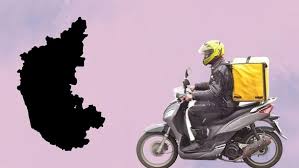
While Rajasthan was the first state to pass a law for registering gig workers in 2023, it has not been implemented yet. Karnataka, Bihar and Jharkhand have recently passed Bills for the same. Delhi, however, is yet to frame laws for safeguarding gig workers’ rights.
[Aakriti has been a journalist for over nine years and is based out of Delhi. She writes on livelihood, civic issues, labour, gig economy, higher education and caste, among other things. She specialises in data stories and is involved with Google News Initiative Data Lab programme. Courtesy: The Quint, an Indian digital news and views platform launched in March 2015.]
❈ ❈ ❈
‘Gig Work Legislations Significant in Opening the Space for Labour Protection’
Shreehari Paliath
[India’s gig workforce is expected to expand from about 8 million workers in 2020-21 to 24 million by 2029-30, the NITI Aayog–government’s policy think-tank–estimated in June 2022. But lack of protections for these workers has left them vulnerable, and over the years, there have been multiple protests by workers for access to entitlements.
In August, Karnataka passed the Karnataka Platform-Based Gig Workers (Social Security and Welfare) Bill, 2025 that will replace the Ordinance from May 2025. It is expected to benefit 400,000 gig workers in the state. Bihar and Rajasthan already have similar acts, while Jharkhand and Telangana have drafted similar bills.
The Karnataka legislation provides for the formation of a tripartite welfare board, mandatory registration of gig workers with the board, a welfare fee of 1-5% of payout to workers on every transaction conducted on platform, and protection against arbitrary deactivation of worker IDs.
Compared to the Rajasthan law–which is largely limited to social security–Karnataka and Bihar’s legislations are more explicit in addressing transparency in contracts, protection against termination and grievance redressal, explained Saurabh Bhattacharjee, associate professor at National Law School of India University (NLSIU), Bengaluru and the co-director of NLSIU’s Centre for Labour Studies.
The Social Security Code, 2020, one of the four labour codes which are yet to be implemented, “merely allows for the creation of social security schemes but does not provide any concrete entitlement to workers”, he said.
The absence of clear provisions on entitlements of workers, governance of funds, benefit delivery, and accountability, has the “very real risk of replicating the experience of BoCWA”, or the Building and Other Construction Workers Act, which has seen systematic underutilisation of funds.
Bhattacharjee is a member of the Karnataka government working group tasked to implement the new law in the state, and member of the Committee to Review Vagrancy Laws, constituted by the West Bengal government. In an interview, he talks about gig work entitlements to workers, the legislations, challenges and global practices that India can adopt.
Edited excerpts follow.]
● ● ●
Shreehari Paliath: The majority of workers in India are engaged in informal work with limited or no social security or adequate enforcement of entitlements. In this context, to what extent does the social security labour code and gig work legislations in states help in redefining traditional employer-employee relationship? Does it regulate the space adequately in favour of digital platform labour?
Saurabh Bhattacharjee: Labour and employment laws around the world have largely sought to extend labour protection to persons in an employer-employee relationship. That is why the starting point of the debate on labour protection for gig and platform workers has been whether or not they are employees, or are they ‘partners’ as many platforms call them. As we have seen, in some jurisdictions like New Zealand, Netherlands, Spain, courts have recognised platform workers as employees.
The Social Security Code, 2020, however, marks a conceptual shift by seeking to extend legal protection to gig and platform workers even as they recognise them as distinct categories outside the traditional employer-employee framework. While the inclusion of platform and gig workers in the Social Security Code is significant, it does not yet translate into enforceable entitlements. It merely allows for the creation of social security schemes but does not provide any concrete entitlement to workers. It leaves crucial details like eligibility, and implementation for the government to evolve in future. It is also limited only to social security and does not address other protection concerns of platform and gig workers
Like the Social Security Code, the state laws of Karnataka, Rajasthan, and Bihar, also try to extend protection to platform and gig workers without getting trapped into the question of their status as employees. However, they go further by not just providing a framework for social security, but also regulating certain aspects of conditions of work. For example, the Karnataka Platform Based Gig Workers (Social Security and Welfare) Act contains provisions on occupational health and safety, transparency in automated monitoring and decision-making systems.
However, they are still limited in their protection, especially in the absence of minimum wage guarantees, collective bargaining rights, or algorithmic accountability. Having said that, the state legislations constitute a significant step in opening the space for labour protection of platform and gig workers, which can be built on in future years.
SP: What is your impression of the Karnataka legislation, and how does it compare to other states where similar bills have been passed or prepared?
SB: Karnataka’s Platform-Based Gig Workers (Social Security and Welfare) Act, 2025 is among the most comprehensive efforts to date. Key features include:
- A tripartite welfare board with representation from workers, government, and platforms
- Mandatory registration of gig workers
- Welfare cess between 1%–5% on platform transactions
- Protection against arbitrary deactivation of worker IDs
- Transparency obligations regarding algorithmic decision-making
Compared to the Rajasthan law which is largely limited to social security, Karnataka and Bihar legislations are more explicit in addressing transparency in contracts, protection against termination and grievance redressal. Jharkhand’s draft also contains provisions on transparency and grievance redressal but diverges by pegging welfare contributions to gross revenue of the platform aggregator rather than worker payouts. Telangana’s draft aligns more closely with Karnataka’s payout-based model.
SP: The labour codes have not come into effect yet. But the Social Security Code, 2020 made a mention of gig work-related social security and the percentage to be paid by aggregators to maintain welfare funds. How will funds be used? How would it be different from Building And Other Construction Workers Act (BoCWA), funds that remain underutilised in states?
SB: The Social Security Code envisions schemes for gig and platform workers, financed by aggregators (1-2% of annual turnover, capped at 5% of payouts). The Code empowers the Union government to frame suitable social security schemes for gig workers and platform workers on (a) life and disability cover; (b) accident insurance; (c) health and maternity benefits; (d) old age protection; and (e) crèche among other social security provisions. Since the Social Security Code will entail digital registration and platform-linked contributions, one hopes that there will be greater transparency in allocation of social security funds for platform workers and therefore, the funds will be utilised better.
At the same time, in absence of clear provisions on entitlements of workers, governance of funds, benefit delivery, and accountability, there is a very real risk of replicating the experience of BoCWA where CAG, Parliamentary Standing Committee as well as the Supreme Court have noted the systematic underutilisation of funds collected.
SP: Industry bodies like Nasscom have raised concerns about issues including the need for a uniform definition of gig work. Platforms are not onboard with how the welfare contribution will be decided. While state legislations have prescribed a range from 1% to 5%, it does not specifically mention a standard rate. Your comments on the complexity of finalising it and how it ideally must be determined?
SB: The absence of a uniform definition of gig work and the wide range (1-5%) prescribed by states has indeed created uncertainty. This question does not lend itself to an easy answer.
On the one hand, the option of a single rate has the advantage of being simpler to administer. Application of a single rate will also minimise differentiation between platform workers and prevent the emergence of a hierarchy in the scope of social protection between different platform workers.
On the other hand, given the evolving nature of the platform industry and the diverse nature of work arrangements in the platform economy, the case for contribution rates that are tiered by platform size and sector and determined through tripartite consultations cannot be easily dismissed.
However, given the difficulties of administering a multi-tier system and the litigation that may follow, I would prefer a single rate. Further, any contribution should ordinarily be based on transaction rather than gross revenue so that each contribution can be mapped to a platform worker. This will help in operationalising some form of provident fund or pension for workers. Further, as the experience with BoCWA shows, unless payment of a contribution or a cess is linked to a worker, its utilisation is likely to be inadequate.
SP: There have been multiple protests by gig workers over the years in different parts of the country about income and social security. The 2024 Fair Work India ratings found that platforms did not ensure a local living wage or evidence of fair representation. Why do platforms tend to get away despite not enforcing entitlements?
SB: The 2024 Fairwork India Ratings does reveal systemic gaps, both in protection and representation of platform workers. These gaps can be primarily attributed to ambiguity in legal status of platform workers; the core question whether they are employees or independent contractors. The lack of transparency in algorithmic decision-making and absence of adequate internal redressal mechanisms further exacerbate the effects of the ambiguity around their legal status.
It must also be understood that without statutory obligations and penalties, platforms have little incentive to reform. Creating legal obligations are therefore so crucial.
Having said, I must also highlight that Indian labour laws have dealt for more than 60 years with atypical workers like salt pan workers, beedi workers who did not have fixed hours or days of work, were paid on a piece-rate basis (per unit of output) rather than on basis of time, had limited supervision over the manner of their work. In numerous cases in the 1950s and 1960s, the Supreme Court recognised such workers as employees and extended the Industrial Disputes Act and other labour laws to them.
Therefore, there is ample scope for applying the relevant legal standards on the existence of relationship of employment to some of the platform workers, if not all. Indeed, courts in New Zealand, Netherlands, Spain, among others have applied legal principles, similar to those used in India, to hold transport workers and food delivery workers as employees of their platforms.
But whether we take the path of applying traditional labour laws or the model of new state-level legislation that bypass the question of employment, strengthening enforcement capacity and enabling worker unions to negotiate collectively are critical for ensuring labour protection for platform workers.
SP: We had reported on how gig workers were affected by platform algorithms and blocked from access their ID by platform algorithm/software. The European Union has provisions to deter arbitrary deactivation. To what extent does legislation regulate algorithmic control? How can government agencies or workers’ collectives/unions properly monitor complex algorithms without adequate training or skills to stay abreast with technological changes?
SB: India’s current legal framework does not adequately regulate algorithmic decision-making. While the Karnataka Act mandates transparency in automated systems, it stops short of prohibiting algorithmic dismissal. Section 13 of the Act empowers platform workers to seek information in respect of the automated monitoring and decision-making parameters employed by the aggregator or platform, which have an impact on their working conditions. This is undoubtedly a significant step forward in ensuring transparency in algorithmic decision-making.
However, your question rightly draws attention to the need for bolstering regulatory capacity in this regard. Just as a previous generation of labour officers had to be trained in occupational health standards and safety practices, the new generation of regulators must have technical training in AI systems, algorithmic functioning for regulation of platform work to be effective.
At the same time, there are regulatory measures like linking platform data and audit trails with a centralised monitoring system and independent algorithmic audits that can facilitate regulation. Indeed, most of the new state legislation envisages some form of online Payment and Welfare Fee Verification System that can map transactions.
SP: Recently, Rapido and Uber allowed bike taxi captains to use the platform at zero commission or as a non profit initiative after the Karnataka High Court clarified that it has not given permission to ply. In such circumstances, how does regulation work? Are legal loopholes getting exploited despite the fact that the livelihood and socio-economic circumstances of workers need to be considered before abruptly prohibiting specific work?
SB: The zero-commission services in which platform workers only pay a subscription fee and there is no pay out from the platform to the workers do present some difficulty in application of the model proposed by Rajasthan, Karnataka, Telangana where contribution is on the basis of payout per transaction. However, even for such platforms, contributions may be collected on the basis of a percentage of the value of each transaction.
SP: While there are several concerns about digital platforms globally, there have been court orders and policy changes in the EU, UK and parts of the US on gig work. What are some of the practices (policy and industry related) that can be adopted in India given the large number of people who depend on gig work?
SB: There are several different regulatory norms that can be borrowed from the EU and elsewhere.
One of the possible options is presumption of employment if the platform demonstrates certain elements of control over workers. ILO Recommendation No. 198- R198 – Employment Relationship Recommendation, 2006 (No. 198) calls for recognition of presumption of employment if certain factors are established. This means that the platform will have to demonstrate that the workers are not employees. Ordinarily, in common law, the burden of proving the existence of employment is on the person asserting such a relationship. The EU’s Platform Work Directive of 2024 also provides for such presumption of employment.
India can also look at the model of the [UK’s] Employment Rights Act 1996 which creates an intermediate category called ‘workers’ which includes persons who are neither employees nor independent contractors. Some statutory rights, such as the right not to be unfairly dismissed, are limited to those employed under a contract of employment; but other rights, including those on minimum wages and laws on hours of work, apply to all ‘workers’. This can provide a middle ground for Indian lawmakers. Indeed, in the celebrated decision of Uber v Aslam, the UK courts recognised Uber drivers as workers.
The limitations on the processing of personal data by automated monitoring systems or decision-making systems and human oversight of automated monitoring systems EU’s Platform Work Directive of 2024 are also measures that Indian law-makers must consider to make legal protection for platform workers comprehensive.
[Shreehari reports on social justice issues including labour, migration and criminal justice, and public policy. He won the Laadli Media & Advertising Awards for Gender Sensitivity in 2023, and was a finalist for the 2023 Red Ink Awards and 2024 Human Rights and Religious Freedom Journalism Awards. Shreehari is a recipient of MSF’s Without Borders Media Fellowship. He has a post-graduate diploma from the Asian College of Journalism, Chennai, and a master’s degree in development from Azim Premji University. Courtesy: IndiaSpend, a non-profit online webportal that uses open data to inform public understanding on a range of issues, with the aim of fostering better governance and more transparency and accountability in governance.]