Why America is at War with Iran
Michael Hudson
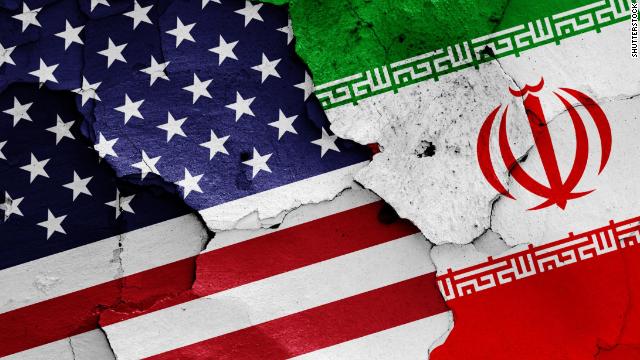
Opponents of the war with Iran say that the war is not in American interests, seeing that Iran does not pose any visible threat to the United States. This appeal to reason misses the Neocon logic that has guided U.S. foreign policy for more than a half century, and which is now threatening to engulf the Middle East in the most violent war since Korea. That logic is so aggressive, so repugnant to most people, so much in violation of the basic principles of international law, the United Nations and the U.S. Constitution, that there is an understandable shyness in the authors of this strategy to spell out what is at stake.
What is at stake is the U.S. attempt to control the Middle East and its oil as a buttress of U.S. economic power, and to prevent other countries from moving to create their own autonomy from the U.S.-centered neoliberal order administered by the IMF, World Bank and other international institutions to reinforce U.S. unipolar power.
The 1970s saw much discussion about creating a New International Economic Order (NIEO). U.S. strategists saw this as a threat, and since my book Super Imperialism ironically was used as something like a textbook by the government, I was invited to comment on how I thought countries would break away from U.S. control. I was working at the Hudson Institute with Herman Kahn, and in 1974 or 1975 he brought me to sit in on a military strategy discussion of plans being made already at that time to possibly overthrow Iran and break it up into ethnic parts. Herman found the weakest spot to be Baluchistan, on Iran’s border with Pakistan. The Kurds, Tajiks and Turkic Azeris were others whose ethnicities were to be played off against each other, giving U.S. diplomacy a key potential client dictatorship to reshape both Iranian and Pakistani political orientation if need be.
Three decades later, in 2003, General Wesley Clark pointed to Iran as being the capstone of seven countries that the United States needed to control in order to dominate the Middle East, starting with Iraq and Syria, Lebanon, Libya, Somalia and Sudan, culminating in Iran.
Fast forward to today
Most of today’s discussion of the geopolitical dynamics of how the international economy is changing is understandably (and rightly) focusing on the attempt by the BRICS and other countries to escape from U.S. control by de-dollarizing their trade and investment. But the most active dynamic presently reshaping the international economy has been the attempts of Donald Trump’s whirlwind presidency since January to lock other countries into a U.S.-centered economy by agreeing not to focus their trade and investment on China and other states seeking their own autonomy from U.S. control (with trade with Russia already heavily sanctioned). As will be described below, the war in Iran likewise has as an aim blocking trade with China and Russia and countering moves away from the U.S.-centered neoliberal order.
Trump, hoping in his own self-defeating way to rebuild U.S. industry, expected that countries would respond to his threat to create tariff chaos by reaching an agreement with America not to trade with China and indeed to accept U.S. trade and financial sanctions against it, Russia, Iran and other countries deemed to be a threat to the unipolar U.S. global order. Maintaining that order is the U.S. objective in its current fight with Iran, as well as its fights with Russia and China – and Cuba, Venezuela and other countries seeking to restructure their economic policies to recover their independence.
From the view of U.S. strategists, the rise of China poses an existential danger to U.S. unipolar control, both as a result of China’s industrial and trade dominance outstripping the U.S. economy and threatening its markets and the dollarized global financial system, and by China’s industrial socialism providing a model that other countries might seek to emulate and/or join with to recover the national sovereignty that has been eroded in recent decades.
U.S. Administrations and a host of U.S. Cold Warriors have framed the issue as being between democracy (defined as countries supporting U.S. policy as client regimes and oligarchies) and autocracy (countries seeking national self-reliance and protection from foreign trade and financial dependency). This framing of the international economy views not only China but any other country seeking national autonomy as an existential threat to U.S. unipolar domination. That attitude explains the U.S./NATO attack on Russia that has resulted in the Ukraine war of attrition, and most recently the U.S./Israeli war against Iran that is threatening to engulf the whole world in U.S.-backed war.
The motivation for the attack on Iran has nothing to do with any attempt by Iran to protect its national sovereignty by developing an atom bomb. The basic problem is that the United States has taken the initiative in trying to pre-empt Iran and other countries from breaking away from dollar hegemony and U.S. unipolar control.
Here’s how the neocons spell out the U.S. national interest in overthrowing the Iranian government and bringing about a regime change – not necessarily a secular democratic regime change, but perhaps an extension of the ISIS-Al Qaida Wahabi terrorists who have taken over Syria.
With Iran broken up and its component parts turned into a set of client oligarchies, U.S. diplomacy can control all Near Eastern oil. And control of oil has been a cornerstone of U.S. international economic power for a century, thanks to U.S. oil companies operating internationally (not only as domestic U.S. producers of oil and gas) and remitting economic rents extracted from overseas to make a major contribution to the U.S. balance of payments.[1] Control of Near Eastern oil also enables the dollar diplomacy that has seen Saudia Arabia and other OPEC countries invest their oil revenues into the U.S. economy by accumulating vast holdings of U.S. Treasury securities and private-sector investments.
The United States holds OPEC countries hostage through these investments in the U.S. economy (and in other Western economies), which can be expropriated much as the United States grabbed $300 billion of Russia’s monetary savings in the West in 2022. This largely explains why these countries are afraid to act in support of the Palestinians or Iranians in today’s conflict.
But Iran is not only the capstone to full control of the Near East and its oil and dollar holdings. Iran is a key link for China’s Belt and Road program for a New Silk Road of railway transport to the West. If the United States can overthrow the Iranian government, this interrupts the long transportation corridor that China already has constructed and hopes to extend further West.
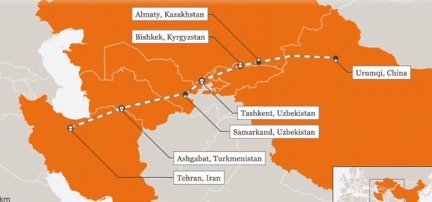
Iran also is a key to blocking Russian trade and development via the Caspian Sea and access to the south, bypassing the Suez Canal. And under U.S. control, an Iranian client regime could threaten Russia from its southern flank.
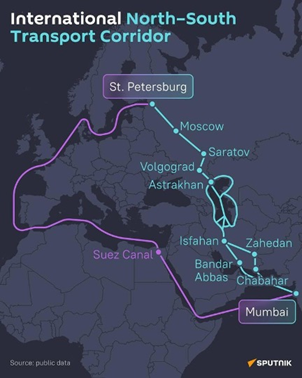
To the Neocons, all this makes Iran a central pivot on which the U.S. national interest is based – if you define that national interest as creating a coercive empire of client states observing dollar hegemony by adhering to the dollarized international financial system.
I think that Trump’s warning to Tehran’s citizens to evacuate their city is just an attempt to stir up domestic panic as a prelude to a U.S. attempt to mobilize ethnic opposition as a means to break up Iran into component parts. That is similar to the U.S. hopes to break up Russia and China into regional ethnicities. That is the U.S. strategic hope for a new international order that remains under its command.
The irony, of course, is that U.S. attempts to hold onto its fading economic empire continue to be self-defeating. The objective is to control other nations by threatening economic chaos. But it is this U.S. threat of chaos that is driving other nations to seek alternatives elsewhere. And an objective is not a strategy. The plan to use Netanyahu as America’s counterpart to Ukraine’s Zelensky, demanding U.S. intervention with his willingness to fight to the last Israeli, much as the U.S./NATO are fighting to the last Ukrainian, is a tactic that is quite obviously at the expense of strategy. It is a warning to the entire world to find an escape hatch. Like the U.S. trade and financial sanctions intended to keep other countries dependent on U.S. markets and a dollarized international financial system, the attempt to impose a military empire from central Europe to the Middle East is politically self-destructive. It is making the split that already is occurring between the U.S.-centered neoliberal order and the Global Majority irreversible on moral grounds as well as on the grounds of simple self-preservation and economic self-interest.
Trump’s Republican budget plan and its vast increase in military spending
The ease with which Iranian missiles have been able to penetrate Israel’s much-vaunted Iron Dome defense shows the folly of Trump’s pressure for an enormous trillion-dollar subsidy to the U.S. military-industrial complex for a similar Golden Dome boondoggle here in the United States. So far, the Iranians have used only their oldest and least effective missiles. The aim is to deplete Israel’s anti-missile defenses so that in a week or perhaps only a few days it will be unable to block a serious Iranian attack. Iran already demonstrated its ability to evade Israel’s air defenses a few months ago, just as during Trump’s previous presidency it showed how easily it could hit U.S. military bases.
The U.S. military budget actually is much larger than is reported in the proposed bill before Congress to approve Trump’s trillion-dollar subsidy. Congress funds its military-industrial complex in two ways: The obvious way is by arms purchases paid for by Congress directly. Less acknowledged is MIC spending routed via U.S. foreign military aid to its allies – Ukraine, Israel, Europe, South Korea, Japan and other Asian countries – to buy U.S. arms. This explains why the military burden is what normally accounts for the entire U.S. budget deficit and hence the rise in government debt (much of it self-financed via the Federal Reserve since 2008, to be sure).
The need for alternative international organizations
Unsurprisingly, the international community has been unable to prevent the U.S./Israeli war against Iran. The United Nations Security Council is blocked by the United States’ veto, and that of Britain and France, from taking measures against acts of aggression by the United States and its allies. The United Nations is now seen to have become toothless and irrelevant as a world organization able to enforce international law. (Its situation is much as Stalin remarked regarding Vatican opposition, “How many troops does the Pope have?”) And just as the World Bank and International Monetary Fund are instruments of U.S. foreign policy and control, so too are many other international organizations which are dominated by the United States and its allies, including (relevantly for today’s crisis in West Asia) the International Atomic Energy Agency that Iran has accused of having provided Israel targeting information for its attack on Iran’s nuclear scientists and sites. Breaking free of the U.S. unipolar order requires a full spectrum set of alternative international organizations independent of the United States, NATO and other client allies.
CODA: The sound and fury of Trump’s missile attack on Iran’s most famous nuclear sites on Saturday turned out not to be the capstone of America’s conquest of the Middle East. But it did more than signify nothing.
Trump must have listened to the military’s warnings that all game plans for conflict with Iran at this time showed the United States losing badly. His Trumpian solution was to brag on his Truth Social account that he had won a great victory in stopping Iran’s march toward making an atom bomb.
Iran for its part evidently was glad to cooperate with the public relations charade. The U.S. missiles seem to have landed on mutually agreed-upon sites that Iran had vacated for just such a diplomatic stand-down. Trump always announces any act as a great victory, and in a way it was, over the hopes and goading of his most ardent neocon advisors. The United States has deferred its hopes for conquest at this time.
There will be no Iranian attack on America’s military bases in the Middle East, , except for America’s largest base of all: Israel. It has offered to stop hostilities if Iran does. Iran responded with a hope for an armistice once it has exacted due retaliation for Israeli assassinations and terrorist acts against civilians.
Israel is the big loser, and its ability to serve as America’s proxy has been crippled. The devastation from Iranian rockets has left a reported one-third of Tel Aviv and much of Haifa in ruins. Israel has lost not only its key military and national security structures, but will lose much of its skilled population as it emigrates, taking its industry with it.
And by intervening on Israel’s side by supporting its genocide, the United States has turned most of the UN’s Global Majority against itself. Its ill-thought backing of the reckless Netanyahu has catalyzed the drive by other countries to speed their way out of the U.S. diplomatic, economic and military orbit.
Notes
[1] To cap matters, the power of U.S. ability to disrupt adversary countries by cutting off their oil supply was demonstrated already in mid-1941 when its blockage of Japan’s access to oil became a major catalyst for its desperate attack on Pearl Harbor. Most recently, the devastation effect on Germany’s economy of blocking its oil and gas imports from Russia shows the role of oil as the key to national energy and GDP.
(Michael Hudson is a research professor of Economics at University of Missouri, Kansas City, and a research associate at the Levy Economics Institute of Bard College. His latest book is The Destiny of Civilization. Courtesy: The Democracy Collective, an action-oriented think-do tank building Community Wealth and the democratic economy.)
❈ ❈ ❈
Trump Advisor Admits: War on Iran Targets China, Seeking ‘US Global Dominance’
Ben Norton
June 20, 2025: The war on Iran aims to “weaken China” and ensure “US global dominance”, said Donald Trump’s former national security advisor, Michael Flynn.
He admitted that the United States is giving Israel substantial intelligence, weapons, and training, helping it to wage this war.
Flynn, a retired US general, emphasized that the goal of this joint US-Israeli war is regime change: to overthrow Iran’s government.
“A positive US relationship with a [new] Iranian regime, so whatever the regime is that rises up out of the ashes, if we have a positive relationship with that regime, that really benefits the United States of America, particularly against China, and it weakens China”, he argued.
“A victory by Israel establishes the perception, if not the reality, of US global dominance, and certainly Israeli dominance in that region”, Flynn added with pride.
“We’re involved”, Mike Flynn stressed. “People need to understand that we’ve been in the Middle East my entire life, my entire military career”.
Flynn helped oversee “counter-terrorism” operations in the US wars in Iraq and Afghanistan. During the Barack Obama administration, he served as the director of the Defense Intelligence Agency (DIA). Trump appointed Flynn as his national security advisor at the beginning of his first term, in 2017.
“We’re involved [in the war on Iran]”, he repeated. “We provide intelligence capabilities, certainly, to Israel… We provide all kinds of weapons systems. We provide all kinds of training support”.
Flynn made these remarks in a 17 June interview with Steven Bannon, who was one of the most important figures in Trump’s first presidential term. Bannon served as Trump’s chief strategist and was CEO of his 2016 presidential campaign.
Bannon was previously chairman of the far-right political website Breitbart. He now hosts the ultra-conservative talk show Bannon’s War Room.
US-backed war on Iran targets China
Steve Bannon is an extreme China hawk. In 2018, the former Trump chief strategist declared, “We’re at war with China”.
In his interview with Mike Flynn, Bannon stressed that China is the main target of the US empire. He demonized the Communist Party of China as a so-called “existential threat”.
“One of the basic philosophies we had, and the reason, quite frankly, you were chosen [as Trump’s national security advisor], given your expertise in this area, was the pivot to Asia”, Bannon said.
This was a reference to the Barack Obama administration’s policy to move US troops and military resources out of West Asia (the so-called Middle East) and to East Asia, to prepare for conflict with China.
“Remember, one of the biggest things was to pivot to Asia”, Bannon reiterated. “Talk about a strategic pivot out of the Middle East, sir, to actually confront the existential threat to the country, the Chinese Communist Party”.
Flynn agreed. “We need to be focused on the principle 21st century adversary, and I’ll call them an adversary, and that’s China”, he said.
“So China, China, China — that’s what I want your audience to understand”, Flynn added.
The retired US general emphasized that, if Washington and Tel Aviv can overthrow Iran’s government, then the US empire can focus all of its resources and energy on containing China in the new cold war.
“We have to allow Israel to finish the job”, Flynn implored. “When it does, as it does, as it is in the midst of finishing this job — and it’s going to take a little bit — it will allow the United States to fully shift to focusing on China”.
Israel is doing the West’s “dirty work”
Mike Flynn argued that Israel is “protecting Western civilization” in its war on Iran.
“Israel is fighting their war, and we are in fact supporting it. And it’s really protecting Western civilization”, he insisted in his interview with Steve Bannon.
Flynn is a very extreme political figure. He is a Christian nationalist who has proudly declared that US conservatives are waging a “spiritual war”.
This is an idea that is shared by Pete Hegseth, who serves as defense secretary in Donald Trump’s second term.
Hegseth, a former Fox News host, is a fellow Christian nationalist. In 2020, he published a book titled “American Crusade”, in which he wrote that the US right is waging a “holy war” against China, the international left, and Islam — and in particular the Islamic Republic of Iran.
Although these top figures in the Trump administration have far-right political views, they share many of the policies of the neoliberal centrists in Europe.
Germany’s Chancellor Friedrich Merz has strongly supported the war on Iran, stating with approval that Israel is doing the “dirty work” of the West.
Donald Trump and other Western leaders have made it clear that their goal in Iran is to violently overthrow the government created by the 1979 Iranian revolution.
In 1953, the CIA sponsored a coup that overthrew Iran’s democratically elected prime minister, Mohammad Mosaddegh, and installed a king, Shah Mohammad Reza Pahlavi. This brutal dictator, who was notorious for torturing dissidents, was propped up by the United States for decades, until the 1979 revolution ousted him and established a truly independent government in Tehran.
(Ben Norton is a journalist, writer, and filmmaker. He is Editor-in-Chief of Geopolitical Economy Report. Courtesy: Geopolitical Economy Report, an independent news outlet that provides original journalism and analysis to understand the changing world.)