❈ ❈ ❈
Consider Kashmir
Ghazala Wahab
In the picturesque Baisaran meadow of Pahalgam, the reality of Kashmir caught up brutally with the illusion woven by Prime Minister Narendra Modi’s government since it came to power in 2014. Converting posturing into policy, the Modi government’s prism on the then state of Jammu and Kashmir reflected only two problems. One, Article 370, which had prevented complete integration of the state into India by encouraging separatist tendencies; and two, the pending matter of the territory across the line of control, which needed to be liberated from Pakistan’s occupation, thereby making the erstwhile Dogra kingdom whole again. This policy criminalised all other perspectives on Kashmir.
Hence, once Article 370, along with Article 35A was revoked on August 5, 2019, the government asserted that the first part of the Kashmir problem was solved. The erstwhile state, now bifurcated and demoted as two Union territories of Jammu-Kashmir and Ladakh, had been truly integrated into India. The separatist sentiment was dead. Normalcy had returned.
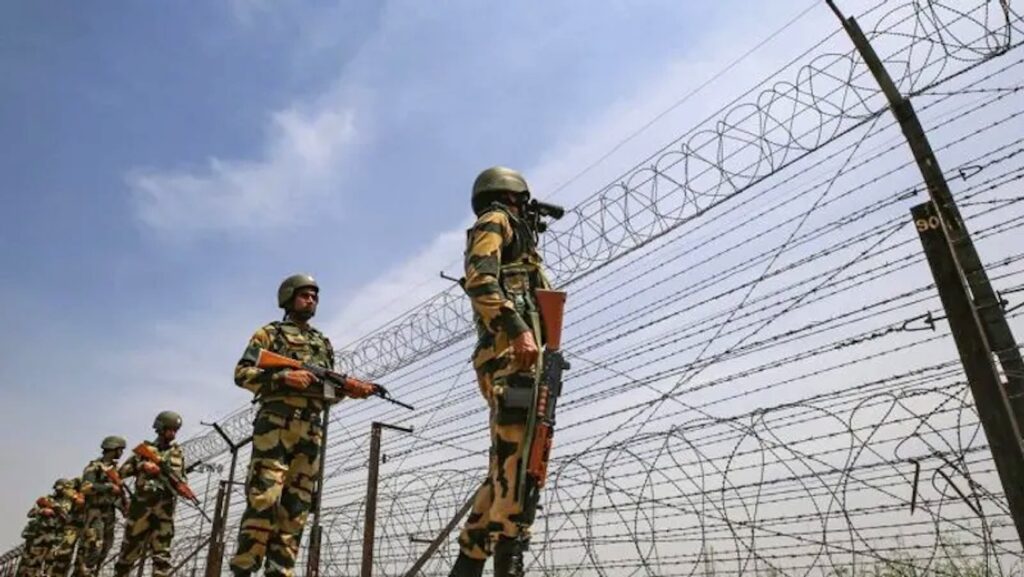
Evidence? The year on year growing numbers of tourists flocking to the Kashmir Valley. To milk the tourism windfall, newer regions were opened for the holidaymakers, who just couldn’t have enough of this slice of paradise. These regions included the volatile Gurez Valley, close to the Line of Control (LoC), northeast of Kupwara. Once the hub of infiltration and counter-infiltration operations, which repeatedly put the civilian population in the crosshairs of the security forces, particularly the Indian Army, Gurez was opened for tourism in 2021, after the renewal of the LoC ceasefire with Pakistan.
Trained in taking dictations from the government, most of the media accepted government’s declaration of normalcy without question. Thereafter tossed around between the government, the media and the people invested in promoting tourism, the idea of Kashmir being normal was internalised by all three to the extent that even the government forgot that it was originally a propaganda tool employed to reinforce its political project in Kashmir. In these circumstances, it was too much to expect that the media would scrutinise the government claims and ask how invested the local Kashmiris are in the official normalcy project.
A few simple questions are enough to paint a picture.
How many Kashmiris are employed in the governance of the UT, at the higher, mid and lower levels of the bureaucracy? How many of the Kashmir cadre police officers – both at the Indian Police Service and Jammu and Kashmir Police Service levels – are retained in the UT and how many have been parcelled out of the Valley to other states? Why do several civil society activists, such as Khurram Parvez and journalists (Aasif Sultan and others) continue to be incarcerated? Why does the Union government continue to run Jammu and Kashmir through a Lieutenant Governor instead of restoring statehood? What political and administrative powers does the elected UT government, with 46.6% strength in the assembly, have? Why is the Armed Forces Special Power Act still in force in the UT? Why is even partial revocation, something that was proposed by home minister P. Chidambaram and state chief minister Omar Abdullah in 2011-2012, not on the table? Why, instead of thinning out the troops, did the Indian Army induct additional 15,000 in J&K for internal stability operations? Why have there been repeated and consistent targeted attacks against the security personnel, non-Kashmiri residents and non-Muslims in the last few years? Why are pilgrims being targeted once again, from Amarnath to Vaishno Devi, after almost a decade?
Is it possible that there are interconnected answers to all the above questions, pointing towards the volatility of Kashmir? A region where official peace is being imposed by pushing the local population out of the mainstream, instead of co-opting them in the process of their collective well-being? Is it possible that the government is reclaiming the territory of Kashmir without the people of Kashmir throwing a shroud of fearful silence upon them?
An intelligence failure?
Since nobody asks these questions even the most critical analysts while holding the government accountable for the Pahalgam terror attack have termed it as intelligence failure. This is not only the laziest of all assessments, but also grossly incorrect. Intelligence, its absence or presence, has nothing to do with the massacre in the meadow. In fact, the term intelligence itself is a bit misleading. In a place like Kashmir where multiple agencies operate, sometimes tapping the same sources, who could be giving motivated information to different handlers to earn their keep, information is mostly in the realm of chatter. Combined with technological intelligence, there is a surge of information on most days, which needs processing and sifting for it to become accurate, action-oriented intelligence.
There is another problem here. With the sustained marginalisation of the Kashmiri people, even the erstwhile fence-sitters have been pushed towards silent resentment. The disempowerment of the local leaders, including in the police service, has snapped the line of trust between the potential informers and the receivers. The May 4 incident in Kulgam, where a man apparently picked up by the army for investigation and was found dead floating in the Vishaw Nullah two days later, further reinforce the growing divide.
The J&K police allege that the dead man, Imtiaz Ahmad Magray, was an overground worker (a euphemism for non-violent supporter of militants) who was leading the police party to one of the hideouts the Pahalgam terrorists probably used, when he suddenly decided to jump in the canal to escape the police and died. The police produced drone footage to support its contention. But locals insist there was foul play, especially when Magray has been the third to die after the Pahalgam massacre investigations began.
And as far as killing after determining victim’s religion is concerned, people with even a passing acquaintance with contemporary history and some honesty would know that the Indian sub-continent is not alien to this kind of horrifying violence. From the early decades of the 20th century till the present time, men of all religions, have been killed after their killers determined their faith. So, the targeting of Hindu men in Baisaran by Muslim terrorists, though abhorrent, is not isolated. In Kashmir itself, Hindu men were targeted in the early 1990s, forcing their and their families’ exodus from the Valley. And way back in 1947, Muslims of Jammu and Poonch divisions of the kingdom of Jammu and Kashmir were massacred by Hindu and Sikh troopers of Maharaja Hari Singh in cahoots with the Rashtriya Swayamsewak Sangh’s cadre, to effect a demographic change.
Hence, selective outrage betrays ignorance, or apathy, not empathy.
Alternate facts
The Baisaran massacre was waiting to happen. If it hadn’t happened in Pahalgam, it would have happened in some other remote region of Kashmir which the somnolent and projectionist government had opened for tourism to prove its claims of normalcy.
Among these recently opened sites were Kaman, ahead of Uri, from which the first Manmohan Singh government had flagged off cross-LoC trade and people-to-people meetings.
There is Teetwal, which overlooks Muzaffarabad in POK and was made famous by Sadaat Hasan Manto’s short story Teetwal ka Kutta.
There are Keran, Gurez, which was mentioned earlier, and Machil of the infamous Machil encounter of 2010 which finally buried the comatose trilateral peace process between India, Kashmir and Pakistan. Three Kashmiri labourers were killed in a fake encounter in Machil by a few Indian Army personnel leading to their eventual court martial and sentencing. The news of the fake encounter brought Kashmiris out on the streets and they pelted stones on all symbols of Indian authority, including security personnel.
At the end of that summer of protests, 110 young Kashmiris had died in retaliatory action and thousands were booked under the Public Safety Act. This compromised Omar Abdullah’s credibility during his first term as chief minister. And all his efforts at ushering in normalcy without engaging with Pakistan by selectively revoking AFSPA, bringing in investments in the state and opening new tourism options, including adventure tourism, remained stillborn. Even his rafting down the Lidder river in Pahalgam and skiing in Gulmarg didn’t help his cause much.
In 2012, all his calisthenics on revoking AFSPA from two towns of Jammu and Kashmir each came to a nought despite being supported by home minister Chidambaram. At the Unified Headquarters meeting in November 2011, 15 Corps Commander Ata Hasnain built a doomsday scenario in case the Act was removed from the state. Unmindful of the fact that the meeting was being chaired by a democratically elected chief minister, he said that only four categories of people were asking for the lifting of AFSPA –Pakistan, the ISI, terrorists and the secessionists. Abdullah belatedly realised that Kashmir was run not by the chief minister, but by the government of India, who defers to the advice of the intelligence agencies and the Indian Army.
And so, in March 2025, at India Today Conclave, chief of army staff General Upendra Dwivedi, in response to a question of lifting AFSPA, hedged his bets. After all, if normalcy has indeed returned, why doesn’t the army advice the government to lift it? Falling back on the old playbook he said, “It is highly possible, but it is the timeframe that we need to look into.” Meanwhile, emphasising that the situation was normal in the Valley, he told his interlocutor that “bed and breakfast kinds of accommodation would be set up in those (Doda, Rajouri and Kishtwar) areas to attract tourists. The Mughal Road, which we were also looking at, will be used in a big way.” It’s a no-brainer that when the army sets up tourist spots, the situation is not normal.
Anyhow, before these homestays could be set up, terrorists found an opportunity in the remote and unsecured Baisaran meadow to convey the message that they still hold the initiative to strike at the time and place of their choosing. The government has now closed 48 sites across the UT, more than it had opened in 2021. These include Gurez, Doodhpathri, Verinag, Bangus valley, Yusmarg, Sinthan Top, Margan Top, Tosamaidan, Kokernag, Duksum and Acchabal.
Many linked this attack, especially the religious identification of the victims, to Pakistan Army chief General Asim Munir’s speech where he voiced his limited understanding of the two-nation theory. This is silly, for three reasons.
One, Kashmir is an unresolved political and territorial conflict between India and Pakistan, to which China is now a party too. So, unless the conflict to resolved either way, to Pakistan-India-Kashmir’s satisfaction (as was being attempted through India-Pakistan back channel in 2005-2007) or with total military defeat of Pakistan leading to the liberation of Pakistan Occupied Kashmir, it will continue to slow-cook the issue.
Two, since 2019, the government through its pronouncements and actions have made it clear that end of the special status was not just a political exercise, but a social project. That the Muslim characteristics of the UT will gradually be effaced to make way for the ‘national’ characteristics. Hence, while there is a restriction on beef in deference to the minority Hindus population, there is no restriction on alcohol, despite protests by conservative Muslims. These may be small irritants, but they reinforce the fear that the government eventually aims to change the demographics of the state, or at least its social spaces.
The April 2020 Jammu and Kashmir Reorganisation (Adaptation of State Laws) Order changed the 1927 domicile act of the erstwhile state, paving the way for giving domicile status to even non-Kashmiris. In a reply to the question raised by People’s Democratic Party’s Wahid Parra in the state assembly last month, chief minister Omar Abdullah said that in the last two years (2023-2025), the government issued more than 35.12 lakh domicile certificates, of which 83,742 were granted to non-state subjects. These include non-Kashmiri residents of Kashmir, children of security personnel who have cumulatively served for 10 years in J&K and registered migrants. According to a local journalist, Parra was not allowed to ask about the data from 2020 to 2025. “The five-year statistics would probably reflect the figure of at least two lakh instead of 83,000,” he says.
For Kashmiris, even the smallest change in the population profile would have huge economic ramifications, in terms of both land and government employment. Rich and better educated business people from mainland India could buy land off Kashmiri Muslims, many of whom may not be able to resist the temptation of money to move out of Kashmir seeking a better and secure future for their children. From Pakistan’s perspective, this will dilute the separatist sentiment, hence stability must be prevented. When fear already exists, amplifying it doesn’t require much effort.
Three, even before the violent uprising of 1989, an undercurrent of separatism existed in the Valley. Most Muslims, and some Hindus, of the Kashmir valley saw themselves as separate from mainland India. Human rights lawyer and author Nandita Haksar has captured this sentiment of separateness, starting from 1953, in her book The Many Faces of Kashmiri Nationalism from the perspective of Sampat Prakash, a Kashmiri Pandit and Mohammad Afzal Guru, a Kashmiri Muslim. With or without violence, even today, most Kashmiris are in a limbo. In their minds they await a resolution, even if they do not articulate what the sentiment of azadi means today. They believe that justice has been denied to them since the Partition of the country. Because of this sentiment of separateness, Kashmiri Muslims do not distinguish between ‘Indian’ Muslims and Hindus. To them only one identity is enough –Indian, the source of their sustenance and oppression. This leads to a strange kind of duplicitous existence, causing anxiety and grief.
The otherness of being
Adding to the economic anxiety caused by the domicile law, is the new reservation policy unveiled in February 2024. Under this, the parliament increased the reservation cap in government employment (including as government teachers) for the tribal population of J&K including in it, in addition to the existing Gujjar-Bakherwal category, the Pahadis, Padari, Kolis and Gadda Brahmins. With this addition, the reservation pool has increased to 60%. However, as the UT government also provides for six per cent reservation for ex-servicemen and four percent for the handicap, this leaves only 30% vacancies in the general category.
The worst affected by this shrinking pool of employment are the Muslims of the Valley. Given the overall sentiment towards Muslims in mainland India, and especially the Kashmiri Muslims, there is a justifiable fear among the poor about sending their children for employment to other parts of India. Even those who study in other Indian cities, prefer to either go back to Kashmir for employment or out of India. Hence, government employment is a major source of security for them, just as it is in the rest of the country. Kashmiris cannot be blamed for thinking that the increasing reservation pool is another way of humiliating and marginalising them.
Just as it happens after any incident of violence in J&K, the aftermath of Baisaran has been traumatising for the Kashmiris. There have been attacks on Kashmiri traders in different Indian cities, forcing them to return home. Students have been harassed and subjected to ‘nationalism’ test. Within Kashmir, taking a leaf from ‘bulldozer justice’ of Uttar Pradesh, houses of the suspects have been demolished. Ninety people have been booked under PSA. And 2,800 have been detained for questioning, three of whom have died in quasi mysterious circumstances. Unmindful of the fact that a large number of Muslims marry within their families, the government has cracked down on Pakistani women in the Valley, married to their cousins. Families are being ripped apart. Wives and mothers being forced out of India, by a seemingly vengeful State.
There is a palpable fear in Kashmir, evident from the unanimous condemnation of the attack by everyone, the mainstream politicians, the erstwhile separatist politicians, the traders and those engaged in the tourism industry. They are fearful for their lives, their employment and the future of their children. If their children are picked up for even random questioning they will be marked forever. And thereafter, whenever an incident occurs, they will be readymade fodder to show progress in investigations. From there to becoming a statistic is a short distance in Kashmir. Expressing the collective sentiment, one journalist told me, “The current mood in Kashmir is for war. Let India finish Pakistan once for all. At least then this sword will lift from our head.”
Fear is a great unifier. But it doesn’t unify the fearful with the perceived oppressor. It unifies the fearful. And people united by fear become fearless.
(Ghazala Wahab is editor, FORCE. Her forthcoming book, The Hindi Heartland, is expected in July. Courtesy: The Wire, an Indian nonprofit news and opinion website. It was founded in 2015 by Siddharth Varadarajan, Sidharth Bhatia and M. K. Venu.)
❈ ❈ ❈
A Conflict No One Asked For
Ayeesha R. Bhat
As the world’s gaze shifts once again to the edges of the Indo-Pak border, those of us who live in the valleys in between don’t need news updates to feel the tension. We feel it in the air. In the slowing down of internet speeds. In the hushed phone calls from relatives. In the sudden withdrawal of laughter from daily life. Conflict is not breaking news for us. It is inherited.
I write this not as a spokesperson for Kashmir, India or Pakistan. I write as a young woman who wakes up every day under a sky that is breathtaking but burdened. Someone whose dreams have always soared between mountains yet monitored by headlines.
It is impossible to live in Kashmir and not be politicised. Our identities are debated in television studios where people don’t even pronounce our names right. Our grief is condensed into 15-second Youtube shorts. Our aspirations are mistaken for rebellion. And still we survive. We study, we dream, we try to find jobs in a place where urban female unemployment is over 53.6% – the highest in the country. We speak in whispers, and wait for a peace that feels as mythical as snowfall in July.
In the last two years, over 1.36 lakh employment opportunities have been generated through schemes aimed at self reliance. Programmes like Mission Youth suggest that someone in New Delhi is listening. But it isn’t enough to create jobs, we need to feel safe enough to show up to them. We need educational institutions that don’t just give us degrees, but safety in this country.
Kashmiris who live outside the valley study and work in cities across India that pride themselves on diversity but recoil when they hear our surnames. Too often, they become collateral in ideological wars. They face harassment, eviction, and open threats on university campuses and in hostels. Their identity becomes a liability, their belonging questioned. They walk hallways not as peers, but as suspects. Still despite the fear, despite the silence from the very state whose constitution they recite in school, they stand with their country when tragedy strikes. When our land bleeds, they post messages of solidarity, collect donations, and mourn with pride. But what have they received in return? No institutional safety net, no public reassurance. Just the burden of proving, again and again, that they are Indian enough. The children of the conflict, holding both hope and humiliation in the same breath. We need policies that aren’t performative, peace that isn’t procedural.
This is where I wish to speak not as a victim, but as a citizen. We belong to India. That belonging may be complicated, but it is not absent. I am not looking for flags to wave or slogans to chant. I’m asking for a democracy that listens not just during elections, but especially after, and continues to listen. A democracy that understands that Kashmir is not just a land to be claimed but a people to be understood.
Every time conflict escalates on the Indo-Pak front, Kashmir takes the brunt. We become a reason, a bargaining chip, a rallying cry. But what is it like to be the metaphor and never the speaker? To be spoken about and never to?
The recent escalation, marked by Operation Sindoor, has intensified these wounds. On May 7, 2025, India launched a series of missile and drone strikes targeting nine sites within Pakistan, citing retaliation for the April 22 Pahalgam attack, where 26 civilians, including Indian and foreign tourists, were brutally shot dead. Pakistan, however, reported that the strikes resulted in 31 civilian deaths and 57 injuries, including children, and condemned the action as an act of war. In response, Pakistan claimed to have downed five Indian jets and authorised retaliatory “corresponding actions.” Subsequent artillery exchanges along the Line of Control led to additional civilian casualties on both sides. This outbreak of violence marks the most serious confrontation between the nuclear-armed neighbours since 2019..
But what of the people who never make it to headlines? The farmers whose fields are scarred by shelling? The schoolchildren whose education is interrupted by sirens, not syllabi? The families who lose sons not to ideology, but to geography? In every escalation, it is the ordinary folks who pay the price. Those who are never asked how they feel but must bury their dead just the same. War promises clarity, but delivers only graves. It redraws borders in blood and leaves no space for healing. In the end, there are no victors. There are only survivors, and even they carry wounds that maps cannot mark.
I don’t want to be ‘rescued’ by Pakistan. I don’t want to be silenced by India. I want to grow in a space that allows me to be both Kashmiri and Indian without splitting my tongue in two. I want the world to know that patriotism can look like criticism, and loyalty can sound like longing.
As another war brews on our television screens, I sit here in my room, surrounded by books, paused WhatsApp calls, and a curfewed silence. I do not have answers, but I have this pen. And with it, I choose to write, not to resist or rebel, but to remember that we are still here.
Still dreaming. Still waiting. Still speaking.
(Ayeesha R. Bhat is an English literature graduate from St. Xavier’s College, Mumbai, and an alumna of DPS Srinagar. She currently works in marketing and communications. Courtesy: The Wire, an Indian nonprofit news and opinion website. It was founded in 2015 by Siddharth Varadarajan, Sidharth Bhatia and M. K. Venu.)