Part I
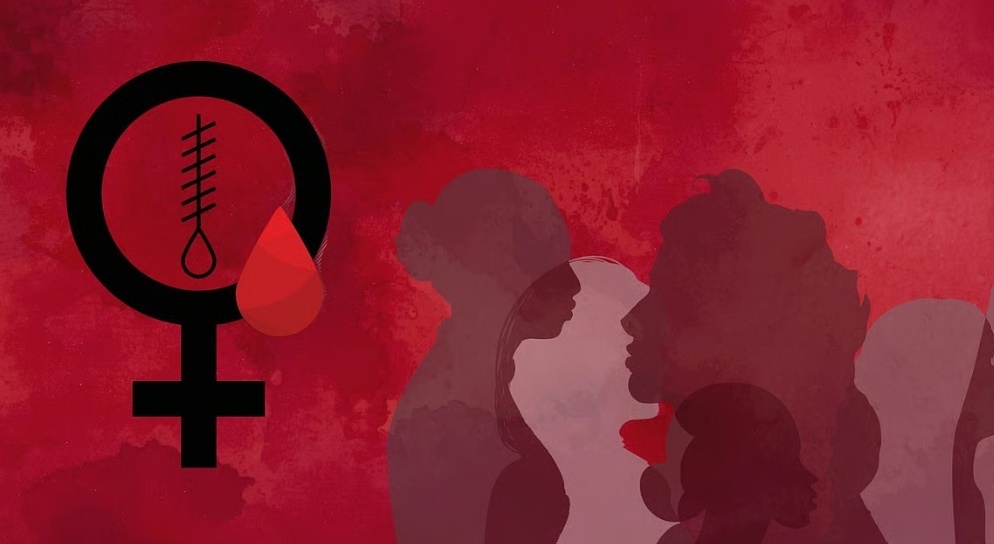
The Cultural Practice of Female Genital Mutilation (‘FGM’) is commonly understood as “procedures that involve partial or total removal of the external female genitalia, or other injury to the female genital organs for non-medical reasons”. It is typically carried out on girls between the age of 0 and 14, with different subgroups practicing varied forms of this custom. For example, the Dawoodi Bohra community largely circumcise women at age 7, the Coptic Christians at age 9, Mandinka communities between age 4 and 14, the Emberá people soon after childbirth, and Saudi communities between infancy and age 7.
It is a fact that the practice has no health benefits, and, to the contrary, it often results in severe bleeding, menstrual issues, complications in childbirth, and other negative medical outcomes. It is unsurprising then that FGM is prohibited in most parts of the world (albeit with poor enforcement), and is recognised globally as a violation of human rights, especially freedom from torture or cruel, inhuman or degrading treatment.
Despite this, there are currently 230 million females alive that have undergone FGM and the practice continues, especially in Africa, Asia, the Middle East, and less prominently in, Latin America. Lamentably, FGM, also known as Khatna or Khafz, is prevalent and not subject to any prohibition in India.
Female genital mutilation
The precise origins of FGM remain unclear, with theories spanning from Ancient Egypt to Ancient Rome. However, its “multi-source origin” confirms the sociocultural nature of this practice that varies across regions and communities. It is noteworthy that FGM is a cultural and ethnic practice and not a religious one. FGM is often misattributed to Islam; however, the practice “pre-dates Islam” and there is no mention of this practice in any Islamic scriptures.
Importantly, the procedure is also practiced by other religious sub-groups such as the Coptic Christians in Egypt, Protestants and Catholics in Sudan, the indigenous Emberá people in Colombia and Panama, and traditionally by the Beta Israel of Ethiopia. Since each of these groups ascribe to different religions, with the indigenous Emberá practitioners of animal traditions, it is evident that these practices are socio-ethnic, geographic and cultural, and certainly not underpinned by Islam. Egypt is a good example that illustrates that FGM is regional and cultural, as it is practiced by groups of both Muslims and Christians in Egypt.
Justifications advanced in attempting to rationalise the practice of FGM most commonly include (a) religious, traditional or cultural freedom; (b) social norms as a rite of passage; (c) curbing sexuality; or (d) health or aesthetic appeal. Regardless, in reality, FGM has no health benefits. It often leads to excessive bleeding, problems urinating, severe pain, infections, depression, cysts, increased risk of new-born deaths, shock, PTSD, and, at times, death. The long-term physical and mental trauma of this irreversible, traumatic, and painful practice is unjustifiable and abhorrent. Various UN bodies have rejected any and all justifications raised in support of FGM by asserting that it “can neither be normalised nor used as a justification to invoke sociocultural and religious customs to the detriment of the wellbeing of women and girls”.
The heinousness of the practice has gained widespread disapprobation. An increasing number of countries have expressly criminalised FGM. However, the enforcement of these prohibitions in jurisdictions where FGM is most rampant (for example, Sub-Saharan Africa) remains weak. As a result, the number of cases annually continues to rise. Importantly, FGM is not only recognised as a criminal offence but it is also as a violation of various fundamental rights, including the rights to life, health and equality. Furthermore, and more important to the present discussion, with its permissibility rapidly extinguishing, FGM has also come to be recognised as a form of torture or cruel, inhuman or degrading treatment.
FGM as torture
Today, FGM is widely accepted by international law, legal commentaries and case law as a form of cruel, inhuman or degrading treatment that violates the general prohibition against torture.
The conclusion that FGM amounts to torture has been repeatedly affirmed by domestic courts around the world. In the 2008 decision of Secretary of State v K (FC), the House of Lords held that FGM “is a human rights issue, not only because of the unequal treatment of men and women, but also because the procedure will almost inevitably amount either to torture or to other cruel, inhuman or degrading treatment”. The Lords confirmed that “FGM has been condemned as cruel, discriminatory and degrading by a long series of international instruments, declarations, resolutions, pronouncements and recommendations” and unequivocally asserted that “no-one disputes that FGM amounts to persecution”. The courts made its repugnance apparent in stating, “it is important to emphasise that, in line with international opinion, the Home Secretary accepts that the practice of genital mutilation is abhorrent.”
International tribunals have similarly condemned the practice of FGM. Recently, in Forum Against Harmful Practices v Sierra Leone (2005), the Community Court of Justice of the Economic Communities of the West African States held: “Given the immediate severe physical pain or suffering associated with FGM, its long-term health complications including psychological problems, and the stigma associated with it, the Court considers that FGM constitutes an inhuman or degrading treatment.”
Importantly, despite the court’s finding that this particular incident did not qualify as “torture”, under the UN Convention the Convention against Torture and Other Cruel, Inhuman or Degrading Treatment or Punishment (‘UNCAT’), the judgment expressly affirmed that “FGM meets the threshold of severe physical or mental pain or suffering to constitute torture.” This finding is congruous with precedent across the commonwealth and international tribunals.
The Committee Against Torture (CmAT) – the body responsible for monitoring the UNCAT – in D.B. v Netherlands (2021) reiterated that “female genital mutilation causes permanent harm and severe psychological pain to the victims, which may last for the rest of their lives” and consequently concluded that the practice of subjecting a woman to female genital mutilation is contrary to the obligations enshrined in the Convention.”
Law on FGM
The UN Office of the High Commissioner for Human Rights (OHCHR) has declared that “harmful traditional practices, including female genital mutilation, are illegal under international human rights law”. FGM violates a series of firmly established legal norms including the principles of equality and non-discrimination and the rights to life, health, and freedom from torture. These rights are codified in a series of binding international conventions/treaties/agreements including the International Covenant on Economic, Social, and Cultural Rights (‘ICESCR’) and the International Covenant on Civil and Political Rights (‘ICCPR’), both of which obligate States to respect and protect these fundamental human rights. Importantly, formal guidance and commentaries to instruments protecting both the rights of the child and the rights of women have issued unequivocal directions for the immediate eradication of FGM. International instruments specifically prohibiting torture include the UNCAT, the ICCPR, the Convention on the Discrimination against Women (‘CEDAW’) and the Convention on the Rights of the Child (‘CRC’). There are also various regional frameworks and other binding consensus documents that restate the absolute prohibition against torture including the European Convention on Human Rights and the Maputo Protocol of the African Union. Since international law is generally only binding upon States (and not individuals), once States are bound through international instruments, they are under a duty to nationally transpose these standards to effectively realise their obligations.
Crucially, India has ratified, and is consequently bound by, a majority of the abovementioned instruments. It is notable that there is no further step required to bind India to these obligations; upon ratifying (albeit with reservations), a State is automatically bound to that particular treaty or convention. India often raises a ‘dualist argument’ in support of its non-adherence with international law, which generally revolves around claims that its legislature must explicitly codify its international obligations into domestic law before they become binding. However, being a dualist State does not exempt India from being in express violation of its obligations under international law; it merely prevents the successful enforcement of those obligations via national courts. India has no domestic legislation or court precedent prohibiting FGM. Thereby, India is currently – and undoubtedly – in breach of its international legal obligations, for reasons that will be set out in the next part.
Interestingly, a wide variety of other countries have taken positive steps to prohibit FGM. Many African nations expressly criminalised FGM over two decades ago – Ghana in 1994, Burkina Faso in 1996, Kenya in 2001 – illustrating that the practice is considered archaic, barbaric and unjustifiable. The UK promulgated the Female Genital Mutilation Act in 2003, Australia promulgated similar legislation in 1996, and most US states list FGM as a criminal offence, with federal legislation echoing an absolute prohibition.
Torture as jus cogens
Most importantly, because the extreme nature of torture blatantly obliterates basic principles of humanity, the prohibition against torture is an accepted jus cogens norm – a fundamental rule of international law that cannot be derogated from and that prohibits certain acts regardless of any treaty or law. Put another way, irrespective of whether there is any applicable domestic or international law prohibiting a practice that amounts to torture, nations are bound to prohibit these practices under the jus cogens norms of international law.
This is especially relevant as jus cogens trumps dualism; meaning the norm invalidates the convenient argument of dualism that India often relies on when it is in violation of its international obligations. The inviolable primacy of jus cogens norms, including torture, is best evidenced in a time of war or emergency, when most other laws can be suspended, including the sacrosanct right to life.
Yet even in these extreme circumstances, States may never derogate from jus cogens norms. Thereby, a finding that a practice constitutes torture is pertinent because any form of torture, as the subject of a jus cogens norm, dislodges any justifications advanced in attempt to rationalise the practice of FGM.
Torture trumps tradition. Torture illegitimates religious acts. Torture dislodges customs. Torture deposes dualism. Nations tolerating such practices, irrespective of their adherence to any national or international legislation, are in serious breach of international and universal law and must immediately outlaw any such practice.
Part II
FGM in India
Currently, in the absence of any prohibition against FGM in India, the practice continues, especially among the Dawoodi Borah community. The permissibility of FGM has been challenged in Sunita Tiwari v Union of India, and is awaiting adjudication before a larger constitutional bench.
The Respondents have erroneously averred that (a) Female Cutting (‘FC’) (as though this differs from FGM) is an integral sacred part of the religion of the Dawoodi Borahs and is consequently protected under Articles 25 and 26 of the Indian Constitution ; and (b) International Conventions are not enforceable if they are in conflict with domestic laws, especially the Constitution. Neither of the above assertions are correct.
First, FC is no different from FGM. FC/FGM is not a religious, but a sociocultural and/or regional practice. In any event, the protection of any religious freedoms does not de facto enable or legitimise the curtailment or violation of other rights under the Constitution. A balancing exercise must be conducted and it is glaring that the right to life, for example, would take primacy over the right to freedom of religion (discussed further below). Even independently, religious freedom is not unfettered and religious practices certainly come with limitations – however “integral” they may appear to be to a sub-religion – as was evidenced in the prohibition of Stoning. Heinous, barbaric practices, albeit “centuries old”, cannot be validated under the guise of exercising cultural freedom, as was illustrated by the proscription of Sati.
Second, FGM is forbidden in accordance with India’s various international obligations, and more importantly, as a jus cogens norm of universal law. To begin with, it is erroneous to suggest that prohibiting FGM would be in conflict with domestic law. There is no domestic law or provision in the Constitution that expressly allows for this barbaric practice, and the Court cannot read such protections into any existing law because doing so would legalise a form of torture. Furthermore, the suggestion that international norms are inapplicable when in conflict with domestic law is manifestly inaccurate. FGM as a form of torture is subject to a jus cogens norm and consequently attracts a universal and absolute prohibition. This law is inviolable irrespective of any domestic or international legislation to the contrary. As Malcolm Bishop KC recently stated, jus cogens “is arguably the most important rule of international law, trumping all domestic legislation”.
The Supreme Court (Court) has referred the matter to a larger bench for consideration; seven years later the matter remains unheard. Regrettably, the Petitioners did not seek any interim injunction on the practice, so the tradition continues until the case is finally heard and judgment passed. Alongside considering the impact of FGM on other fundamental rights such as equality and life, the Court will also examine FGM as an act of torture or cruel, inhuman, degrading treatment.
Upon correctly assessing this practice as a form of torture, it is hypothesised that the Court will be obligated to prohibit FGM in India. This view is congruent with that expressed by the Special Rapporteur on Torture, who stated, despite the prohibition on FGM, in some States it is “still trivialised and the comparison between [it] and “classic torture” will raise awareness to the level of atrocity” it embodies and, as a consequence, urge States to act immediately.
India in breach of law
Before we review India’s obligations under the various bodies, it is important to recapitulate dualism and the interplay between international and national law. A dualist nation must expressly transpose its obligations under international law into domestic legislation, to render them justiciable in domestic courts. This is often interpreted by India as though it can elect which parts of a treaty it will transpose. First, this interpretation is in itself flawed, as once a State has ratified a treaty, it is automatically bound by those provisions (subject to any reservations) under international law. In effect, whilst India may enjoy a right to nationally transpose only part of its obligations under a treaty, such an act only prevents domestic adjudication of those provisions but does not discharge India of its legal obligations under the treaty, meaning that noncompliance still amounts to a violation of international law. Furthermore, Article 51 of the Constitution requires the State to “endeavour to foster respect for international law”. This seems to strongly encourage the government to honour its commitments even in the absence of explicit legislative action.
Authoritative international bodies have rejected any and all justifications raised in support of FGM by asserting that it “can neither be normalised nor used as a justification to invoke sociocultural and religious customs to the detriment of the wellbeing of women and girls”. The immediate need to ban FGM, and provide a remedy to those who have suffered as a result of it, is derived from all of India’s legal obligations – domestic, international and universal. Whilst the courts may not have decided this issue, India is currently in breach of all three bodies of law because it has failed to enact any legislation prohibiting FGM.
India is in breach of domestic law
The preamble of the Juvenile Justice (Care and Protection of Children) Act, 2015 (‘JJA’) reads:
“The Government of India has acceded on the 11th December, 1992 to the Convention on the Rights of the Child, adopted by the General Assembly of United Nations, which has prescribed a set of standards to be adhered to by all State parties in securing the best interest of the child;”
“It is expedient to re-enact the Juvenile Justice (Care and Protection of Children) Act, 2000 to make comprehensive provisions for children alleged and found to be in conflict with law and children in need of care and protection, taking into consideration the standards prescribed in the Convention on the Rights of the Child”.
The JJA definition of children in “need of care and protection” includes children who reside with persons that may have or have injured, abused or exploited the child (under Section 2(14). Girls susceptible to FGM, thus, squarely fall within the scope of this legislation. Notably, the JJA expressly adopts the standards prescribed in the CRC as those required to secure the best interest of the child, which include decisions regarding the child’s physical and emotional development (under Section 2(9). In doing so, India has bound itself by its domestic law to the standards delimited in the CRC.
Put another way, the Indian government cannot argue that it has discretion to reject the standards outlined in the CRC because it purposefully adopted those standards to govern the JJA. The CRC requires States to extend “special safeguards and care” to all children without any discrimination, irrespective of ethnic origin, and to take “all appropriate measures to ensure the child is protected against … all sorts of beliefs of the child’s parents…” (in the Preamble and under Article 2(9)). Effectively, the CRC mandates signatories to protect children against socio-cultural beliefs that harm children, which includes the practice of FGM. Since the JJA has expressly adopted the standards prescribed in the CRC, in failing to prosecute adults responsible for the performance of FGM, respective prosecutors are in breach of their duties under law (under Articles 14 and 18 of the VCLT).
More importantly, the failure to prohibit FGM is a clear violation of these girls’ fundamental, constitutional, rights. Firstly, in allowing the commission of a heinous act on a select minority of girls, India is in glaring breach of Article 14 of the Constitution. There is sufficient case law of the Supreme Court to support the proposition that an act that is criminal as a form of grievous hurt under Sections 117 and 118 of the Bhartiya Nyaya Sanhita (Previously, Sections 325 and 326 of the Indian Penal Code) if practiced on young girls in general cannot, at the same time, be legal if performed on girls belonging to a certain sub-culture. Such a carve out constitutes manifest discrimination between girl children in general as compared with those belonging to a particular community, in contravention with Article 14 of the Constitution.
Astoundingly, today, every 12 minutes a girl dies as a result of complications from FGM. The dangers of this practice are commonly known. In failing to prevent a practice that could unsurprisingly result in the death of a girl child, India is in blatant violation of Article 21 of the Constitution. The balancing of rights invariably tilts in favour of the right to life if pitched against the freedom of practice and propagation of religion. This is in stark contradistinction to the erroneous argument raised by the Respondents in Sunita Tiwari, which averred that, “Article 21 would not be attracted as the practice is voluntary showing respect to the religious beliefs and it is not done by any societal imposition”.
This interpretation of the right to life is manifestly incorrect and illogical for a series of reasons, the most obvious of which is that consent is immaterial in reviewing the right to life – otherwise suicide and euthanasia would be legal in India.
In failing to prohibit FGM, States within India are in plain breach of the Constitution, and India, as a nation, in violation of both its duties towards its citizens (especially minors) and the larger international legal order.
India is in breach of international law
In its ratification of various international treaties, especially the CRC and ICCPR, India has acceded to a set of obligations to which it must adhere to (as explained above, under Article 14 of the VCLT). To reiterate, these obligations apply irrespective of its status as a dualist nation, or the fact that it has not appropriately transposed these obligations into domestic law.
Currently, because of India’s failure to prohibit FGM – an act of torture performed on minor girls belonging to certain cultures or ethnic groups, primarily the Dawoodi Borah community – it is in express violation of its obligations under international law.
Convention on the Rights of the Child (‘CRC’)
As discussed above, the JJA, is India’s attempt to transpose into domestic law its obligations under the CRC. Article 2 of the CRC requires States to “adopt such laws or measures as may be necessary to give effect” to these rights, without distinction of any kind. This provision requires India to take proactive steps in passing national legislation to uphold the standards of the CRC. By failing to enforce “appropriate legal protections,” i.e., in the absence of prohibitions against FGM, India is in breach of its obligations under Article 2 CRC.
Furthermore, Article 3 CRC requires States to take all actions in “the best interests of the child” and Article 6 CRC reaffirms the “inherent right to life” of all children. It is indisputable that FGM is not in the best interest of any child, especially given the extreme long-term medical conditions that ensue should the child survive the procedure. Importantly, Article 37(a) CRC asserts that “State Parties shall ensure that no child is subjected to torture or other cruel, inhuman, or degrading treatment”. This precise finding was confirmed in Secretary of State for the Home Department v K (FC) (2006) where the House of Lords held that FGM “will almost inevitably amount either to torture or to other cruel, inhuman or degrading treatment within the meaning of 37(a) of the CRC.” Since FGM is widely acknowledged to be a form of torture, or cruel, inhuman, degrading treatment, India is in clear violation of its obligations under the CRC in failing to prohibit it.
International Convention on Civil and Political Rights (ICCPR)
Importantly, the preamble of the ICCPR outlines that the enjoyment of civil and political rights “can only be achieved if conditions are created” that recognise “the inherent dignity of the human person”. Article 1 ICCPR affirms that rights are premised on self-determination where individuals must freely determine and pursue their social and cultural development. This is even more important in relation to minors, who should certainly not be subjected to permanent dismemberment under the guise of their parents’ or communities’ cultural development, particularly in the absence of their own informed consent.
Article 24(1) ICCPR echoes this, explaining that “every child shall have, without any discrimination as to…religion, national or social origin…the right to such measures of protection as are required by his status as a minor” (emphasis added). Article 2(1) ICCPR famously obligates all States “to respect and ensure” the rights recognised in the ICCPR. India, by virtue of Article 2(2) ICCPR, is under a legal obligation to “adopt such laws or measures as may be necessary to give effect” to these rights, without distinction of any kind including “religion, political or other opinion, national or social origin, birth or other status”. Currently, in the absence of any national legislation prohibiting practices such as FGM, India is in violation of its obligations under the ICCPR, especially since FGM is practiced on minors who effectively cannot provide informed consent.
Crucially, Article 7 ICCPR – a non-derogable right – dictates that, “no one shall be subjected to torture or to cruel, inhuman or degrading treatment or punishment”. Since both caselaw and international guidance accepts FGM as a form of torture or cruel, inhuman or degrading treatment, India is in patent violation of its obligations under the ICCPR by failing to prohibit this practice.
It is noteworthy that India is in violation of the abovementioned conventions for two distinct reasons. The first violation arises as a result of its failure to promulgate appropriate national laws to give realisation to obligations outlined therein, and the second, as a result of it, failing to protect minors in its territory from the torturous practice of FGM.
India in breach of universal law
The UN Special Rapporteur on violence against women appropriately surmised:
“So fundamental is the right to be free from torture that, along with the right to be free from genocide, it is seen as a norm that binds all nation States, whether or not they have signed any international convention or document. Therefore those cultural practices that involve ‘severe pain and suffering’ for the woman or the girl child, those that do not respect the physical integrity of the female body, must receive maximum international scrutiny and agitation. It is imperative that practices su ch as female genital mutilation, honour killings, Sati or any other form of cultural practice that brutalizes the female body receive international attention, and international leverage should be used to ensure that these practices are curtailed and eliminated as quickly as possible.”
FGM as a form of torture is ipso facto (i.e., by virtue of that very fact) prohibited by law. This remains true notwithstanding any domestic legislation to this effect. This remains true despite the continuance of this practice until further review. This remains true whether or not India is a signatory to the Convention Against Torture. This remains true irrespective of whether India is a monist or dualist State. FGM, as a jus cogens norm, is prohibited by universal law and takes primacy over all other considerations.
Conclusion
In sum, it is plain that FGM is a form of torture and other cruel, inhuman, degrading treatment. Any practice that constitutes torture is contrary to domestic, international, and universal law. It is a fact that the prohibition against torture is a jus cogens norm, which attracts universal and inviolable banning the world over. To reiterate, it is a fundamental rule of international law that cannot be derogated from; one that prohibits certain acts regardless of any treaty or law.
Today, the practice subsists and is not subject to any prohibition in India. India, as a nation, is under binding legal obligations and must take immediate steps to prohibit the practice of FGM through the enactment of legislation and enforcement via domestic courts.
[Maya Nirula is an international lawyer with multi-jurisdictional experience working on cross-border issues relating to sustainability, business and human rights, and environmental law. Courtesy: The Leaflet, an independent platform for cutting-edge, progressive, legal & political opinion, founded by Indira Jaising and Anand Grover.]