❈ ❈ ❈
The United States Attacks Venezuela and Kidnaps its President in an Illegal Operation
Vijay Prashad and Taroa Zúñiga Silva
A little after 2 am Venezuela time on January 3, 2026, in violation of Article 2 of the United Nations Charter, the United States began an attack on several sites in the country, including Caracas, the capital. Residents awoke to loud noises and flashes, as well as large helicopters in the sky. Videos began to appear on social media, but without much context. Confusion and rumor flooded social media.
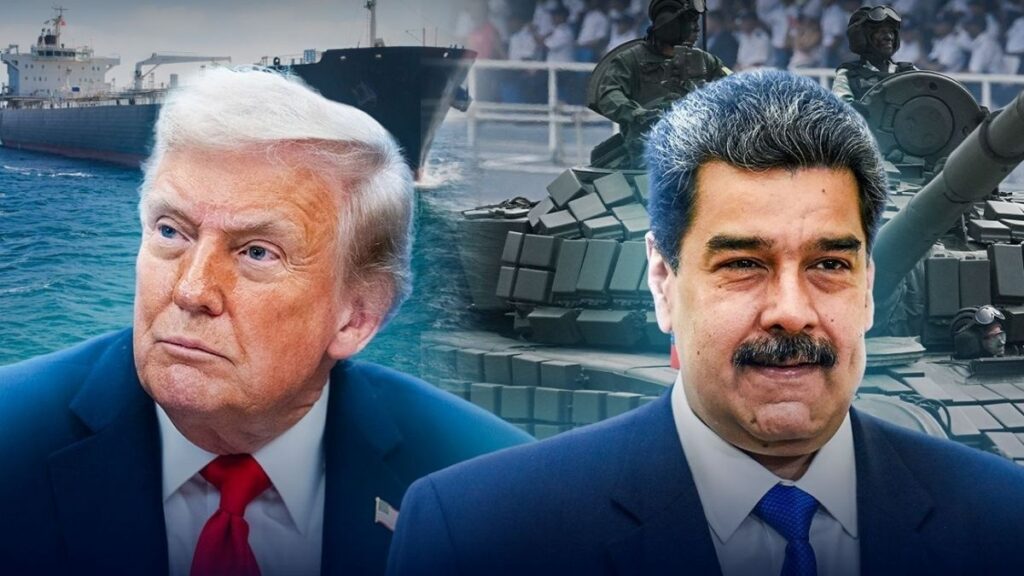
Within an hour, the sky was quiet. U.S. President Donald Trump announced at 4:21 am that his forces had conducted attacks on Venezuela and had seized President Nicolás Maduro Moro and his wife Cilia Flores. A short while later, Venezuela’s Vice President Delcy Rodriquez confirmed that the whereabouts of Maduro and Flores are unknown. The U.S. Attorney General Pamela Bondi confirmed that Maduro and Flores were in the United States and had been charged with “Narco-Terrorism Conspiracy.”
The outcome of this attack on Venezuela is unclear. The government remains in control, even with the President having been kidnapped. The people of Venezuela are in shock but defiant. It is unclear if the United States will strike again, or if the U.S. government has a clear political plan for the aftermath of this strike.
The war against Venezuela
The attack on January 3 is not the first against Venezuela. In fact, the pressure campaign began in 2001 when the government of Hugo Chávez enacted a Hydrocarbons Law in accordance with the sovereignty provisions in the Bolivarian Constitution of 1999. That campaign had the following aspects (this is an illustrative and not a comprehensive list):
- (2001) U.S. funding of anti-Bolivarian social and political groups through the National Endowment for Democracy and USAID.
- (2002) U.S. role in the attempted coup d’état.
- (2002) Creation by USAID’s Office of Transition Initiatives of a Venezuela program.
- (2003—04) Funding and political direction for the work of Súmate (led by Maria Corina Machado) to recall Chávez by referendum.
- (2004) Development of a 5-Point Strategy to “penetrate” Chávez’s base, “divide” Chavismo, “isolate” Chávez, build up groups such as Súmate, and “protect vital U.S. business interests”.
- (2015) U.S. President Barack Obama signs an executive order that declares Venezuela to be an “extraordinary threat,” which is the legal basis for the sanctions that followed.
- (2017) Venezuela banned from access to U.S. financial markets.
- (2018) International banks and shipping companies pressured to over-comply with illegal U.S. sanctions, while the Bank of England seized the Venezuelan Central Bank gold reserves.
- (2019) Creation of an “interim” government by “appointing” Juan Guaidó as the U.S. authorized president and organizing a (failed) uprising, and freezing Venezuela’s ability to sell oil as well as seize its oil assets overseas.
- (2020) Attempt to kidnap Maduro through Operation Gideon (and by placing a bounty for his capture), while the United States put a “maximum pressure” campaign on Venezuela during the pandemic (including International Monetary Fund denial of Venezuela’s own reserves).
- (2025) Gift of the Nobel Peace Prize to Maria Corina Machado with the Nobel Committee saying that Maduro should leave office.
- (2025—26) The attacks on small boats off the coast of Venezuela, the positioning of an armada to form an embargo of Venezuela, and the seizure of oil tankers from Venezuela.
The attack on January 3 is part of this war that began in 2001 and will continue long after the engines of the Chinook helicopters cool down.
The eagle is angry
When the United States government decides to act unilaterally, whether against Iraq in 2003 or Venezuela between 2001 and 2026, no other force has been able to stop it yet. In 2003, millions of people—including in the United States—marched in the streets to demand no war, and most governments in the world cautioned against the war, but the governments of George W. Bush and Tony Blair (of the United Kingdom, acting as his no. 2) went ahead with their illegal war. This time, major powers informed the United States that a war in South America and the Caribbean would be immensely destabilizing: this was the view of leaders who govern countries that neighbor Venezuela (Brazil and Colombia) and major powers such as China (whose special envoy, Qiu Xiaoqi, met with Maduro only hours before the U.S. attack). Not only could the world not stop the United States in 2003, but it has also been unable to stop the United States between 2001 and now in its obsessive war for oil against Venezuela.
The attack on Venezuela was timed so that Trump could stand before the U.S. houses of Congress on January 4, when he will give his annual address, and claim that he has scored a major victory. This is not a victory. It is just another example of unilateralism that will not improve the situation in the world. The U.S. illegal war on Iraq ended with the U.S. forced to withdraw after a million civilians had been killed in a ruthless decade; the same transpired in Afghanistan and Libya—two countries ruined by the American Eagle.
It is impossible to imagine a different future for Venezuela if the United States continues with its bombing and sends ground troops into the country. No good comes from these “regime change wars,” and none will come here either. There is a reason why Brazil and Colombia are uneasy with this attack, because they know that the only outcome will be long-term destabilization in the entire northern half of South America, if not in the entire region of Latin America. This is precisely what has transpired in the northern half of Africa (Trump’s bombing of Nigeria is part of the detritus of the 2011 NATO bombing of Libya).
Trump will get his standing ovation from the U.S. Congress, but the price for that has already been paid by hundreds of dead civilians in Venezuela and millions more who are struggling to survive the long-term hybrid war imposed by the United States on Venezuela for the past two decades.
[Vijay Prashad is an Indian historian, editor, and journalist. He is a writing fellow and chief correspondent at Globetrotter. He is an editor of LeftWord Books and the director of Tricontinental: Institute for Social Research. He is a senior non-resident fellow at Chongyang Institute for Financial Studies, Renmin University of China. He has written more than 20 books, including The Darker Nations and The Poorer Nations. His latest books are Struggle Makes Us Human: Learning from Movements for Socialism and (with Noam Chomsky) The Withdrawal: Iraq, Libya, Afghanistan, and the Fragility of U.S. Power. Taroa Zúñiga Silva is a writing fellow and the Spanish media coordinator for Globetrotter. She is the co-editor with Giordana García Sojo of Venezuela, Vórtice de la Guerra del Siglo XXI (2020) and is a member of the Secretaría de Mujeres Inmigrantes en Chile. She also is a member of the Mecha Cooperativa, a project of the Ejército Comunicacional de Liberación. Courtesy: Peoples Dispatch, an international media organization with the mission of highlighting voices from people’s movements and organizations across the globe.]
❈ ❈ ❈
US Starts 2026 by Bombing Venezuela and Kidnapping its President, Setting a Tone of Imperialist Violence for the Year
Tamara Pearson
With its violent military intervention into Venezuela–a country I used to live in–the U.S. has begun this year with entitled and undisguised imperialism. The unapologetic kidnapping of Nicolas Maduro and of Celia Flores (not just a wife as the media refers to her, but also former head of the National Assembly) and killing of at least 40 Venezuelans aims to cement and normalize the U.S.’s standard operating procedure for international relations as violence and control. It will take Venezuela’s oil and the DRC’s tech minerals, and to hell with Global South self-determination, agency, and ownership.
I remember when I lived in Venezuela and we talked about what we would do if the U.S. attacked. We were already facing other kinds of attacks, including basic food shortages orchestrated by private companies, destabilization attempts, right-wing violence, and English-language mainstream media lies. The conversation particularly came up around elections, when the shortages and destabilization typically increased, and U.S. attacks felt less hypothetical.
Even then, though, we would balance the very real and long history of violent U.S. interventions in Latin America with skepticism. How could they kill innocent people and bomb what felt like to me the closest thing to paradise? Venezuela was never a utopia – there were mistakes and much work to do, but the Andean mountains were intensely green, the coastal waters a peaceful turquoise, the nights full of fairy fog that you could see drifting down the streets. The days were full of the laughter of the tiny children I taught as part of our participatory education project. We solved our own local problems as an organized community, turned empty lots into community gardens, and there was always, always, political debate and high political literacy. People knew their constitution, often by heart, knew the laws, and the news. Venezuelans had and have this infinite urge to dance, even on moving buses or after two-day long meetings. How could anyone consider destroying that world? It felt inconceivable. It didn’t make sense, and it still doesn’t.
Yet we all know that beautiful Gaza, with its beaches, shops, delicious zaatar bread, hospitals, books, and resilient people, has been turned into rubble and whole families wiped out. The U.S.-led destruction of Afghanistan and Iraq ruined people, communities and saw key cultural and archaeological sites irreparably damaged, and artifacts looted. I live in Mexico now, and here alone, the U.S. has used NAFTA and the so-called “War on Drugs” to militarize this beautiful country and systematically turn it into a vast grave (with 131,000 forced disappearances) and into an obedient neoliberal production line for nearshoring U.S. companies. So, in Venezuela, I guess we should have been less skeptical. Friends there messaged me on Saturday in shock, their ears ringing from the sounds of bombs. New Year’s weekend wasn’t meant to be this.
However, throughout 2025, the U.S. had asserted itself more openly as global police chief at the service of big business. It “negotiated” (pressured) a “ceasefire” in the DRC which would give it access to the country’s highly sought-after tech minerals and metals and to security control, and it has supported Israel, bombed Nigeria, and killed Venezuelans with complete impunity. It closed its borders to refugees in violation of international law, and breached migrant and human rights within its own borders. It also bombed Syria, Iraq, Iran, Yemen, and Somalia. It carried out or was partner to 622 overseas bombings in total, and also intervened in manipulative ways, such as Trump’s comments days before the Honduran election in November that led to the victory of the right-wing candidate he backed, or the U.S.’s role in the international “Gang Suppression Force” in Haiti.
While global institutions like the International Criminal Court and the UN have demonstrated their ineffectiveness at doing anything at all about the U.S.’s illegal sanctions against Cuba, the genocide in Gaza, or climate destruction, Trump has been able to fortify the U.S. as a force that actually decides international affairs.
In his press conference Saturday, Trump said the U.S. would be selling Venezuelan oil. Though he laid the groundwork for the military intervention into Venezuela with evidence-free talk of drug cartels, bombing what were likely fishing boats in the second half of 2025, most people knew this was always about regaining control over the country with the largest known oil reserves. However, Venezuela also represents defiance. The U.S. has sanctioned the country for such behavior for over a decade, killing or contributing to the deaths of over 40,000 people in 2017–18 alone.
The U.S. doesn’t just treat the Global South as a resource buffet. In order to secure its access to the goods, it wants the countries’ governments at its beck and call. Venezuela, especially during the 2010s and through initiatives like CELAC, was playing a role of uniting Latin America against such dominance and towards independence and social and economic alternatives.
The bombing of Venezuela, beyond the oil itself, is about U.S. control over Latin America and part of a right-wing push back against movements, grassroots empowerment, and alternatives to violent capitalism. Beyond Bukele in El Salvador and Milei in Argentina, in 2025 the right wing also won in Bolivia, Honduras, and Chile. With Trump, these “leaders” are furthering racist, homophobic, sexist, and privatization agendas.
Normalizing empire and global human rights violations
Beyond the horrific event itself, the events of January 3 are part of a move towards normalizing a global state of danger, insecurity, human rights abuses, and disregard for international law. It does not matter what anyone thinks of Maduro; whether he won the 2025 election is an important discussion for another place and time. The U.S. has no right to determine the heads of other countries. It wants to be, but is not the world boss, and beyond that, has no moral standing to decide or control anything.
But Saturday’s move, as a continuation of U.S. policy in 2025, upholds military intervention as a solution to problems. It is a signal to wayward countries to obey. Such imperialism not only kills people, in the long term it perpetuates racist tropes of Global South countries that can’t run themselves, while legitimizing U.S.- and euro-centrisim that stipulates their monopoly on wisdom and democracy. Imperialism scares its victims into silence and submission and cements a global apartheid dynamic where some regions are politically and financially controlled, subjected to unlivable wages and to resource robbery. Through debt systems and trade and income inequalities, rich countries have drained US$152 trillion from the Global South since 1960.
The intervention machine is rigging the world for U.S. big business interests, at the price of Global South dignity and agency. For invaded and intervened countries, there are hidden impacts as well; lower self-worth and an unsubstantiated belief that one’s education, art, and inventions are inferior, disillusion with organizing and movements, and often, a need to migrate that is then met with rejection by those forces causing that need – as of course is the case with the U.S.
The Venezuelan people are not a threat. The country doesn’t even produce or traffic significant amounts of drugs. In reality, much of the cruelty and harm globally is coming from the U.S. The Trump government and the U.S. elites are the ones committing human rights violations, shirking democracy by orchestrating coups like the one on Saturday morning and shirking legality let alone decency, by killing people in Venezuelan boats under the pretext of opposing drug trafficking, but without any trials or any proof. With each intervention Saturday’s, the U.S. furthers its and Israel’s impunity for war crimes, abuses, and violations.
[Tamara Pearson is an Australian-Mexican journalist, editor, activist, and literary fiction author. Her latest novel is The Eyes of the Earth, and she writes the Global South newsletter, Excluded Headlines. Courtesy: CounterPunch, an online magazine based in the United States that covers politics in a manner its editors describe as “muckraking with a radical attitude”. It is edited by Jeffrey St. Clair and Joshua Frank.]
❈ ❈ ❈
Who Is Nicolás Maduro — and Why Washington Kidnapped Him
Gary Wilson
On Jan. 3, 2026, the Trump administration carried out one of the most open acts of imperialist aggression in the recent history of Latin America. U.S. forces invaded Venezuela and kidnapped its democratically elected president, Nicolás Maduro, along with Cilia Flores.
This was not a covert operation or a proxy maneuver. It was a direct assault on Venezuelan sovereignty, carried out openly and justified after the fact through executive fiat and imperialist bravado. The target was not simply an individual president, but the right of an oppressed nation to determine its own political and economic path.
Cilia Flores is not a ceremonial figure. Long before being labeled “First Lady,” she was a central political actor in her own right. A lawyer by training, Flores served as president of the National Assembly and was among the most visible institutional defenders of the Bolivarian process during periods of intense opposition pressure. She played a key role in maintaining legislative continuity after the 2002 coup attempt against Hugo Chávez and later served as attorney general and a senior party leader within the United Socialist Party of Venezuela.
Flores herself has long rejected the title of “First Lady,” a term rooted in elite protocol rather than political struggle. She has instead described her role as that of the “First Revolutionary Combatant,” emphasizing that her place within the Bolivarian process is not symbolic but active. The formulation reflects how she understands her position — as a participant in a collective political project, not an adjunct to presidential power.
Her inclusion in U.S. indictments and her seizure alongside Maduro underscore the political character of the operation. Flores has been targeted not because of any proven criminal activity, but because she represents the civilian, institutional backbone of the Bolivarian state — a woman leader with her own base, record, and authority. Her kidnapping was meant to decapitate not only the presidency, but the broader political leadership that has resisted U.S. intervention for more than two decades.
To understand why Washington seized Nicolás Maduro, it is necessary to understand who he is — and what the Bolivarian leadership he represents has meant for Venezuela.
From bus driver to Bolivarian leader
Maduro did not come from Venezuela’s traditional political elite. He began his political life as a bus driver in Caracas and a trade union organizer in the city’s transport system. In the 1980s, he helped form an unofficial union for Metro workers, an experience that grounded his politics in the daily struggles of working people rather than in electoral maneuvering or elite sponsorship.
This background mattered. When Hugo Chávez burst onto the national stage in the late 1990s, he drew strength from militants, organizers, and rank-and-file workers who understood the limits of Venezuela’s old political order. Maduro was part of that layer. His rise within the Bolivarian movement was not accidental, nor was it based on personal charisma alone. It reflected years of organizational work, party discipline, and political loyalty during periods of intense pressure.
Maduro was elected to the National Assembly in 2000 and later served as its president. He went on to become foreign minister, where he played a central role in building alliances against U.S. domination, particularly through regional integration projects and closer ties with Cuba and other countries resisting Washington’s dictates. In 2012, Chávez appointed him vice president and publicly identified him as his political successor.
Chosen successor amid mounting pressure
When Chávez died in March 2013, Maduro stepped into leadership during a moment of profound uncertainty. The special presidential election that followed was closely contested, but Maduro won. His opponent, Henrique Capriles Radonski, came from one of Venezuela’s wealthiest families and was backed openly by domestic capital and the U.S. government. The election result was never accepted by Washington, which had already begun treating Maduro’s presidency as illegitimate from its first day.
When sanctions and diplomatic pressure failed to break the Venezuelan state over the following years, Washington shifted tactics. The invasion was justified after the fact through sweeping legal claims and executive assertions that recast regime change as law enforcement rather than war.
Trump’s claim that Venezuela “stole” oil and land from the United States is completely unfounded. Venezuela nationalized its oil industry in the mid-1970s, long before Chávez or Maduro came to power, as an assertion of national sovereignty later expanded under the Bolivarian process. U.S. companies were compensated at the time, and no serious legal body has ever recognized U.S. ownership of Venezuela’s natural resources. These assertions functioned not as evidence, but as ideological cover.
The Don-Roe Doctrine: empire without disguise
What made this operation different was not its illegality, but the fact that it was openly declared and politically justified as an act of imperialist power. Trump himself described the action as the first application of what he called the “Don-Roe Doctrine,” a personalized version of the Monroe Doctrine. Its purpose, he said plainly, was to reassert U.S. dominance in the Western Hemisphere and to expel any independent presence by states such as China, Russia, and Iran. After the invasion, Trump boasted that “American dominance in the western hemisphere will never be questioned again.”
He was even more explicit about Venezuela itself. The United States, he said, would “run the country” until a transition could be arranged. He spoke enthusiastically about reopening oil fields, rebuilding infrastructure through U.S. corporations, and securing access to Venezuela’s vast reserves of oil, gold, and rare earth minerals. Venezuela holds the world’s largest proven oil reserves. That fact alone explains more about the invasion than any indictment ever could.
International reaction was swift. Russia, China, Iran, and other governments condemned the action as a flagrant violation of international law. The United Nations secretary-general warned that the prohibition on the use of force had been breached.
A familiar pattern in Latin America
The precedent is a familiar one.
In 1965, the United States invaded the Dominican Republic to block the return of Juan Bosch, a democratically elected president whose reform program had been overthrown two years earlier by a military coup backed by Washington. When a popular uprising sought to restore Bosch to office, U.S. troops occupied the country, crushed the constitutionalist forces, and paved the way for the consolidation of a compliant regime aligned with U.S. interests.
Nearly two decades later, Washington invaded Grenada to destroy a revolutionary government that had broken with U.S. domination in the Caribbean, an assault that included the killing of Prime Minister Maurice Bishop and the deaths of Cuban civilian personnel working in the country to build a hospital.
In both cases, legality was improvised after the fact, and military force was used to decide political outcomes that could not be controlled through pressure alone. The operation against Venezuela follows the same pattern, updated for a new phase of imperialist decline.
The human cost was immediate. Venezuelan authorities report that more than 80 people were killed in the attacks, including civilians and members of the armed forces. Cuba confirmed that 32 Cuban personnel stationed in Venezuela at the government’s request died resisting the assault. Residents of Caracas described explosions, destroyed homes, and mass fear. One public worker, Linda Unamumo, said the blast that tore through her roof forced her to flee with her family. “It was really traumatic,” she said.
The Trump administration acknowledged injuries among U.S. troops but claimed that none were killed.
A government still standing
In Caracas, Vice President Delcy Rodríguez assumed the role of acting president under constitutional provisions and denounced the seizure of Maduro and Flores as a kidnapping. She demanded proof of life and called on the international community to recognize the violation of Venezuelan sovereignty. The Venezuelan state, she said, remains intact. Maduro, despite his forced removal, remains the legitimate president.
“Our country aspires to live without external threats,” Rodríguez said, “in an environment of respect and international cooperation.”
That aspiration is precisely what Washington moved to crush.
[Gary Wilson is a retired computer network engineer and long-time socialist agitator currently working as co-editor of Struggle-La Lucha. Courtesy: Struggle La Lucha, a US based socialist publication.]