The seeds industry has grown and consolidated tremendously in the last few decades. Today, four companies control 56% of the global market, which is worth US$50 billion.[1] This reflects the development of plant breeding as a commercial activity separate from farming itself, and the shift away from agricultural research and seeds themselves as public goods.
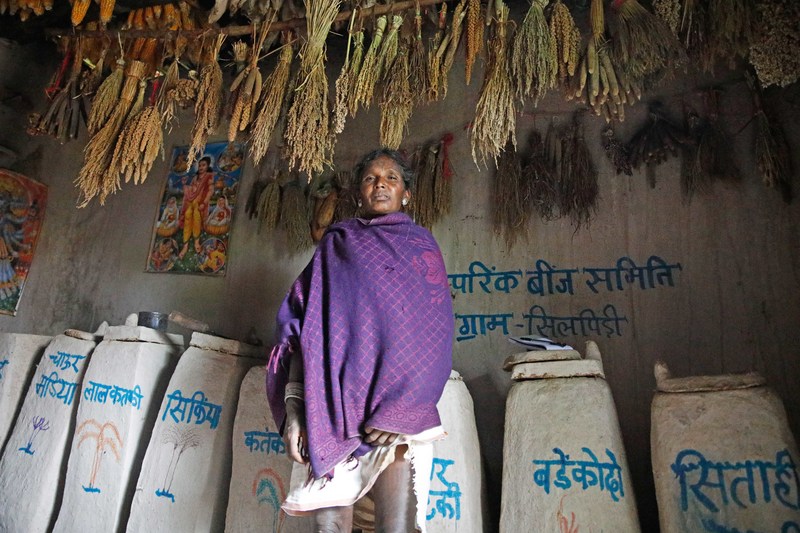
Most people using commercial seeds are farmers that produce for large markets, contractors or agribusiness companies. Small scale farmers tend to rely on seeds from public channels, other farmers or their own supplies. Even in highly industrialised countries, commercial farmers will save seeds from their harvest, if they can, rather than buy fresh seeds each year.[2]
Eyeing this potentially massive market, corporations use two strategies to expand their footprint – and their profits. One is biological: hybridisation. Under the right conditions, hybrid crops give a significant yield boost, but for one generation only. Therefore, farmers have no interest to save the seeds. Hybrids have been in use since the 1930s, creating a very lucrative market for breeders. But not all crops can be hybridised. The second strategy is legal: intellectual property rights and marketing laws. These are rules that prevent farmers from saving, exchanging and selling seeds, in the case of intellectual property schemes, or that can discourage the use of anything but certified commercial seeds, in the case of marketing laws.
Seed laws that undermine farmers’ seeds
An aggressive wave of corporate-friendly “seed laws” is being unleashed globally. Usually, states that are home to multinational seed companies, or the firms that own them, pressure other countries to adopt these laws, to expand their sales. One way they do this is through trade agreements. These are powerful tools to impose new policies on trading partners. But foreign debt and development aid, as pushed by donor governments or agencies like the World Bank, can also be used as leverage to force countries to change policies.
Seed laws is probably an overly broad term that refers both to intellectual property laws, like patents or plant variety protection, as well as to seed marketing regulations.[3] What they have in common is that in most countries, they cater to a uniform seed system, where the main actors are companies or research institutes at the expense of farmers’ seeds and biodiversity. (Uniformity is key, because that’s what serves big industry and global trade.) Farmers’ seeds generally don’t fit these rules and get marginalised.
More specifically:
- Patents provide a 20-year monopoly on any use of an invention. This can apply to seeds, plant cells, breeding processes or genetic sequences. Farmers growing patented seeds do not have any rights over what they plant. They often have to sign contracts saying they will not save, resow, exchange or even experiment with seeds from their harvest. Also, plant breeders cannot use patented seeds for further research without a licence. This is the most radical form of intellectual property, as it locks everyone out.
- Plant variety protection (PVP) is a “soft” patent system, developed specifically for plant breeders. It gives them a 15-30 year monopoly over plant varieties that are new, distinct, uniform and stable. The International Union for the Protection of New Plant Varieties (UPOV), set up in Europe in 1961, runs a harmonised PVP system internationally. Under its latest revision (1991), UPOV does not allow farmers to save, reuse, exchange or sell PVP-protected seeds as a general rule. Member countries may make limited exceptions to this rule, as long as breeders are paid. The point of this system is to make sure that companies can make a profit, by making it illegal for farmers to freely reproduce and reuse seeds as they would normally do. This is privatisation. It ignores the fact that farmers are the original plant breeders of all our crops and therefore the source of all “new” seeds that the industry produces.
- Seed marketing laws define the criteria that must be met in order for seeds to be sold on the market. Under the influence of agencies like the Organisation for Economic Cooperation and Development and the International Seed Testing Association, they often follow the same criteria for PVP (distinct, uniform and stable) while adding the requirement that any new variety must be an “improvement” over current ones. Things like seed quality, truthful labelling and traceability are obviously very important for small as well as commercial farmers. Unions in Canada see these as public interest protections worth keeping.[4] But other countries, following the European approach, have more draconian laws. In Kenya, for example, it is a full-blown criminal offence to sell or exchange seeds that are not certified by the government.[5]
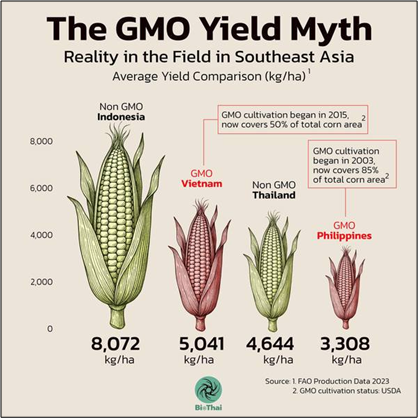
One of the most common arguments for PVP is to promote innovation in plant breeding and therefore improved yields for food security. Yet UPOV does not require that new varieties are improved. And while seed marketing rules can be a tool to protect farmers from corporate abuse, pressure to serve global markets pushes them in the other direction. As a result, these laws tend to undermine the ability and knowledge of farmers to breed, produce, grow, save and exchange seeds – which has kept humanity going rather well for the last 12,000 years. In Southeast Asia, statistics show that open-pollinated maize, which small farmers prefer, yields more than “high tech” genetically-modified maize.[6] In Mexico, 62% of the farmers currently use indigenous maize varieties while less than 15% use so-called “improved” seeds.[7] This drives home the point that, if well supported, farmers’ seeds have a lot to offer – and that the real purpose of these laws is to strengthen the control of seed corporations and create dependency on them.
The imposition of intellectual property rights and marketing rules that cater to seed companies creates major obstacles to innovation by farmers. It threatens agricultural biodiversity, deforms the function of public research away from social needs and outlaws the development of farmers’ seed systems, the very backbone of food sovereignty.[8] As such, seed laws, as many countries have shaped them, are not just about taking away rights, but also about endangering the livelihood, welfare and even survival of the majority, including urban people.
Alternatives can give a false sense of security
In response to the sheer injustice of privatisation and the most restrictive seed marketing laws, numerous legal texts and countermeasures have been devised to supposedly protect farmers’ rights in relation to seeds. We can mention: national “sui generis” PVP laws, with their own tweaks and amendments; the FAO International treaty on plant genetic resources for food and agriculture; the UN Declaration on the rights of peasants and other people working in rural areas; and even the African Continental Free Trade Area. All of these try to counterbalance breeders’ rights with farmers’ rights. Sounds fair, right? It’s tricky!
Take the FAO seed treaty. It was set up in 2001 to regulate access to the world’s wealth of crop biodiversity and ensure that seed companies pay back some of the profits they make from its privatisation and use. The treaty pays tribute to farmers’ rights but makes them “subject to” national laws, which firmly protect breeders’ rights. Since it was established, social movements have been trying to turn this phrasing into something meaningful and effective. But it’s proven difficult. In April 2025, 150 farmers and civil society organisations voiced serious concerns over the treaty.[9] Where it initially applied to a small range of crops, to see how it would work, it will now apply to all crops and even genetic sequences, with little to show in terms of benefit sharing, accountability or transparency. This makes the treaty a tool for “biopiracy”, the groups say, rather than a means to protect farmers’ rights.
National PVP laws have come into vogue ever since the World Trade Organisation mandated all members to provide intellectual property protection for plant varieties. Many countries joined UPOV as a ready-made solution. Others created their own “sui generis” laws. Some, like the Philippines’, are based on UPOV, but allow farmers to save, breed, use, exchange and sell protected seeds. Others, like India’s, offer legal protection for farmers’ seeds. Yet even India’s “progressive” approach has yielded little tangible benefit for farmers, despite thousands of farmers’ seeds being registered, according to Indian activists.[10]
Making farmers’ rights a part of an intellectual property system, or subject to trade negotiations, is fiercely objectionable. Farmers seeds are a collective heritage – some say a “commons”. As such, they should be strenuously protected from privatisation and legal monopolies, not turned into one. Additionally, legal frameworks rely on state actors, often influenced by or serving powerful elites, corporate interests and geopolitical agendas. What control could small scale farmers possibly have over these? Even when they do emerge, laws and regulations to protect farmers’ rights and farmers’ seeds in the public interest run the risk of being diluted, degraded or deformed.
Take the case of Chile’s recent resolution on traditional seed, proposed in 2023 and adopted in 2024.[11] It recognises the existence of traditional seeds, and of people who care for and reproduce them according to their own procedures. It is meant to allow for and protect the exchange of farmers’ seeds and associated knowledge, in a country where proposals to adopt UPOV 1991, which criminalises farm-saved seed, have been long resisted. While the initial proposal allowed the exchange and sell of peasant and indigenous seeds (based on adapted criteria like low cost), with an intent to protect biodiversity and rural traditions, this is gone from the final text. The final resolution actually strengthens the commercial power of seed companies and gives the Ministry of Agriculture the power to regulate the amount of peasant seeds that can be exchanged among communities. For ANAMURI and other peasant organisations in Chile, this undermines the autonomy of rural and indigenous communities. In the end, the regulation does not provide the necessary protections needed by peasant and indigenous peoples over their seed systems, but opens the door to more restrictions, aggression and abuse.[12]
Another approach that groups have tried is the promotion of “open source” seeds, using licenses in a fashion similar to those using copyleft or creative commons for software, books or other works. The goal is to prevent the privatisation of seeds by declaring them not appropriable through labels, pledges or other conditionalities. In the words of Jack Kloppenburg, who has been struggling to construct appropriate frameworks for farmers’ seeds for decades, “We’ve given up on the idea of protecting seeds in favour of trying to allow seeds to be shared.”[13] But even pledges have no real legal effect, as companies can still tweak farmers’ seeds and register them as their own. Similar critiques have been levied at those who promote “free seeds”, understood as a free market for seeds with no rules at all.[14]
The challenge of how to stop privatisation and corporate abuse is even greater in the era of digital technologies. Today, companies can download genetic sequences from public databases, develop new seeds with that information and commercialise the results without needing to get hold of physical seed samples or compensate the source country or communities. African countries are facing this pressure rather forcefully right now. The African Union has drafted a protocol on intellectual property rights over seeds that forms part of its continental free trade agreement. The text, currently being considered by member states, tries to balance breeders’ rights with farmers’ rights, making farmers’ rights a form of intellectual property.[15] This is antithetical to the idea of seeds being a commons, under the control of peasant communities themselves. Formalising such rights in neoliberal trade agreements and digitising African seed registries, as the Bill Gates-funded AGRA is now doing, risks putting peasant seeds in greater peril of corporate takeover.[16]
Defending farmers’ seed in practice
Despite decades of privatisation and the hyper-concentrated seed industry, farm-saved seeds still provide for 70 to 90% of what is planted every year in a majority of countries (and even, when possible, in the global North).[17]
Farmers’ systems remain the main source of seeds for small-scale producers in Asia and Africa. Local seeds are generally more adapted to local conditions like soils, pests, disease and climate. Promoting them strengthens biodiversity and resilience in the food system, protects community health through better nutrition, and lets farmers manage risks. Using farm-saved seeds, even with industrial varieties, helps farmers control the cost of production, which can clearly benefit consumers as well.
Rather than trying to formalise farmers’ rights in state-administered laws that may work against farmers’ interests and be far beyond their reach, we should be aggressively fighting to roll back the privatisation of seeds and investing in practical measures to strengthen and promote farmers’ seeds.[18]
MASIPAG, in the Philippines, provides a good example of how this can work. They have been working to defend farmers’ seeds against the Green Revolution and industrial agriculture since the 1980s. In their view, seed laws focus on protecting seed as a commodity and what the market wants. They are not seen as protecting small farmers, whose knowledge and culture is embedded in the diversity of local seeds, nor the systems used to pass this knowledge on. MASIPAG works to strengthen public support for farmers to have the power and freedom to breed, save and exchange seeds – and not only traditional varieties – that they need on their farms as a common practice that should not be restricted by anyone or any law. By doing this as a partnership between farmers and scientists, they are continuing the practice that farmers have carried out for millennia but which was suddenly declared “illegal” when the Philippine government adopted a Plant Variety Protection Act. In MASIPAG’s view, it is more effective and more relevant to strengthen such social and communal protections, which allow farmers’ practices to thrive and allow farmers to retain power and independence.[19]
In India, groups like the Deccan Development Society have also focused for decades on strengthening the direct control of dalit women over local seeds through community practices of seed storage, characterisation, biodiversity, seed exchanges, farmer-to-farmer trainings, promotion of indigenous crops, local markets and peasant-controlled media to get the message right.[20] These very same practices are being pursued by countless communities at the local, regional and even national levels across Africa, the Americas, Europe and the Pacific.
The fight for farmers’ rights and farmers’ seeds is clearly a fight for power. That power needs to be built at the grassroots community level. It will not come from laws and state apparatuses that farmers may never control. While it may be tempting to push for policies that will recognise farmers’ seeds as a fundamental right or a public good, the past thirty years of experience shows that the odds are massively stacked in favour of making this subservient to corporate interests.
Notes
[1] ETC Group and GRAIN, “Top 10 agribusiness giants: corporate concentration in food & farming in 2025”, 10 June 2025, https://grain.org/e/7284
[2] In North America, depending on the crop, farm-saved seeds can represent 80% of seeds used.
[3] GRAIN and La Via Campesina, “Seed laws that criminalise farmers: Resistance and fightback”, 8 April 2015, https://grain.org/e/5142
[4] National Farmers Union, “Fundamental principles of a Farmers’ Seed Act”, https://www.nfu.ca/learn/save-our-seed/fundamental-principles-of-a-farmers-seed-act/
[5] Ferdinand Omondi, “Kenyan farmers, civil society, and advocates take seed fight to court in landmark case for food sovereignty”, Greenpeace, 21 May 2025, https://www.greenpeace.org/africa/en/press/57608/kenyan-farmers-civil-society-and-advocates-take-seed-fight-to-court-in-landmark-case-for-food-sovereignty/
[6] Biothai, “The GMO yield myth”, 20 July 2025, https://www.facebook.com/share/p/1AndFHJWkH/.
[7] “Criollas 60% de las semillas cultivadas en México: INEGI”, Imagen Agropecuaria, 10 May 2021, https://imagenagropecuaria.com/2021/criollas-60-de-las-semillas-cultivadas-en-mexico-inegi/
[8] Olivier de Schutter, “The right of everyone to enjoy the benefits of scientific progress and the right to food: From conflict to complementarity”, Human Rights Quarterly, May 2011, https://www.researchgate.net/publication/236761225_The_Right_of_Everyone_to_Enjoy_the_Benefits_of_Scientific_Progress_and_the_Right_to_Food_From_Conflict_to_Complementarity
[9] Third World Network, “Stop plant treaty taking them all”, 2025, https://www.twn.my/title2/biotk/2025/btk250408/ENG_Joint%20Letter%20on%20Package%20of%20Measures%20on%20Enhancing%20MLS_Update.pdf
[10] See Shimali Chauhan, “Plant treaty: Farmers’ groups raise alarm over global talks that could open India’s seeds to corporations”, Down to Earth, 7 July 2025, https://www.downtoearth.org.in/food/plant-treaty-farmers-groups-raise-alarm-over-global-talks-that-could-open-indias-seeds-to-corporations
[11] Ministry of Agriculture, “Resolución 220 exenta”, 14 May 2024, https://www.bcn.cl/leychile/navegar?idNorma=1203480&idVersion=2024-05-14
[12] Direct communication with Camila Montecinos of ANAMURI, and ANAMURI, “Declaración pública sobre resolución del ministerio de agricultura”, BiodiversidadLA.org, 15 April 2024, https://www.biodiversidadla.org/Campanas-y-Acciones/DECLARACION-PUBLICA-SOBRE-RESOLUCION-DEL-MINISTERIO-DE-AGRICULTURA
[13] In a 1 June 2025 podcast, David Collier interviewed Jack Kloppenburg on seed commoning, “a departure from the standard capitalist or liberal reliance on the law” to keep seeds circulating, free from intellectual property rights: https://david-bollier.simplecast.com/episodes/jack-kloppenburg-on-sharing-seeds-in-a-world-of-proprietary-agriculture
[14] See the box on “Controversies” in La Via Campesina and GRAIN, op cit.
[15] Mohamed Coulibaly and GRAIN, “What future for seeds under the African Free Trade Area?”, 20 Jul 2023, https://grain.org/e/7013
[16] “AGRA launches Africa Digital Crop Variety Catalogue to revolutionize access to improved Seeds – A first on the continent”, 22 July 2025, https://agra.org/news/agra-launches-africa-digital-crop-variety-catalogue-to-revolutionize-access-to-improved-seeds-a-first-on-the-continent/
[17] For some crops, like wheat, European or Australian farmers will buy seed every other year. But they have to pay royalties to the seed company the year they use farm-saved seed – it’s not free, it’s not their own seed!
[18] Lisette Nikol et al, “Seed activism on four fronts: MASIPAG’s rice seed struggles in the Philippines”, Agriculture and Human Values, 15 May 2025, https://link.springer.com/article/10.1007/s10460-025-10747-8
[19] Direct communication with Eliseo Ruzol Jr., advocacy officer, MASIPAG national secretariat, Philippines.
[20] See the DDS website at https://www.ddsindia.org/
[Courtesy: GRAIN, a small international non-profit organisation that works to support small farmers and social movements in their struggles for community-controlled and biodiversity-based food systems.]