❈ ❈ ❈
The Menstrual Leave Debate and the Silence Around Women’s Health in India
R. Maithreyi
In October 2025, Karnataka became one of the few states in India (and countries across the world) implementing a menstrual leave policy.[1]
The state government explained its decision as a move to address women’s health by attending to social determinants such as gender-responsive workplaces. The move brings much-needed attention to a natural, biological process that women routinely undergo, but are discriminated and stigmatised for, with implications on their health, mental health, and well-being.
Menstrual leave is a debated issue, with national legislation remaining stuck in Parliament (BCP Associates, 2023).[2] Prominent women lawmakers have argued that menstruation is a natural phenomenon and must not be seen as a limitation. Others worry that such policies might create a bias against hiring women. Yet others predict productivity loss, especially in smaller enterprises, and difficulties in monitoring implementation. On the other side, provisions for a single day of leave for a phenomenon that extends over three to five days, and affects women differently, have been considered as tokenism.
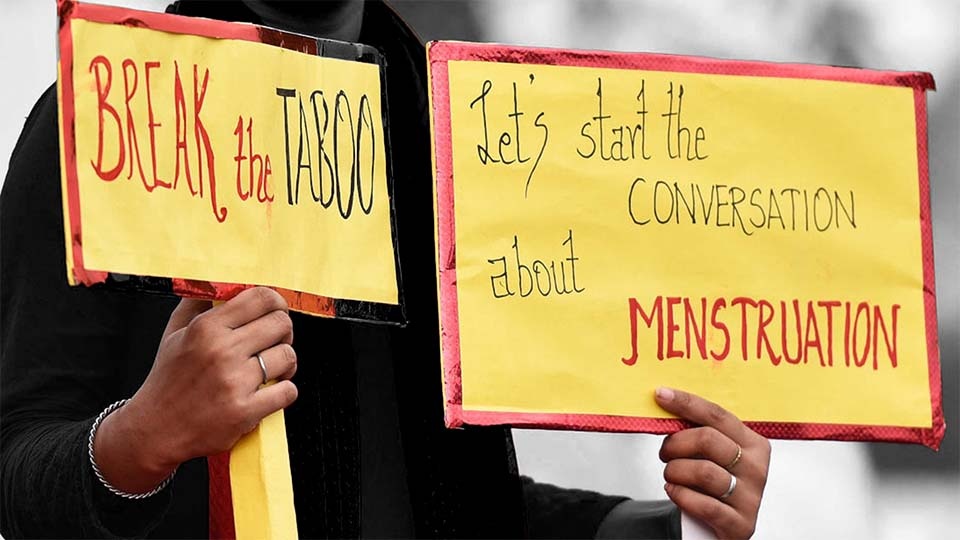
Such a framing of the issue misses how welfare measures around menstruation could normalise women’s sexual and reproductive health (SRH), bring attention to neglected aspects of women’s health within public discourse, and strengthen women’s empowerment outcomes. It further fails to acknowledge principles of equity, and the historical discrimination and stigma that women of reproductive age regularly experience as a result of the natural and biological process of menstruation, every month.
Women’s Experiences of Menstruation
The average women experiences menstruation for nearly three decades of her life, starting in the adolescent years and continuing up to the age of 45-50 years. This age-span also overlaps with critical periods of education, employment, and care-work for women.
The socio-cultural taboos around menstruation restrict girls’ and women’s access to nutrition, healthcare and menstrual hygiene products, mobility and play (Gold-Watts et al., 2020; Kumar & Srivastava, 2011; Saini et al., 2024). School dropouts are correlated with the attainment of menarche (first menstruation) for girls, which is further correlated with early and child marriages, and teenage pregnancies (Beattie et al., 2019; M Khanna, 2019).
Public celebrations within several communities at attainment of menarche, announcing girls’ preparedness for marriage, may put adolescent girls at discomfort, affecting their mental health. Stigma and taboo often prevent women from seeking help or taking action towards healthy management of menstruation, including access to household spaces, foods, and healthcare (Suman, 2025). This means that many women suffer silently through uncomfortable period cycles with heavy menstrual bleeding, anaemia, pain, fatigue or mood disorders. These symptoms that are often normalised, may in fact signal more serious underlying conditions, such as Polycystic Ovary Syndrome, Abnormal Uterine Bleeding or Endometriosis. It is estimated that 15-87% women in India experience dysmenorrhea or painful menstruation, with wide variations in prevalence across states (Chaudhary et al., 2025). Dysmenorrhea may also be associated with psychological distress and irritability, and decreased self-esteem. Studies have shown a likelihood of exacerbation of psychiatric symptoms and suicidal ideation prior to and during the menstrual cycle (Handy et al., 2022).
The severity of these conditions associated with menstruation not only call for better public awareness and data, but also supportive educational and work environments with flexible arrangements.
Menstrual health: A Complete State of Well-Being
Public discourses on menstrual health and health equity is largely limited to menstrual hygiene and is primarily directed towards adolescent girls through the Menstrual Hygiene Scheme. Little attention has been paid to the importance of menstrual health — achieving an overall wellbeing in relation to the menstrual cycle for all girls and women across the gender and age spectrum. We do not have, for instance, even a comprehensive national dataset on the prevalence of dysmenorrhea (Chaudhary et al., 2025).
Menstrual health entails more than just ensuring access to menstrual products or resources to manage menstruation, such as toilets and water. It includes individuals’ awareness and access to resources that can support them to participate fully in all spheres of education, work and life during their menstrual cycle, including access to healthcare, early diagnosis, support systems, and policies that recognise period pain as a serious public health issue.
Menstrual health management is affected by social determinants, such as geographical remoteness, which affects transport and supply chains for menstrual products and services, built-environments, and access to water and sanitation facilities, employment conditions, education, sociocultural taboos and stigmas. Differences emerging from these social determinants further contribute to inequities in menstrual health management. Period poverty, defined as limited access to period products, menstrual education, or adequate water sanitation and hygiene facilities, affects millions of girls and women worldwide, preventing them from fully participating in education and work.
In the Indian context, undoubtedly, girls and women from the most socio-economically marginalised groups such as Scheduled Caste and Scheduled Tribes, rural and hard-to-reach tribal communities, trans girls and women, women working in the informal and unorganised sectors, are most likely to bear the highest burden of poor menstrual health, stemming from these inequities (Roy, 2024; UN Women, 2025).
A first step, but miles to go…
Not every menstruator may require relief from paid work or school during their menstrual cycle, but Karnataka’s menstrual leave policy, in principle, protects women’s right to make decisions regarding their bodies and management of health. From a health equity lens, it is a step in the right direction.
However, there is much more to be addressed in implementation of the policy, including extending the same opportunities to women in unorganised sectors and adolescent girls in schools and colleges. Karnataka has 60 lakh women in the workforce, of which 4.5 lakh women work in garment factories under highly restrictive conditions, with long hours of work and limited breaks (Dev, 2025). One-third, or about 80,000 active job card holders under the Mahatma Gandhi National Rural Employment Guarantee Scheme (MGNREGA), are also women. For women engaged in these forms of casual work, and other sectors such domestic work, daily-wage labour, sanitation, street vending, construction sites, plantations and small-scale service sectors, outside formal institutions, office spaces and environments, management of menstruation are rarely simple or straightforward.
Menstrual management in these contexts entails decision-making around leaving the house for work or education, keeping in mind considerations such as availability of toilets with water, restrooms, adequate breaks, and frequent travel or fieldwork (e.g., gig workers, frontline health workers like ASHAs). What the policy offers these workers is an opportunity to prioritise health and manage menstruation with dignity.
Supplementing Leave with Education and Infrastructure
Menstrual leave is just the first among several steps needed to assure better health, well-being and dignity for women. Stronger efforts will be needed to break the stigma around menstrual health, through curriculum, public health campaigns and social and behavioural change strategies.
Educational institutions and workplaces have to become more conducive to menstruators, through sensitisation programmes for employees. They also need to provide access to menstrual products, and functional toilets that are women-, trans-women-, and disabled-friendly. (An estimated – 3,500 schools, in Karnataka lack functional toilets and about 4,000 lack WASH facilities, indicative of the menstrual health management challenges [R Khanna, 2025]).
Routine menstrual health awareness programmes and screening for menstrual disorders, and its effects on mental health, must be put into place, through public health systems, educational and community-based institutions and facilities, including Sanjeevini Sanghas or other self-help groups. Instituting these provisions can increase timely detection and support to women to manage menstruation and mental health. Along with this, increased awareness, knowledge and skills to manage conditions such as endometriosis and menopause, for women, as well as men -as care givers – needs to be inculcated.
Another area that has received less attention is the impact of climate on menstrual health (Moore, 2022). Climate change is known to impact women’s hormonal balance affecting their menstrual cycles. Further, in the context of climate-induced migration and displacement, women’s access to information, knowledge, menstrual health services and products may be affected. Thus, it is important to develop a proactive public health strategy focused on mitigating the impacts of climate on menstrual health.
Conclusion
Building a supportive ecosystem for improved menstrual health management for women is an important step towards achieving health equity, and the Sustainable Development Goals (SDGs). Not just the state, but employers, particularly in the unorganised sector, and civil society, must also take on the moral responsibility of adequately supporting women’s menstrual health needs.
There are significant gaps currently, in assuring women safe and dignified periods at the workplace. Successful implementation of the policy, particularly ensuring buy-in by industry and educational institutions, and women’s demonstrated confidence in availing the leave without stigma or fear, can provide the much-needed impetus to move a legislation on menstrual leave and menstrual health at the central level. Within a month of announcing the policy, private institutions have already drawn this matter to court, challenging the government’s implementation of the policy (Express News Service, 2025). The state’s efforts at resolving such contentions and working with industry bodies in sensitising them to the issue and allaying fears around productivity, providing clear guidelines for implementation, building monitoring and accountability mechanisms to ensure the implementation of the policy can provide lessons for implementation for other states to follow. Legal interpretations and the precedence set by the Karnataka High Court in interpreting the state’s mandates towards health equity and powers to enforce the menstrual leave policy will have broader significance. It can provide directions for better accountability and regulation of health provisions and services for other states and the country, in the context of extensive neoliberal reform of the economy and privatisation of welfare.
Karnataka is yet to outline the mechanisms for availing leave without the fear of loss of remuneration, ensuring compliance, for grievance redressal mechanisms in case employers do not adhere to the regulations. Public support and provisioning, and civil society acceptance and respect for menstruators and their needs will be key to successful implementation of the policy, particularly for women workers in unorganised sectors, such as daily wage labour, domestic workers, street vendors, agricultural and plantation workers, who are still to be covered under the policy ambit and for whom infrastructure provisioning remains inadequate.
Notes
1. The Karnataka policy to offer working women across public and private sectors 12 paid menstrual leaves annually. The other states include Bihar, Kerala, Odisha and Sikkim. Outside India, countries like Japan, South Korea, Zambia and Spain have similar policies.
2. Bills were introduced in 2017 and 2018, and most recently, the Right of Women to Menstrual Leave and Free Access to Menstrual Health Products Bill, 2022.
References
BCP Associates. (December 15, 2023). Menstrual Leave in India – Latest Trends and Perspectives. Retrieved from https://bcpassociates.com/menstrual-leave.-in-india-latest-trends-perspectives/
Beattie, T.S., Javalkar, P., Gafos, M., Heise, L., Moses, S., Prakash, R. (2019). Secular changes in child marriage and secondary school completion among rural adolescent girls in Indian Journal of Global Health Reports, 9(3):e2019041. Doi:10.29392/joghr.3.e2019041
Chaudhary, V., Khan, A., Kumari, S., Maazuddin, M., Rohita, Meenakshi, S., Murti, K., Kumar, N, Gudage, S.M., and Pal, B. (2025). Burden and risk factors of dysmenorrhea among students in India: A systematic review and meta-analysis. Medical Journal Armed Forces India. Doi: 10.1016/j.mjafi.2025.07.012
Dev, A. (October, 10, 2025). Karnataka Approves Monthly Paid Menstrual Leave for Women. The Hindustan Times. Retrieved from https://www.hindustantimes.com/india-news/karnataka-approves-monthly-paid-menstrual-leave-for-women-101760092155802.html
Gold-Watts, A., Hovdenak, M., Daniel, M., Gandhimathi, S., Sudha, R., and Bastien, S. (2020). A qualitative study of adolescent girls’ experiences of menarche and menstruation in rural Tamil Nadu, India. International Journal of Qualitative Studies on Health and Well-being, 15 (1). Doi: 10.1080/17482631.2020.1845924
Handy,. AB., Greenfield, S.F., Yonkers K.A., and Payne L.A. (2022). Psychiatric Symptoms Across the Menstrual Cycle in Adult Women: A Comprehensive Review. Harvard Review of Psychiatry, 30(2):100-117. doi: 10.1097/HRP.0000000000000329.
Khanna, M. (December 04, 2019). The Precocious Period: The Impact of Early Menarche on Schooling in India. Ideas for India, IGC. Retrieved from https://www.ideasforindia.in/topics/money-finance/the-precocious-period-impact-of-early-menarche-on-schooling-in-india.html
Khanna, R. (January 10, 2025). 3850 Government Schools in Karnataka Lack Functional Loos. The New Indian Express. Retrieved from https://www.newindianexpress.com/cities/bengaluru/2025/Jan/10/3580-govt-schools-in-karnataka-lack-functional-loos-report
Kumar, A., and Srivastava, K. (2011). Cultural and Social Practices Regarding Menstruation among Adolescent Girls. Social Work in Public Health, 26(6): 594-604. Doi: 10.1080/19371918.2010.525144
Moore, E. (August 26, 2022). The Effects of Climate Change on Menstrual Health of Women and Girls in Rural Settings within Low-Income Countries. Columbia University Libraries. Retrieved from https://academiccommons.columbia.edu/doi/10.7916/bqyy-vh75
Roy, A. (July, 23, 2024). Period Poverty and Public Policy: Challenges and Solutions. Retrieved from https://sprf.in/period-poverty-and-public-policy-challenges-and-solutions/
Saini, B., Khapre, M., Kumar, P., Bharadwaj, R., Gupta, A., and Kumar, S. (2024). Prevalence and Barriers of Menstrual Hygiene Practices among Women of Reproductive Age Group in Rural Field Practice Areas of a Tertiary Care Center in Rishikesh. Indian Journal of Community Medicine, 49(1):82-90. Doi: 10.4103/ijcm.ijcm_871_22
Suman, R.S. (January 23, 2025). Breaking the Silence: Analysing the SSMF Report on Tackling the Stigma around Menstruation. Feminism in India. Retrieved from https://feminisminindia.com/2025/01/23/breaking-the-silence-tackling-the-stigma-around-menstruation/
UN Women. (July 28, 2025). Period Poverty – why millions of girls and women cannot afford their periods. Retrieved https://www.unwomen.org/en/articles/explainer/period-poverty-why-millions-of-girls-and-women-cannot-afford-their-periodsfrom
[R. Maithreyi is the thematic lead of the Women’s Health vertical at Karnataka Health Promotion Trust (KHPT). Courtesy: India Forum, an independent online journal-magazine that seeks to widen and deepen our conversations on the issues that concern people.]
❈ ❈ ❈
Karnataka Govt Clears Menstrual Leave Policy, Women Can Take One Paid Day Off Every Month
The Wire Staff
Karnataka’s cabinet, led by chief minister Siddaramaiah, has approved a menstrual leave policy on Thursday (October 9) that entitles women in both government and private sectors to one paid day off every month.
The Menstrual Leave Policy (MLP), 2025 covers women working in different sectors, including government offices, private companies, IT hubs and garment factories. According to official estimates, over 60 lakh women work in Karnataka, with 25-30 lakh employed in the corporate sector.
The labour department officials plan to hold awareness sessions with employers before the rule is implemented.
The decision was taken after an 18-member committee, led by Sapna S. from Christ University’s Law Department, studied the physical challenges and health needs of women during menstruation and advocated for adequate rest.
Notably, states like Bihar and Odisha already offer menstrual leave to women in government jobs. Bihar provides two days of leave monthly, while Odisha offers one day. Kerala has introduced menstrual leave for female students and university employees.
Some companies, such as Larsen & Toubro (L&T), have also implemented menstrual leave policies for their employees. L&T’s policy provides one paid day off monthly for women in its engineering and construction divisions.
In July 2024, the Supreme Court had suggested that the Union government should develop a model policy on menstrual leave after consulting with states and stakeholders, but stopped short of making it mandatory.
[Courtesy: The Wire, an Indian nonprofit news and opinion website. It was founded in 2015 by Siddharth Varadarajan, Sidharth Bhatia and M. K. Venu.]
❈ ❈ ❈
Left Behind: The Women Missing from India’s Period Leave Conversation
Meenakshi Jha
India often celebrates its cultural richness and resilience, yet its labour market tells a different story where women make up less than a quarter of the workforce. This isn’t just a statistic; it’s a reflection of deep, systemic barriers. Laws like Equal Remuneration Act and the Maternity Benefit Act were introduced with the intent to support women’s participation in the workforce.
On paper, they promise protection, equality, even empowerment. But in practice, the story is far more complex. These laws often fail to address the everyday realities of women workers. In some cases, they even create unintended barriers- like employers hesitating to hire women to avoid the ‘cost’ of compliance.
The structural barriers run deep. Workplaces are often unsafe. Gendered expectations around caregiving remain rigid. And critically, more than 90% of working women in India are in the informal sector –employed without contracts, protections, or pathways to redress. For them, legal safeguards are more myth than reality. Now, with Karnataka approving one day of paid menstrual leave per month for women in the workforce, the headline might read like progress- but it also raises a deeper question: does this new law open a door, or erect yet another threshold that women must justify crossing.
A short global history of period leave
Japan was the first country to legalise period leave by introducing a statute back in 1947, which mandates employers to grant women employees leave as and when requested during their menstrual cycle. This welcome step within the legal frameworks of organisations was followed by Indonesia, where female workers who experience pain are required to inform their employer and are entitled to not report to office on the first two days of their menstruation, and South Korea provides one day paid leave per month accorded to female employees in case they make a special request during their period.
Taiwan allows three paid leaves in a year owing to menstruation and any leave exceeding beyond that gets deducted from available sick leaves. These leaves are availed at half the rate of such employees’ salary(link). Zambia permits one day paid leave each month without having to produce any valid medical certificate. Spain was the first European nation to introduce menstrual leave as part of its legal regime; wherein female employees can avail 3 to 5 days’ leave due to menstrual pain on production of a doctor’s note and the State social security backing the same.
In India, a southern state Karnataka has taken the lead in covering both the government and private sector in its menstrual leave policy. Earlier, two eastern states, Bihar and Odisha, already have a policy for government employees. Another southern state, Kerala has implemented this policy in its universities for staff and students.
A step forward, but who gets to walk?
Karnataka’s decision to introduce menstrual leave is a landmark one, one that acknowledges a long-ignored reality of women’s health in the workplace. For many, it feels like a long-overdue gesture of respect and dignity. But beneath the celebratory headlines lies an uncomfortable question: whose workplaces are actually being reformed?
For vast majority of women, this policy is little more than a footnote. These women power the country’s vast informal economy: they farm the land they don’t own, roll bidis in backyards, stitch clothes in sweatshops, sell vegetables on sidewalks, clean homes in urban high-rises. They carry the dual burden of paid and unpaid labour, often without recognition, protection or compensation. For them, “menstrual leave” isn’t just a missing benefit; it’s not even a conversation.
These women are invisible in boardrooms, in budget speeches, and in GDP tallies. So, when a state like Karnataka rolls out workplace reform aimed at menstrual health, it risks reinforcing the divide between the formally employed minority and the informally employed majority. A policy meant to empower women could inadvertently deepen the exclusion of those who need it most.
As economist Ravi Kumar pointed out in his article, the long-term impact of menstrual leave hinges not just on policy design, but on whom the policy chooses to include. If we are serious about gender issue, the conversation must extend beyond government offices and corporate campuses to the frontline of India’s informal economy – where the bulk of women actually work.
Karnataka’s move is laudable. But it is just that – a step. For it to become a march toward equity, the state must reckon with the lived realities of informal women workers, who are vital to the economy but remain excluded from its protections.
While the policy promises universal sectoral coverage, this assurance collapses under the weight of India’s highly informal labour market. As mentioned earlier, majority of women are in the unregulated sectors like garment industry, construction sites, streets, households, et al and enforcement mechanisms in these sectors are notoriously weak. Most of these workers fall outside the scope of labour regulation and demands structural imagination, given their precarious work environment.
Recognising the invisible backbone
To truly empower women in the Indian workforce, it is imperative to bring the informal sector, where most women are employed, into the centre of policy, protection and progress. Instead of waiting indefinitely for the benefits to trickle down to the underrepresented, it truly will be a mark of solidarity when we include every single working woman in conversations pertaining to fundamentals of health and hygiene.
Women who form the backbone of agriculture, domestic work, caregiving, street vending and countless other unregulated occupations, often operate without any contracts, job security, social protection, or recognition. Bridging this gap requires not only extending the reach of existing labour laws and welfare schemes but also reimagining systems that currently exclude informal workers from institutional support. Women’s Rights Activist Brinda Adige, while praising the initiative, expressed concern for the challenges faced by informal sector.
The motives of all landmark policies and laws should be to lessen the already existing deep divides between a country’s populace. Absence of contracts and functioning beyond the realms of legal frameworks puts almost all of these women at risk and exposed to vulnerabilities. It further limits their abilities to gain skills needed for formal employment.
From access to childcare and healthcare, to skill development and financial inclusion, the needs of informal women workers must be addressed with urgency and empathy. Only then can we move beyond symbolic empowerment or empowerment of the select few and ensure that every working woman –regardless of her sector – has the dignity, security, and opportunity she rightfully deserves.
[Meenakshi Jha is a passionate writer who works at a school during the day. She is currently working on a book on adolescence. Courtesy: The Wire, an Indian nonprofit news and opinion website. It was founded in 2015 by Siddharth Varadarajan, Sidharth Bhatia and M. K. Venu.]