The Impact of the Nationalisation of the Electricity Sector and Uranium Production in Niger
Nidol Salami and Pedro Stropasolas
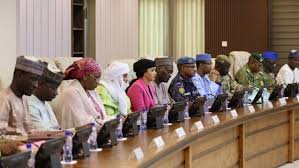
[The Nigerien government has announced the nationalization of a unit of the French uranium company Orano. Its subsidiary Somaïr has been at the center of a standoff that has been ongoing since last year, when the company suspended production at the mine. The announcement was made last week on state television, citing “irresponsible, illegal and disloyal behavior” by the French company. Orano is 90% owned by the French government and has operated mines in the African country for decades.
On the same occasion, the country’s president, Abdourahamane Tchiani, announced the nationalization of the Niger Electricity Company (Nigelec SA). Created as a joint-stock company with a mixed economy, Nigelec is responsible for the production, transmission, and distribution of electricity throughout the country. Its share capital, valued at over 76 billion CFA francs, was held by the state for over 99%, with the remainder being held by several minority shareholders, including the French Development Agency.
Despite public dominance, the company remained autonomous for several decades, with attempts at privatization that never came to fruition.
According to analysts, in addition to the numbers, the lack of adequate energy supply itself motivated the action. For several years, the population of the Sahel country has been faced with recurring power cuts, due to the country’s strong energy dependence on Nigeria.
The vulnerability was highlighted in the past two months, when a power outage in Nigeria plunged hundreds of thousands of Nigerian homes into darkness, affecting schools, hospitals, shops and government offices.
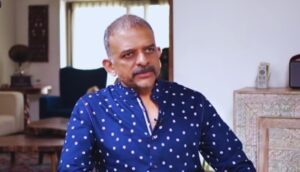
In an interview with Brasil de Fato, Mamane Sani Adamou, from the Revolutionary Organization for New Democracy ORDN (Tarmouwa), analyzes the government’s decision to nationalize Nigelec and compares the measure with the recent acquisition of Somair, highlighting the differences and motivations behind each action. Both decisions are seen by Adamou as important steps towards ensuring Niger’s economic sovereignty.
The Revolutionary Organization for New Democracy (ORDN) is a party founded in 1992, after the opening of multipartyism, and known for its active participation in the trade union struggle in the Sahel.]
● ● ●
Full Interview:
Brasil de Fato: How do you see the Nigelec nationalization process?
Mamane Sani Adamou: The government believes that by taking 100% control of the company, it will change its direction, change the way the company is run and achieve 60% access to electricity by 2030, which is a considerable achievement. The state therefore wants to put an end to an injection that is not very satisfactory and wants to accelerate access to electrification for the vast majority of Nigerians.
BdF: What is the current electricity situation in Niger and, more importantly, how dependent is Niger on Nigeria? Does Niger still depend on its neighboring country for 70% of its electricity?
MSA: Well, there has been a change. There has been a lot of work done in Niamey, which is reducing that percentage a little bit. So I think we are even less dependent on Nigeria than we were in the past. Despite that, there is still electricity from Nigeria, which is important here, not only for the city of Niamey, but for the rest of the country. With the exception of Agadez, the rest of the country is supplied by thermal energy produced from coal. Everything else is electrified from Nigeria, but there are more and more electrification centers and solar energy is starting to appear. So all of this together means that, only in the city of Niamey, there is a little less dependence on energy from Nigeria, but overall we continue to depend on the country.
BdF: In 2024, Niger took operational control of the French company Orano over its three main mines in the country: Somaïr, Cominak, and Imouraren — the latter of which has one of the largest uranium reserves in the world. How do you see the nationalization of Nigelec compared to the nationalization of Somaïr? Can we say that these are similar steps towards energy sovereignty?
MSA: Well, these are not very similar measures. You could say they are similar in the sense that they aim to end a crisis, but the two situations are different. Somaïr was the first company to start extracting uranium in Niger, in 1971, and is 63% owned by French shareholders. Since the coup d’état of July 26, there has been a standoff with France, which has led Niger to stop all uranium exports. So France’s retaliation was, first, to stop mining with Cominak, not to start up the Imouraren megaproject – which was the subject of a contract with France – and then to practically make it impossible for that plant to operate, because France brought back all its staff.
Niger has finally decided to acquire all of Somaïr’s shares to put an end to this uranium crisis, because France had caused a lot of damage to the company by trying to sell it and by preventing Niger from managing it properly. That’s what’s at stake. It’s not exactly the same thing, because before we had a 33%, 34% stake, and now we will have everything. Somaïr will now belong exclusively to Niger, and the country will benefit from the entire value chain of uranium exploration.
BdF: Do you believe that in the near or distant future it will be possible for Niger to start selling electricity, as Nigeria currently does?
MSA: We are trying to revive this plan, which is for Niger to combine the exploitation of fossil fuels with better use of solar energy, which means that the percentage of solar energy in the country’s energy mix will improve significantly. At the same time, Niger will combine the use of several sources, which will allow it to produce enough electricity to export. For now, we are not there yet. We need to get everything in order.
BdF: Adamou, there is a very strong idea from Nkrumah, the Pan-Africanist leader from Ghana, who said that you cannot build Pan-Africanism without electricity. How do you see this idea of Kwame Nkrumah today, in this moment that we are living in?
MSA: Without control over energy, it is impossible to achieve anything. First and foremost, the industrialization of the country is at stake. Many companies are reluctant to set up shop here because the cost of energy is very high. Thus, mastering electrification means mastering the source of industrialization, enabling the processing of agricultural products and thus laying the foundations for autonomous development. In this sense, Nkrumah is absolutely right. Energy is vital in this area. We need to control it, make it accessible to our citizens and, above all, ensure that factories can develop, because energy will be accessible and we will thus be able to process our products locally, instead of perpetuating the logic of the international division of labor, which confines us to the position of exporter of raw materials and consumer of processed products. This will put an end to this dependence.
(Courtesy: Brasil de Fato and People’s Dispatch. Brasil de Fato is a Brazilian socialist online newspaper and a radio agency; Peoples Dispatch is an international media organization with the mission of highlighting voices from people’s movements and organizations across the globe.)