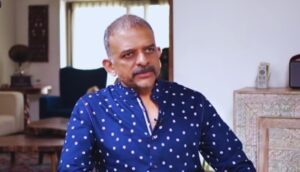
[Wolfgang Streeck, director emeritus of the Max Planck Institute for the Study of Societies in Cologne, is in the front ranks of Europe’s social thinkers, having come out with some of the most penetrating analyses of the crises of neoliberal economics and the ills of neoliberal society over the last 30 years. No stranger to controversy, he has criticized the technocratic elites in Europe and the United States for placing adherence to so-called “universal values” rather than the democratic process as the basis of the right to rule, called for an end to Europe’s subjection to the United States, dismissed the Russian threat as a fiction manufactured by the Baltic states, and called for the transformation of Europe and the global order into systems of small states. Though a man of the left, he has distanced himself from both the German Social Democratic Party (SPD) and Die Linke (The Left Party) on matters of peace, immigration, and social policy and become identified as a strong supporter of the party (BSW) of the controversial Sahra Wagenknecht in the lead-up to the 2025 Bundestag elections. His latest book is Taking Back Control? States and State Systems after Globalism (2024).]
● ● ●
Will the AfD Come to Power?
WB: The far-right Alternativ für Deutschland (AfD) became the second biggest party in the Bundestag in the February 2025 elections, eclipsing the Social Democratic Party. For a party that was founded only 12 years ago, this is rather impressive. Do you think it is inevitable that AfD will eventually come to power?
WS: No. We’re not in the 1930s. It’s an entirely different world. The Nazis in Germany had the support of the old eastern nobility, which had command of the army and much of the Prussian state. It also had the support of big industry, which was German and very much anti-French, and, of course, anti-the western allies after Germany’s defeat in the First World War and the Treaty of Versailles. And it was a national industry, not internationalized as it is today. Fascism was pro-state and anti-market, but those who vote for AfD have a deep suspicion of the state and indeed of any exercise of state authority, including for example compulsory vaccination. Many of them are middle class Poujadists—anti-state, pro-neoliberalism. That’s a different constituency, a different configuration.
The Nazis also had much support in the state apparatus, in the army, in the police, and there’s very, very little of this in the case of the AfD. You can also say it is not a structurally based movement but a culturally based one. In the macro-structure of society, there’s no support for this sort of thing. There are much more dangerous things going on than the AfD.
WB: Can you tell me more about how the working class relates to the AfD?
WS: Lots of voters have abandoned the Social Democratic Party (SPD) over the last 20 years. And the right wing also absorbed a lot of people from the traditional working class. But the AfD has no consistent program for them, in the sense that it is a neoliberal party when it comes to economic policy, but when it comes to populist rhetoric, it is a pro-worker party. It defends the workers against migrants. But, in reality, when it comes to economic policy, it stands for cutting the welfare state.
Also, this cultural drift away from the left has something to do with the structure of the left, that is, it is seen as increasingly made up of elitist, middle class, global-market-oriented people who despise people in the provinces, outside the big cities.
And you have to add East Germany as a special factor. The scars of the transition from communism to liberal capitalism are still visible, in the minds of people more than physically. So, for example, in capitalism, intwenty-first century capitalism, the rhetoric is always, “Be prepared for the next wave of technological and social change.” Now these people in the East had gone through a fundamental change in the 1990s, after unification. Now the feeling is, “It’s enough. We went along with that one, we don’t want another one.” So, they’ve become much more conservative than the West Germans who have under modern capitalism gone through continuous transitions and many of them have been doing very well. While the East Germans remember one catastrophic transition, with unemployment reaching 40 percent in parts of their country. And you also have to factor in the lack of respect and recognition that came and still comes from the West, where people are confident they can always prevail. And when you’re on the other side of this sort of sentiment, even if it is not explicitly expressed and is not visible in everyday life, it is extremely incendiary in politics in any society.
Migration: The Burning Issue
WB: Where is the immigration issue in all this?
WS: Oh, it’s absolutely important, and not only in Germany, but in all societies that I know. People need time to get acquainted with strangers. There’s no society that’s completely open, where someone can come in and say I’m a member now. A society is a product of investment over generations in reliable social bonds. It is possible, of course, to bring people in and make them citizens, members of the community, but it takes time. And if the pace is too fast people get nervous. In the minds of the German Greens, there’s this naïve notion that people come from somewhere, say Syria, and then they can settle anywhere in their new country, right among the natives, just another standard German family. But in reality, immigrants settle near other immigrants from the same country, near people that speak their language and whom they trust and who can help them. As they try to continue the cultural life of where they come from, they are looked at with suspicion by the natives.
Moreover, most immigrants begin at the bottom of any society, not at the top. At the top, there is no problem. If you’re an Indian Nobel Prize-winner in physics, you can live anywhere, but if you’re a normal guy from Pakistan, it is hard to start anywhere but at the bottom of the society, and there you meet people who may not always be the nicest people, and they may not be completely socialized in their host society, so you get what sociologists call anomie, typically including a higher crime rate. And if you bring in 20-year-old single males in large numbers, wherever they come from, they sometimes form gangs to defend themselves against the arrogance of the natives, and not just in Germany.
WB: So was Angela Merkel’s embrace of Syrian refugees in 2015 a mistake?
WS: What is a political mistake? My observation in politics is that when political leaders do something, they do it for more than one reason. They need several reasons because they need to build a constituency for their decision, and the more supporters they find the better, even if their motives differ. Not all Germans were enthusiastic about the Syrians, but there were German employers who saw that the German labor market was shrinking for demographic reasons. Then there was, outside Germany, Obama. Why Obama? Because owing to his interventions in Syria, he had created the problem of Syrian refugees swamping all over the Middle East. There was Turkey, which was facing instability because of the huge number of Syrian refugees created by American “nation-building.” Obama had asked Merkel to help in Syria by sending troops. Merkel couldn’t do that, because of our constitution, because of her party, because of the public. Later Obama seems to have said to her, and I’ve heard this from several quarters, “So Angela, you left us alone when we rescued the Syrian people, and now you owe me one. And you always told me about your demographic issues, so please be kind and open your border.” German foreign policy can be understood only in the context of Germany’s deep dependency on the United States.
Then there was Merkel’s move towards the Greens. She was trying to align the centrist conservatives of the Christian Democratic Party through a slow opening with the Greens rather than the Social Democrats, for she rightly considered the Greens to be the next generation of the German bourgeoisie—the daughters and sons of her original constituency, and so she was trying to unite the political family of the German bourgeoisie in her coalition. Her 16 years in government were a permanent attempt to move towards the Greens and away from the Liberals and Social Democrats. Her opening the borders in 2015 was the most significant attempt by her to convince the Greens that she was their best coalition partner. It backfired because the influx of one million Syrians in one year invigorated the AfD, which had been almost dying at that time.
Crisis of the Left
WB: Coming back then to traditional German Left. Isn’t SPD now down to number three in terms of electoral support? Where do you think things went wrong? Was it because they had no political strategy aside from the Grand Coalition? Was it because of a failure of political imagination?
WS: What you have to do is see this in the context of Social Democracy in Europe generally, because this is not a special problem of German Social Democracy. (There is one country in Europe where this problem does not seem to exist, and that is Denmark. But the Danish Social Democrats are exceptional in that they are strictly anti-immigration and also very much pro-NATO and anti-Russian.) Now German and generally Social Democracy in Europe had this tradition of détente from the 1970s and 1980s, but more important are the usual suspects: the changing structure of the labor market, the breaking apart of the trade unions, the fiscal and economic limits of the welfare state. Many of the social problems that existed in the 1960s were basically solved, but over time those solutions were so expensive for business and the state that the social democrats when they were in government had to agree to cuts in the welfare state. But the moment they were seen as collaborating in austerity policies, their voters were disappointed, and they moved to other parties. Same in France. Same in Italy. Same in the UK. The Dutch social democrats, once a proud party, have practically disappeared, and the former Communist Party in Italy has become marginal at the polls. We’re looking at a very general development.
I think there’s also a cultural thing. Traditional social democratic politics assumed that collective political action requires collective political discipline. You organize social movements under the leadership of a party. The party meets in a convention and formulates a program. And as a member or voter you have to stand for this program even if you don’t like everything. All of this was connected to an idea of progress, social progress as a result of political organization. Now, in today’s capitalism, there’s no one who can promise anything like social progress. What the social democrats now can promise is at most to defend what you have. If they are honest, they must tell their constituents that today, they have to run faster so they can, perhaps, remain in the same place. Or they can say, there are many risks in the future, and we will try to manage them for you but there is no guarantee. I remember the social democratic enthusiasm in the 1970s when unions were strong and the economy was growing, so states had enough money to build generous social protection systems. That’s over.
WB: When it comes to the German Social Democratic Party, one of the explanations for its decline that one encounters is that the SPD government of Gerhard Schroeder carried out the neoliberal reforms that the CDU could never do.
WS: I think that’s a bit simplified. In Germany we had an institution, called Unemployment Money as distinguished from Unemployment Benefit, that was unique in the world. If above a certain age and you lost your job, you could receive Unemployment Money once your Unemployment Benefit had run out, until you were seamlessly moved into old age pension. As a result, there was quite a number of people who, when they lost their job, didn’t care much about getting another job. They reckoned that until they would be pensioned off they would be on the two kinds of unemployment insurance, first Benefit, then Money. The arrangement was more complicated, but in effect this was what it was.
After unification the East Germans had to have the same rights. It was easy to be unemployed in East Germany after 1992, but then almost everybody was unemployed, and depending on your age, you just needed a couple of more years on unemployment support until you could switch to your pension. And then the employers chipped in. They told workers they considered redundant that they would be fired after which, however, the employer would pay them the difference between his old net income and his everlasting Unemployment Money. Not only would they not have to go to work anymore, but they wouldn’t even notice they were unemployed. Then unions began to collaborate with this system, partly because their members liked being unemployed in this way, and partly they believed in the “lump of labor theory.” For each older worker pensioned off a younger new worker would be hired since someone had to do his job, after all. But the reality was very different, of course.
To cut a long story short, Schroeder was narrowly reelected in 2002. The coalition negotiations with the Greens in the fall of the year were a complete disaster, so Schroeder decided to grab the bull by the horns and, among other things, end this system of never-ending unemployment support. The result was Agenda 2010, which was passed in the spring of 2003. It was widely perceived as anti-union and anti-worker and pro-austerity, which in part it was.
WB: When it comes to the immigration issue, is it the case that the left has lost ground because of a failure of political imagination?
WS: You can talk about this for days, and the matter is really very complicated and has many different facets. The understanding was, during the 1960s, when Germany had very high economic growth, that people would come from Southern Europe, they would stay for part of the year, then they would go back, as seasonal workers. This was the period of the Gastarbeiter (guest worker). The picture from the 1960s was trains arriving from Italy and men disembarking—no women, because they were staying at home—then at the end of the year the men returning home with money in their pockets.
Now at some stage it was realized that that was a misconception, that workers wanted to stay. They brought their families. During that time, when you talk about the German left, the trade unions were absolutely meritorious in opening themselves to organizing these workers. The Metal Workers Union had a clearly targeted organizing strategy—because there was very much a tradition of solidarity on the left. If you worked in a factory, you often worked alongside someone else who wasn’t German. You made friends with Marcelo. If your boss came and treated Marcelo badly, you told your boss to behave. Increasingly also, mid-level positions in the union hierarchy were filled with people from Italy and Spain and Turkey. In the 1970s, as a young researcher, I was surprised at how at Opel, the American-owned German automobile factory, union leaders were determined to make sure that, as they put it, “In our plants there won’t be two kinds of animals,” opposing temporary working arrangements for immigrants. If you were a foreign worker in the factory, you had to have the same rights as all the others.
In current conditions, factory work has disappeared, and immigrants no longer work in a factory next to Germans but hang out with other immigrants and take casual jobs in the service sector rather than in manufacturing, where Germans don’t see them and have very little contact with them. It’s a very different situation. So, the capacity to organize declined with the structural change of German industry and the German labor market. In periods of unemployment the question comes up, shouldn’t these people go home? Then you get some racist discrimination, and unions at a given plant would settle for an arrangement that would, in effect, give more employment rights to Germans than to other workers, less so where there had been a strong socialist tradition, but still.
There are success stories though. Increasingly you get to see people with Italian or Spanish names who have made it in public administration, for example, often as technicians, engineers and the like, second-generation immigrants, speaking German with the intonation from the area where they grew up. But the way this country works, you need to be successful in school or in higher education as a condition of occupational achievement. People from some countries seem to do better than others in this respect. Also, today you find schools where 70 to 80 percent of the kids in the first and second grade do not speak German, and then the German parents become nervous about whether their children will be able to learn enough in a school where the majority can’t even speak German.
WB: How about when it comes to the upper middle class and the upper class, to management, are there people who break out of their immigrant backgrounds and make it?
WS: Unlike in the UK for example, it’s not easy to identify an elite in this country. There is no nobility, there are no elite private schools etc., and after the war the society was pretty much like scrambled up. West Germany in 1949, four years after the end of the war, had about 45 million inhabitants plus 15 million refugees from the East. You can just imagine that this resulted in a deep break-up of the traditional social structure. Of course, it always pays if your parents have gone to university, and then there’s the likelihood that you’ll also go to the university. But then, this is a country where in its ideology, achievement counts more than descent.
WB: And would you say that there has been a difference in the reception of people of Southern European or Eastern European origins, compared to people of Islamic, Syrian, or African backgrounds.
WS: No doubt. Africans have faced the greater difficulties. If you’re from Africa, you’re recognized by your skin color. As to Syria, well, my observation is that many Syrian refugees were middle class. Syria seems to have had quite a big educated middle class. Today, if you go to a German hospital, at least where I live, it is quite likely that the surgeon has a Syrian name. Turks are relatively well integrated today, also through their extended families. If you’re Turkish and you move to Germany, there are a lot of Turks already there, and they help you, and you’re your way and get ahead. The typical Turkish immigrant today, in this generation, may not be a surgeon but one who runs a grocery shop, and people know that the best vegetables are those you get from the Turk, who gets up very early, one hour earlier than his German competitor, goes to the market, and buys the best of the lot. Being supported by a national community and a more traditional large family, people can make it in a foreign country.
WB: What about Islam?
WS: My impression is that the situation is much worse in other places. France has a problem with any religion because of its very strict separation between Church and State. In this country this is not so. We have the Catholic Church and the Protestant Churches. They are established Churches. Like in England, they are recognized by the state. Then there is Islam. They have no Church. There is no hierarchy, no dogmatic theological orthodoxy. The German state always tries to set up something like an Islamic equivalent to the Catholic Church, and then, of course, it withers away. Muslims disagree among themselves on how to practice their religion, even more than Christians, and they lack institutions that could adjudicate their differences. In Germany, the additional question is the distinction between Islam and Islamism. Islamism is considered dangerous because it is supposed to be anti-democratic and anti-Semitic. Islam is okay, as long as you don’t say anything about the genocide in Gaza; if you do, you are an Islamist. As you know, the German state is absolutely ruthless when it comes to making its citizens support Israel, its occupation of Palestine lands and its Gaza operation.
Trump: Purveyor of Chaos and Uncertainty
WB: Let me turn to another issue. What do you think is going to happen with Trump and Europe?
WS: Before I address that issue, let me say that we have, in Germany, 40,000 American troops, the same as Okinawa. In addition, we have an unknown number of American nuclear warheads stationed in Germany. In Ramstein and Wiesbaden, we have the two most important command centers of the American military apart from the Pacific. Anything that is being done in the Middle East is being done out of the American military command in Wiesbaden, Germany. So, German foreign policy must always be seen in this perspective. And we have a political elite that over decades has been trained that Germany on its own cannot do anything unless the United States supports us.
Now to Trump, I’ve never been in a situation where it’s so difficult to make predictions. As a leader this man is a source of chaos—chaos means you don’t know what’s going to happen next. For this reason, one needs to look at the deep state in the United States. Trump is sitting on something. That something is the biggest military in the history of mankind and the biggest espionage and sabotage operation. In Europe, the two former fascist countries that were defeated in the Second World War, Germany and Italy, are still basically occupied by the United States. By the US military. Will they leave if Trump tells them to? I don’t think so. What they’ve dug into the ground in terms of technology, you can’t even speculate on this sort of thing. But there must be billions and billions worth of high technology on German soil, or underground. Will they pull it out? Career opportunities in the U.S. military have to do with their 750 military bases around the world. 750! If Trump is thinking about making “America Great Again” by rebuilding American society, finally building decent high schools and finally getting a decent health care system in place and ending the drug epidemic, then he would have to bring these people back into the real life on the American ground. They would have to learn to be decent policemen or decent doctors. Can you imagine this? This is what I think what Trump will have to get done to keep himself in office if MAGA is about the United States as a society rather than an empire.
WB: Let’s talk a bit about the deep state and how there might be dissatisfaction there with Trump’s policies. Do you think there are people in the US military who would be willing to move against Trump?
WS: It’s hard to think about someone in the U.S. military who would want to become a dictator. But J.D. Vance might fit the bill. To me he seems like someone who’s both very intelligent and absolutely ruthless. There’s a procedure in the American constitution, the 25th Amendment, to declare the president incapable. The procedure has to be started by the vice president. If he can convince the Speaker of the House and the Senate Majority Leader that Trump is mentally incapable, according to the constitutional procedure for removing the president from office if he’s no longer mentally fit, he might do it. Then he will be president.
Will Capitalism Again Reorganize Itself through War?
WB: Do you see the relations between Europe and the US as irreversibly deteriorating?
WS: When Trump came in during his first term and also at the start of his second term, there was this sense that European countries must have a common foreign policy and security capacity because the United States will leave. Then in a very short time, we had the NATO chief sucking up to Trump. From one extreme to the other. My view is that we need to have something different from both a United States of Europe and from Europe as a trans-Atlantic extension of America. In recent writings I have tried to point out the difficulties involved in both extremes, in order to really understand what Europe is and where it should go.
But before discussing that, let me share my biggest nightmare, which is capitalism reorganizing itself through war. Capitalism, in fact, has again and again organized itself through war. Capitalism was reorganized when the Dutch took over from Genoa and the center of capitalism moved from the Mediterranean to the Atlantic, then the British defeated the Dutch and the center moved to London, then came the First World War which destroyed the old quasi-feudal European empires, replacing them with the modern nation-states, after which came the chaos of the 1930s, when Britain could no longer maintain world order while the United States still refused to do the task, leading to the Second World War, which saw Germany and Japan become allies, each seeking their own “zone of influence,” modeled after the Monroe Doctrine, then the postwar settlement—the second after 1918—which gave rise to the bipolar order and the colonial wars of liberation, and finally the end of the Cold War—without bloodshed only because of the wisdom of Gorbachev—making the United States the new hegemon, bringing in three decades of neoliberalism—George H. W. Bush’s New World Order—which is now in ruins. Around which power, or powers, will capitalism reorganize itself this time? And will it, once more, be reorganized by war? There are just two candidates, the United States and China.
What is frequently being discussed in the United States is the scenario Thucydides gives when trying to account for why Athens, the leading power of its time, lost the Peloponnesian War. As he recounts it, Athens was defeated by Sparta because it didn’t strike early enough, when it still had the strategic advantage. It watched the new hegemon rise until it was too late, Sparta having become too strong to be defeated. Note the ambivalence in Trump’s posture in relation to China. Sometimes he sounds very warlike, sometimes you’re not so sure. If Trump told an American military planner today that 10 years from now the United States would probably have to go to war with China, the answer might be that this would be too late because the Chinese would by that time have become too strong. So, the army might prefer to do the job now. Europe would inevitably be dragged into this conflict, unless it takes steps now to move away from its dependence on the United States.
Europe’s Crisis and the German Question
WB: So where is the thinking among European elites on this question?
WB: Since German unity in 1990, the rhetoric was always that Germany must accept its responsibility and act as the leading country in Europe. What this meant, however, was that Germany would pay the costs of keeping Europe together, but that being the leader did not mean telling others what to do. And that led to Merkel in particular, always hiding behind other countries, especially France.
The present German government, under Friedrich Merz, the new chancellor, has changed the tone. Now the rhetoric is about Germany as Europe’s most powerful nation. What this really means is that they actually want to lead, not just to pay. This makes for conflict, certainly with France. For the French always saw the Europe of the European Union as being led by a tandem, with them steering and the Germans sitting at the back. Now, things seem have to become different. Recently, someone suggested that one reason why the current German government has taken on such a lot of debt is to preempt Italy and France from getting their way by allowing the EU to take on debt on their behalf and with the Germans providing the de facto collateral. If the EU would now acquire debt on a large scale, interest rates would become prohibitive. Generally, I think that the new German leadership under Merz now aspires to a leading role of Germany in EU and Europe beyond just picking up the bill, basically out of political necessity, to avoid having to act in the interest of others instead of its own interest. In a longer perspective that points to Germany as the hegemon of the Western European state system in a multi-polar world.
My view, as I have said several times, is that Germany does not have the military capacity to support this kind of project. Since the 1960s, when France set up the Force de Frappe, the French governments have always had a deal in mind along the following lines: their nuclear force is expensive, so if we promise to extend our nuclear deterrence to the defense of Germany, Germans can pay for some of it. Since they don’t and can’t have a nuclear force, they have enough money to pay for a strong conventional army, the opposite of the French situation. There were several efforts by France to set up a deal like this, and Germany was sometimes willing to entertain something like it, paying part of the costs of the Force de Frappe in exchange for French nuclear protection. But when the Germans asked for the target catalogue for the French nuclear missiles, they heard that targeting had to remain a French prerogative as a sovereign nation. The problem behind this was that most of the targets were in Germany, since the idea was to stop the Russian army from getting to France, and where you stopped them was and could only have been in Germany. So, they never even came close to a deal, and this reinforced the dependence of Germany on the United States.
Interestingly, the new floor leader of the CDU in the Bundestag recently raised the question of whether Europe would need a nuclear umbrella of its own and where Germany would fit in this. If my memory serves me right, this had not been discussed since the 1960s. He repeated in an interview that Europe would need its own nuclear capacity but left unanswered who would be in charge of the nukes, saying it was still a problem that needed a solution and going on to propose something completely ridiculous like in the likelihood of war, countries could draw lots. Can you imagine giving Giorgia Meloni or Marine Le Pen the nuclear trigger? So, the implication is, if you can’t have a European nuclear weapon, then it has to be a national nuclear capacity for Europe, and if you don’t want it to be a French one, then Germany is the obvious candidate to develop this.
Is Russia the Enemy?
WB: Let me go to the question of Russia. Is Russia the enemy?
WS: No, I don’t see that. The official rhetoric in Europe is that Russia is the enemy, and that in five years’ time, the Russians will be ready to march on Europe. Now this is a picture that is above all spread by the Baltic states. The three Baltics countries are very small. They need someone else to fight their wars for them, and this can only be the Germans. They had tried this alliance in the last world war, and it did not end very well for them. They, in fact, wanted German protection so much that they armed several SS regiments fighting Russia under German command and assisted the Nazis in the persecution of the local Jewry. Very much like Ukraine.
Realistically, it seems totally ridiculous to think that Putin would want to conquer Germany or any other West European country. In principle they can sell gas and oil and other resources to the West Europeans and prosper. Why should they want to rule Germany or, for that matter, Finland, if they have a hard time ruling their own country?
One reason why the Baltics are so excited is that they have sizeable Russian minorities that some of them treat very badly. The tensions with Russia might be more manageable, without these immense preparations for war, if the Russian minorities would be given full citizenship and language rights and federal autonomy. That would mean they would no longer call on Moscow to help them against their governments. The worse they treat their Russians, the more Moscow might feel forced to do something for their compatriots. It is up to the Baltic states to decide how much pressure to put on their Russian minorities so that at some stage they will turn secessionist or irredentist. Instead there are wild dreams about getting the West to defeat Russia for the benefit of the smaller nations on the Russian periphery. For example, Kaja Kallas, the former Prime Minister of Estonia, who is now responsible for the foreign policy of the European Union, is said to have once suggested that Russia should be sliced up into four or five different states, and that only then will Europeans—that is, the Baltics—be safe. This, of course, has been tried before, and it turned out a disaster, including costing the lives of 15 million Russians alone. I claim that a safe life in Europe and in Germany is only possible if we find an arrangement to coexist in peace with Russia on the Eurasian continent, and this is linked to the bigger question of where Europe should go.
Is Another Europe Possible?
WB: And where is that?
WS: Europe is a collection of old societies and states, and the idea that someone can come and merge this into one, either a United States of Europe or as a trans-Atlantic extension of America—that is a very mistaken idea. So, my view is that if we can talk the Baltics out of dragging us into a war with Russia, we need to move into something that is both realistic and good for everyone.
That is, European countries cooperating voluntarily, and extending their freely chosen relations to the rest of the world. Nowadays, logistics are much easier than the 1930s. Germany, or other European countries, could develop amicable relationships with places like the Philippines or South America, or whoever. We could deliver things these countries urgently need, take desalination plants for example, and they could deliver things to us that we need. So, if different European countries on their own initiative, moving together with other European countries that have similar interests, could strike up relations with countries on the Southern side of the world, but also inside the continent of Eurasia, in particular with Russia, that would be something. In this context, we must deal with Russia in a positive way. In a Eurasian perspective, the old idea from Gorbachev to Yeltsin to Putin, “a zone of peace and prosperity from Vladivostok to Lisbon,” if that could be constructed, then we could see the end of our dependence on the United Sates, a dependence which partly depends on resources, since Russia has all the resources the Americans have. There will, of course, be security issues, but there needs to be shared security, with arms control, disarmament, confidence-building measures—none of this is new. If we manage to have a stable system of international security in Eurasia, the Americans can go wherever they want, hopefully in peace. Is that an illusion? I don’t know but if you ask me, what could be a positive legacy for our children and grandchildren, I’d say something like that.
[Walden Bello is co-chair of the Board of Focus on the Global South, an affiliate of the Chulalongkorn University Social Research Institute in Bangkok, a retired professor of the University of the Philippines and the State University of New York at Binghamton, and an associate of the Transnational Institute in Amsterdam. He is the author of numerous books, the latest of which is Global Battlefields: Memoir of a Legendary Public Intellectual from the Global South (2025). Courtesy: Foreign Policy in Focus, a “Think Tank Without Walls” connecting the research and action of scholars, advocates, and activists seeking to make the United States a more responsible global partner. It is a project of the Institute for Policy Studies.]