The Fading Role of Universities as Conscience of Society
The University Grants Commission (UGC)’s directive to universities and colleges in the country to install the Union Government’s Beti Bachao Beti Padhao (BBBP) logo on their premises should be treated as another attempt to curtail academic freedom, which is already under siege. This is not a one-off incident. Such diktats from the government have been sent to these institutes previously too. Earlier, they were asked to conduct activities such as generating awareness on G-20 meetings and Swachhatha campaigns. As a repeat of such directives, the UGC, in a letter of December 1, required the colleges to create selfie points featuring the Prime Minister.
The aim of the selfie point, according to the letter, is to create awareness among the youth about India’s achievements in various fields, particularly the new initiatives under the National Education Policy 2020. However, such moves aimed at advancing the political agenda of the ruling regime through the universities would seriously dilute the academic institutes’ freedom and ability to follow their agenda of teaching and research that finally generates new ideas.
While the government’s insistence that academic institutes act as carriers of their political propaganda is becoming more trenchant, the concept of universities being vehicles of free thought would fall by the wayside. Ironically, the current ruling establishment is led by those who fought the Emergency of the 1970s — the first attempt to drag independent India towards homogenisation and regimentation of thought. It appears that they are using the same playbook to stifle the higher study centres from maintaining spaces for dissent.
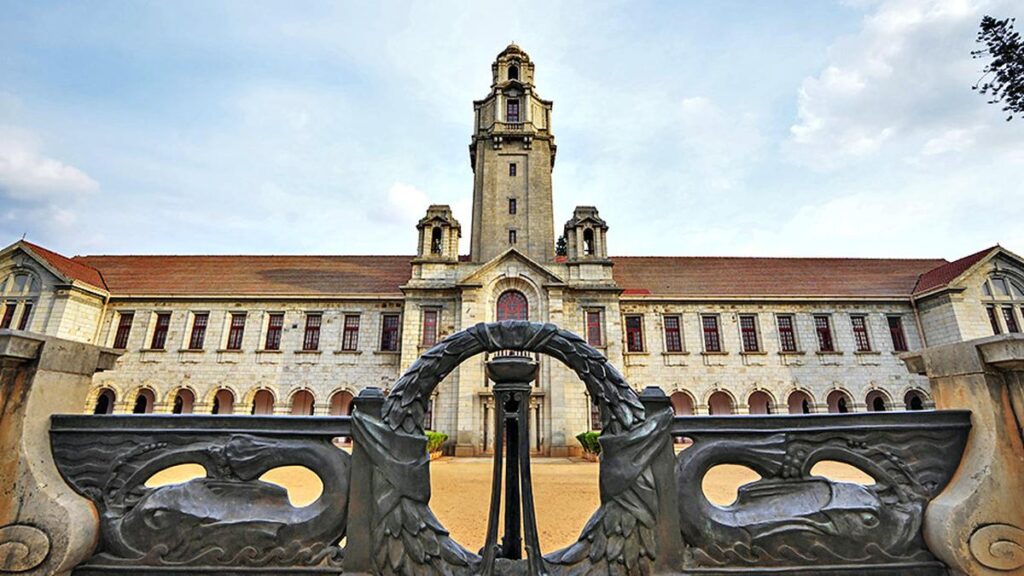
The last year saw several occasions that attempted to throttle academic freedom. Indian Institute of Science (IISc) — the country’s top-ranking institute — had to call off a discussion on the Unlawful Activities Prevention Act (UAPA), organised by its students and faculty. Last March, the Jawaharlal Nehru University (JNU) administration decided to impose fines to the tune of ₹20,000 for protesting on the campus — a decision withdrawn later. The sanctity of academic freedom recently came into question when two important scholars resigned from their positions at Ashoka University following the publication of a paper that argued that the ruling party won a disproportionate share of seats in the 2019 Lok Sabha polls. Can Democracy survive without dissenters and critical thinkers? What better platform than an academic institute to hold such discussions? Such discussions are crucial in a functioning democracy, regardless of anyone’s ideology or belief system. Placing restrictions on the articulation of one’s opinion or ideas can negatively impact academic work and hurt the research environment.
As it is clear from the speeches given in high-profile meetings like the G-20 Summit, even those who hold top positions in the current ruling dispensation are proud to single out India’s role in upholding democratic values. The Prime Minister himself proudly proclaimed in a venue provided by the American Congress during his last year’s visit to the U.S. that democracy is part of Indian DNA. But what is missing in such performative chest-thumpings on the Indian democracy is the lack of concern for the freedom to conduct civic discourses that are vital for participatory democracy to thrive.
The downward spiral of academic freedom is reflected in India’s position in the indices prepared by the V-Dem Institute of the University of Gothenburg in Sweden. India’s academic freedom index is in the bottom 30% among 179 countries, according to last year’s report, published on February 2, 2023. On a scale of 0 (low) to 1 (high), India scored 0.38. The V-Dem Institute’s indicators include freedom to research and teach; freedom of academic exchange and dissemination; institutional autonomy of universities; campus integrity; and the freedom of academic and cultural expression. What’s ironic is that this score is lower than India’s bête noire Pakistan’s 0.43. Independent India had seen such low rankings only during the Emergency years of the mid-70s.
In recent times, we have seen many such examples of the government intimidating scholars working in the knowledge sector into submission, either by intimidation or sending them to jail. Unlike in New Zealand, academic freedom is not mentioned in the Indian constitution; it is subsumed in the concept of the right to free speech as a part of the fundamental rights. A guaranteed principle in the Indian constitution, it is subject to reasonable restrictions emanating from the considerations of sovereignty, integrity, security, public order, and morality. The constitutional guarantee of freedom of speech is often hindered by the application of sedition law (Section 124A) or more commonly misused clauses under Section 295A – hurting religious feelings. Defamation lawsuits are now becoming tools of harassment against artists and academic scholars.
The fading academic freedom is also reflected in the gradual erosion of institutional autonomy, including the selection of Vice-Chancellors and heads of academic institutes. The UGC Act of 1956 specifically says that its core function is to monitor the standards in universities, “in consultation with universities”, besides regulating fees, determining the qualifications for faculty, and setting minimum standards of instruction. As Niraja Gopal Jayal wrote in one of her essays, the UGC “has seen a steady accretion of power and displayed a heightened propensity to function as an instrument of the ministry”.
The lack of academic autonomy is the bane that extends to the State level, too, and numerous instances of academic interference by the State governments have come to public attention. It has now become a common practice, both at the Central and State government levels, to make university appointments on political considerations rather than merit. The poor leadership of universities thus developed works in tandem with the ruling parties to further their political interests, thus internally sabotaging the autonomy.
In a detailed analysis of academic freedom published in India Forum, Nandini Sundar and Gowhar Fazili say, “Contracts with faculty should include a clause on the protection of academic freedom, i.e., they will not be penalized for extra-mural activities…Global institutions can help by including ‘Academic Freedom’ as one indicator in university rankings…” It is time that universities and higher education centres formulate system-wide protections against restricting academic autonomy and freedom of expression, taking a leaf out of the Education Act legislated by the Government of New Zealand, wherein, among other points, academic freedom is defined as: “the freedom of academic staff and students, within the law, to question and test received wisdom, to put forward new ideas and to state controversial or unpopular opinions”.
The political parties, in the larger interest of the nation, must begin consultations with faculty bodies and students’ associations to change the current sorry state of academic freedom and autonomy in the country.
We are celebrating the 75th year of India’s existence as a Republic. It is time to remember that we are yet to realise Tagore’s vision of a nation, where the “mind is without fear”, as invoked in his soul-stirring poem, which was written when India was still a colony of the British.
(C.P. Rajendran is an adjunct professor at the National Institute of Advanced Studies, Bengaluru; he is the author of the upcoming book, The Rumbling Earth – The story of India Earthquakes, to be published by Penguin Random House. Courtesy: The Hindu.)
❈ ❈ ❈
In another, more recent article on the same theme, Academic Censorship has Become the Norm in Indian Universities, published in The Wire, Prof. Apoorvanand adds (extract):
For the last 10 years we see only one kind of meets being held in the colleges. They cannot be called academic and intellectual fora. They are platforms created for propaganda for the regime and one kind of ‘Indianness’ or ‘nationalism.’ If you do a survey of the topics across colleges, you would find a monotonous similarity. It is a campaign to indoctrinate young people. For it to succeed, the authorities keep other voices and ideas out of the reach of the students.
We also need to understand that such seminars give teachers an opportunity to engage with their peers who can approach the same issue differently. It helps them in enriching their own scholarship. Such platforms are occasions where academics from different disciplines sit together. This is how you evolve an interdisciplinary culture on the campus.
My colleague said that he would not let the matter rest. It was not about only one individual. But it was also about him. How can you think that one would agree to save the seminar by sacrificing one speaker? It is to compromise the very integrity of academic or scholarly exchange. If you exclude what is thought to be the most problematic viewpoint for the authorities, then what is the point of the whole exercise? Academics do not fear confronting the most disagreeable topics.
I know the said ‘problematic’ colleague. While teasing him about this, I said, “We lost this seminar because of you!” He tried to laugh but this was not the first time this had happened to him. He rarely invited by universities for such talks. So when he gets an invitation, he first tries to dissuade the organiser, knowing that this would happen sooner or later. Recently, he was invited by a university in Delhi to give a public talk. The organiser was sure that she wanted to do it. But a day before the event, he got a letter from her informing him that the talk was being ‘postponed’ because of unforeseen reasons. He later learnt that the organiser was served a show cause notice for inviting him.
Reasons are foreseen though. It is not only him. He can name at least half a dozen names that have been declared persona non grata in academic premises. If a courageous teacher manages to call them, they are bound to get disinvited the previous evening. There are times when students call them but they too are discouraged by the authorities. This list is growing.
This is not the story of Delhi University alone. While this story was unfolding, I was sitting in another state with teachers from different universities. When I told them about this, they opened up. Some of them were from ‘elite’ universities like Ashoka or Krea and Azim Premji University. There too the authorities have become very cautious. Names of the speakers have to be cleared by the authorities. There is an order in one university to share the slides the speakers would use three days before the event. The teachers are also cautioned against going to places that could upset the regime or accepting invitations from people who are considered to be its critics.
I recalled my conversation with one of the top political scientists of India. He was encouraged to leave his job at one of these elite private universities. So his description has changed from political scientist to critic of the regime. He was invited by the faculty of the Jawaharlal Nehru University (JNU) to deliver their prestigious Krishna Bharadwaj lecture. He started getting calls from the university office requesting him not to come. These were polite requests asking him to decline the invitation to save himself from any unpleasant situation that might arise if he came to JNU. He told them that this request has to come from the organisers. He cannot dishonour their invitation. Eventually, he went but the hall was locked. So he gave the lecture in the open and it resulted in a larger turnout than what the hall could have accommodated.
Be it public universities or private ones, censorship has become the norm. Certain topics are evaded, certain scholars are avoided. But we think that scholarship is still alive and thriving in Indian universities. The academic show must go on.
(Apoorvanand teaches Hindi at Delhi University. Courtesy: The Wire, an Indian nonprofit news and opinion website. It was founded in 2015 by Siddharth Varadarajan, Sidharth Bhatia, and M. K. Venu.)