The ECI’s Credibility Collapse
Parakala Prabhakar
There was a time when the public’s trust in the Election Commission of India (ECI) was higher than its trust in the judiciary. In his address on the occasion of the ECI’s golden jubilee in 2001, the then President, K.R. Narayanan, cited the finding of an opinion poll and said: “…people rated the Election Commission very high, far ahead of… even the judiciary.”
Today, that trust is eroding. A survey conducted by Lokniti-CSDS in six States between July 31 and August 13 found “a consistent decline in high trust in the ECI across all six States and a corresponding increase in the numbers of those who do not trust the ECI”. In Uttar Pradesh and Delhi, the percentage of people who do not trust the ECI went up from 11 per cent in 2019 to 31 per cent and 30 per cent respectively, now. In Kerala, it rose from 10 per cent to 24 per cent; in Madhya Pradesh, it rose from 6 per cent to 22 per cent.
Overall, 21.7 per cent of the survey’s respondents said that the ECI was working “completely” under pressure from the government; 31.7 per cent said it was “somewhat” under pressure; only 11.6 per cent said that the ECI was “not at all” under pressure. The ECI’s crisis of credibility is now deep.
The loss of credibility is well-earned by the ECI, both by its own conduct and by the way it has now come to be constituted. The selection committee that picks Election Commissioners (ECs) and the Chief Election Commissioner (CEC) now has a government majority of two to one. This has rendered the appointment of ECs and the CEC akin to any other routine bureaucratic posting.
But that need not necessarily render them partisans of the ruling party. We must not forget that T.N. Seshan was also appointed by the government of the day. But his conduct in office was exemplarily independent. He fiercely asserted the commission’s autonomy. The conduct of the present ECs and the CEC is in stark contrast to that.
During the run-up to the 2024 general election, the ECI did not apply the Model Code of Conduct to Prime Minister Narendra Modi and the ruling party’s lead campaigners. The Prime Minister could deliver as many as 110 hate speeches unchecked.
Also, the phasing of the election schedule defied logic. It was open to suspicion that it was designed to give the ruling party at the Centre an advantage. Consider the lack of logic in the following: Andhra Pradesh, which has 25 seats, went to the polls in a single phase, but Odisha, which has only 21 seats, voted in four phases. Tamil Nadu, which has 39 seats, voted in one phase, but Bihar, which has only 1 seat more, had a seven-phase election.
On polling figures, the ECI has no credible explanation for the inordinate delay in announcing the final numbers. It took 11 days to announce the final polling tally for the first phase. For the second, third, fourth, fifth, sixth, and seventh phases, the delay was 4, 4, 4, 3, 3, and 5 days, respectively.
Hollow claims
The ECI’s claims of logistical and connectivity challenges and exhaustion suffered by polling personnel are unconvincing. The example of Chandigarh, a small Lok Sabha constituency with a radius of 15 kilometres, first-rate connectivity, and having as few as 614 polling booths and registering a turnout of only 4,48,547 voters, discredits the ECI’s excuses. The election body took five days to announce the constituency’s final voter turnout. The discrepancy between the provisional and the final voting figures there was 5.18 per cent. What logistical and other challenges the ECI faced there remains a mystery.
Full details of the second phase are still not available, more than a year after the election. The ECI has not yet given the State-wise and constituency-wise provisional polling data for the phase. We have only the final polling data. One cannot, therefore, know what the discrepancy is between the provisional figure and the final tally of polling for this phase in different States.
There is, indeed, cause for deep suspicion about this phase because the strike rate of the ruling National Democratic Alliance (NDA) led by the BJP was extraordinarily high in it. For example, out of the eight seats that went to the polls in Uttar Pradesh in this phase, all were won by the BJP/NDA.
The following are the coalition’s strike rate figures for other States where some seats went to the polls in phase 2: 3 out of 3 in West Bengal, 6 out of 6 in Madhya Pradesh, 3 out of 3 in Chhattisgarh, 1 out of 1 in Tripura, 1 out of 1 in Jammu and Kashmir, 12 out of 14 in Karnataka, 10 out of 13 in Rajasthan, and 4 out of 5 in Assam.
Is the high strike rate of the BJP/NDA in any way related to non-revelation of full poll data for this phase? The suspicion lingers.
High discrepancy
Meticulous research by experts of the Vote for Democracy (VfD) group revealed that there is an unusually high discrepancy between the provisional polling figures announced after the official closing time of voting and the final polling figures notified by the ECI after a delay of several days. The discrepancy amounted to around 5 crore votes: 4,65,46,885 to be precise.
The increase was as high as 12.54 per cent in Andhra Pradesh and 12.48 per cent in Odisha. In both the States, the BJP/NDA scored remarkably high: in Andhra Pradesh, it won 21 out of 25 seats, while in Odisha it won 20 out of 21 seats.
In sharp contrast, in Uttar Pradesh, in the five phases out of seven where the difference was well under 0.50 per cent, its score was low. To illustrate, in phase 3, the discrepancy was 0.21 per cent and it could win only 4 out of 10 seats.
In phases 4, 5, 6, and 7, the discrepancy was 0.34 per cent, 0.23 per cent, 0.01 per cent, and 0.25 per cent respectively. The score of the BJP/NDA in these phases was 8 out of 13, 4 out of 14, 3 out of 14, and 7 out of 13 respectively. The overall tally of the BJP/NDA in the State came down from 64 in 2019 to 36 in 2024.
This shows that the smaller the discrepancy between provisional and final voting figures, the lower the gains are for the BJP/NDA. And the larger the discrepancy, the higher its gains. It is difficult to draw any other inference.
Serious irregularities
There is one more irregularity in the 2024 election figures accessed from the ECI’s data that merits serious attention. Association for Democratic Reforms, a non-profit organisation, reported that there are discrepancies between votes polled and votes counted in 538 out of 542 constituencies that voted.
Except in 4 seats out of 542, namely Amreli, Attingal, Lakshadweep, and Daman & Diu, there was a discrepancy between the votes recorded in the electronic voting machines and the votes counted as reported by the ECI.
In 176 constituencies, a total of 35,093 more votes were counted. In 362 constituencies, 5,54,598 fewer votes were counted. A total discrepancy of 5,89,691 votes was detected in 538 constituencies. The ECI has no explanation for this gross irregularity.
Then there is another worrying irregularity. The last phase of polling was held on June 1, 2024. Counting was held and results were declared on June 4. But the final election data of the seventh phase was announced by the ECI on June 6, two days after the results were declared.
In other words, two full days after declaring the results, the ECI told the country how many votes were actually cast in the last phase. If the ECI thinks that it does not matter that polling numbers were declared after the results were announced, it should explain why the country should not worry about it.
Unreleased data
The ECI’s 2024 data present yet another mystery. Final voting figures are available State-wise as well as constituency-wise for all the phases. However, constituency-wise provisional polling data are not available for any phase. Even in this mystery, phase 2 has an additional distinction: for this phase, both constituency-wise and State-wise preliminary polling figures have not been revealed by the ECI, even as of today. We are yet to learn how the ECI would justify this.
All these anomalies inexorably lead to one inference: the mandate of 2024 is questionable. The data from the VfD report show that an increase of nearly five crore votes could have resulted in a minimum of 79 seats across 15 States changing hands. If these irregularities had not taken place, the ruling BJP-NDA in all likelihood could have been limited to 214 seats and the opposition alliance might have had a tally of 303 seats.
There is a reason why the BJP-led NDA has reduced the ECI to a government department-like entity and made its functioning unaccountable and its practices opaque.
No vote for majoritarianism
The country’s electorate historically has never given a mandate to a majoritarian, divisive agenda. When the BJP’s predecessor, the Bharatiya Jan Sangh, went to the polls on a Hindu majoritarian plank, its best ever vote share never even touched 10 per cent. Only when it put aside its majoritarian agenda was the BJP able to increase its popular vote and manage to reach 25 per cent vote share and attract allies to stitch a coalition capable of forming the government.
For a long time, however, the party had to battle taunts of a “hidden” agenda and it had to repeatedly declare its faith in India’s secular creed. To be acceptable, it often had to say that it too was secular, “genuinely” secular, but secular, nonetheless.
It is important to recall that the 2014 and 2019 campaign pitches of the BJP-led NDA were not majoritarian. They emphasised development, removal of poverty, fighting corruption, bringing back black money stashed abroad, creating jobs, national security, ending policy paralysis, etc. In the run-up to the 2014 general election, Modi, who was the prime ministerial candidate, declared that the fight was not between Hindus and Muslims but between Hindus and Muslims on one side and poverty and unemployment on the other.
However, in 2024 the BJP’s pitch was unabashedly communal, divisive, and majoritarian. Its agenda to turn India into a Hindu rashtra and recast the republic into a “civilisational state” came to the fore. Broad hints were dropped that a new Constitution would be brought in. Consecration of the Ayodhya Ram temple, abolition of Article 370, and decisive moves towards a uniform civil code too were major themes in the campaign. The Prime Minister’s rhetoric prominently featured dog whistles.
Election manipulation
When sparsely attended rallies made it apparent that the electorate was hostile to the communal and divisive pitch, the BJP/NDA had no option but to resort to election manipulation to retain power. The delay of 11 days in announcing the final voting figures for phase 1 and the non-revelation of the provisional data of phase 2 can only be seen in this light. Similarly, the delay of three to five days in announcing the final polling figures for the remaining phases of polling. With a robust digital communications network in the country, even a day’s delay in making the final data public is unjustifiable.
If doubts are being cast over the sanctity of the 2024 mandate, the responsibility for it rests entirely on the ECI. The Commission has become unaccountable and inaccessible. It stonewalls RTI queries. It does not meet civic groups or respond to memorandums submitted by them. It rarely speaks to the media, and when it does, it makes grotesque remarks such as machine-readable voter lists would be doctored.
It invokes privacy concerns to withhold and destroy video recordings of the electoral process. It says it does not have the names and contact numbers of Returning Officers. It collaborates with the government to amend Rule 93(2)(a) of the Conduct of Election Rules, 1961, to deny citizens access to many critical election records. The ECI has not made Form 17C Part-I available in the public domain for anyone to verify exactly how many votes were cast in each booth in the country.
While the nation’s attention is focussed on the “voter cleansing” (à la ethnic cleansing) that is happening in the name of Special Intensive Revision in Bihar, it is important not to lose sight of the ECI’s gross irregularities that render the Lok Sabha 2024 mandate questionable.
If questions are not raised and the ECI is not compelled to be transparent and accountable, future elections in the country will become even more farcical. If the 5 crore vote discrepancy in the 2024 election is not called out, the next election might see a 10 crore vote increase and the one after that might even have a 20 crore increase. The danger of India turning into a notional democracy is real.
[Parakala Prabhakar is a political economist and author of The Crooked Timber of New India. Courtesy: Frontline magazine, a fortnightly English language magazine published by The Hindu Group of publications headquartered in Chennai, India.]
❈ ❈ ❈
SIR is the Biggest Disenfranchisement Exercise in History: Yogendra Yadav
Soni Mishra
[Political scientist and activist Yogendra Yadav has launched a scathing attack on the Election Commission of India’s (ECI) SIR (Special Intensive Revision) of electoral rolls in Bihar, calling it an unprecedented assault on voting rights. In an exclusive interview, Yadav—who has petitioned the Supreme Court against the exercise—says that over 65 lakh voters have already been excluded from Bihar’s draft electoral rolls, and at least 2 crore more could be disenfranchised because of the kind of documents the Election Commission has sought from the voters.
The controversy centres on what Yadav characterises as a fundamental shift in India’s electoral process, where citizens must now prove their eligibility rather than being presumed eligible. He says the Election Commission has rejected commonly held documents, such as Aadhaar cards, while demanding certificates that most citizens don’t possess.
Yadav’s fierce criticism of the SIR comes amid a broader political storm over “vote chori”, with opposition parties accusing the Commission of systematic manipulation ahead of Bihar’s 2025 Assembly election. The Election Commission defends the exercise as necessary housekeeping to remove duplicate and fraudulent entries, but critics argue it amounts to mass disenfranchisement targeting marginalised communities.
The Supreme Court is currently hearing multiple petitions challenging the SIR process, with Yadav dramatically producing three voters declared “dead” by the Commission to underscore his claims of systemic failures.]
● ● ●
Excerpts:
Soni Mishra: The Election Commission held an unprecedented press conference amid swirling questions about voter lists and the furore over Bihar’s SIR of electoral rolls. Critics say many questions remain unanswered, and the briefing did little to redeem the Commission’s image. What does holding this highly unusual press conference tell us about the ECI’s state of affairs?
Yogendra Yadav: Unusual is the right word. It’s not that the Election Commission hasn’t held press conferences before—they have, and should. It’s their duty to give facts to the public, explain misgivings. But remember the context. This press conference is held on the same Sunday that leaders of all leading Opposition parties start a yatra against what they call vote chori. Rather unusual—Election Commission doesn’t usually do that. Those who understand media might say that’s headline management, so vote chori shouldn’t be the headline. Parties do media management; constitutional bodies don’t.
It’s also unusual because it happens when very serious questions were raised about the Commission’s credibility. That morning, The Hindu carried a CSDS [Centre for the Study of Developing Societies] survey showing Election Commission’s credibility had hit rock bottom—levels never recorded in 30-40 years. It happened after the Leader of the Opposition, Rahul Gandhi, presented evidence about voter list manipulation in Bengaluru.
This was still an opportunity. I thought maybe the Election Commission would announce a transparent inquiry headed by some judge no one could point fingers at. The Election Commission could have refuted all opposition allegations without sounding combative. But nothing of that kind.
What the Election Commission did in its tone, content, posture, silence was truly something which doesn’t befit a constitutional body. The Chief Election Commissioner’s language—he was the only one who spoke, others sat like statues—was the language of a political commentator, a political leader, not a constitutional authority. He flatly refused to hold any inquiry about very serious and specific allegations. He refused to offer full facts on the SIR exercise in Bihar. He simply did not answer pointed questions posed to him.
SM: The Chief Election Commissioner said doubts regarding voter lists are often belatedly raised by political parties, suggesting these allegations are politically motivated. Your response?
YY: That’s possible. “Why are you saying it now? Why did you not say it before?” Perfectly all right. But you are a constitutional body. Even if all political parties fail to raise an objection—every single party fails to examine the voters list—is it not your responsibility to do so?
Someone comes and says your magazine carries many errors, and you say, “Why are you saying this a month later?” All right, sorry I didn’t say it earlier. But should you, as editor, not be concerned? When someone raises serious questions, instead of answering those questions, you start questioning those who are raising the questions. You don’t come across as someone whose intentions are very good.
Also, remember that creating this kind of evidence is not easy. The Election Commission provides voters’ lists in the most unhelpful manner. Refuses to give machine-readable electronic voter lists, which would be easy to analyse. Remember the time when these lists are released—most political parties are busy fighting elections, often fighting each other. That’s not the moment when they can do something like this. But even if they failed in their duty then, that’s no justification for the Election Commission failing in its own duty.
SM: The Chief Election Commissioner said Bihar SIR was especially necessary because of questions raised about voter lists recently.
YY: That’s a ridiculous argument. There was a British serial called Yes Minister with an episode where three politicians are standing. Someone says, “Very serious stuff, something needs to be done.” The second says, “Well, here is something.” The third says, “Okay, let’s do it.” That’s a logical fallacy. Someone should be asking: is there something that needs to be done? Is SIR the answer?
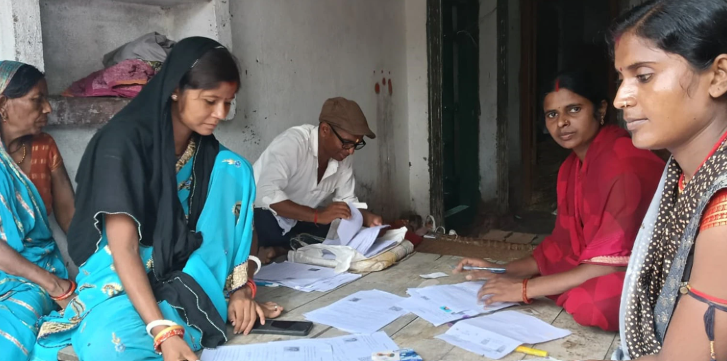
SIR combines medicine with steroids and poison. We have a problem with voters’ lists. Annual revision isn’t very good because it doesn’t involve house-to-house verification. So, we do need intensive revision where the BLO [Booth Level Officer] goes to every house, verifies personally, gives papers for objections, comes back having made thorough corrections and modifies the list. Yes, we need it.
But that’s not what’s happening in Bihar. Number one: the existing voter list has been junked. It’s not being revised—it’s been junked. Number two: the onus of being on the voters’ list has been shifted to the voter for the first time in India’s history. It’s a lie that the Chief Election Commissioner repeated that in 2003 we asked for enumeration forms. No sir, no such forms were asked.
The second extraordinary, unprecedented and illegal thing is that it has shifted the onus to each person. You have to fill the form, and if you don’t return it by the following day, your name will not figure even on the draft electoral rolls. And third, for the first time in India’s history, the presumption of citizenship has been overturned. Everyone is being asked, “Show me documents.” This has never happened. In the past, if there were doubts, specific reasons to doubt citizenship, then documents were demanded. But en masse asking everyone to produce documents—documents the government knows people don’t have—while refusing to accept documents everyone has, this has become an exercise in disenfranchisement.
SM: The Commission appeared aggrieved at allegations it was involved in “vote chori”. How do you view their defensive tone?
YY: There are two ways to counter allegations. Political parties counter with counter-allegations. Constitutional authorities do not. When you hold constitutional office, you expect attacks. This isn’t the first time.
The person who attacked the Election Commission most viciously in recent history happens to be Prime Minister Narendra Modi in 2002. Not once, in dozens of public meetings during the Gujarat election. He attacked not just the Commission but Chief Election Commissioner J.M. Lyngdoh by name. By parodying his name, he would say “James Michael Lyngdoh” mockingly, intending to remind listeners he was Christian. Allegations were made that he was taking instructions from Rome. What did the Election Commission do? Did Lyngdoh hold a press conference? Threaten Modi with consequences? Ask him to apologise? None. He went about his job. That’s how constitutional authorities react.
Everyone has reasons to be aggrieved. Every human being feels bad when accused, but that’s precisely why there are protocols. Street fight is not the job of a Chief Election Commissioner. If he feels particularly aggrieved and thinks the nation owes an answer and Rahul Gandhi should apologise, he should resign, go to the street, hold a rally and counter Rahul Gandhi. That’s his right as a citizen, not as Chief Election Commissioner. Not as an umpire. If, as an umpire, a player thinks poorly of you, you do not start a brawl on the field.
SM: What does this mean for ordinary voters’ trust in the Commission’s ability to hold free and fair elections, the allegations that are being made against the Election Commission, and what is being described as its “inadequate response’’?
YY: “Inadequate” is very polite. The Election Commission isn’t giving inadequate explanation—it’s refusing to give explanation. It’s threatening those demanding explanation.
On trust levels, CSDS [Centre for the Study of Developing Societies]—which I was a member of 13 years ago before I resigned—has tracked Election Commission trust across three decades. During the Seshan era, Lyngdoh era, trust in India’s Election Commission was only matched by trust in the Indian Army. It was higher than India’s judiciary.
Today all polls show it’s declining rapidly. The report in The Hindu last week showed in five States it had plummeted to levels not recorded before. When you see the Election Commission doing what it’s doing, trust drops.
Political parties making allegations doesn’t affect public trust levels. But when the Election Commission refuses to hold inquiry, refuses to come clean, launches counter-offensive with filmy dialogues, doesn’t answer questions in its own press conference, public trust is bound to decline. When a survey institution reports declining trust levels and you lodge FIRs against that institution, public trust declines further.
SM: FIRs have been launched against CSDS, and ICSSR [Indian Council of Social Science Research] has initiated action. Your thoughts?
YY: Clearly an indication that Election Commission and government have come together. Arms of government are used to silence Election Commission critics.
I should clarify—when BJP trolls attacked CSDS, they invoked my name: “Yogendra Yadav’s CSDS.” In 2013, I went on leave from CSDS. In 2016, I resigned. For 13 years, I’ve had nothing to do with CSDS surveys. When I was in the Aam Aadmi Party, they were saying we’d get 32 seats, CSDS survey said only four. These people have no idea people can behave independently.
We must remember the pretext being used to attack CSDS. The pretext is a tweet, not the survey on Election Commission. There’s no question about methodology or findings. The pretext is one tweet by Sanjay Kumar. He wasn’t reporting survey findings—as a public writer he said in Maharashtra the number of voters between parliamentary and Assembly elections had gone down. If Sanjay’s claims were true, that would have gone against Rahul Gandhi.
How convoluted can public discourse get? If that tweet was correct, it would have helped BJP, gone against Rahul Gandhi. Rahul’s team was saying voters had increased; that tweet showed they decreased. Nothing can be more ridiculous than CSDS feeding Congress statistics about Maharashtra.
Election Commission feels bad that surveys report their reputation is declining. One response: look in the mirror. Maybe you’re doing things because of which reputation is going down. Second: shoot the messenger. Election Commission, draws upon police authority to launch ridiculous FIR against a research organisation.
ICSSR has issued a show cause notice. Remember what happened to Centre for Policy Research a year ago—they were told unless you change the director, we’ll close your centre. The director had to go; the centre was practically closed. This is assault on academic integrity, academic autonomy. It is an attempt to curb voices that may bring truth to the Election Commission.
SM: You’re a petitioner in the Supreme Court case against Bihar SIR. You said this is the biggest disenfranchisement exercise in world history. Please elaborate.
YY: To an ordinary viewer, it looks like there’s some problem in Bihar’s voter list, and the Election Commission is making an effort to clean it up. That’s erroneous. This is not a revision of the electoral rolls. Number one: This is a de novo rewriting of the election list. Number two: it’s rewriting the rules by which voter lists are made. For the first time in this country’s history, the onus of being on the voters’ list has been shifted to voters. For the first time, the presumption of citizenship has been overturned.
These two things together can have only one consequence. Wherever you have self-initiated registration rather than State-initiated registration, the proportion of people on the voter list goes down dramatically. Compare India with the US. In India, if there are 100 persons 18-plus, the voters’ list is 99 per cent. In the US, it’s only 74 per cent. This is bound to be the case wherever you shift responsibility onto voters. The bottom 20 per cent will be knocked out.
The kind of documentary requirement in a country where many people don’t have documents—not because they willfully decided not to have them, but the documents being demanded simply don’t exist. Ordinary people have no way of having those documents. Election Commission perversely refuses to accept documents people do have. What documents do ordinary people have? Aadhaar, ration card, Election Commission’s own photo identity card. Election Commission says sorry, we won’t accept any of these, including our own identity card. Bring birth certificates, passport, degree. How many people have that? We calculated at least 50 per cent of relevant population between 18-40 in Bihar don’t have even one of these documents.
Already 65 lakh names have been excluded. Bihar’s adult population is 8 crore 18 lakh. When SIR started, Bihar had 7 crore 90 lakh voters. So SIR should have done net addition of 28-29 lakh voters. Instead it has thrown out 64.5 lakh names. Second round is ongoing; more people will be excluded. Twenty-nine lakh were already in deficit, 65 have been thrown out, and another 20-30-40 will be thrown out further.
Give me one example in India or anywhere in the world where in one single exercise nearly 10 million or more people were excluded from voters list. This is just the beginning—Bihar is only the first State. The order applies to entire India.
SM: What percentage of the 7.24 crore enrolment forms would be accompanied by necessary documents?
YY: The Election Commission refused to give these figures. In court, their advocate said 1 crore people submitted documents—he boasted. But think about it: out of 7.24 crore, only 1 crore submitted documents. Out of 7.24 crore, some will get bypassed if their names were on the 2003 electoral rolls. Election Commission initially boasted 4.96 crore would be covered because they were on the 2003 list—they didn’t even calculate how many may have died, moved out. The current estimate is a little less than 3 crore.
Exclude those 3 crore. We’re left with 4.24 crore required to give documents. Of them, 1 crore have given documents—though we don’t know if they’re the kind Election Commission wanted. From field experience, most people just gave Aadhaar thinking they’ve given documents and they’ve been uploaded. They haven’t been verified yet.
If Election Commission strictly goes by its own order—Aadhaar not acceptable, EPIC [Electors Photo Identity Card] card not acceptable, ration card not acceptable—at least 2 crore more would be disenfranchised. Election Commission doesn’t have courage to do that, so they’re finding backdoor ways of bypassing their own order. The Indian Express reported Election Commission is devising a back route: if you can show any relative was on 2003 electoral roll, we’ll give you bypass.
I shouldn’t object to this bypass if it’s given. But asking you to show relatives on electoral list is completely illegal. Indian Constitution recognises only your date of birth, place of birth and parents. Any other relative is irrelevant to proving citizenship.
The easiest way would be to say we accept Aadhaar. Election Commission’s weird logic is that Aadhaar doesn’t constitute proof of citizenship. My question and the judges’ question in the Supreme Court: Is a matriculation certificate proof of citizenship? Caste certificate? Land patta? If all these aren’t proof of citizenship—and “Niwas Praman Patra” (Residence Certificate), which has been issued in the name of a dog and a tractor isn’t either—why are you excluding Aadhaar? The Election Commission is hell-bent on ensuring that the document ordinary people have shouldn’t be accepted.
The name of the game is filtration. Deletion. Isn’t it funny that after an exercise of one month where Election Commission claims to have met 8 crore people, they haven’t found one single person who should have been included. Not one. You found 65 lakh names for exclusion. Did you not meet one person who should have been on electoral rolls but was missed? This was an exercise in exclusion, deletion, disenfranchisement.
SM: You brought voters declared dead to court. Walk us through that moment.
YY: The Election Commission was taking a completely false position that these 65 lakh people hadn’t submitted the enumeration forms. “What can we do?” They said 22 lakh were dead. We said, “Give us the list of the dead.” The Election Commission wouldn’t. We tried hard, and some BLOs and local officials at great risk gave us lists for a few panchayats. We checked dead names—many were alive.
Justice Surya Kant, in a previous hearing, said, “Don’t worry. Even if there are 15 people alive and the Election Commission thinks they’re dead, bring them to us.” He probably didn’t mean to bring them literally, but we thought the only way to puncture this lie was to actually bring those people.
We had 22 names. Through political parties I asked if some could come to court. There were less than 36 hours available. About 10 turned up in Delhi. It was hard getting them passes into Supreme Court, harder to enter courtroom. Finally only three managed inside. Even that was enough to puncture the lie. A paper lie punctured with papers is one thing. A paper lie punctured with actual human beings is altogether different. The Election Commission’s reaction—calling it “drama, theatre”—showed they couldn’t stomach the truth. Truth was standing in front of them.
Fortunately, Justice Surya Kant said ordinary people of this country coming to Court is a good thing. I’m grateful for that recognition. This is one of those rare moments when truth doesn’t have to speak through papers. Truth was standing there.
SM: How much relief does the Supreme Court’s interim order provide?
YY: It’s a positive step. But the interim order is only about those 65 lakh excluded altogether. The remaining 7.24 crore people on the draft electoral rolls whose names still have to be scrutinised, who still are required to give documents, remain. That’s coming up for the next hearing on Friday. The court would hopefully issue interim orders about that as well.
SM: The Election Commission says SIR will be conducted nationwide. Your view on extending this beyond Bihar?
YY: If Election Commission says we want door-to-door enumeration to double-check, triple-check every name, I’d have no objection. Do it anywhere. Give yourself sufficient time, have transparent guidelines, ensure no one is thrown out without proper notice, inquiry. Please give as much attention to inclusion as exclusion because there are large numbers of deserving names not on electoral rolls. Errors of commission and omission both need attention.
If the Election Commission wants to do that, it should be welcomed, facilitated. Everyone should contribute. But if the Election Commission wants to carry SIR in the present format—which shifts the onus onto the voter, takes away the presumption of citizenship—then it’s a deadly exercise in knocking down the base of Indian democracy, which must be opposed by every freedom-loving Indian.
SM: What immediate steps can the Election Commission take to redeem its credibility?
YY: Number one: order an inquiry into the allegations the Leader of the Opposition, Rahul Gandhi, made. He’s put together at least 1 lakh papers. Order inquiry—not internal inquiry. Following principles of conflict of interest, someone involved in making the voters’ list cannot carry out an inquiry about it. Invite an ex-judge whose track record inspires confidence and trust. It’s not merely completing formality—if the Election Commission is genuinely interested in inspiring trust, what does it have to hide? Ask an ex-judge to investigate. The Election Commission will step back, provide every possible paper.
Number two: In SIR, please come clean. Offer time. Don’t rush it. At least to begin with, detach SIR from the Bihar election. To save yourself from the worst political allegations, step back. Detach it from Bihar. Do it for the rest of the country, as it should be done.
Number three: improve the system of voter list registration in India. Something I’ve advocated for two decades is simple sample check. India has some of the world’s finest statistical systems. We have birth and death registration for every person. We know there could be errors, so independent sample check is commissioned—less than 1 per cent. Both statistics are released publicly every year.
Why can’t the Election Commission ask for a sample check? I wouldn’t even say 1 per cent—0.1 per cent is good enough. Use NSSO [National Sample Survey Office], Government of India’s own offices, Registrar General of India and check the quality of electoral rolls. Why don’t you do that? All these would inspire confidence. Making shallow partisan political statements and giving filmy dialogues does not inspire confidence in neutrality and autonomy of Election Commission.
(Soni Mishra is Deputy Editor at Frontline. Courtesy: Frontline magazine, a fortnightly English language magazine published by The Hindu Group of publications headquartered in Chennai, India.)