❈ ❈ ❈
Ali Khan Mahmudabad has Fulfilled the Task of a Political Scientist
Neera Chandhoke
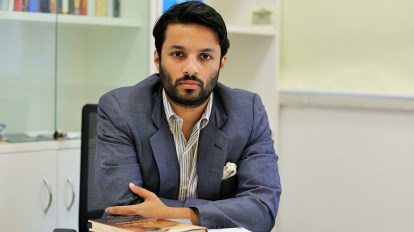
On May 29, 2025, the Supreme Court extended the interim bail granted to the political scientist Ali Khan Mahmudabad till the third week of July. He had been arrested on May 18, because a couple of people finding his social media posts during Operation Sindoor objectionable had filed first information reports against him.
Initially, the court had instructed him not to post any opinion related to the events preceding and during the Operation. A day ago, these restrictions were reiterated. “We do not want him to run a parallel commentary on the issues under investigation,” stated the honourable Supreme Court.
Many learned commentaries have been published on The Wire on the legal and political implications of the arrest of Mahmudabad. It is perhaps time to ask some fundamental questions of the entire issue, because they relate to the way we think and conceive of our right to freedom, and the way it is threatened by coercive politics in the country.
Plato’s Apology – ‘apologia’ in Greek stands for defence speech – represents the trial of Socrates conducted in 399 B.C.E. When he is accused of practicing subversive modes of philosophy known as Socratic questioning, Socrates stands before the jury of wise men in ancient Athens raising significant philosophical issues. His accusers allege that the method ‘makes the worse argument the stronger’ and ‘corrupts the young’. Socrates asks the jurors a loaded question. What, he asks, “do I deserve to suffer or to pay because I have deliberately not led a quiet life?”
“I did not follow the path that would have made me of no use either to you or to myself, but I went to each of you privately and conferred upon him what I say is the greatest benefit, by trying to persuade him not to care for any of his belongings before caring that he himself should be as good and as wise as possible, not to care for the city’s possessions more that for the city itself, and to care for other things in the same way. What do I deserve for being such a man?”
“What do I deserve for being a such a man?” This question can be asked by, and on behalf of Ali Khan Mahmudabad of the political science department in Ashoka University.
What has he said that any sane, rational human being will not believe in? That war is evil. Prime Minister Narendra Modi had famously said to President Vladimir Putin of Russia that this is not an era for war. May I with full respect remind the prime minister that there never can be an era for war. War devastates, it kills babies, it destroys cities and villages, it demolishes hospitals and houses, it annihilates the environment for decades to come, it is the ultimate curse that can befall a people. We just have to look at our screens to see what military aggression has done to Palestine and Ukraine, how many lives have been destroyed, how many psyches have been deranged, how many people have been denied basic goods like drinking water, food, and medicines, and how they died hungry, tired, and exhausted.
Do we really have to be told what horror has been unleashed by war? When Ali foregrounded the dangers of war in his social media post, he was warning hotheads who have been baying for blood to not defend war as it is the ultimate dreadfulness that confronts human beings.
Whose interests are served by war?
The poet Amrita Syam scripts an imaginary conversation between Subhadra, one of the wives of the hero of Kurukshetra, Arjuna, and Krishna in the poem Kurukshetra. Fought in the name of justice, the human costs of the war were unimaginable. Generations were wiped out as two branches of a family confronted each other over property. Subhadra whose young son Abhimanyu was brutally slain asks Krishna to account for these losses:
The war was, after all, a fight for a kingdom
Of what use is a crown
all your heirs are dead
When all the young men have gone
…And who will rule this kingdom
So dearly won by blood
A handful of old men
A cluster of torn hopes and thrown away dreams.
The poem should make us think. What is society left with when the grisly play of violence is over? Yudhishtir is convulsed with grief. What he, wonders, in volume eight of the Mahabharata, is the value of power, if the path to this goal is drenched with the blood of his own people?
“This heavy grief however is sitting in my heart, that through covetousness I have caused this dreadful carnage of kinsmen”.
Ali reminded us of these costs when he spoke against war. He is a political scientist, and the task of a political scientist is to remind young people that there is a world we should strive for, a world of values, a world of humaneness, a world of solidarity, and a world without war.
This the task of the social scientist and of humanities, to teach students to think beyond the foolishness of rabid nationalism towards a world of civility and of civilisation. This is the obligation of the political scientist. And I speak as a political scientist.
A university without the humanities [and social sciences] wrote the celebrated Marxist literary critic, Terry Eagleton, is like a bar without beer. Without these two academic components, we will not have universities, we will have technical training institutes. Ali was writing as a political scientist, but above all as an Indian citizen who was concerned about the effect of warmongering on our society and our country. Listen to the message, do not shoot the messenger.
Is our country so fragile?
One of the two cases filed against Ali by a BJP functionary is on the basis of his post in which he urged his fellow citizens to also feel for minorities who have been lynched. So, one Yogesh Jatheri complained that Ali’s post promoted hatred, was prejudicial to national integration, and endangered the sovereignty of the country. Really? The sovereignty of a great country like India is going to be compromised by a social media post? The mind boggles. Is our country so fragile?
I would request professional filers of complaints against this or that sane and eminently reasonable academic, to remember our history and understand what our constitution is about.
Even as independence came to India drenched in blood spilled by the Partition, the Constituent Assembly, which had met in December 1946, was drafting a constitution for the country. The Partition raised fresh challenges to the project of social and political transformation. Cavalcades of Hindus left from what had become Pakistan for India. Caravans of Muslims left India for a newly minted Pakistan. A substantial number stayed behind in the home of their ancestors.
Consider the mammoth task confronting the assembly. Indians who had been divided along the lines of politicised religion had now to accept each other as fellow citizens in a democratic political community that was being fashioned by the Constitution. They had descended to the lowest level of humanity during the Partition of the country. Utter chaos in northern and eastern India had begun to resemble Thomas Hobbes’ state of nature; war of all against all. But the solution that Hobbes proposed in his 1651 Leviathan, a powerful state, was simply not enough. Society had to be transformed and social relations had to reworked and strengthened.
The makers of the constitution had to introduce a modicum of sanity in a society that had been wracked by insanity. A new society had to be created out of the wreckage of the old, it had to cluster around norms that were as far removed from religious mobilisation and enmity that marked pre-partition and partition days of the 1940s, as possible. The political community had to be reinvented.
Seeking to lay down principles that could serve as the fulcrum of a democratic political .community, the makers of the constitution institutionalised the normative precepts of political theory-freedom, equality, justice, and fraternity or solidarity. These principles had to bring Indians together on issues that concerned themselves and their fellow citizens. And progressive poets tried their best to further this project. In 1961, Sahir Ludhianvi, writing the lyrics for B.R Chopra’s Dharamputra (1961) which was directed by Yash Chopra, and in which N. Dutta gave the musical score, asked a significant and shattering question in: ‘Yeh kiska lahu hai, kaun mara?’. Whose blood is this? Who died? The moment we ask this question we realise the promise of fraternity in the Preamble of the constitution.
The makers of the constitution, many of whom were well versed in political liberalism were aware that democracy falters if people do not care about others, about their ill health or poverty, or who do not raise their voices if a particular community is subjected to rampant injustice and the rest are indifferent. Without fraternity we remain a mere bunch of individualised self-interested rights bearers. Without fraternity, we continue to live in Thomas Hobbes’s state of nature, isolated and cut off from civic virtues that complete us as human beings. Fraternity enables us to come together in networks of shared concerns and establishes a dialogical relationship with our fellow citizens so that we can think out the distinction between what is and what can be. This is what Ali was reminding us of. He reminded us of the Preamble of the constitution. Was he therefore arrested for upholding the constitution?
Let me end by returning to Socrates’ defence.
“Perhaps someone might say: But Socrates, if you leave us will you not be able to live quietly, without talking?” Socrates’ reply is memorable. “Now this is the most difficult point on which to convince some of you” he said. “If I say that it is impossible for me to keep quiet because this means disobeying the god, you will not believe me and will think I am being ironical. On the other hand, if I say that is the greatest good for a man to discuss virtue every day and those other things about which you hear me conversing and testing myself and others, for the unexamined life is not worth living for men, you will believe me even less.”
But examining our lives means that we must learn to think. We however live in an environment that dissuades and discourages thinking. This is perhaps understandable from the perspective of the ruling class. For as Julius Caesar remarked in Shakespeare’s immortal play bearing the same name:
“Let me have men about me that are fat; Sleek-headed men, and such as sleep o’ nights: Yon Cassius has a lean and hungry look; He thinks too much: such men are dangerous.”
Ali has been penalised because our society has been taught to distrust intellectuals. It should realise that intellectuals are the lifeblood of our society because they advocate the thinking human being.
[Neera Chandhoke was a professor of political science at Delhi University. Courtesy: The Wire, an Indian nonprofit news and opinion website. It was founded in 2015 by Siddharth Varadarajan, Sidharth Bhatia, and M. K. Venu.]
❈ ❈ ❈
For Mahmudabad’s Bail Observations, We Cannot Blame Just the Supreme Court
Sarayu Pani
The recent decision in the bail hearing of professor Ali Khan Mahmudabad re-emphasises the decade-long evolution of the Supreme Court from a broadly anti-majoritarian institution to a more executive friendly institution.
And while much is made of the role played by specific judges, and the pressures of an increasingly authoritarian government, what ails the judiciary today goes beyond the individual. The ongoing erasure of constitutional values in decisions in favour of the prevalent popular morality indicates that the gap between constitutional values and the values prevalent in society has become too big to be bridged top-down.
Constitutional morality versus popular morality
When Dr. B.R. Ambedkar presented the draft constitution of India to the Constituent Assembly in November 1948, he explained the rationale behind retaining detailed administrative law provisions in the constitution.
Constitutional morality, or a widespread acceptance of authority acting within the norms of the constitution, was, Ambedkar argued, not prevalent in India:
“Constitutional morality is not a natural sentiment. It has to be cultivated. We must realize that our people have yet to learn it. Democracy in India is only a top-dressing on an Indian soil, which is essentially undemocratic.”
The constitution, therefore, provided that these democratic values would be imposed top down, with as little as possible left to local administrative discretion. If the government strayed from these values (as was always expected given its dependence on electoral popularity), the judiciary was to pull it back.
Today, more than 75 years after the adoption of the constitution, it is fair to say that Dr. Ambedkar’s fears were not unwarranted. Despite constitutional guarantees of religious freedom and equality, Muslims in some parts of the country live under a quasi-apartheid system, where the state offers them neither equality before the law, nor the equal protection of the law. A collective made up of both state actors (including the police and municipalities) and non-state actors (like majoritarian “vigilante” groups) enforce increasingly arbitrary and blatantly discriminatory laws against them using both judicial and extrajudicial punishment, like physical violence and house demolitions.
Despite the constitutional prohibition of untouchability, Dalit people, in most parts of the country (including states that have been at the forefront of anti-caste movements like Tamil Nadu) remain subject to caste atrocities. While specific aspects of democracy like universal adult franchise have been widely embraced and internalised, a broader moral evolution into a society internalising values like equality, religious freedom and a rejection of localised violence has not materialised.
There is a tendency to blame institutions for this failure.
The tenures of specific judges in the judiciary are evaluated based on how well they upheld constitutional values (or how badly they eroded them). Legal scholars like Gautam Bhatia, while explaining the evolution of Supreme Court, argue convincingly on the element of choice. Judges, Bhatia argues, can always choose interpretations that advance liberty over state power, and some do.
While this is no doubt true, it tends to overshadow a connected issue: the long-term success of this top-down enforcement of democratic values on an essentially undemocratic society depended on large-scale social reform that would bridge the gap between the prevalent on-ground morality and these constitutional values. Without this work, there was always the risk that instead of constitutional morality permeating downwards into society, popular morality would permeate upwards into the judiciary.
Hindutva and popular morality
The politics of Hindutva is often described as running ideologically counter to the politics of caste. This is true in many ways. Caste, which within the Hindu fold, still determines what you eat, whom you eat with, whom you marry and what violence or discriminations you may be subjected to, remains both the primary marker of identity for most people who identify as Hindu and the basis on which they vote. Hindutva on the other hand relies on political (or at least electoral) consolidation around a broader Hindu identity cutting beyond caste to assert numerical dominance.
While the politics of Hindutva requires unification across castes, it cannot seek the dismantling of caste in any meaningful way, because it remains ideologically committed to the “sanatana dharma”, where castes are separated by strict endogamy and commensality and associated with ranked differences of diet and occupation. While modernisation and urbanisation have altered caste relations to a certain extent, these practices have not substantially altered.
To consolidate a voter base while preserving this inherently divisive social structure, Hindutva typically uses anti-Muslim violence as a glue. The methods of coercion used against Muslims, however, continue to draw on norms long legitimised in caste- based societies, including dehumanisation and violence. Hindutva violence against Muslims often replicates caste-violence with a new target.
For example, in caste-based societies, dominant castes are permitted to restrict or disallow public religious or social processions undertaken by lower castes or prevent such processions from entering particular areas of villages. Despite legal protection, Dalit weddings and funeral processions are often still targeted in this manner by higher castes.
This form of coercion when applied against Muslims manifests as a clampdown on namaz being offered in public. Before Eid earlier this year, the police in parts of Uttar Pradesh warned Muslims not to conduct namaz on the roads or even on their own private rooftops, and deployed drones to monitor compliance. In other parts of Uttar Pradesh, mosques were covered with tarpaulin sheets by the state so as to invisibilise them during Holi.
Further, castes are separated by strict endogamy. Over 90% of marriages in India remain caste endogamous. Pew Research noted in 2021 that over 64% of Hindus felt it was very important to prevent women from marrying across caste lines. When this is applied by Hindutva to Muslims, it manifests as “love jihad” conspiracy theories and coercion enacted against inter-faith couples. Interestingly, the percentage of Hindus (67%) who felt it was very important to prevent women from marrying across religious lines isn’t significantly higher than the percentage opposed to inter-caste unions.
Traditionally, castes are also separated by commensality – the practice of sharing cooked food only within the caste or with castes of equal or higher status. While urbanisation and modernisation have modified the nature of this to some extent, the cultural focus on “pure veg” restaurants or vegetarian-only housing societies indicates that this remains important. This has been applied by Hindutva to Muslims. The last few years have seen widespread rumourmongering (including on the news) accusing Muslims of spitting into the food they prepare to discourage others from dining at Muslim owned or operated restaurants. It has also resulted in local regulations in some parts of the country requiring Muslim owned eating establishments to display the names of the owners and the workers.
Finally, in traditional caste-based societies, legitimate violence is not reserved to the state. Historically caste groups enacting brutal violence to enforce caste norms also enjoyed broad social legitimacy, and sovereign sanction. This same framework is used by Hindutva groups to target Muslims. The starkest example of this has been in the enforcement of cattle slaughter laws. Muslims accused of cattle slaughter (or even just carrying meat) have been subjected to brutal and often fatal violence by non-state actors. The police (representative of the state in this example) are often bystanders to this violence. By refusing to intervene, and at times by working with these groups, the state de facto confers legitimacy to their violence.
The similarity between caste violence and anti-Muslim violence is evident in news stories from the last week alone: a Dalit man in Gujarat was lynched for the basic courtesy of calling a caste Hindu boy “beta” (son) and four Muslim men were stripped and beaten brutally in Aligarh for transporting meat.
Hindutva, unlike constitutional morality, therefore does not require a caste-based society to reform, alter its fundamental moral code, or reject the inherent brutality of the caste-system. It simply redefines or expands the permitted targets of this brutality to include Muslims. This means that in the absence of large-scale social reform challenging the core principles of caste-based segregation, dehumanisation and violence around which much of Hindu society remains organised, Hindutva will generally appeal to a broader section of society than constitutional values like equality or individual freedom.
Institutions, which are at the end of the day made up of individuals drawn from the same society, are not immune to this tendency. What ails our judiciary today goes beyond the choices of individual judges, or even the pressures of an often authoritarian ruling government. It is the ongoing erasure of constitutional values in favour of the prevalent popular morality, by individuals within the judiciary who, due to their own social conditioning, no longer hold constitutional values to be paramount. While this tendency may be checked or reversed from time to time by specific judges, the broader trend is unmistakable. As the inherent social norms of a caste-based society are hardened, formalised and legitimised by the Hindutva state, challenging them judicially will only become more difficult.
Eradicating the social legitimacy conferred on the oppressions of caste-based society (whether enacted against oppressed castes or minorities) is far easier said than done. It is worth noting that even in states with very successful redistributive anti-caste movements, like Tamil Nadu, caste violence by dominant backward castes against Dalits remains prevalent. And yet, difficult or not, wide-spread social reform must be put back on the agenda. Understanding that institutions cannot be permanently kept secure from the prejudices of the society they operate in, also means that understanding institutional reform cannot be discussed in isolation from social reform.
(Sarayu Pani is a lawyer by training. Courtesy: The Wire, an Indian nonprofit news and opinion website. It was founded in 2015 by Siddharth Varadarajan, Sidharth Bhatia, and M. K. Venu.)