❈ ❈ ❈
Modi’s SHANTI Bill Promises Peace for Nuclear Suppliers – A Free Pass for Accidents Caused by Defective Equipment
The Wire Analysis
The Modi government on December 15 introduced a new Bill in the Lok Sabha that scraps India’s strict liability law for suppliers in the event of nuclear accidents and also allows private companies to enter a sector hitherto reserved for specialised public enterprises.
The Sustainable Harnessing and Advancement of Nuclear Energy for Transforming India (SHANTI) Bill, 2025, comes weeks after Prime Minister Narendra Modi said that his government is preparing to open India’s nuclear industry to private players to bolster the country’s energy security and strengthen its technological capabilities. The new Bill will replace the Atomic Energy Act, 1962 – India’s primary legislation for the nuclear sector – and the Civil Liability for Nuclear Damage Act, 2010, which US nuclear suppliers have long campaigned against with the aggressive support of Washington. The new law – which will facilitate US companies making multi-billion dollar reactor sales – also comes against the backdrop of difficult trade negotiations with the Trump administration, in which the latter has been demanding more business opportunities in Indian for American corporations.
When the 2010 law was enacted, the Bharatiya Janata Party joined the Left in opposing the dilution of two key provisions, as demanded by the US nuclear lobby:
- Section 17 (b), which grants an Indian nuclear operator a ‘right of recourse’ – as far as compensation it is liable to pay victims – where “the nuclear incident has resulted as a consequence of an act of supplier or his employee, which includes supply of equipment or material with patent or latent defects or sub-standard services.”
- Section 46, which said the operator of a nuclear plant would not be exempt “from any proceeding which might, apart from this Act, be instituted against such operator”, i.e. which allows victims of an accident to sue the operator for damages (tort claims).
In January 2015, six months after Narendra Modi became prime minister, the Ministry of External Affairs sought to placate the US administration’s demand for dilution of the 2010 CLNDA by issuing an ‘FAQ’ in which it sought to read down these two provisions. US President Barack Obama responded by publicly declaring that India and the US had “achieved a breakthrough understanding on two issues that were holding up our ability to advance our civil nuclear cooperation, and we’re committed to moving towards full implementation”.
With US nuclear suppliers still not satisfied, however, American pressure for the formal repeal of the two liability provisions slowly built up again. Given the domestic political sensitivity, the Modi government had hoped the issue would remain on the back-burner indefinitely but the return of a super-transactional Donald Trump to the White House appears to have forced its hand.
While the SHANTI Bill gives US nuclear suppliers a free pass even in the event of an accident caused by defective equipment, it camouflages its diluted liability provisions within a new version of India’s overarching atomic law – presumably in an attempt to avoid the political damage that a standalone, highly visible reversal of the 2010 law’s liability provisions would generate.
Accordingly, in its Statement of Objects and Reasons the Bill merely says that the proposed legislation is aligned to “achieve the objectives of increasing the share of nuclear energy in the total energy mix of India, facilitate innovation in nuclear science and technology, expand its applications to non-power applications and continue to honour India’s obligations towards safety, security, safeguards and towards nuclear liability.”
What the new Bill does is to delete the entire clause on supplier liability from the subsection on the operator’s right of recourse (Section 17 of the CLNDA and Section 16 of SHANTI) in the event of an accident. As for tort claims against nuclear operators, which Section 46 of the CLNDA allowed, the new draft law shuts the door on that possibility by barring the jurisdiction of civil courts in the event of a nuclear accident (Section 81, SHANTI):
“No civil court shall have jurisdiction to entertain any suit or proceedings in respect of any matter which the Central Government, Board, the Appellate Tribunal, the Claims Commission or the Claims Commissioner, as the case may be, is empowered to determine or adjudicate, under this Act…”
The other major provisions of the new Bill is that it will allow any government department, or government company, or any other company including joint ventures to build, own, operate or decommission a nuclear power plant or reactor.
Under the earlier regime, only the Nuclear Power Corporation of India Ltd (NCPIL) was authorised to operate nuclear power facilities.
Once passed, licenses will be provided to private players to build, own, operate or decommission a nuclear power plant or reactor, the fabrication of nuclear fuel including conversion, refining and enrichment of uranium-235 up to such threshold value, or production, use, processing or disposal of other prescribed substance, as may be notified by the Central Government.
Further private players can also get licenses for the transportation or storage of nuclear fuel or spent fuel or any other prescribed substance; the import, export, acquisition, or possession of nuclear fuel or prescribed substance, equipment, technology or software, that may be used for the development, production or use of prescribed substance or prescribed equipment; or any other facilities or activities as may be notified by the Union government.
Somewhat contradictorily, however, the Bill adds that the Union government will exclusively undertake the enrichment or isotopic separation of prescribed substance or radioactive substance, the management of spent fuel, including reprocessing, recycling, separation of radionuclides contained therein and management of high-level radioactive waste arising thereof; the production of heavy water and its upgradation by isotopic separation. Unless the government’s intention is to not treat U-235 as a ‘prescribed substance’.
Liabilities and damages
Like the CLNDA, the SHANTI Bill says that the nuclear operator shall be liable for damages from an accident except those caused by “a grave natural disaster of an exceptional character, an act of armed conflict, hostility, civil war, and insurrection or terrorism.” It also says that the maximum amount of liability in respect of each nuclear incident shall be the rupee equivalent of three hundred million Special Drawing Rights or such higher amount as the Union government may, by notification, specify. Special drawing rights are supplementary foreign exchange reserve assets defined and maintained by the International Monetary Fund.
However, the SHANTI Bill drops a key provision of CLNDA (Section 5(2)) that prevents operators from using compensation paid for “nuclear damage” under the law as a legal shield against other, independent claims arising from the same incident under other laws, such as environmental damage, tort claims etc:
“Provided that any compensation liable to be paid by an operator for a nuclear damage shall not have the effect of reducing the amount of his liability in respect of any other claim for damage under any other law for the time being in force.”
The SHANTI Bill says that the Union government will be liable for nuclear damage in an installation owned by it, or if liability exceeds the amount of liability of an operator specified in the Second Schedule of the law, to the extent such liability exceeds the liability of the operator. It can also assume full liability for a nuclear installation not operated by it if it is of the opinion that it is necessary in the public interest to do so.
Like the CLNDA, the Bill also provides for the Union government to establish a fund to be called the Nuclear Liability Fund, in such a manner, as may be prescribed.
Since SHANTI is also meant to replace the AEA of 1962, the Bill envisages the same regulatory structure – an Atomic Energy Regulatory Board which will provide safety authorisation – but adds an Atomic Energy Redressal Advisory Council for redressal of disputes.
Opposition members object at introduction stage
While the bill was tabled on December 15, opposition members raised objections during the introductory stage.
“Permitting profit seeking private participation in ultra hazardous nuclear activities while simultaneously limiting liability while granting statutory immunities and restricting judicial remedies undermines the state’s non delegable public trust obligations over life, health and the environment,” said Congress MP Manish Tewari.
MoS Jitendra Singh in the Prime Minister’s Office however, said that Tewari’s objections could be taken up during the discussion on the Bill while only the introduction was being put forward at present and then went on to say that previous legislations had been brought to the House under Congress governments.
“The same house brought the Atomic Energy Act, 1962 when Jawaharlal Nehru was the prime minister and the Civil Liability for Nuclear Damage Act, 2010 was brought when Manmohan Singh was prime minister. Why suddenly there is a different party in power, the house has been forbidden from bringing this Bill?” said Singh.
The Bill in its Statement of Objects and Reasons also states that India has set an ambitious target to achieve energy independence with a roadmap for decarbonisation of the economy by 2070 and to achieve 100 gigawatt of nuclear power capacity by 2047.
“To achieve this goal, it is imperative to enact a new legislation to harness the full potential of India’s nuclear energy and indigenous resources through active involvement of both the public and private sectors. It further seeks to leverage the contribution of domestic nuclear energy for augmenting the global nuclear energy ecosystem,” it says.
[Courtesy: The Wire, an Indian nonprofit news and opinion website. It was founded in 2015 by Siddharth Varadarajan, Sidharth Bhatia and M. K. Venu.]
❈ ❈ ❈
EEFI Demands Withdrawal of SHANTI Bill, Terms it ‘Seismic Attack’ on Nuclear Framework
Newsclick Report
Terming the SHANTI Bill as “a seismic and dangerous attack on India’s nuclear framework”, the Electricity Employees Federation of India (EEFI) has called for its immediate withdrawal.
In a press statement, EEFI said the Bill “removes important safety and accountability safeguards while opening the door to large-scale private and foreign participation in the most sensitive and hazardous energy sector. “
Full text of press statement:
Press Release, 16 December 2025
Immediately Withdraw the SHANTI Bill
Stop Jeopardizing the Sovereignty and Security of People of India!
The Central Government has tabled the Sustainable Harnessing and Advancement of Nuclear Energy for Transforming India (SHANTI) Bill, 2025 in the Lok Sabha on 15 December 2025, seeking to repeal and replace the Atomic Energy Act, 1962 and the Civil Liability for Nuclear Damage Act, 2010. This is certainly a seismic and dangerous attack on India’s nuclear framework; the Bill removes important safety and accountability safeguards while opening the door to large-scale private and foreign participation in the most sensitive and hazardous energy sector.
We demand its immediate withdrawal and the conduct of full and transparent public hearings, with representation of all major stakeholders, as well as independent technical experts, before placing any changes to the Acts related to nuclear power.
The SHANTI Bill repeals the Atomic Energy Act, 1962, which kept civilian nuclear activity under strict public control, and replaces it with a profit-oriented framework that opens large parts of the nuclear value chain to private players under a licensing framework. The Bill’s clauses enabling private operation of reactors, fuel-cycle activities, and large foreign investment create a precedent of privatisation of risk while socialising catastrophic liability.
By repealing the Civil Liability for Nuclear Damage Act, the SHANTI Bill removes the operator’s statutory “right of recourse” against suppliers, a provision in the existing CLND Act that made such recourse possible in certain circumstances. Removing operator recourse to suppliers shifts the economic burden of defective supply and systemic failures away from private firms that profit from supplying and selling of reactors. Where the operator cannot sue suppliers for latent defects, the victims and the State are forced to shoulder the consequences.
Further, the Bill continues an operator liability framework capped at 300 million Special Drawing Rights, or approximately ₹3,690 crore, which is manifestly inadequate for a major nuclear accident and is orders of magnitude smaller than internationally comparable standards. The CLND Act had created a strict liability regime focused on victim compensation and contained mechanisms, including limited operator recourse, to ensure accountability. The SHANTI Bill substantially weakens this framework.
Actually, since the enactment of the CLND Act, multinational nuclear reactor suppliers, particularly Westinghouse of the United States and Areva (subsequently taken over by EDF of France), have refused to supply reactors or invest in India’s nuclear sector. During President Obama’s 2015 visit to India, the Modi government attempted to circumvent this issue by proposing an Indian Nuclear Insurance Pool as part of a liability risk management framework. However, this initiative failed to satisfy foreign suppliers, who continued to insist on dilution of India’s liability law. Notably, even the existing liability cap under the CLNDA was not based on any technical or economic assessment of nuclear accident costs. Instead, it was a political compromise arising from the Indo – US Civil Nuclear Agreement of 2008, designed primarily to accommodate foreign suppliers.
The scale of potential nuclear damage far exceeds these limits: the Fukushima disaster in Japan has already cost over $200 billion. Despite this, international suppliers continue to demand total immunity, seeking to confine liability exclusively to the operator and within rigid monetary and time limits.
The Bill proposes a new regulatory structure and an independent nuclear safety authority on paper; however, the same legislative instrument simultaneously creates promotional and facilitative mechanisms for private entry. Any clause that allows executive appointment of regulators without Parliamentary confirmation, fixed tenure protection, transparent selection processes, or financial independence undermines the democratic obligations of the State. If promotional functions remain with the same ministry, or if promotional bodies are allowed to sit on regulatory boards, conflicts of interest are embedded in the statute. Provisions that limit the disclosure of safety reports, vendor certificates, or environmental monitoring data on vague “national security” grounds may be used to withhold vital information from affected communities.
EEFI demands that any new statute must define a truly independent Nuclear Safety Authority, with statutory tenure protection for its members, an open and transparent selection process based on technical qualifications, budgetary autonomy, a clear prohibition on dual roles between promotion and regulation, and mandatory public disclosure of safety audits and emergency preparedness plans.
The Bill explicitly promotes Small Modular Reactors (SMRs) and fast-track licensing to accelerate deployment. While the Bill does not expressly exempt SMRs from environmental clearance, it empowers the Central Government to prescribe licensing and approval procedures through rules, thereby creating scope for dilution of environmental impact assessment (EIA) and public hearing requirements. Any clause that bypasses statutory EIA, public hearings, coastal regulation norms, or land acquisition safeguards for SMRs is unacceptable. Smaller reactor size does not eliminate risks related to radioactive waste, siting, or cooling water requirements. EEFI demands that SMR deployment must comply with full EIA and social impact assessment processes, transparent siting criteria, and documented emergency preparedness plans, with no exemptions from public consultation.
The Bill frames private participation as a key economic objective but does not appear to strengthen worker safety, job security, or local grievance redress mechanisms in the context of increased commercialisation. The clauses licensing contractors and suppliers do not contain strict labour standards, union recognition rights, mandatory safety training provisions, or enforceable penalties for violations. The Bill’s current approach prioritises commercial procurement without embedding worker safeguards. There is no clear statutory mechanism guaranteeing long-term medical monitoring, livelihood restoration, or community compensation in the event of industrial or nuclear incidents.
EEFI supports the safe and responsible expansion of low-carbon energy. However, a nuclear law that privatises profits and socialises catastrophic risks, strips away established principles of liability and accountability, weakens independent regulation, and dilutes environmental and labour protections is unacceptable in a democratic republic. The SHANTI Bill, in its present form, would institutionalise legal structures that favour suppliers and investors over victims, workers, and local communities, without adequate Parliamentary scrutiny. The Bill vests sweeping discretion in the executive to permit foreign participation and technology transfer without mandatory Parliamentary approval, raising serious concerns regarding accountability, sovereignty, and long-term strategic control.
We therefore demand the immediate withdrawal of the SHANTI Bill and its referral to a Parliamentary Select Committee with mandatory hearings involving major stakeholders, trade unions, public health and environmental experts and State governments.
We further demand the reinstatement and strengthening of strict liability provisions, restoration of the operator’s right of recourse in defined circumstances, and removal of any inadequate insurance or liability caps; statutory guarantees of regulatory independence, including secure tenure, transparent selection, and budgetary autonomy, with a clear firewall between promotional and safety functions; and the enforcement of mandatory EIAs, robust worker protections, lifelong medical surveillance, and clear compensation frameworks for workers and communities. Finally, we demand explicit Parliamentary oversight over any foreign technology or ownership participation and all strategic fuel-cycle activities.
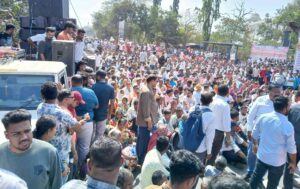
The EEFI calls Electricity Employees, Engineers and people in general to come on to the street and protest this draconian Bill – Our priority is Safety and Sovereignty of our Country!
Issued by
Sudip Dutta, General Secretary, EEFI
[Courtesy: Newsclick, an Indian news website founded by Prabir Purkayastha in 2009, who also serves as the Editor-in-Chief.]
❈ ❈ ❈
An Attempt to Amend National Laws to Enable Nuclear Reactor Imports
Pradip Datta
Efforts are underway to open the path for importing American nuclear reactors. India is trying to ensure that the 50% tariff penalty imposed by the U.S. is withdrawn. To that end, India has had to increase imports of American oil and cooking gas. After Prime Minister Narendra Modi’s recent meeting with U.S. President Donald Trump in Washington, Trump announced that India is preparing to relax its nuclear liability laws. This would open the door for the export of American reactors to India.
Several years ago, after suffering heavy losses in the reactor manufacturing business, the American company Westinghouse went bankrupt. Trump is now trying to revive the company. Reactors built with India’s domestic technology have a generation capacity of no more than 700 MW. In contrast, reactors of advanced countries have a minimum capacity of 1,000 MW. Therefore, importing foreign reactors would significantly increase nuclear power generation capacity.
It must be remembered that although India and the U.S. signed a nuclear agreement in 2008 during the Manmohan Singh era, it did not include any commitment to import nuclear reactors. Under the Atomic Energy Act of 1962, private and foreign companies do not have unrestricted access to India’s nuclear power sector. Only government-owned entities may operate nuclear reactors. The Indian government now wants to amend the Act to give private and foreign companies free access. If the law is amended, private or foreign companies will be allowed to invest in nuclear power projects.
Under the Civil Liability for Nuclear Damage Act of 2010, India is now looking to relax the financial liability of reactor or equipment suppliers in the event of an accident. This means reducing the amount of compensation they must pay and shortening the duration for which they remain liable.
Foreign equipment suppliers—such as America’s Westinghouse Electric or France’s EDF—have complained that this clause is an obstacle to investment. The issue is the “Right of Recourse,” which allows the operator to transfer liability to the supplier. In India, nuclear reactors are generally operated by state-owned companies such as NPCIL (Nuclear Power Corporation of India Limited). Besides foreign reactor manufacturers, domestic suppliers like L&T or Walchandnagar Industries may also be involved. Investors fear that this clause could make them liable for future accidents. To address this problem, the government is considering not only capping the liability within a fixed limit but also creating a state-backed fund.
Based on lessons from the Bhopal gas disaster and the Chernobyl nuclear accident, the nuclear liability law originally imposed unlimited financial liability on reactor manufacturers in the event of an accident. Former BJP leaders Arun Jaitley (Lok Sabha MP at the time) and Sushma Swaraj (then Rajya Sabha leader) played important roles in drafting the law. Now it has been decided that the maximum liability will be capped at ₹1,500 crore. The government is also considering a state-supported fund to deal with post-accident situations.
Efforts to involve Indian private companies in the nuclear power sector had begun earlier. However, the high cost of installing and operating nuclear reactors has kept industrialists uninterested. There are also safety concerns. To keep nuclear power competitive in terms of price, Small Modular Reactors (SMRs) with capacities of 30 to 300 MW are being considered important. Large industrial groups that own petrochemical, oil refining, cement, and steel plants could use SMRs to generate their own electricity. Companies such as Reliance Industries, Tata Power, Adani Power, Hindalco Industries, JSW Energy, and Jindal Steel have shown interest. If both laws are amended, they may proceed with installing SMRs.
SMR technology allows reactors to be built in factories instead of at the power generation site. This reduces construction cost and time by half. These two reasons make SMRs attractive as an alternative. However, the previously highly regulated nuclear fuel cycle would no longer remain so. The other risks associated with nuclear reactors also remain unchanged.
The circumstances under which these amendments are being proposed are worth noting. Not only in India, but worldwide the nuclear sector is struggling. There are 408 reactors operating globally (the highest number was 413 in 2006)—33 of these are in long-term outage (19 in Japan and 6 in Ukraine). Nuclear power contributed 17.5% of global electricity production in 1996; today it has fallen to 9%. The main reason is that nuclear power is extremely expensive—several times costlier than solar power. Meanwhile, solar and wind energy have grown at an unprecedented pace. Wind now contributes about 8.1% and solar 7% of global electricity—together rivaling nuclear power.
According to the World Nuclear Industry Status Report, investment in many new nuclear power projects in 2025 remains uncertain. Many projects have been delayed or cancelled, and many reactors have aged. Progress on small modular reactors (SMRs) is extremely slow; construction of none has begun.
In India, 7–10% of electricity is generated from solar, and 4.43% from wind. Together these renewable sources produce more energy than nuclear—and entirely through private investment, unlike nuclear power, which is funded by taxpayers. Nuclear power generates only about 3% of India’s electricity. Clearly, nuclear energy is not essential for development. So what is the rationale behind importing reactors?
When drafting the liability law, the authors kept in mind the far-reaching impact of the Bhopal gas tragedy and the Chernobyl nuclear disaster. To assess Chernobyl’s health impacts, the International Atomic Energy Agency (IAEA) set up the “Chernobyl Forum” in 2003. According to their estimates, the death toll was 4,000. The World Health Organization (WHO) published the same figure—because both are UN agencies and had agreed that no study on radiation effects could be published without IAEA’s written approval.
Later, in 2009, the New York Academy of Sciences published a book titled Chernobyl: Consequences of the Catastrophe for People and the Environment. It was authored by three scientists from Russia and Belarus. One was Alexei Yablokov, a Russian biologist and former scientific advisor to the President of Soviet Russia. Another was physicist Vasily Nesterenko, who headed Belarus’s Joint Institute for Power and Nuclear Research. After the accident, he flew over the reactor to assess the real situation. In 1990 he founded the BELRAD research center with Andrei Sakharov. After Nesterenko’s death from radiation-related illness, his biologist son Alexei Nesterenko led the institute—the book’s third co-author.
The book summarized about 5,000 scientific studies on health effects. Numerous researchers from Russia, Belarus, and Ukraine had published papers on radiation impacts after the accident. It reviewed how radioactive contamination affected populations from the U.S. to central China. According to the authors, between 1986 and 2004, 985,000 people died from Chernobyl-related radiation exposure—most in Ukraine, Belarus, and Russia. According to Yablokov’s calculations, 225,000 died in Europe and 19,000 outside Europe during that period.
Chernobyl was not the only disaster. Before it came the 1979 Three Mile Island accident, and later the 2011 Fukushima disaster, due to which 19 Japanese reactors remain offline even after a decade and a half. Reactor No. 4 at Fukushima continues to release radioactive water. With no space left to store millions of litres of contaminated water, Japan is releasing it into the ocean.
Nuclear power is this dangerous. Therefore, expanding it through private or foreign companies makes no sense. Amending laws to increase this public-harmful mode of electricity generation is a matter of grave concern.
The World Nuclear Industry Status Report 2025, a reliable annual global review of nuclear trends, reveals that aging reactors approaching retirement, delays and cancellations of projects, and uncertain investment plans are all reducing global nuclear capacity. For nearly two decades, the report has provided annual overviews of operational reactors, reactors under construction, shutdown units, and abandoned projects. According to the report, Taiwan officially abandoned its nuclear power program in May 2025.
The number of countries constructing new reactors has also decreased. Only 11 countries were building 63 reactors—2 fewer than in mid-2024, and 5 fewer than in 2023. Of these, 32 reactors were under construction in China, with 26 behind schedule—something unimaginable a few years ago. Still, China has surpassed France to become the world’s second-largest nuclear power producer after the United States. Meanwhile, Russia remains a major exporter of reactors, with 20 under construction abroad and 7 more at home.
In 2024, 7 new reactors were commissioned but 4 were shut down. Several saw reduced output. As a result, global nuclear capacity fell from 369.4 gigawatts at the end of 2024 to 368.7 gigawatts by mid-2025.
The average age of the world’s 408 operating reactors is 32.4 years. Among them, 266 have operated for more than 31 years, and 141 for over 41 years. By mid-2025, 218 reactors had been permanently shut down, representing nearly 110 gigawatts of capacity. In addition, 33 reactors were in long-term outage (LTO). The pace of decommissioning is very slow: only 23 reactors have been fully dismantled, and 9 no longer require regulatory oversight.
European countries are struggling with reactor decommissioning. The challenges are so complex that many nations are considering extending the life of aging reactors—technically difficult, expensive, and posing new safety risks. India will require technical support not only for reactor design but also for decommissioning. Any contract with foreign or private investors must include mandatory decommissioning commitments.
Large reactors typically take twice the planned time (five years) to build and cost two to three times the original budget. This is why SMRs are emerging as alternatives. But no SMR construction has begun anywhere yet. In the U.S., NuScale is preparing to build two SMRs. Two major SMR developers in Europe are facing financial difficulties.
It is essential to remember that SMRs do not guarantee safety. Their decommissioning requires even more caution and is time-consuming and expensive. Managing spent fuel and radioactive waste poses serious safety challenges.
A nuclear-armed country is itself the principal promoter of this electricity. Opponents of nuclear power have long argued that the atomic bomb and the reactor are twin brothers. A major German study published in 2017 supported the truth of that claim. After examining the financial condition of the 674 nuclear reactors built worldwide up to 2016, the German Institute for Economic Research found that nuclear-armed states are interested in expanding nuclear power primarily for military reasons—namely, to build bombs.
The institute reported that in every case where reactors were built under private ownership, governments provided massive subsidies to promote them. Not a single privately owned reactor was built without subsidy support, and in many cases the real purpose of setting up those reactors was military. In most instances, reactors were brought into operation while accepting financial losses. Nuclear power has never been economically profitable.
The rapid expansion of renewable energy is encouraging, but solar and wind generation drop when sunlight or wind is unavailable, creating volatility in the grid. This is making grid management difficult. Therefore, energy storage battery capacity must be expanded quickly.
References:
- World Nuclear Industry Status Report 2025
- “Cernobyl: Consequences of the Catastrophe for the People and the Environment”, New York Academy of Sciences, 2009
- Ben Wealer, Simon Bauer, Leornard Goke, Christian von Hirschhausen, and Claudia Kemfert, “High-Priced and Dangerous: Nuclear Power is not an Option for the Climate Friendly Energy Mix.” DIW Weekly Report
- VP Singh & Pradeep S Mehta, “Nuclear Revival Needs a Clear Road Map”, Financial Express, May 2, 2025
- “India Mulls Nuclear Policy Shake-Up, May Ease Entry of Private Players with Conditions”, Financial Express, May 19, 2025
- Incentivise Private Sector in Nuclear Power Generation, The New Indian Express, 30 Aug 2025
- Aanchal Magazine & Anil Sasi, “Two Key Amendments to Open Up N-Power Sector Likely in Winter Session, Nuclear Collaborations Driven More by the Need for Capital Than Technology: Official”, Indian Express, Nov 3, 2025
[Pradip Dutta is a prominent anti-nuclear and environmental activist based in Kolkata and an influential member of citizen movements opposing nuclear projects (such as Haripur). He is also the author of the critical work Nuclear Power: The Reality behind the Hype, which exposes the risks and dubious promises of nuclear energy.]