The Indian rupee losing its value against the US dollar should normally not draw undue attention as it has been a long-term trend. But three factors have contributed to concerns about the recent and ongoing descent of the rupee vis-a-vis the dollar. To start with, there has been a marked acceleration in the pace of its decline. The rupee lost 6 per cent in value between February and October this year, compared with just 0.6 per cent over the corresponding period in 2024. Second, this occurs at a time when the dollar itself has been in decline relative to other major, so-called hard currencies like the euro and the pound. And, third, the rupee has lost far more ground relative to the dollar than the currencies of many other “emerging markets”, like Malaysia, the Philippines, and Thailand, some of which have even recorded an appreciation.
The rupee’s free fall is of course partly due to US President Donald Trump’s tariff aggression and the fact that the levy on imports from India to the US is much higher, at 50 per cent compared with the 10-20 per cent imposed on competing countries. But while that does affect India’s forex receipts from merchandise trade through sectors dependent on the US market, India is far less dependent on exports in general and on exports to the US in particular compared with these “competitor” countries. So why the rupee performs poorly when compared with the currencies of these countries vis-a-vis the dollar remains a puzzle.
One factor that seems to play a role is the fear that the inflow of foreign capital, especially portfolio capital, into India, which has been exceptionally robust in recent years, is likely to reverse because of multiple sources of uncertainty. India has experienced a net outflow of close to $2 billion of portfolio capital over the past year; though that figure is small, the direction of the movement is worrying.
During years of global capital flow boom since 2004-05, and especially following the COVID-19 pandemic, India had emerged as a favoured destination. But with that rush having taken market indices to unsustainable levels, fears that expectations are likely to be belied were inevitable. That could possibly trigger larger net outflows of capital, which in turn could put pressure on the domestic currency.
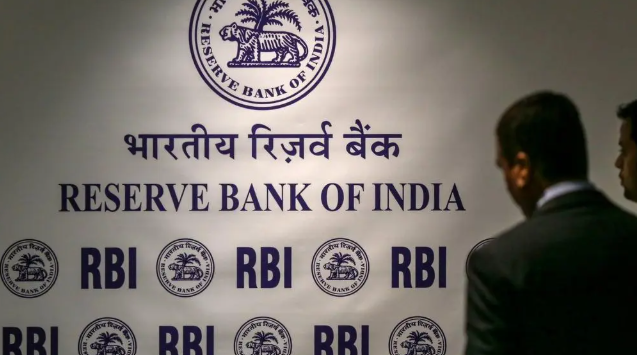
The RBI has in the past intervened in the market through sale of some of its dollar reserves to shore up the rupee. But what is remarkable in recent times is that it has refrained from such interventions. In fact, while the central bank’s net sales of dollars totalled $57 billion between October 2024 and February 2025, that figure fell to a little more than $8 billion over March-July 2025, when the rupee was losing ground. The signal that the RBI is not inclined to support the rupee has possibly increased speculation that the slide can accelerate in the context of the Trump administration’s aggression.
Given the trend in the rupee’s relative value, the RBI’s stance is difficult to explain. Not least because of the strength the central bank derives from its still large holding of dollar reserves. There are a number of possible explanations. One is that the central bank is going beyond its principal remit and seeking to counter the adverse effect of the Trump tariffs on India’s exports by permitting a substantial depreciation of the rupee, which partly neutralises the loss of export competitiveness by cheapening the dollar value of India’s exports. The results of such forbearance could be presented as an autonomous tendency rather than a trade-promoting offensive action.
There could, however, be a less “proactive” explanation for the central bank’s reticence to resort to its traditional open market intervention in response to the rupee’s slide: a fear of an excessive collapse in reserve levels.
Two factors could potentially contribute to such a collapse. The first is a widening of the current account deficit because of the potential effect on foreign exchange receipts of the massive hike in fees for the grant of H-1B visas from less than $10,000 to $1,00,000, and the increased likelihood of measures aimed at limiting digitally delivered software and information technology-enabled services that the H-1B decision signals.
These measures would substantially reduce dollar receipts from the exports of services as well as remittances from workers on temporary visas providing on-site services to the US clients of their employers. Such receipts have been quite crucial to India’s balance of payments stability. Inflows on account of the exports of “IT services” helped cover between 94 and 114 per cent of the merchandise trade deficit between 2023-24 and 2024-25.
And remittance inflows amounted to between 23 and 28 per cent of the value of the trade deficit. Any reduction in these inflows at a time when the trade deficit is already rising because of the hike in tariffs on India’s exports would widen the current account deficit. The fear that this could lead to a significant decline of its dollar reserves is possibly discouraging central bank action to voluntarily expend reserves to support the rupee.
That fear may not, however, be a deterrent if the central bank was confident that inflows of foreign capital would replenish reserves. But global and India-specific uncertainties spurred by the Trump administration’s actions are setting off a retreat of footloose portfolio capital invested in India’s equity and bond markets. That reverse flow is eating into reserves, rather than contributing to the financing of a larger current account deficit and shoring up reserve levels. This too would dissuade the central bank from using available reserves to support the rupee.
The result is that at a time when external developments are accelerating the rupee’s decline, the willingness of the central bank to act to stabilise the currency in weakening. That possibly explains the sharp depreciation of the rupee.
[C.P. Chandrasekhar taught for more than three decades at the Centre for Economic Studies and Planning, Jawaharlal Nehru University, New Delhi. He is currently Senior Research Fellow at the Political Economy Research Institute, University of Massachusetts Amherst, US. Courtesy: C.P. Chandrasekhar’s blog at networkideas.org.]