The debate about population in India must focus on women’s reproductive autonomy rather than impose control over their bodies through statistics and demographic narratives and anxiety. That is what India’s latest data on fertility urgently signals.
For the first time, India’s fertility rate has fallen to 1.9, below the replacement level of 2.1 necessary for a population to replace itself from one generation to the next. The Sample Registration System Survey’s Statistical Report 2023 shows that fertility has declined even in rural areas.
This challenges the widespread narrative that India is overpopulated. These figures indicate that the country is moving towards population stabilisation, with some projections suggesting that it may decline from as early as the 2060s, or closer to 2080.
The falling fertility rate has generated a new anxiety. The discourse has shifted from concerns about “too many people” to alarms about “too few births” to sustain the economy, workforce – and political power for some groups.
Politicians and religious figures are now urging couples to have more children, sometimes invoking cultural or patriotic motives or even explicitly linking it to political representation.
In the midst of these debates, women continue to be treated as instruments to serve demographic goals rather than as individuals who have personal freedom.
Fertility as a political project
From colonial population anxieties to post-Independence population control programmes, the Indian state has repeatedly sought to govern women in the name of development.
During the Emergency from 1975 to 1977, forced male sterilisation campaigns eroded public trust in family planning. However, in the following decades, the burden of population control shifted almost entirely onto women.
Mass sterilisation camps became the dominant form of contraception, often without informed consent.
By the late 1990s and early 2000s, several states introduced policies to discourage having more than two children. For example, Madhya Pradesh and Haryana barred candidates with more than two children from contesting local body elections to village panchayats and municipal corporations.
Rajasthan and Andhra Pradesh linked eligibility for welfare benefits with adherence to family size restrictions. Policies like these disproportionately harmed poor, marginalised and rural communities, for whom larger families are often shaped by livelihood insecurity, child mortality and the absence of social protection.
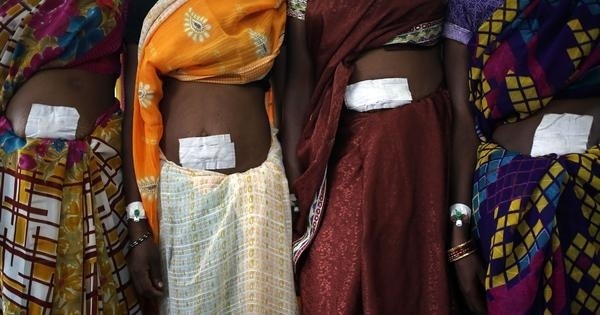
Even after India’s family planning programme was declared to be “target-free”, with no fixed numbers to achieve, sterilisation continued to dominate family planning statistics. Tragedies are inevitable when women are herded to be sterilised in assembly line procedures.
For instance, the deaths of 15 poor and marginalised women in Chhattisgarh in 2014 after botched sterilisation procedures exposed how a numbers-driven system devalues women’s lives, dignity and rights.
Layered onto this history is a persistent anxiety about the fertility of the Muslim community. Despite a steady decline in Muslim fertility that is in line with national trends, Hindutva narratives portray Muslims as a demographic threat who will outnumber Hindus, ignoring the social and economic conditions that shape reproductive decisions.
With India’s fertility rate at replacement levels, the pendulum has swung again. The demographic imagination that once demanded fewer births now demands more. Rashtriya Swayamsevak Sangh chief Mohan Bhagwat has, most recently in August, urged Hindus to have more children in national interest. The logic of control is the same, only the desired outcome has changed.
Governance of reproduction
Reproductive decision-making, particularly for women, is rarely an individual or autonomous choice. It is shaped by family and women’s disproportionate responsibility for gendered labour, such as unpaid domestic work and caregiving for family members, that is often undervalued, and constrains women’s negotiating power within households. These everyday labour expectations intersect with the hierarchies of caste and religion, further limiting women’s capacity to make their reproductive decisions.
Structural conditions such as child mortality, precarious livelihoods, unequal access to healthcare and education, and gender-based violence also influence reproductive behaviour.
Although the state sets demographic goals, women’s reproductive decisions are rarely shaped by their aspirations alone. They are constantly negotiated between what they desire, what is expected of them and what is possible within the patriarchal norms of their families, social institutions and market forces.
Women may be encouraged to bear children to fulfil familial obligations or, pressured to limit births in the name of responsibility or development, blurring the line between choice and coercion.
Reproductive governance operates through several mechanisms: incentives such as cash payments for sterilisation, disincentives such as being denied welfare benefits or political participation, and moral persuasion through ideals of responsible citizenship and motherhood.
These mechanisms disproportionately regulate women’s reproductive lives and operate unevenly across lines of gender, caste, class, and religion. Increasingly, market forces are also playing a role through the commercialisation of fertility services and assisted reproductive technologies (ART).
Together, the state, family, community and market manage reproduction in ways that constrain autonomy rather than enable free choice.
Fertility and electoral politics
This governance of fertility now extends into the realm of electoral politics. In 2026, India’s parliamentary constituencies will be up for reorganisation based on the latest population data after the census.
Southern states, where fertility has been below replacement levels for years now, fear a loss of political representation in favour of the more populous northern states. Political leaders are now urging families to have more children to safeguard political representation.
In March, Tamil Nadu Chief Minister MK Stalin encouraged families to have more children. Similarly, Andhra Pradesh Chief Minister N Chandrababu Naidu has linked welfare benefits to family size, saying that larger families may receive greater incentives to help manage the “demographic dividend”. Fertility is thus framed as a means to protect political representation or economic interests rather than a matter of individual autonomy.
Political, economic and social anxieties converge on women, erasing their personhood and reducing them to bearers of the nation’s demographic future. Fertility remains a lever of governance, an act of citizenship and loyalty, not a personal decision.
Reproductive justice
India’s fertility debate must shift from population targets to a framework of reproductive justice, affirming the right of every person to decide if, when, how many and under what conditions, to have children, free from coercion, incentives or moral pressure.
The right to make reproductive choices is protected under Article 21 of the Indian Constitution, which guarantees dignity, privacy, and bodily integrity. Landmark Supreme Court judgements, such as the 2009 ruling that dealt with the pregnancy of a woman with mental disability and the KS Puttuswamy vs Union of India verdict in 2017 on privacy, have affirmed that reproductive decisions are central to personal liberty.
A rights-based approach must go beyond controlling numbers. It must ensure access to a full range of contraception and safe abortion services without coercion, while also addressing caste discrimination, lack of education and employment and gender-based violence that constrain real choice. Without tackling these systemic barriers, “choice” remains an empty abstraction.
India needs a social and political environment that affirms reproductive autonomy and the right to live with dignity – whatever reproductive choices women make.
[Sarojini Nadimpally, a public health practitioner and researcher, works on issues related to gender, fertility and reproductive & genetic technologies. Courtesy: Scroll.in, an Indian digital news publication, whose English edition is edited by Naresh Fernandes.]