❈ ❈ ❈
Plastics in the World’s Oceans and Food: No Longer an Invisible Killer
Stewart Lawrence
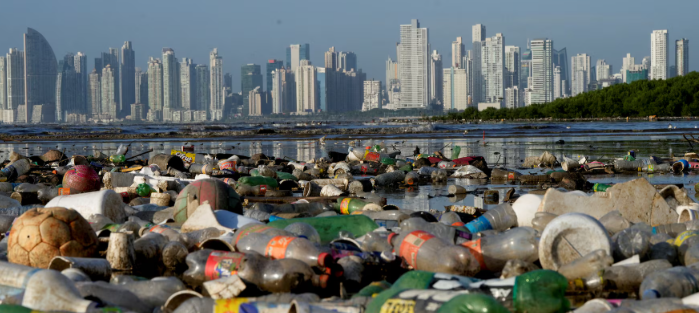
In recent years, heart-rending images of dead or dying sea mammals and fish, their stomachs stuffed with plastic, have shocked citizens around the globe. Reports indicate that the amount of plastic dumped into the world’s oceans has tripled over the past decade alone. And unlike oil spills, which can be remedied with extensive and costly clean-up efforts, there is no obvious solution to plastic “spills.”
Typically, the plastic is discarded on shore and then slowly makes its way into rivers and streams that feed the world’s largest bodies of water. Plastic is not biodegradable and because so much of it is translucent, it’s not easy to detect. Even sea creatures often cannot distinguish plastic from their favorite prey. In the end, tens of thousands of aquatic creatures – maybe more — die every year from consuming plastics of various kinds.
It’s not hard to figure out why plastics have come to pose such a threat. First, modern industry isrelying increasingly on plastics in consumer products like liquid containers, dishes, cups, straws and utensils. Other products formerly made of wood, glass or metal are being substituted with plastic. Plastic bags and plastic packaging are ubiquitous. Even many construction and other heavy-duty products – including piping, roofing, insulation and basic building blocks – have increasingly shifted to plastic.
Ironically, some of this transition stems from a desire to reduce reliance on paper products and to preserve trees. Moreover, plastic packaging prevents food contamination and can improve food safety. However, by switching to plastic, a new and dangerous environmental threat has emerged.
A look at the numbers is frightening. Roughly half of all plastics production – half! – has occurred since the new millennium. Moreover, during the past ten years about 60 percent of all the plastics produced either went to landfill or have been dumped in the natural environment. One source notes: “At current rates there will be more plastic than fish in the ocean by 2050 by weight, much of it in the form of small particles, ingestible by wildlife and very difficult to remove.”
The rapidly rising volume of plastics might not be such a huge problem if there were effective waste management. The average person in the US and Western Europe consumes five times the amount of plastic as the average person in Asia However, waste management systems in Asia are practically non-existent. The biggest culprit is China, followed by Indonesia, Vietnam, Philippines, and Sri Lanka. In fact, China, at 1.3-3.5 million metric tons, dwarfs the next five countries combined.
How pervasive is the plastics threat? An estimated 60% of all sea birds and 100% of all sea turtles have ingested plastic. While some fish species are more affected than others, a 2021 study found that 386 of the 555 species studied – about two-thirds – had ingested plastic. Plastic disrupts sea animal digestive systems and high levels of consumption can cause choking, suffocation and death. Fish can also lose mobility and begin to starve, thinking they have consumed food sources that are actually plastic. Predators that consume those fish also become contaminated; over time, the entire ocean food chain is affected.
Chemicals from plastic can also degrade the quality of coral reefs where 25% of aquatic species live, and which help sustain the delicate balance of the seas. The presence of plastic increases the likelihood of coral disease from a low of 4% to a whopping 89%, according to one recent study.
It is not just the quality of sea life that is affected. Recent research indicates that human consumers that buy and eat fish are also likely contaminated by smaller plastic microbes that are toxic. For example, one study estimates that 25% of the fish sold in markets in California contain microplastics. In an article published in Scientific Reports, the scholars concluded: “The widespread distribution of micro-plastics in aquatic bodies has subsequently contaminated a diverse range of aquatic biota, including those sold for human consumption such as shellfish and mussels. Therefore, seafood products could be a major route of human exposure to microplastics.”
The Environmental Protection Agency periodically releases advisories to warn consumers when fish get contaminated with chemicals in local U.S. waters. However, a growing share of US seafood – as much as 85%, depending on the region – now comes from foreign waters, which the EPA does not monitor. In fact, only a small fraction of imported fish is tested for contaminants.
And fish may not be the only source of human contamination. The most recent studies have found microplastics and nanoplastics, which are even smaller, in fruits and vegetables, water bottles, cosmetics and household dust. As a result, American consumers may be far more vulnerable to plastic contamination – and a wide range of plastic-related health risks, including cardiovascular disease – than they realize.
To be sure, the current science on human exposure to toxins in consumed microplastics is still in its infancy. To date, most of the concern about consumed seafood has focused on toxic chemicals like mercury, where the risk is unusually high for specific fish species (and pregnant women and children). However, an estimated 210 of the 383 fish species that are known to ingest plastic – about 55% – are consumed commercially, which means the microplastic health risk exposure to humans could be far more widespread. While alarmism based on the current evidence is unwarranted, the need for more advanced research on plastic chemical contamination of humans from fish and other foods is indeed urgent.
Finally, it’s worth mentioning the visual blight caused by plastic waste, especially on some of the world’s most premier beach locations. One of the most notorious waste-scarred areas is Kamilo Point off the Big Island of Hawaii. The North coast of Oahu is another badly blighted area. Because these areas are highly concentrated, the negative visual impact is augmented, but also localized. Within Hawaii, these plastic waste beach dumps are hard to ignore and are beginning to affect tourism.
A study by the National Oceanic and Atmospheric Administration found that doubling the amount of marine debris on beaches in tourism-dependent communities in Orange County, California had resulted in a loss of $414 million tourism dollars spent, and a decrease of nearly 4,300 jobs.
What can be done? Experts have outlined four areas of potential intervention – some at the source, in production, others, in plastic waste management, which may be more feasible politically, though less effective. They include:
Switch from plastics to bioplastics. Only 4% of plastic is made from corn and other vegetables that are biodegradable. In theory, this percentage should be much higher. However, bioplastics have been shown to release a high level of methane, a greenhouse gas 23 times more powerful than carbon dioxide — which means increased reliance on bioplastics may worsen the climate change problem. In addition, the land required to grow bioplastics cuts into food production, and could contribute to the global food crisis. Despite these real and potential risks, sustainable bioplastics alternatives do exist – the automotive industry is already applying them to upholstery, carpeting, vehicle hoods and other exterior components, for example – and they should be pursued further.
Reduce the manufacture and use of some kinds of plastic. Above all, “single-use” plastic – plastic that cannot be recycled and typically ends up in landfill and the oceans – should be eliminated. Some 60 countries have introduced bans or imposed fees on single-use production. In the US, there are piecemeal bans by states and cities on plastic bags and drinking straws. Ideally, all states – and the nation as a whole – would impose an outright ban on single-use plastic. A more comprehensive ban on plastic may not be feasible for a host of reasons. However, environmental groups like Greenpeace, are calling for a strong treaty that will cut plastic production by at least 75% by 2040.
Expand ocean clean-ups. Most of the plastic that makes its way to the ocean tends to remain in close proximity to the shore. One study found that, for the first five years after entering the ocean from land, 77 percent of plastic remained on beaches or floated in coastal waters. That means organized beach cleanups may be one of the most effective ways of dealing with ocean plastics and microplastics. They also help publicize the issue and increase pressure on legislators and producers to take stronger action.
Groups like the Ocean Conservancy bring together more than 10 million volunteers from 150 countries to conduct an annual International Coastal Cleanup. Over three decades the group’s volunteers have removed an estimated 220 million pounds of trash from the world’s beaches. That amount sounds impressive, but is relatively small compared to the problem.
Increase plastics recycling. The EPA has begun providing grants to plastics companies to recycle their plastic and many are eagerly joining the effort because it has proven profitable and allows them to hire more workers. In early 2018, the Association of Plastic Recyclers launched a nationwide campaign to increase market demand for recycled resins. But recycling plastic is expensive and the recycled plastic is often of poor quality and not easily used for new products. Only 10% of the plastic currently in use has been recycled once; just 1%, twice. To be cost-effective, recycling needs to be scaled up dramatically and greater sorting of the plastic conducted.
A related solution is to use incineration technologies to convert plastic waste to oil, gas and power. Here again, some potential environmental drawbacks need to be addressed, however. Controlled incineration of some plastics coupled with the use of emissions capture technologies at dedicated installations could help.
The ocean plastics problem – especially the threat from microplastics – has not received the same attention as many other environmental challenges. Because so much of the source of the problem is concentrated in Southeast Asia, Western nations have tended to focus more attention elsewhere. That’s also proven to be a convenient dodge, since Western nations are in a position to effect meaningful change. Today, the issue has reached a level of visibility and risk to public health that an “out of sight, out of mind” approach can no longer be sustained.
In theory, the Biden White House was committed to taking strong action on the plastics front. The administration did commit to a 10-year bioplastics initiative in March 2023. But Biden’s overall national strategy initiative didn’t emerge until last November, and seemed little more than a last-ditch re-election maneuver designed to shore up his sagging popularity, especially among youth.
Predictably, the incoming Trump administration is now reversing course, rejecting Biden’s proposed ban on single-use plastic straws, for example. In the absence of fresh grassroots advocacy and legislative lobbying, serious action by the administration or Congress on plastics could be derailed indefinitely.
Still, there are ways to move forward. At least five pieces of bipartisan legislation are already circulating in Congress to address the problem – wisely focusing more on recycling and waste management, perhaps, than on plastic production. The Senate has already passed a number of bills co-sponsored by outgoing Senate Environment and Public Works Committee Chairman Tom Carper, a centrist Democrat, with support from GOP Senators Shelley Moore Capito (R-WV) and John Boozman (R-AR) that aim to reduce plastic pollution by investing in recycling and composting systems. Counterpart House bills, introduced last year by Representatives Don Davis (D-NC) and Larry Bucshon (R-IN), also aim to modernize recycling infrastructure, increase recycling rates, and promote the use of recycled materials in new products. By focusing on fresh business opportunities to profit from plastics control, as well as new fiscal revenues to be gained from licensing and taxation, the more likely conservatives are to support these initiatives, even with a GOP dominated Congress.
The manufacture of plastics is escalating rapidly. The next two to three decades will likely be critical for determining whether the problem is contained and reduced to manageable proportions – or continues to escalate out of control. Surveys indicate that well over three-quarters of Americanssupport plastics control policies, including pressure on manufacturers – combined with incentives – to shift to more sustainable packaging, and in some cases, to ban plastics production outright. With the threat so high – not just to wildlife but also to human life – it’s critical to bring plastics control to the forefront of the nation’s environmental agenda.
(Stewart Lawrence is a long-time Washington, DC-based policy consultant. Courtesy: CounterPunch, an online magazine based in the United States that covers politics in a manner its editors describe as “muckraking with a radical attitude”. It is edited by Jeffrey St. Clair and Joshua Frank.)
❈ ❈ ❈
In another article that questions plastic recycling as a solution to the plastics crisis, “Plastics Crisis” Endangers Humanity and All Aspects of the Environment, Concludes Lancet Study, Simon Whelan writes:
“The world is in a plastics crisis” declares a review published August 3 by The Lancet medical journal. “Countdown on health and plastics” is a study co-authored by Professor Philip J. Landrigan, a paediatrician and epidemiologist, in collaboration with contributors including biologist Professor Martin Wagner and 24 others across a range of disciplines including marine ecology and law.
The review opens with a stark warning: “Plastics are a grave, growing, and under-recognised danger to human and planetary health. Plastics cause disease and death from infancy to old age and are responsible for health-related economic losses exceeding US$1·5 trillion annually.”
Global capitalist commodity production is the driving force behind this growing threat to planetary health. Or as the review puts it: “The principal driver of this crisis is accelerating growth in plastic production”. Global plastic output has grown by a factor of at least 250, “from less than 2 megatonnes (Mt) in 1950, to 475 Mt in 2022, with the most rapid increases seen in the production of single-use plastics.”
Plastic waste has increased in direct proportion to skyrocketing plastic production. That will nearly triple by the year 2060 without intervention.
The study describes plastic as “the defining material of our age.” The authors note that plastics are “flexible, durable, convenient, and perceived to be cheap. Plastics are ubiquitous in modern societies, and have supported advances in many fields, including medicine, engineering, electronics, and aerospace.” But its widespread use has huge “hidden economic costs borne by governments and societies.”
At least 16,000 chemicals are involved in the production of modern plastics, including numerous flame retardants, fillers, dyes and stabilising agents making them stronger, flexible and durable. Many of these ingredients extend the life of plastic products, and by extension plastic litter.
An increasing number of chemicals utilised in the production of plastics are linked with negative health impacts at all stages of human life, the report states. But measures to understand scientifically both the human and environmental impacts of plastics pollution are hampered by a singular lack of corporate transparency regarding which chemicals are used to produce which specific plastics.
Over 98 percent of plastics are manufactured using fossil fuels—oil, gas and coal—with energy-intensive production processes releasing the equivalent of 2 billion tonnes of CO2 a year into the environment. In addition, half of unmanaged plastic waste is burned in the open air, producing other toxic forms of air pollution.
Single-use bags, plastic bottles, fast-food containers and wrappers are four of the main plastic culprits fouling the environment, and in total constitute almost half of all manufactured waste. Many of these products have a useful lifespan of mere minutes to hours yet remain in the environment for hundreds of years.
As the Lancet reviewers point out, the damage represented by plastics has been understood by scientists for decades. Sixty years ago, the first reports emerged of “plastic waste obstructing the gastrointestinal tracts of seabirds, entangling sea turtles, and killing marine mammals.”
Importantly, the study explains how the impacts of plastic pollution “fall disproportionately upon low-income and at-risk populations.” In every country, without exception, it is the working class which lives closest to polluting industries, stinking refuse dumps, recycling, power and incineration plants, and heavily polluted roads and motorways, and must breathe the most polluted air. In a vastly unequal society, the super-rich can move uphill, upstream and upwind, away from the worst environmental pollution created by the corporations they own.
The harm to human health and especially to workers in the plastics production process has been scientifically understood since the mid-1970s, including observation of initial cases of “hepatic angiosarcoma [a rare and aggressive cancer of the liver] among polyvinyl chloride [PVC] polymerisation workers in Kentucky, USA, occupationally exposed to vinyl chloride monomer.”
The review notes how the risk of plastics pollution to humans was first acknowledged because of “the high incidence of injuries, illnesses, and deaths among workers who extract carbon feedstocks for plastic production by fracking, oil drilling, and coal mining.”
Over the following decades scientists found that “Elevated rates of stillbirths, premature births, asthma, and leukaemia in fenceline communities adjacent to fracking wells and plastic production facilities show that plastics’ harms extend beyond the workplace and affect people of all ages.”
Today, the review warns, microplastic and nanoplastic particles are found increasingly “in human biological specimens, including blood, breastmilk, liver, kidney, colon, placenta, lung, spleen, brain, and heart in populations worldwide.” Even in household dust, scientists have located brominated flame retardants which are a group of synthetic organobromine chemicals added to products to prevent or slow the spread of fire.
With no let-up by capitalist corporations in the use of fossil fuels, the plastics crisis, the review makes clear, is accelerating “alongside the other planetary threats of our time and is contributing to climate change, pollution, and biodiversity loss.”
The Lancet pulls no punches about recycling as a potential solution to the plastics crisis pointing out “Less than 10% of plastic is recycled” and “therefore 90 percent is either burned in the open air, goes to landfill or gathers in the environment.” Chemically complex plastics cannot be recycled, unlike paper, glass, steel, and aluminium. The review states unequivocally, “It is now clear that the world cannot recycle its way out of the plastic pollution crisis”.
The review concludes, “Continued worsening of plastics-associated harms is not inevitable.” It lists “ambient air pollution, lead, mercury, climate change, and chlorofluorocarbons” as examples whereby the harm to human beings “can be successfully and cost-effectively mitigated with evidence-based laws and policies that are supported by enabling measures.” The review lists potential measures to fight pollution: “transparency, regulation, and monitoring” apparently “facilitated by effective implementation measures (e.g.: fair enforcement and adequate financing).”
The study’s authors are correct to conclude that worsening pollution is not inevitable. But their claim that government regulation and legislation can prevent the plastics crisis from metastasizing into a full-scale human and planetary disaster is wishful thinking. Pollution has reached such catastrophic levels because capitalist governments in every country are beholden to transnational corporations and the multi-billionaires who own them.
The publication of the Lancet review was timed to coincide with UN negotiations toward what was hailed as a landmark treaty to end plastic pollution. But member states failed to get a deal over the line at the end of December 2024, and the latest set of talks, the sixth in under three years, ended August 14 in ignominious failure.
UN negotiations have fractured over whether an agreement should focus on reducing plastics production or plastic pollution. Russia, Saudi Arabia and other oil and gas-based economies oppose any cuts to plastic production, a stance shared by the plastic-producing corporations. They argue that superior waste collection and better recycling infrastructure is the way to deal with the plastics crisis.
The Lancet review’s findings are an indictment of the profit system and its incompatibility with human need, and ultimately the very survival of the planet. Scientists and the working class must link arms against the capitalist nation-state system rooted in production for profit and the anarchy of private competition. The colossal fortunes of the billionaires must be expropriated and placed under social ownership. The rational use of plastics alongside finding new alternatives—and their disposal without further environmental degradation—requires the global reorganisation of society on a socialist basis under democratic workers’ control.
[Courtesy: World Socialist Web Site, the online publication of the International Committee of the Fourth International.]
❈ ❈ ❈
U.S. and Oil Producers Block a Treaty to Clean the World of Plastic Pollution
Tina Landis
The fifth session of the UN Plastics Treaty negotiations ended on Aug. 15, once again in a deadlock. Over 100 countries came to the table, with the majority pushing for a binding agreement to cut plastic production, determine when plastics become waste, and limit the toxic chemicals used in plastics. Talks are set to resume at a future date, far beyond the deadline that had been set for an agreement.
As with other UN negotiations, such as the annual COP meetings on climate change, the U.S. and its allied petrostates continue to block any significant progress despite a majority of countries seeing the need to rapidly shift off fossil fuels and their byproducts, such as plastics. Frustration with the process was conveyed by Dennis Clare of Micronesia, who said, “What might have collapsed is not so much the talks but the logic of continuing or concluding them in a forum with dedicated obstructionists.” (“Plastic pollution talks fail as negotiators in Geneva reject draft treaties”, The Guardian)
In 2022, the UN set the goal of establishing a global Plastics Treaty by the end of 2024, recognizing the need to address the plastics pollution crisis through a legally binding agreement. That mark was missed once again with the U.S., along with petrostates like Saudi Arabia and United Arab Emirates, refusing to make any concessions that would limit production and restrain their ability to profit off of this fossil fuel-driven industry. They instead argued that the focus should solely be on waste management rather than addressing the source of the problem—plastics production itself.
Of the approximately 2,600 participants at the fifth session of the Intergovernmental Negotiating Committee Plastics Treaty negotiations, 234 registrants were fossil fuel and chemical industry lobbyists —up from 221 at the previous session. This blatant interference by the very industries who have caused the environmental crisis calls into question the viability of any honest negotiations occurring through these UN bodies.
Plastics pollution is the second biggest environmental threat
According to the UN, plastic pollution is the second biggest threat to our global environment after climate change. Four hundred million tons of new plastic are produced globally each year with projections estimating a 70% growth in production by 2040. Plastics will take centuries to tens of thousands of years to completely break down, depending on the chemical makeup of the specific plastic. Instead of degrading like other materials, such as metal or glass, it instead breaks down into microscopic particles that are now prevalent everywhere—in the air we breathe, in rain and snow, in the food we eat, the water we drink, and even in human embryos. The toxic chemicals used in plastics act as neurotoxins, cause cancer and birth defects, disrupt our hormones and create infertility.
On top of the health impacts from its breakdown in our environment, the primary location of domestic plastics production is in the “Chemical Coast” of Texas and Louisiana, where a high concentration of industry poisons low-income communities and communities of color.
First created in 1907, plastics weren’t manufactured on a mass scale until after World War II, with 2.2 million tons produced in 1950. The 1970s saw an explosion of single-use plastics with overall production climbing to 407 million tons in 2015. The Coca Cola Corporation is the world’s largest producer of plastic waste, outsourcing this waste problem to every corner of the globe through their products.
Twenty-two tons of plastic waste enters the oceans every minute! Many remote areas and less developed countries don’t have the capacity for comprehensive waste management programs and with the influx of consumer goods—that generally contain plastic—waste ends up being washed into river systems during heavy rains and on to the ocean. Plastic is so prevalent in the products we use that it’s nearly impossible to avoid—from food wrappers and packaging to clothing, vehicles and technology, and nearly every household item—plastics are everywhere. It is predicted that plastics will outweigh fish in our oceans by 2050 if we continue on the current trajectory.
In the 1970s in response to the environmental movement that demanded solutions to waste and pollution, recycling programs were created. Industry pushed recycling as a tactic to diffuse peoples’ valid concerns, but never divulged the significant limitations to recycling plastics. Since the advent of recycling, only 10% of plastics have ever been recycled, partly due to the economic cost of recycling. Also, the unique properties of each plastic polymer used in various products require different processes to recycle, which are often trade secrets, so only the corporation that produced the polymer knows exactly what is in it.
Plastic waste is outsourced to to the global south
Just as the U.S. outsources its greenhouse gas emissions by outsourcing production to the Global South, it also avoids its solid waste problem by diverting it to lower-income countries. In 2018 alone, the U.S. shipped 1.07 million tons of its plastic waste to global south countries that often lack the infrastructure to manage and recycle the waste.
Even when plastics are recycled, they still end up in our environment one way or another. Through one recycling method called “downcycling,” plastics are ground into tiny fibers, which are then used to create other products like clothing, which when washed in our laundries sheds microplastics into our water systems. Thirty-five percent of microplastics in our environment are from synthetic clothing fibers. This downcycling is also limited to only two cycles before the source material is too degraded for use in new products.
Other so-called recycling processes include “advanced recycling” and “chemical recycling,” which are just greenwashing terms for incineration. As of 2020, the greenhouse gases created by plastic production and incineration of plastic waste equaled the emissions of 500 large coal-fired power plants.
So why are we still producing plastics in mass quantities every year? The answer is the profit motive.
Fossil fuel giants see profits from plastics as their ‘plan B’
Around 6% of annual oil production goes to plastics. So not only do plastics provide low-cost, light-weight packaging and materials, which increases profits of corporations, but they also provide another market for fossil fuels beyond the energy sector. Plastics are seen as a “Plan B” for fossil fuel companies. As their profits are threatened by the transition to renewable energy, plastics production is being ramped up along with lobbying efforts that help to undermine a shift off their toxic products through a binding Plastics Treaty.
But there is another way. First, we need to greatly reduce waste in general and eliminate single-use plastics. Second, we can go back to using refillable glass and metal containers or biodegradable materials.
Sustainable solutions are available, but don’t generate profits for a few
Ninety percent of plastics used today could be made from plant-based materials, such as brown kelp, which degrades within 4 to 6 weeks. Kelp is one of the fastest growing plants on the planet, growing up to one meter per day. And kelp forests have other environmental benefits, such as filtering pollutants from waterways and alleviating nutrient run-off from agricultural fields and wastewater outflows, which reduces the occurrence of toxic algae blooms. Kelp forests also create vital habitat for a myriad of species, increasing biodiversity and reducing ocean acidification.
Through human ingenuity and sharing of research and technologies across borders, as well as an end to the consumer culture pushed onto the world by the West, we could find many truly sustainable solutions to the plastic pollution crisis.
Under capitalism, what is produced, how much is produced, what materials are used and how much waste is created is determined based on what is most profitable for the ruling elite who own these industries. This ruling elite, who benefit from the fossil fuel and plastics industries, will continue to undermine any attempts at environmental protections as they always have throughout the existence of capitalism.
Only through mass movements of the people—that threatened their continued profits—have any protections been won in the past. The U.S., along with the petrostates—which would collapse without the sale of their fossil fuels—will continue to be a barrier to the changes that are needed for a livable future. Only a socialist planned economy and global cooperation can solve the crisis that we are facing and move us to long-term environmental sustainability.
[Landis is the author of the book Climate Solutions Beyond Capitalism. Courtesy: Liberation News, an online publication of the Party for Socialism and Liberation, an American socialist group.]