❈ ❈ ❈
The Roots of Neo-Fascism in East Germany
Jacob Yasko
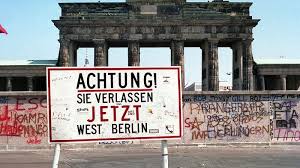
On November 9, 1989, the German Democratic Republic (GDR) relinquished its border security to the Federal Republic of Germany (FRG). While the world watched images of euphoric citizens pouring into West Berlin, the political reality of the moment was far more sobering: the opening of the border sealed the future of socialism in Germany. What followed was annexation, accompanied by economic liquidation, mass unemployment and the subjugation of the entire GDR population under a new order.
The FRG, designed as a frontline state against socialism, had long incorporated far-right elements into its institutions. In this context, the Berlin Wall was not just a border, but also a protective barrier against fascism. After 1989, neo-fascist groups rapidly expanded into East Germany, reinforcing the argument that the Wall had served as a defense against reactionary forces. Even figures like John F. Kennedy understood that without the Wall, conflict was inevitable. The same claim was later supported by Heinz Kessler and Fritz Streletz, who presented extensive evidence on the subject in their book Without the Wall, There Would Have Been War.
Yet, to this day, bourgeois authors and politicians attempt to shift blame for the rise of neo-fascist movements in East Germany to the GDR. By doing so, they ignore a crucial reality: after the annexation, anti-fascism and communist consciousness were fought against through a calculated political campaign. This was driven by West German authorities just as much as fascist currents that moved into the region to reshape its ideological landscape.
The protective wall
While West German media incited hostility against migrants, the FRG was stripping the GDR of its economic resources, dismantling industries, and destroying hundreds of thousands of livelihoods. At the same time, the so-called “reappraisal” of the GDR’s history was underway—a process in which neo-fascist actors played a direct role. Former Marxist professors were purged from universities, anti-fascist monuments were demolished, and figures from the Nazi era were rehabilitated, while the GDR’s long-standing anti-fascist culture was banished. Now, 35 years after the fall of the Berlin Wall, it is crucial to examine how the destruction of these border fortifications paved the way for an unprecedented influx of neo-fascist groups into East Germany.
Even before the opening of the border, West German neo-fascists were smuggling music and propaganda into the GDR, embedding themselves within the skinhead and hooligan scenes. This trend intensified with time, aided in part by the Community of Like-Minded People of the New Front (Gesinnungsgemeinschaften der Neuen Front, GdNF), a network set up by neo-Nazi cadre Michael Kühnen. The organization gathered numerous fascists, including individuals who had previously served prison sentences in the GDR before being redeemed by the FRG—after which they quickly resumed spreading the poison of anti-communism and racism.
In the 1980s, Kühnen’s network developed into a larger umbrella organization with contacts not only in the GDR, but also in other countries. The GdNF had dozens of front structures and held close contacts with numerous parties, while its leadership structures were riddled with informants who invested their generous salaries from the German domestic intelligence agency (Verfassungsschutz) into far-right political work.
Kühnen himself held strong connections to intelligence services. While the Lower Saxony Verfassungsschutz claimed it had lost all files on such activities, a dossier from the GDR State Security uncovered these connections. GDR’s agencies had been investigating Kühnen since 1970 and documented that after his release from prison in 1982, he was picked up by a vehicle linked to Verfassungsschutz. The conclusion of GDR investigations was that Kühnen’s years in prison were likely used to recruit him as an informant or secure other forms of cooperation.
A few years later, Kühnen authored a strategic document, Workplan East (Arbeitsplan Ost), outlining a blueprint for the network’s expansion into the GDR. This plan guided various neo-fascist organizations and front groups, with the fall of the Berlin Wall serving as their signal to act. Kühnen himself claimed that he was able to cross into the GDR “with the help of local comrades,” setting the stage for an influx of far-right cadres into the region. In the months that followed, dozens of leading figures from Kühnen’s network, as well as members of the New Right, followed his example.
Building a neo-fascist movement
After the fall of the Berlin Wall, neo-fascist groups quickly took root in the former GDR, occupying properties and establishing strongholds in various neighborhoods. Violence and pogroms targeting anti-fascists and foreigners soon followed, particularly against young people. Under the patronage of Michael Kühnen and the GdNF, offshoots of the Free German Workers’ Party (Freiheitliche Deutsche Arbeiterpartei) and the National Democratic Party of Germany (NPD) emerged, alongside dozens of new organizations such as the Lichtenberger Front and Deutsche Alternative. By March 1990, neo-fascists were openly joining anti-GDR demonstrations, exploiting their anti-communist sentiment to gain visibility.
Despite being marginalized by the FRG’s policies, anti-fascist resistance persisted. Protesters fought against the remodeling of concentration camps, the demolition of monuments, and the infiltration of universities by Western far-right groups. Even Rainer Eppelmann, head of the Commission for the Reappraisal of GDR History, acknowledged widespread public support for preserving the GDR’s anti-fascist legacy.
The December 1990 amnesty for political prisoners further galvanized the ranks of neo-fascists in East Germany. Among them were perpetrators of the Zionskirche attack and figures like Ingo Hasselbach, later known as the “Führer of Berlin.” Many of these cadres, released from prison or arriving from West Germany, actively built fascist networks, held recruitment events, and invited prominent extremists from abroad. British Holocaust denier David Irving, for instance, was brought to Dresden by the Deutsche Volksunion to push the myth of the “Allied bombing holocaust,” with his expenses covered by West German millionaire and neo-fascist financier Gerhard Frey.
In the time surrounding the final days of annexation of the GDR approached, neo-fascist violence escalated dramatically. On the night of October 2–3, 1990, over 1,500 armed neo-Nazis launched coordinated attacks against anti-fascists, squatters, and migrants across East Germany, with 30 violent incidents recorded in multiple cities. These attacks were part of a broader surge in far-right activity. Earlier that year, Ingo Hasselbach, in collaboration with Michael Kühnen, had founded the National Alternative in Berlin, stockpiling weapons and organizing paramilitary training. Nazi slogans such as “Rotfront Verrecke” (“Rotfront perish”) and “Kanaken Raus” (“Immigrants out”) were openly chanted at protests, while Jewish cemeteries, Red Army graves, and the Soviet war memorial at Treptower Park were vandalized. However, such provocations did not go unanswered—on January 3, 1990, 250,000 GDR citizens mobilized in a mass anti-fascist protest.
State backing and support
The wave of far-right violence in the early 1990s only continued to grow, with 1992 recording more violent right-wing extremist crimes than any year since 1949. This surge was enabled by the deliberate inaction of German authorities and intelligence services, and a media landscape that promoted racist smear campaigns and narratives. In cities like Dresden, Leipzig, Halle, Jena and Weimar, right-wing mobs were able to carry out attacks and arson assaults almost unhindered. Pogroms in Hoyerswerda and Rostock were not only tolerated, but took place amid media coverage of the so-called “asylum problem,” while the police routinely failed to act.
The CDU/FDP federal government used the wave of racist violence to further fuel the so-called asylum debate that it had sparked, with the Social Democrats soon falling into the same line. In 1993, the basic right to asylum was abolished. Politicians pushed for this outcome by promoting xenophobia: immediately after the Rostock-Lichtenhagen mob attacks, Schwerin CDU leader Eckhardt Rehberg declared: “The fact that foreigners do not know our customs and traditions, and perhaps do not even want to, disturbs our citizens’ sensitivities.“
The refascisation of East Germany
The “baseball bat years,” as the media called them, were far more than street violence by neo-fascist gangs. The opening of the borders accelerated a targeted re-fascization of East Germany, facilitated by the political and media establishments. Within a short period, anti-fascist and communist positions were marginalized, while neo-fascist movements provided a violent mechanism to intimidate opponents and absorb let-down youth.
At the same time, the ideological offensive of the New Right gained ground within the political establishment. Anti-fascist organizations were banned, history rewritten, and monuments, schools, and streets were stripped of their GDR-era names. These processes did not come out of the blue: in contrast to the GDR’s systematic persecution of fascists and war criminals, West Germany reinstated former Nazi officials into government and administration long ago. While ex-concentration camp inmates held office in the GDR, their former tormentors returned to positions of power in the FRG.
The dismantling of GDR anti-fascism and the rise of a neo-fascist movement in East Germany were two sides of the same coin—an ongoing process still visible today, 35 years after the fall of the border. Anyone seeking the roots of today’s far-right resurgence need look no further than the rulers of the Federal Republic, where fascism was never truly eradicated after 1945.
(Jacob Yasko is a German researcher. Courtesy: People’s Dispatch, an international media organization with the mission of highlighting voices from people’s movements and organizations across the globe.)
❈ ❈ ❈
You Can’t Keep Imposing Austerity and Expect the Corporate Party to Last Forever
Pete Dolack
The failures of the neoliberal brand of capitalism — and capitalism as a system itself — were once again on display in the February 23 German elections. In a political vacuum, with mainstream parties unable to offer anything other than the austerity that has been imposed for decades, the extreme right gains adherents. The 21 percent vote total and second-place finish of the Alternative for Germany (AfD) is another unmistakable klaxon.
Although the political “firewall” against the fascist-tinged AfD appears that it will hold, with yet another “Grand Coalition” of the Christian Democrats and Social Democrats almost certainly to be the outcome of negotiations, the doubling of the AfD vote stands out. That was by far the biggest improvement of any party’s increase, dwarfing the four percent increases enjoyed by the Christian Democrats and the Left Party (Die Linke).
A glance at the German electoral map is sobering: Districts in the five states of the former East Germany almost uniformly put the AfD first, with only Berlin and a couple of other constituencies excepted; the eastern part of Berlin put the Left Party first. By contrast, the states of the former West Germany are nearly uniformly black for the Christian Democrats, with one exception being the Social Democratic vote in urban centers including Hamburg and Bremen. The Christian Democrats and the AfD earned nearly half the vote between them, and add in the vote for the business party, the Free Democrats, and the right won a majority. Celebrations of the late surge of the Left, gaining nine percent, a strong increase from the previous election, don’t seem that much to celebrate given the surge for the right. And the new Sahra Wagenknecht Alliance, combining Left economics with conservative calls to halt immigration, fell flat; the BSW failed to reach the five percent needed to enter the Bundestag, the German parliament.
The disastrous result of the Social Democrats (SPD), finishing with their worst result since the revival of German formal democracy after World War II, is the culmination of years of imposing austerity and not merely a referendum on the outgoing administration of Chancellor Olaf Scholz, a point to which we will return below.
Of interest is the pattern of voting when broken down by age, education and sex. German women voted noticeably to the left of German men, those with higher education voted to the left of those with less education, and the Left Party received the most votes from those ages 18 to 24 and placed second for those ages 25 to 34. These results, particularly the women/men breakdown and the education split, mirror what has become routine in the United States over recent national elections. The German results also mirror the voting patterns of the 2024 British election, although the female/male split there was not as pronounced.
So what conclusions might we draw from all this? Given that the Labour landslide in Britain was more a reaction to the disastrous years of Conservative rule, a rout magnified by the single-seat, winner-take-all format of its Parliamentary elections, and not a mandate for Keir Starmer’s Conservative-lite (and barely “lite”) policies, the pattern seen across the advanced capitalist countries is clear. With a wholesale abandonment of anything progressive or pro-working people by mainstream “center-left” parties and austerity enforced no matter who is in office, the siren songs of the far right are reaching more ears. Even the incoming Chancellor, Friedrich Merz, sounded this alarm. “This is really the last warning to the political parties of the democratic centre in Germany to come to common solutions,” he said the night of the Christian Democratic victory.
That is not simply a coded message to the SPD to join in a coalition — given the results, that coalition seems a foregone conclusion — but a warning that the AfD can’t be held off indefinitely. And although Chancellor Merz is coming from a perspective of political survival, it is a warning with content even if somewhat hypocritical given his party’s increasing adaptation of AfD talking points. The disastrous showing of the SPD, should it wish to heed it, certainly is a ringing alarm. That same alarm is ringing for the Democratic Party in the U.S., the Liberal Party in Canada and other “center-left” parties.
Leave voters behind and they’ll eventually look elsewhere
The continual moves to the right, tailing the “center-right” parties that move rightward themselves, go beyond the personal failings of this or that political leader. When Bill Clinton, Barack Obama, Joe Biden, Jean Chrétien, Justin Trudeau, Tony Blair, Gordon Brown, Keir Starmer, François Hollande, Gerhard Schröder, Olaf Scholz, José Luis Rodríguez Zapatero and Romano Prodi all fall to their knees in front of industrialists and financiers, when each speedily implements neoliberal austerity policies despite leading the supposed “center-left” opposition to the conservative parties that openly stand for corporate domination, there is something other than personal weakness at work. That something is structural — a political system wholly captured by the most powerful possessors of economic power in a system of massive inequality.
When voting for traditional parties doesn’t change conditions, some people will begin to look at something different. With the collapse of Left alternatives, the “something different” on offer comes from the far right — the AfD in Germany, the neofascists in Italy, Trump in the U.S. and the anti-democratic governments that have held, or still hold, office in Poland, Hungary, Argentina and elsewhere. Germany serves as an exemplar here.
The strong German economy of the first two decades of the 21st century (strong in terms of exports, gross domestic product (GDP) and corporate revenue) was built on the backs of German workers. The “secret” to Germany’s economic dominance within the European Union was cuts to German wages. Germany undercut other countries that use the euro as their currency by suppressing wages, a process that took form under a Social Democratic government. In 2012, at the height of German economic performance, German wage increases to that point from 2001 averaged half of one percent per year, consistently below the German inflation rate, according to the International Labour Office. To put it another way, the ILO calculated that German productivity had remained virtually unchanged in relation to the productivity of all countries that use the euro, while German wages declined by more than ten percent relative to the composite wages of all other euro-zone countries.
The prosperity of German manufacturers had come at the price of a decade of wage cuts (adjusted for inflation) suffered by German workers. Sound familiar? Reduced income leads to reduced consumption, so exports accounted for a steadily rising portion of German GDP. In relative terms, it became more difficult for other European Union countries to compete with German products, particularly in other countries using the euro, because German manufacturers increasingly could undercut them. Manufacturing capacity elsewhere is shuttered, reinforcing German dominance and increasing unemployment in the countries on the receiving end of the exports.
A 2011 paper written by a British economist, Engelbert Stockhammer, described this phenomenon bluntly: “Germany has pursued a policy of aggressive wage restraint resulting in large current account surpluses. German gains in competitiveness (since the introduction of the Euro) have not been founded on superior technological performance, but on more effective wage suppression. … Simply put, German wage suppression rather than fiscal profligacy is at root of the crisis of the Euro system. … Europe needs a set of economic institutions and policy rules that addresses such imbalances and their underlying mechanisms.”
It was none other than the SPD that brought about this wage suppression. In 2003, Schröder, then the Social Democratic chancellor, pushed through his “Agenda 2010” legislation. Schröder said at the time, “We must not get trapped in defending our past achievements, but instead must work to our future.” Since those “past achievements” included old-fashioned concepts such as good wages and pensions, Schröder said, “The core challenges before us are accepting the reality of globalization, the ‘digitalization’ of our economy and an aging society.” Classic Right-wing code words. “Accepting” this “reality,” Agenda 2010 cut business taxes while reducing unemployment pay and pensions.
The structures of corporate domination
The European Union, for all that some Germans might gain from it, is nonetheless a purveyor of austerity itself; it is designed to benefit large capital, in particular finance capital, and suppress conditions for working people. European capital can’t compete with U.S. capital without a similarly large political economic unit behind it; the EU serves as a vehicle to elevate European competitiveness in global capitalism at the same time EU governments keep themselves subordinate to the United States.
The EU is a supra-national institution to impose corporate domination on a reluctant population. National governments are not insulated from popular opinion, but a supra-national structure can impose dictates on those governments, which can then tell citizens that it has “no choice” but to adhere to them so that the country can remain “part of Europe.” European capitalists’ need for the combined clout of a united continent underlies the anti-democratic push to steadily tighten the EU, including mandatory national budget benchmarks that require cutting social safety nets and policies that are designed to break down solidarity among wage earners across borders by imposing harsher competition through imposed austerity. The EU, in its current capitalist form, is a logical step for business leaders who desire greater commercial power on a global basis: It creates a “free trade” zone complete with suppression of social accountability while giving muscle to one of two currencies that has any potential (albeit small) of challenging the U.S. dollar as the world’s pre-eminent currency.
Having become dependent on exports, what happens when demand in other countries declines? Trouble, as Germany is currently undergoing. Throw in higher energy costs because the cost of U.S. liquified natural gas is higher than the natural gas previously piped in from Russia, and it is no surprise that many Germans are struggling, and looking for anyone who addresses their struggles. And, it could be added, the costs of housing are skyrocketing, further cutting into German living standards. The shortage of affordable housing units is calculated to be in the millions. Neither renters or homeowners can afford to stay where they are.
It is only natural that more people seek different solutions, and the siren songs of the far right, even those with fascist elements, such as the AfD, and those who aspire to install themselves as a fascist dictator, such as Trump, begin to sound appealing to the politically naïve because their problems appear to be addressed where others fail to do so. But the “solutions” the far right puts forth are the usual scapegoating — immigrants are taking your jobs, elites look down on you, diversity and inclusion are poisons to a pure national people, etc., as they play on people’s emotions. Anything to deflect attention from the socioeconomic system and its inherent inequality and harshness that is the actual root cause. When U.S. Democrats, Canadian Liberals, German Social Democrats, French “Socialists,” British Labourites and other European center-left parties join their center-right rivals in imposing austerity, then there isn’t much reason to vote for them other than to keep Republicans, Conservatives and their equivalents out of office. Voting becomes a sterile exercise in voting for the lesser evil to keep something even worse out of office, and after enough rounds of this, more voters will decide to just sit it out, as just happened with millions of liberals in the U.S. election.
Interestingly, Germany bucked this pattern, with the turnout of 84 percent the highest since reunification. Perhaps fear of the AfD had something to do with that turnout; perhaps more so those who previously felt they had nobody to vote for decided they had something at stake this time. The AfD gained 2 million votes from those who didn’t vote in the previous federal election, by far the highest of any party, and picked up another 1 million from those who had voted for the Christian Democrats.
However you wish to parse the numbers, the rise of parties flirting with fascism is an ominous development, one now years in the making across the Global North. The Europe of the 1930s and the Latin America of the 1970s gives us grim history lessons in what happens when fascists are able to gain and exploit power. Germany’s formal democratic structures are holding but that cannot be said to the case everywhere, especially given the dangerous stress the Trump gang is placing on U.S. institutions at the moment, compounded by the willingness of many heads of government to pander to the Orange One-Man Crime Wave and illustrated by the willingness of Trump’s de facto co-president, Elon Musk, to blatantly interfere in the German election and other government matters.
If we want a better world to be our future, there is an enormous amount of work to be done. The fascist takeovers of the past, while by no means destined to be repeated, nonetheless give a warning of the shape of the future if we don’t fight back.
(Pete Dolack is an activist, writer, poet and photographer. He writes the Systemic Disorder blog and has been an activist with several groups. Courtesy: Systemic Order Blog.)