❈ ❈ ❈
Rebuilding Nepal
Sujeev Shakya
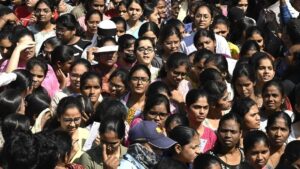
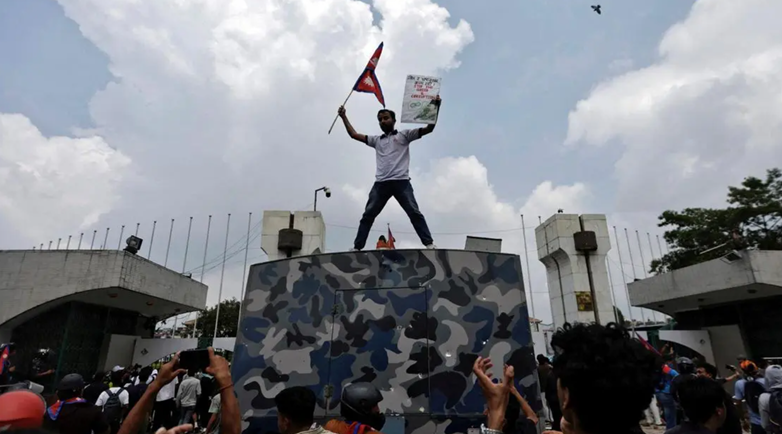
Nepal captured global media headlines in early September. A student protest against corruption and a social media ban was brutally suppressed by the state security forces, triggering an unprecedented backlash, with houses of political parties, businesses allegedly linked to political parties, and government buildings vandalised and set on fire across the country. As many as 15,000 prisoners escaped from prison. The events of September 8 (“Black Monday”) and September 9 (“Inferno Tuesday”) resulted in the deaths of over 70 people and injured more than 1,000. Private and public property worth billions of dollars was damaged. In the 37 hours from 9 am on September 8, when the demonstrations began, until 10 pm on September 9, when the army was deployed, the country witnessed the most violent civilian unrest in its recent history.
The President and the army chief worked with the youth who represented the “Gen Z” protesting groups to elect an interim leader. For the first time in world history, the Prime Minister was chosen by the youth themselves through the social media platform Discord, which allows communities to interact online and organise. Sushila Karki, a former Chief Justice of the Supreme Court of Nepal known for her integrity and independence, secured the highest share of votes (50 per cent) and was sworn in as Prime Minister. The runner-up was a YouTube creator with the handle “Random Nepali”, who polled 26 per cent of the votes.
By the night of September 13, it seemed that the crisis was behind us. Elections were announced for March 6, 2026, and the Parliament was dissolved. In 120 hours, Nepal had undergone an unprecedented transformation. On September 14, the prohibitory order was withdrawn and the Nepali Army returned to the barracks. When I reached the airport to catch a flight to New Delhi, it seemed like just another normal day. The international airport had been shut down for only 36 hours.
From September 12 onwards, people came out to clean the debris, restore damaged structures, assist police stations in clearing the mess, and help government offices begin recovery work. Social media started to fill with pictures of people involved in arson or looting, and communities began to track them down and recover stolen goods and money. Journalists pursued individuals believed to be part of misinformation campaigns and shared pictures and videos online to aid police action.
On September 15, a week after the protests, three more Ministers were inducted into the Cabinet: Rameshore Khanal, a former Finance Secretary who had resigned citing political pressure; Kulman Ghising, the former head of Nepal Electricity Authority, the state electricity authority widely credited with ending load-shedding in the country; and Om Prakash Aryal, a lawyer known for filing PIL petitions against corrupt politicians. They have a difficult task ahead, for they have to meet the demands of the protesting Gen Z groups and ensure that a government with battered infrastructure can still function to meet the country’s basic needs.
The long road to recovery
Looking ahead, there are five things to consider.
First, economic recovery. Internal estimates of the Nepal Economic Forum indicate the damage could run into billions of dollars in public and private property, excluding the potential impact on tourism and future investments. The stock market has remained shut. When it opens, it will reveal the impact on people’s assets and on the loan portfolios of banks. With around $50 million in private insurance claims in a country where insurance companies are reinsured through domestic re-insurers with limited international expertise, some companies could be greatly impacted. It will take time to make a full assessment of the damage and compile a comprehensive list of damaged government properties. Apart from government buildings, vehicles were also targeted by arsonists.
Nepal has recovered from major shocks such as the 2015 earthquake, the Indian blockade, and the COVID pandemic. With international support, financing should not be an issue. During the 2015 earthquake, the international community committed $4 billion for rebuilding.
If corruption in contracts is weeded out and efficiency as well as productivity become the benchmarks of future contracts, building back will be faster. It is estimated that official graft amounts to $2-3 billion a year, which means even if two-thirds of the graft is eliminated, funding could be secured domestically within three years. Further, with $17 billion in foreign exchange reserves, money is not the issue. The challenge is to see how rebuilding Nepal avoids the same traps of graft, inefficiencies, and low-quality work at high costs.
Second, politically, it is going to be a bumpy ride. Sections of society have long relied on graft and political connections, alongside politicians who have treated politics as a profession. They will fight tooth and nail against the dissolution of Parliament, the appointments of new officials, and the reversal of decisions made by previous governments. It is up to society to work hard to make this government function and challenge those seeking to return to status quo ante. Political leaders have amassed significant wealth and they have big war chests to fight future battles.
Third, the role of global Nepalis—Nepalis working or settled abroad who take a keen interest in Nepali politics—is vital. Many of them left the country feeling frustrated at the way Nepal was governed. There is now an opportunity for professionals to return, as many did in 1990 and 2006, and contribute positively to Nepali society. Rebuilding Nepal will rely a lot on the talent and investments of the diaspora.
Fourth, the shaping of the narrative. During the protests, some Indian media reports focussed on the monarchy and Hindu state angle, leading many in India to believe that the protest was aimed at strengthening these factions. Deepfake videos and heavily funded misinformation campaigns circulated fabricated clips of the king returning. With limited international media and analysts focussed on Nepal, there is heavy dependence on Indian analysts, many of whom still hold the view that Nepal is a poor, feudal country and that a monarchy is the only path to stability.
While analysts who last visited Nepal decades ago still carry the same imagery and perceptions, the country itself has transformed, with a diaspora spread over 180 countries shaping the economy, society, and ideology back home. The royalists tried hard to push the narrative of a potential return of the monarch and the Hindu state, and to a large extent they were successful in peddling misinformation. However, the reality is that this may be the last time the monarchy features prominently in such an unrest. People have realised the cost of granting impunity to the former king for his authoritarian acts and are less likely to allow this chapter to be reopened.
Fifth, the formidable nexus between the private sector and politicians. Conflict of interest was rampant, with powerful business figures appointed to key government bodies. Business associations became powerful enough to make or break political careers.
The fact that business leaders proudly hobnobbed with politicians led to resentment. Politicians and bureaucrats spent hours at programmes organised by these associations while ordinary people struggled to get appointments for their basic needs. This was a major source of frustration and a key challenge that the protest sought to address.
Finally, the protests exposed deep divides in Nepali society: between the haves and the have-nots, the residents of the capital, Kathmandu, and those outside, and Nepalis across generations. While the last regime resisted any efforts to bring in efficient governance through digitalisation, the new generation has elected a leader using a platform unknown to many until these protests began. Nepalis are frustrated with how basic government functions online, be it issuing no-objection certificates for students going abroad, passports, driving licences, company filings, and national identity cards. The government showed little interest in pushing economic reforms to expand e-governance tools. Youth frustration also stemmed from the non-delivery of what they consider very basic services.
The recent developments in Nepal have been of great interest to people in India, as China and India’s interests seem to be converging after a long time. It is important for people in Nepal to realise that the past 20 years have been transformative. The economy has grown sixfold from $7 billion in 2004 to $44 billion in 2024, despite all the challenges. Nepalis pay vehicle duties comparable to those in Singapore, and consumption has surged to an all-time high. Remittances of $11 billion a year continue to fuel the economy. With 81 per cent of Nepalis living in their own homes and real-estate prices rocketing, Nepalis own assets whose value has increased multifold over the past two decades. For India, it is better to recognise a prosperous Nepal and appreciate its transformation, rather than view it through the outdated lens of a poor nation needing sympathy or direction.
In the changing world order and era of re-globalisation, Nepal’s political sphere must match the aspiration of its people, especially the youth. In a country where 50 per cent of the population is under the age of 25, youth are an asset but, as the recent events demonstrate, can just as easily be channelled into destruction.
It will be important to truly understand what the youth of Nepal are looking for, and gauge the gap between their expectations and reality. The recent protests are proof of what can go wrong if these gaps are not understood. Concerted efforts will be required to ensure that history does not repeat itself.
[Sujeev Shakya is Chair, Nepal Economic Forum. His most recent book is Nepal 2043: The Road to Prosperity. Courtesy: Frontline magazine, a fortnightly English language magazine published by The Hindu Group of publications headquartered in Chennai, India.]
❈ ❈ ❈
Nepal’s Gen-Z Movement and the Ghostly Afterlives of Revolution
Sabin Ninglekhu
After the end of the decade long People’s War in 2006, mostly based in the hinterlands, one of the key Maoists leaders was asked by the media, “Now that you have moved to the city, what kind of a city is your ‘dream city’?” Pat came the reply – Bangkok-like shopping malls, roads as wide and shiny like that of the West and so on. The imagery that these words sketched together was a mimicry of a city, whose making would only be possible through large-scale investments of unregulated financial capital.
Ironic as it was, coming from a revolutionary figure, the outline of the dream was a revelation of a desired future, one whose arrival had begun to take shape in Kathmandu, particularly following the 2015 earthquakes.
High-rises carrying global five-star luxury brands, boutique hotels, exquisite cafes, hotel-like hospitals now line the cityscapes of Kathmandu. In this rise of “urban gigantism”, the recently constructed Hilton Hotel in the north end of the city stood tall, broad and excessively large compared to the adjoining minnows of houses and buildings surrounding it. The stuff of the Nepali Maoist dream was more or less being realised, it seemed. Except, there is now a glitch in the system.
On the 9th of September, 2025, alongside many similar structures, the Gen-Z movement set Hilton on fire, and burned it down to the ground. For now, the dream has derailed.
How did it all begin?
It all began with a few like-minded individuals in their early to mid-20s, who had formed a Viber group to plan for a series of protest programs, peaceful and creative. The rallies would be filled with poetries and such. As protest plans were underway, on September 4, the Nepal government imposed a ban on social media, including Facebook, TikTok, YouTube and so on. The announcement served as a trigger as what was initially a Viber group of 15 to 20 soon expanded to include over 300 or more individuals of similar age.
On the September 8, they set out on to the Maitighar Mandala, a government-designated protest zone. From there on, the plan was to march toward the Parliament in over 3,000 in numbers. However, halfway through the march, few of the peaceful protestors began to notice something troubling – sight of other protestors in hundreds – and soon in thousands – the “infiltrators” representing the “invisible forces”, who were not part of the Viber group’s plan nor communication.
One can assume that the “infiltrators” could have been anyone from the disgruntled Gen-Z or Gen-Y members of the major political parties dismayed at their archaic and corrupt leadership; social media users to whom the digital platforms could have been a source of livelihood beyond serving “social” purposes; activists for whom TikTok videos, instagram posts and Facebook reels are archives of “evidence” of corruption and state-sanctioned violence; or, the “infiltrators” could as well have been the far right monarchists and Hindu fundamentalists rubbing their hands at the opportunity to trouble the system after a failed attempt last March.
It could have been any or all. Sensing a riot, the Gen-Z protestors began to exchange messages on Viber, alerting one another of the simmering danger of the protest getting out of hand. They abandoned the streets with the plan to regroup in some other space and time. But by that time, the streets of Kathmandu were filled with the Gen-Z movement in thousands. Designated zones were traversed. Walls and gates of the parliament halls forbidding entrance were brought down. In a matter of hours, the protestors claimed every inch of the city as a protest zone.
The protests were now in full force in cities beyond Kathmandu, across Nepal. The police fired back. Toward the end of the day, 19 young individuals, men and women, were declared to have been killed by bullet wounds – 72 total deaths at the time of writing – with several hundreds being treated in hospitals, many in serious conditions. The day ended on a tragic note. But nobody was even remotely prepared for what was to come the following day.
Early next morning, defying curfew orders, people had started gathering burning tires and blocking the roads, with chants carrying themselves to the next day, “Oli Chor, Desh Chhod” – “Oli (the prime minister) you thief, leave the country” – being the primary slogan. Even at this point, it did not look like the carnage would immediately unfold in the manner that it did. In a matter of hours, three of the major buildings representing the Nepali government were set on fire – the parliamentary, the legislative and the Supreme Court. Private houses, many mansions, of the parliamentarians, primarily belonging to the three major parties, the Communist Party of Nepal, United Marxist Leninist (UML) and Nepali Congress, the ruling coalition, as well as the Maoists party, were destroyed and set on fire.
The prime minister, Oli, also head of the UML party, resigned and fled in the early hours that day, with his whereabouts still unknown to the public. Videos of protestors dragging Sher Bahadur Deuba, the head of the Congress party, and Arju Deuba, the serving foreign minister and Deuba’s wife, widely known as a corrupt figure, out of their houses went “viral”, all the while screaming into their ears: “Do you now see the power of the people?!”.
The newly constructed “Minister Quarter”, a residential neighbourhood housing ministers and parliaments, constructed after claiming a large swathe of open land in one of the most expensive real estate locations, too went down in flames – all residents evacuated in helicopters. Alongside these structures, what also went down were hotels, shopping malls and cable car companies, those that carried the imprints of political parties, largely through a new version of public-private partnership (PPP), a working model for crony-capitalism, that has become rampant in Nepal within the last decade or so.
Unlike the 1990s PPP model introduced to institutionalise “good governance”, today’s morbid version casts business conglomerates as the “private sector”, while the politicians – whether in power or opposition – are the “public” increasingly under the sway of private capital, bending laws and bureaucracy to billionaire interests. As such, to the protestors, the Hilton hotel was an in-your-face physical manifestation of this Faustian pact.
Hilton Hotel: A perfect target
On June 11, 2025, one of Nepal’s prominent journalists, Dil Bhusan Pathak, was issued an arrest warrant for committing a cybercrime. It was clear that the arrest warrant was a retaliation against Pathak’s expose through his highly popular YouTube media channel “Tough Talk”. The particular episode focused on Jayveer Deuba, the powerful Deuba duo’s son, and his purchase of Hilton Hotel’s share valued at around 177 million USD. Alleged to have bought the share at a much-reduced price, Jayveer Deuba is said to own expensive real estate businesses in Dubai, expanding in Australia and Canada, in partnership with other business conglomerates of Nepal.
While foregrounding Deuba junior as the protagonist of his story, Pathak’s take-home message was clear and concise: that politicians and businesses are increasingly operating as a single well-oiled machine holding the federal republic and citizens hostage, while their children are groomed to inherit the entrenched power, thereby permanently perpetuating the crony-capitalist order. It mattered little that in February, 2025, the international body, Financial Action Task Force (FATF) grey-listed Nepal for its failure to combat money laundering and illicit financing.
The two messages that the particular episode of “Tough Talk” carried were two central targets of the Gen-Z movement: #NepoBaby and #Corruption. And Hilton Hotel was an outcome and an incubator of both nepotism and corruption, and hence was a perfect target. Needless to say, like the rest of Nepal, journalist Pathak had very little inkling of the fate that the Gen-Z movement would hand out to Hilton, and many other structures like Hilton financed through unregulated capital, and the Deuba family, like many other “legacy family” like them, only three months after his episode went live.
To note, the arrest warrant issued against Pathak lays bare not just the corrupt political-business nexus, but also the increasing trend of press freedom being trampled the moment it threatens the powerful.
Ghosts of futures past
The three major political parties now representing “the old guard” have done little to give a hint of “reform” that the Nepal populace at large demands of them. If anything, the fact that the parties’ collective issuance of a press release condemning the appointment of the current prime minister Sushila Karki, ex-chief judge of Nepal known for crackdown against corruption during her tenure, as unconstitutional, simply means that old guard is still unable to feel the pulse of the changing time and sort their act accordingly.
Karki is a popular figure in Nepal who has now been appointed as Nepal’s prime minister after the Gen-Z protestors voted her as their leader through a public meeting on Discord, a digital communication platform primarily used by gamers that anyone can “infiltrate”, including Gen-Y and Gen-X, just like the protest itself.
There are individual instances of growing anger among the young communist and congress party cadres at the grassroots level as the patronage politics they have relied on for as long as they have been “doing” politics has suddenly derailed. Mahesh Basnet, one of the prominent leaders of CPN-UML, recently shared a video of him going around visiting destroyed houses, with a gang of his physically well-sculpted sycophants, one of whom was recorded uttering a famous Bollywood line, “chun chun ke maarenge” – will target the Gen-Z selectively. There are reports of a young man, part of the Gen Z movement, committing suicide after succumbing to harassments from party workers.
The “other” Gen-Z communities – the Indigenous, the Madhesi bordering India, the Dalits, including the landless Gen-Z, all part of the Gen-Z movement – have been organising to sketch their own outline of a vision articulating their claims over the promise of an uncertain albeit a new future. There appears to be a gap of communication between the “other” Gen-Z and a selective group of Gen-Z that have now become the official face of the Gen-Z movement, and in close proximity to the interim government. Therefore, Nepal continues to live in an uncertain time even if the interim government is in order while the streets have begun to carry a semblance of normalcy.
Of the many buildings – public, commercial, and private – one of those that stands derelict and decrepit after arson, was that of Prachanda, the chief architect of the People’s War. It is a property that belongs to a private businessman that is spread across a relatively large parcel of land in one of the expensive real estate locations of the Kathmandu Valley. Many say that Prachanda lived there rent-free. A journalist shared, on the day of the arson, that Prachanda was the one of the first key leaders that was out of contact from early in the day. The author of “Prachanda-Path”, pathway of Prachanda, essentially a doctrine to end monarchy, fight capitalism and set Nepal on its course to socialist utopia, had been forced to run away from the revolutionary “moment” that had engulfed Nepal that one historic day.
Not too far away from where this event unfolded, the Gen-Z protesters left an imprint behind that reads, “Revolution is contagious”. The rapid slide of the Maoist politics into a crony-capital-driven pool of ignominy, following the end of the “People’s War” in 2006, is a testimony to the fact that the contagion stands true for counter-revolution too. The dead remains of Prachanda’s residence now represent the ghostly “afterlife” of the Maoist revolution that was once deemed the permanent harbinger for transformative change. The Maoists, like the congress and the communists before them, not only failed to avoid the “afterlife”, but in many ways helped create themselves.
When in prison during Mussolini’s fascist regime in the 1920s through the 30s, the Italian philosopher Antonio Gramsci wrote, “The crisis consists precisely in the fact that the old is dead and the new is yet to be born; in this interregnum, a great variety of morbid symptoms appear”. In the wake of the Gen-Z movement, Nepal now has a critical task at hand: To prevent the historic outcomes of the new revolutionary “moment” from being devoured by the “morbid symptoms” creeping back – threatening to revive the ghosts of futures past; the dead remains of broken promises from revolutions long gone.
[Sabin Ninglekhu is a researcher studying urban politics and social movements, and is currently leading an international research project, ‘Heritage as placemaking: The politics of erasure and solidarity in South Asia’. Courtesy: The Wire, an Indian nonprofit news and opinion website. It was founded in 2015 by Siddharth Varadarajan, Sidharth Bhatia and M. K. Venu.]
❈ ❈ ❈
Nepal: Turbulence and Disquiet
Joginder Sharma
Nobody thought that after Sri Lanka and Bangladesh it would be the turn of Nepal to go through mob violence and arson leading to the downfall of KP Sharma Oli’s Government. Even those who were waiting for people’s backlash against the political arrogance of successive ruling alliances did not think that it could happen so soon and in the way that it happened.
The immediate cause of the Gen-Z protest was the Oli Government’s announcement of its intention to ban social media apps in case they fail to register themselves under regulations within the stipulated time frame. The young generation of Nepal, now being called Gen-Z, was very active on social media against corruption, nepotism and joblessness. They unleashed a huge campaign on social media against this move of the government. When the government finally banned 26 social media apps like WhatsApp, Facebook, Instagram, YouTube, etc. on September 4, 2025, various NGOs and social media influencers called upon the students and youths to collect in Kathmandu on September 8, to register their protest. The most prominent among them was Mr. Sudan Gurung, President of Hami Nepal, a non-governmental organization. Students were called upon to come to the protest site in school uniforms and books in their hands. It shows that it was a call for a peaceful protest.
On September 8, a section of protesters entered the Parliament building and vandalized it. Instead of tactful and sensitive handling, the authorities used force, including bullets, resulting in the loss of 20 precious young lives. The people of Nepal had never witnessed such a brutal suppression of a mass movement. They were shocked and angered. They wholeheartedly supported the protest as it stemmed from the growing grievances of the people, particularly the youth, against the repeated failures of successive governments to resolve their genuine problems and meet their aspirations. The sharp rise and prevalence of high levels of unemployment also aggravated the sense of alienation and disquiet.
On September 9, the Parliament House, the President’s office, the Supreme Court building, the Raj Mahal, the Singha Durbar, local government offices, hotels and private properties were attacked and burnt. Houses of prominent political leaders and offices of political parties were set on fire. Political leaders, including former prime minister Sher Bahadur Deuba and his wife, were beaten up. Finally, in the evening, KPS Oli resigned from the Prime Minister’s post and his resignation was immediately accepted by the President. Next day, the military brought the situation under control and imposed a nationwide curfew. Military chief, General Ashok Sigdel, started a dialogue with protest leaders in order to form an interim government. Finally, the former Chief Justice of Nepal, Sushila Karki, was appointed as the interim Prime Minister on September 12, 2025.
Some revealing features of these events are as under:
- The Gen-Z leaders gave a call for a peaceful protest. Then why and how did it turn into mob violence?
- All symbols of the State including the Parliament, President’s office, Supreme Court, Singha Durbar, Secretariat, and all others except military headquarters were attacked and burnt. Most of the Gen-Z leaders swear by democracy and want a democratic setup to be inclusive and responsive to the people’s genuine problems and aspirations. Then who instigated the mobs to attack these symbols of State and democracy, and why?
- The entire political establishment except the pro-monarchy Rashtriya Prajatantra Party (RPP) and Rashtriya Swatantra Party (RSP) came under attack of mob violence. Offices of even those opposition parties and houses of their leaders were burnt who have supported the Gen-Z protesters demands. Who gave the violent mob the addresses of private houses of the leaders of these parties? Who was to benefit by discrediting the entire political establishment and democratic institutions including the Supreme Court?
- The mob stormed the Nakkhu Jail in Kathmandu to get Rabi Lamichhane, the former deputy prime minister and leader of Rashtriya Swatantra Party (RSP) released who was convicted by court in a corruption case. He was given a hero’s welcome by the mob hoping that he will be in the race for the PM’s post besides Kathmandu Mayor Balendra Shah and others. Hundreds of criminals also escaped in this melee. It is alleged that the military and the police forces remained silent spectators when the mob went on a rampage.
- Immediately after the resignation of Oli the demand for restoration of monarchy was raised in a big way. The former king Gyanendra himself released a video of his message to test the waters. The army chief, Ashok Sigdel addressed the nation with a portrait of late king Prithvi Narayan Singh in the background.
It is apparent from the above that pro-monarchy and other right wing forces as well as certain vested interests had infiltrated the protest. They instigated and led a section of protesters into the Parliament building on September 8. Brutal suppression of the movement provided an opportunity to these forces to hijack the protest movement. Only the monarchy, Hindutva and other right-wing forces were to be benefited by discrediting the entire political establishment and democratic and constitutional institutions. These were the political forces who led the targeted violence and arson on September 9. Obviously, the criminal and anti-social elements always take advantage of such situations by attacking and looting private properties, hotels etc.
It is to be noted that RPP and other pro-royalist forces like Hindu Swayamsevak Sangh (HSS) have become very active in recent months. When the former king Gyanendra arrived at Kathmandu International Airport on March 9, 2025, he was given a grand welcome. Around ten thousand people joined his procession in which posters of Gyanendra and Uttar Pradesh chief minister Yogi Adityanath were displayed and restoration of monarchy was demanded.
Hindu Swayamsevak Sangh, a Nepali chapter of RSS, is running a large number of Pashupatinath Shishu Mandirs on the lines of RSS’s Sarsawati Shishu Mandirs and propagating for Nepal to be declared as Hindu Rashtra. Pracharaks of HSS are being trained by RSS. HSS has many front organizations which are active in different fields of life. RSS, BJP, VHP and other Hindutva forces in India are very vocal supporters of Hindu monarchy in Nepal.
Another very significant economic and political force in Nepal is a huge nationwide network of NGOs mainly funded by European countries and the USA. These NGOs have very strong lobbies in almost all the political parties of Nepal. The NGOs play a significant role in the internal functioning, policy and decision-making procedures of political parties. What role these NGOs have played in this Gen-Z protest is a matter of investigation.
Unfortunately, Nepal has been passing through a long phase of political instability for more than three decades. No government could complete its full term. Nepali people have a more than seven decades old glorious history of struggle against monarchy and for democracy. Monarchy was officially abolished on May 28, 2008. After that in two general elections held in 2008 and 2013 no political party got majority. Three major political parties – Communist Party of Nepal (United Marxist-Leninist), Communist Party of Nepal (Maoist Centre) and Nepali Congress – with the help of other smaller parties, formed different coalition governments at different intervals. Their primary task was to prepare the Constitution of Nepal as well as to discharge the responsibility of an elected government. The Constitution was adopted on September 20, 2015. But on economic and other fronts the successive governments failed to deliver. Nepal had nine Prime Ministers in the first 10 years after abolition of the monarchy.
In 2018, just before the parliamentary and provincial elections, two streams of Nepalese Communist movement namely the CPN (UML) and CPN (Maoist Centre) declared their intent to unify and fight the elections unitedly. This generated a lot of hope and enthusiasm among the people of Nepal. The unified Nepal Communist Party got almost two third majority and formed the government at the centre and in six out of seven provinces. It was rightly hoped by the people, in Nepal and also across the world, that the phase of political instability in Nepal was over. But this hope proved to be an illusion as the unified CPN got divided into three groups. Nepal has seen 14 governments in 17 years.
These short-lived governments could not fully focus on building and strengthening the State institutions and fulfill the demands and aspirations of the people as was promised by these political parties. On the contrary corruption, nepotism, unemployment and price rise increased. The resultant discontentment of the people was being used by the pro-royalist and right-wing forces. They got the opportunity in the Gen-Z protest to discredit the entire political establishment, democracy and the Constitution itself. Their aim was to bypass the constitution and capture power and gradually pave the way for the restoration of monarchy.
The people of Nepal had made huge sacrifices during the anti-monarchy struggle and for a secular and democratic republic. They were angry with the government but they did not want the restoration of the monarchy. What happened on September 9, made them realize that both the Constitution and democracy are at stake. The majority of protest leaders also came forward in defense of democracy and foiled the designs of these pro-royalist and right-wing forces. But at the end of the day the leadership of the main political parties lost credibility to a great extent.
The interim government has constituted a high-level commission to probe the violent incidents during the Gen-Z protest. The ousted prime minister KPS Oli is reported to have said that his government did not order the use of bullets against the protesters. These bullets were fired from automatic weapons which the local government forces on ground did not have. There are reports that bullets were also fired from the top of some buildings. We have to wait for the findings of the probe panel to know the truth. We can only hope that the interim government, as the interim Prime Minister has announced, is successful in holding the general elections as per the provisions of the Constitution within six months so that a newly elected government is formed.
Finally, Communist Parties of Nepal as a whole make up the largest political force in Nepal. Since 2008, they together always had a majority or near majority in parliament. At the time of this bloody upheaval the government was led by CPN (UML). Therefore, the Communist Parties have to share the responsibility of prolonged political instability in Nepal. With the formation of the Interim Government a new phase of political instability as well as national churning has started. Nepal is expected to witness fierce political and ideological struggle in the run up to the general elections to be held in six months. It’s high time the Communist Parties in Nepal self-critically introspect and prepare themselves to combat the pro-royalist, Hindutva and other right wing forces.
[Joginder Sharma is CPI (M) central secretariat member. Courtesy: Peoples Democracy, the English weekly newspaper of the Communist Party of India (M).]