❈ ❈ ❈
Mumbai’s Move to Privatise Five Government Hospitals Will Hit Slum Dwellers Hard
Tabassum Barnagarwala
For seven months last year, Aktari Mohammed Khan had to make frequent visits to Lokmanya Tilak Municipal hospital, 10 km from her home in Mumbai.
Khan had splitting headaches due to a neurological condition called occipital neuralgia. With no money to afford private treatment, she had to travel in crowded buses till the hospital in Sion, where a government neurologist treated her for free.
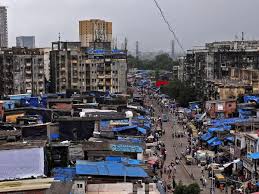
The 38-year-old lives in a tiny hutment in a slum in Mankhurd, where a large number of people displaced by various development projects in Mumbai have been settled over the years. Most of the slum’s residents live in cramped, poorly ventilated spaces and have little access to healthcare.
For years, they have demanded a government hospital for their needs.
In 2013, the Mumbai Metropolitan Region Development Authority decided to construct a hospital for the rehabilitated people of Mankhurd. The hospital was supposed to have a high-tech operation theatre, a maternity wing and was to have been finished by 2015.
After a delay of 10 years, the hospital is nearly ready and has been handed over to the municipal corporation.
Domestic worker Sunita Gazdhane said they have waited for the hospital to open up for years. The 50-year-old lives in a hutment across the new hospital building. “It will be a huge relief for slum dwellers,” said Gazdhane, who visits a private clinic whenever she is ill. “I spend between Rs 100 and Rs 200 there.”
But there is a catch.
The Brihanmumbai Municipal Corporation, short on staff and funds, is in process of handing the hospital over to a private organisation to run.
Khan, whose four sons work in a landfill not far from their home, said she was disappointed with the news. “How will we ever pay for private treatment?” she asked.
Ateeque Ahmed Khan, a leader of the All India Majlis-e-Ittehadul Muslimeen, who contested for the Mankhurd Shivaji Nagar Assembly seat in 2024, asked what “purpose a government hospital will serve in a poor locality if it is privatised”.
For Mankhurd’s residents, it is vital for the entire hospital to be run at government rates, he said.
Besides the Mankhurd hospital, the municipal corporation has announced plans to give away five major hospitals in Borivali, Bandra, Vikhroli, Govandi and Mulund to private players under the public-private partnership model, said Ashok Jadhav, chairman of the Municipal Mazdoor Union.
Each of these hospitals currently serves a significant slum population, who stand to lose out because of the decision.
Municipal workers protest
The municipal corporation has so far floated tenders for two hospitals to be handed over to private players – one in Borivali and the second in Mankhurd.
In Borivali, a newly redeveloped Shri Harilal Bhagwati hospital with 490 beds will be given out to a private player for 30 years.
According to the tender, accessed by Scroll, the private organisation will have to reserve 147 beds for poor patients, according to rates fixed by the civic body, and can charge private rates on the remaining 343 beds.
In the Mankhurd hospital, which has 410 beds, only 150 beds will be reserved for free for patients like Khan. The private partner can profit from the remaining 260 beds.
Four other hospitals that the corporation plans to give away are the KB Bhabha hospital in Bandra, the MT Agrawal hospital in Mulund, the Madan Mohan Malviya Shatabdi hospital in Govandi and Krantiveer Mahatma Jyotiba Phule Hospital in Vikhroli.
All the hospitals have either undergone a recent expansion funded by the municipal corporation or were in the process of completing it. In its 2020-’21 budget, the civic body had estimated the revamp of Bhagwati hospital in Borivali to cost Rs 592 crore, that of MT Agrawal hospital to cost
Rs 457 crore, the Shatabdi hospital in Govandi to cost Rs 500 crore and the redevelopment of the Bandra Bhabha to cost Rs 287 crore. It has allocated Rs 1,849 crore for the hospitals in the last four years.
A former additional municipal commissioner at the Brihanmumbai Municipal Corporation said the hospitals’ capacity was expanded to meet the growing patient load.
Bhabha hospital’s bed strength grew to 497 beds, MT Agrawal hospital now can accommodate 470 beds, and the Shatabdi hospital’s bed strength was increased to 580. The Mahatma Jyotiba Phule is still undergoing an expansion.
The redeveloped hospitals have departments like cardiology, plastic surgery, urology, and gastroenterology, making it easier for people to access free treatment closer to their homes.
But a health department official said the civic body is fund-strapped as well as short on staff, making it difficult to handle the 17 hospitals under it. This finally led to the decision to hand over the five hospitals, with nearly 2,500 beds, to private partners.
The move has run into opposition from municipal employees, who will be removed from the hospitals.
Pradeep Narkar, from the Municipal Mazdoor Union, said their union has begun to approach MLAs and MPs to gather support against the decision. “At least 2,000 nurses, staffers and doctors will be relieved from these hospitals once they get handed over,” Narkar said. Their union has already held a protest outside Bhagwati hospital.
The Brihanmumbai Municipal Corporation has promised that the staff will be absorbed in other hospitals with vacancies. For example, there are about 2,230 vacant posts in the KEM, Sion and Nair hospitals.
“But our opposition is also to the idea of PPP,” Narkar said. “These hospitals are meant for the public who depend on the government to provide affordable treatment.”
Past experience
The municipal corporation’s former executive health officer Dr Mangala Gomare said the public-private partnership model is a good option if the civic body has no manpower to manage hospitals or maternity homes.
“But the challenge is monitoring the private partner and whether they are following all the terms of the contract,” Gomare said, adding that they need a separate cell to monitor such projects.
For instance, the corporation handed over three maternity hospitals in Goregaon, Mulund and Deonar to private players in 2019. Gomare said monitoring had posed a problem when she was in charge.
Dr Abhijeet More, from Jan Swasthya Abhiyaan, an organisation that works on public health, said the lack of supervision allows the private partner to profit disproportionately. “This finally affects the health services a poor person receives,” he said. “We have seen in the past that this model has failed in the BMC hospitals.”
In 2018, the Brihanmumbai Municipal Corporation handed over the administration of intensive care units of six hospitals to Jeevan Jyot Charitable Trusts.
Five years later, a first information report was filed against the trust for recruiting doctors with Bachelor of Ayurvedic Medicine and Surgery and Bachelor of Homeopathic Medicine and Surgery degrees, instead of trained intensivists, to treat patients in intensive care units. The municipal corporation had to terminate the contract.
After the Jeevan Jyot incident, similar contract with Criticare and Associates to run intensive care units of two hospitals was terminated.
The civic body had also handed over the Seven Hills hospital in Marol to a private player in 2005. The contract had to be terminated in 2018 after numerous lapses were found in the implementation of the contract.
In Govandi, activist Jameela Shaikh helps local residents avail Ayushman Bharat cards to get free treatment under the Pradhan Mantri Jan Arogya Yojana. “People in this area are very poor,” she said. “They earn Rs 20,000 per month. With that earning they buy rations, pay children’s school fees and rent. There is hardly any money left for healthcare.”
She added: “If the Shatabdi hospital is privatised, many poor people will have nowhere to go. Instead of expanding services, the BMC is stripping them of their health rights.”
(Courtesy: Scroll.in, an Indian digital news publication, whose English edition is edited by Naresh Fernandes.)
❈ ❈ ❈
Here’s Why Maharashtra Govt Decision to Move Dharavi Residents to Deonar Is a Problem
The Wire Staff
Maharashtra government’s clearance for moving Dharavi residents to the Deonar landfill was in violation of Central Pollution Control Board (CPCB) norms, the Indian Express has reported on the basis of a Right to Information response.
The Maharashtra government in October 2024 had cleared a proposal to shift 50,000-1 lakh residents of the Dharavi slum to the Deonar landfill, which is one of the biggest waste disposal sites in Mumbai.
The move is part of the Dharavi Redevelopment Project (DRP) headed by the Adani group in partnership with the Maharashtra government.
According to the report, CPCB’s 2021 guidelines prohibit building houses, schools and hospitals on or within 100 m of closed landfills. While this rule alone would disqualify Deonar from being used, the reality is that Deonar is not even a closed landfill. In fact, it is one of the top 22 methane spots in the country, releasing an average of 6,202 kg of methane every hour.
Who will clean up the Deonar landfill?
The Indian Express has reported that the Bombay Municipal Corporation (BMC) handed over 124 acres of the 311-acre Deonar landfill to the state government for DRP on September 27, 2024. Since then, no waste has been dumped in the site.
The 124-acre land parcel contains nearly 80 lakh MT or 40% of the total solid waste at the dump at present, the report said.
A report by the Indian Express last year had quoted Mumbai civic officials as having said that the process of reclaiming land from solid waste would take a minimum of 6-7 years and could cost above Rs 1,000 crore in the present circumstances.
While the Maharashtra government had asked the BMC to carry out bio-mining at the site, the BMC handed over the 124-acre parcel in an “as-is” condition to the state government, the report said.
Bio-mining is the scientific model certified by the CPCB when it comes to reclaiming landfills and calls for the segregation and natural degradation of waste.
A report by Hindustan Times quoted BMC officials as having said that it is not possible to carry out bio-mining at the dump yard as there is no space in the city to dump the byproducts. The report gave a new timeline for the completion of such a project, if it had to take place – 12-14 years and at a cost of Rs 2,500 crore.
BMC commissioner Gagrani told the Indian Express for this latest report, “The land on which the Deonar dumpyard stands never belonged to the BMC. It was handed over to the civic authorities by the state’s revenue department in the early 20th century, specifically for the purpose of solid waste management. Now this land has been handed back as per the state government’s demands in an ‘as-is’ condition. As a result, the quantity of waste still remains there.”
An April 2024 letter from the NMDPL shows that it put the onus for cleanup on the BMC early on. “Given the land has been used as a dumping ground in the past, appropriate action of cleaning the dump over next two years by BMC may also be tied up and facilitated,” read the letter from NMDPL’s head of land acquisition to Mumbai’s deputy collector.
Other concerns about the Deonar landfill include its close proximity to a ‘Waste to Energy’ plant and a bio-CNG plant that are upcoming in the area. An environmental impact assessment (EIA), mandatory in the planning stage, is yet to be conducted for the project, the report added.
The Dharavi Redevelopment Project
The project claims to transform Asia’s largest slum into a “modern urban enclave” with housing and other amenities. Of the 600-acre area, 296 acres have been earmarked for DRP.
In 2022, Adani Realty established a special purpose vehicle (SPV), called the Dharavi Redevelopment Project Pvt Ltd (DRPPL), in agreement with the state government’s Dharavi Redevelopment Project Authority – a unit that had existed for over two decades under the state’s Slum Rehabilitation Authority (SRA) specifically for the Dharavi project.
Of the total DRPPL, Adani Realty owns 80% , making it almost a sole entity to carry out the redevelopment of the area with very little interference from the state.
DRPL has now been renamed to Navbharat Mega Developers Private Limited (NMDPL).
Housing for Dharavi residents
NMDPL has a seven-year deadline to rehabilitate Dharavi residents. The plan is twofold: in situ housing for the 1.5 lakh ‘eligible’ beneficiaries – those who had had housing structures built on or before January 1, 2000 – and ex situ housing for 4 lakh ‘in-eligible’ beneficiaries.
Of the 4 lakh individuals who will get relocated, 50,000-1 lakh are expected to be sent to rental units built on the Deonar landfill. For the rest, the government has earmarked land at Kurla Dairy, Wadala and the salt pans between Kanjurmarg and Mulund.
Why are people being housed at a landfill?
Notably, residents do live in Deonar – in areas adjacent to the landfill – and have been vocal about heightened attention to pressing civic issues.
Both the state government and the SRA said it was NMDPL that selected the site.
Said Mahendra Kalyankar, CEO of SRA told the paper, “Even though we own 20% stake, the onus of selecting the land parcel was with DRPPL (NMDPL) since they are a special purpose vehicle responsible for executing the project. The decision of selecting the said site was made by them which was later approved by the Housing Department.” Since the land didn’t belong to SRA, he said, the authority did not have much to do when it came to evaluating the norms.
Valsa Nair Singh, Additional Chief Secretary, housing department, said, “We only cleared the proposal based on the demand DRPPL (NMDPL) and the CEO (SVR Srinivas) made, as the decision of selecting and allotting a land parcel is being made at the level of project authorities and not at the government level.”
The Adani group did not comment on the matter.
(Courtesy: The Wire, an Indian nonprofit news and opinion website. It was founded in 2015 by Siddharth Varadarajan, Sidharth Bhatia, and M. K. Venu.)