❈ ❈ ❈
A Frenemy Named Donald Trump
M. K. Bhadrakumar
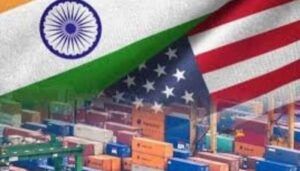
August 1, 2025: Well-known author, fund manager and columnist for the Financial Times Ruchir Sharma wrote this week that the perception that the US President Donald Trump’s gambit with tariffs would have grave consequences have not really been borne out by economic data. He says, “so far, the consequences have been far less disruptive than just about anyone expected.”
“Tariff revenue is rolling in at an annual rate above $300 billion, roughly four times the pace this time last year,” Sharma, the head of Rockefeller Capital Management’s international business, pointed out.
The Modi Government has been optimistic that India would get away with a tariff between 10-15 percent. Trump’s Truth Social post on July 30 announcing punitive tariff of 25 percent on Indian products came as a rude shock.
The government’s optimism was pinned on the hope that its ‘Chanakyan’ diplomacy would mellow Trump. Delhi is gearing up to generate massive volumes of business for American arms vendors.
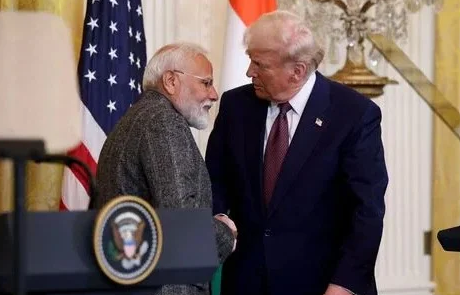
Just 24 hours before Trump’s announcement, reports appeared that the Indian Air Force [IAF] has recommended to the government that the US F-35 stealth fighter jets should be our preferred option as an interim platform until India can produce a fifth-generation Multi-Role Combat Aircraft. The timing of the news report containing such Top Secret information was manifestly orchestrated to bring the seductive proposition to Trump’s notice before August 1 in a gentle reminder that it was he who personally offered F-35 stealth fighter to PM Narendra Modi in the Oval Office in February. Delhi signals that with lightning speed, its ponderous bureaucracy is completing the paper work.
The Indian Defence Research Wing [DRW] website reported, “The IAF has recommended procuring 60 fifth-generation fighters as an interim measure until … around 2035. The US-made Lockheed Martin F-35 Lightning II is a leading contender due to its combat-proven track record, high production rate (over 1,000 units globally), and advanced weaponry … The Russian Su-57 E, while offered with technology transfer, has been criticised for its developmental shortcomings and limited induction in the Russian Air Force, making the F-35 the preferred choice, as per sources.”
The DRW praises F-35 as the talisman that “will transform the IAF into a near-futuristic forces by 2035.” If the Modi government purchases 114 F-35s, we will be making a massive contribution to Trump’s America First. In our naiveté, we believe that the F35 Leak would lock in Trump forever as a friend of India.
But the cost of flying an F 35 fighter aircraft is US$ 35,000 per hour, i.e. Rs 28,00,000 per hour. F 35 is the most expensive fighter aircraft in the world and the cost of one aircraft is approximately US$ 110 million, or Rs 968 crore. And, of course, this price tag does not include the weapon package plus other repairs and servicing requirements through decades to come.
Unsurprisingly, the F35 is a hugely controversial topic. The big question is, will Trump allow IAF in the heat of the battle to deploy F35 against Pakistan where his family members are reportedly digging a gold mine?
The Congress Party pleaded that the PM should not take a “unilateral stance” in the matter. The Congress spokesman asked some searching questions: “Did the American security agency ‘Pentagon’s report’ itself admit that the F35 fighter plane does not meet its operational requirements? Has the report of American security agency Pentagon admitted that F-35 has 65 operational flaws? Did Modiji study this Pentagon report and got the Indian Air Force to study this report?”
Indeed, a GOI decision will mean committing to the F35 as the IAF’s primary frontline fighter for decades to come. Conversely, it also means phasing out the Russian-made combat aircraft from Indian inventory in a conceivable future.
Trump is a clever businessman. He has thrown a red rag at the excitable Indians, which kills three birds in a single shot. By threatening to punish India with high tariff, Trump is actually planting a tantalising thought in the Indian mind that Modi government should suitably “incentivise” him. Plainly put, he expects Modi to close the F35 deal irrevocably. In fact, the commerce ministry’s supine reaction signals that the message has gone home.
Trump was a grandmaster in reality television and is the guru of all gurus in political theatre. What is Trump’s real game plan?
Trump has literally made India’s arms purchases and oil imports from Russia the central planks of his India policy. He is confident he’ll have his way with Modi government. From the high table, conceivably, he may throw a bone or two for the Indian peasant to chew, but that is for the optics — and our government will probably hail it as success for Indian diplomacy.
Such a pantomime wouldn’t be playing out today in a cynical fashion if only PM Modi had been candid and bold to trash Trump’s claim to have collared India and Pakistan from committing harakiri in a nuclear conflagration. Trump taunted Modi at least 28 times before making his move to bracket his mediation with trade.
The most dangerous part is, Trump has linked India-Russia relationship with his tariff war against India. The US has tasted blood: India-Russia defence ties are atrophying rapidly. Trump senses time has come to go for the final kill. It is a geopolitical necessity for global balance.
In the looming confrontation between the US-led Collective West and Russia, Trump is threatening that if India does not join the western camp, there is going to be a heavy price to pay. He may even sanction Indian entities and officials. Now, visa denial will be the unkindest cut of all for the Indian elite.
Yesterday, in a second post on Truth Social, Trump all but accused India of being Russia’s ally: “I don’t care what India does with Russia. They can take their dead economies down together, for all I care. We have done very little business with India… Likewise, Russia and the USA do almost no business together. Let’s keep it that way… ”
Trump’s spiteful outbursts reveal quite a bit of unspoken truth. He has no respect for India, or Modi government. It is doubtful if he’d dare to speak about Indira Gandhi’s India with such contempt. There is something here to introspect seriously. What is this special relationship that our elites get so excited about?
Trump estimates that the Indian elites lack self-respect and grit to stand up to his bullying. Self-respect, of course, is not a virtue that can be cultivated; it is an innate trait; some are born with it, most do not have it in a feudal society.
(Ambassador M.K. Bhadrakumar served the Indian Foreign Service for more than 29 years. Courtesy: Indianpunchline, the author’s blog.)
❈ ❈ ❈
Globalisation Sans Justice: India’s Abdication of Voice
Shirin Akhter
On July 24 and 25, 2025, U.S. President Donald Trump, addressing an AI (artificial intelligence) Summit in Washington, issued a public rebuke to America’s tech giants. His message was both pointed and provocative: stop hiring in India. He accused U.S. firms of betraying the American worker by outsourcing manufacturing to China and software development to India. Resurrecting the “America First” slogan, he warned that those days were over.
What may have once been dismissed as campaign theatrics has now translated into policy directions, and a set of executive orders linking federal funding for AI infrastructure to domestic job creation. Companies, such as Google, Microsoft, Apple, and Meta, were directly named. The new executive framework, as outlined, discourages offshoring and compels firms to demonstrate hiring commitments within U.S. borders.
These developments hold disturbing implications for India’s technology workforce, for its service export model, and more broadly, for its developmental trajectory. The rhetoric is already reshaping corporate conversations, stock market expectations, and boardroom strategy.
Indian IT majors, such as TCS, Infosys, and Wipro, are deeply embedded in U.S.-centric contracts and supply chains. The prospect of a hiring slowdown or even a hiring freeze from American clients has direct consequences. In fact, shortly after the summit, TCS laid off 12,000 employees, citing project delays and uncertainty in global demand. While no official link was drawn to Trump’s remarks, the timing is hardly coincidental. For thousands of young Indian engineers, particularly those emerging from non-elite institutions in smaller towns, the promise of a stable job in the IT sector is already under threat.
India’s globally integrated IT services industry has long been held up as a symbol of its successful engagement with the world economy. Employing over 4.5 million people and contributing nearly 8% to national GDP (gross domestic product), the sector has provided a vital cushion in a landscape otherwise marked by agrarian distress, informal labour, and uneven industrialisation.
But this success story has always been vulnerable to shifts in global political winds. The recent developments reveal just how fragile the edifice is. As the tide turns toward techno-nationalism, the Indian growth model anchored in offshore services begins to look less sustainable. The threat is not merely cyclical; it is structural.
This moment demands a reckoning not only with the present crisis, but also with the historical architecture of globalisation itself. The integration of countries like India into the global economy has always been partial. While capital was allowed to move freely, and goods and services found open markets, labour remained bound by borders, constrained by quotas, and ultimately disposable when politically inconvenient.
The vision of globalisation as a shared and inclusive process has, in reality, been marked by asymmetry. The Global South was asked to open its markets, liberalise its policies, and provide a compliant workforce, but was never allowed equal voice or mobility within the system it helped sustain. It was globalisation for capital, but not for people. The recent turn in U.S. policy is not a sudden deviation, but a logical consequence of this unequal order. The doors are slammed shut precisely at the moment when the South began to ask for fairer terms.
India, in particular, must now confront the consequences of having built its service economy on an unstable foundation. The reliance on U.S. demand, H-1B visas, and favourable sentiment from American corporations has come at the cost of strategic autonomy. If Washington chooses to insulate its labour market and decouple from global sourcing, India is left without viable alternatives.
The potential consequences are far-reaching. Offshore hiring may contract, leading to wage stagnation and reduced job creation. The brain-drain, once seen as a soft power asset, may accelerate toward more welcoming geographies, such as Canada or Germany. Technical education, especially in non-premier institutions, may lose its sheen as placement prospects diminish. And the middle-class upward mobility that was built on the back of IT exports, may begin to erode, deepening existing inequalities across region, caste, and class.
In the face of these developments, the Indian government’s response has been one of calculated silence. There has been no public statement from the Ministry of External Affairs, no outreach to U.S. interlocutors, no defence of Indian professionals who have contributed significantly to global technology development. The foreign policy establishment appears more invested in high-profile visits and symbolic gestures than in the substantive task of safeguarding the country’s labour interests.
Even the Opposition has failed to articulate a coherent response, revealing a troubling consensus around passivity. One cannot help but contrast this with the assertiveness shown by smaller economies, such as Ireland or Mexico, which have openly challenged Western policy moves that threatened their economic models.
India’s reluctance to speak out is often justified in the language of diplomacy. Given the ongoing defence and strategic alignment with the U.S., particularly within the Quad, many argue that discretion is prudent. But this discretion, when it consistently overrides economic justice, begins to look less like diplomacy and more like deference. It signals to the world that India will prioritise optics over outcomes, and headlines over the hard work of protecting its people’s livelihoods. The quietism that masquerades as maturity is, in truth, a form of strategic subordination.
The political costs of such a stance are likely to manifest sooner rather than later. As faith in the government’s ability to secure jobs and stable growth weakens, public disillusionment will grow. Investor confidence in the skills economy may falter, and India’s image as a digital powerhouse may begin to dim.
Perhaps, more critically, India’s failure to articulate its position in multilateral forums such as the World Trade Organisation, International Labour Organisation, or G20 further undermines its standing in the Global South. It is a tragic irony that India is more vocal in defending its image in foreign documentaries than in defending the employment rights of its own citizens in the global economy.
What is needed is a reorientation of India’s tech diplomacy towards a worker-centric framework. This would involve publicly defending the rights of Indian professionals in foreign markets, building strong coalitions with like-minded countries on digital labour mobility, and diversifying partnerships beyond the traditional U.S.-centric axis. It would also require investing in domestic job guarantees and active labour market policies to absorb potential displacement. Above all, it would demand that India move beyond the illusion of global partnership based on silent compliance and instead embrace a principled internationalism rooted in dignity, reciprocity, and economic justice.
Trump’s call to stop hiring in India is not merely an American campaign slogan. It is a symptom of a world in retreat from multilateralism, from cooperation, and from the promises of shared prosperity. It reminds us that globalisation, in its current form, was never neutral. It was always shaped by power, and that power was never equally distributed.
For India to remain relevant in this new world, it must speak, it must act, and it must resist. It must not concede the space it has fought so hard to occupy, not for the comfort of diplomacy, nor for the illusion of stability. Silence may serve the interests of a few, but it cannot serve the aspirations of a nation.
(Shirin Akhter is Associate Professor at Zakir Husain Delhi College, University of Delhi. Courtesy: NewsClick, an Indian news website founded by Prabir Purkayastha in 2009, who also serves as the Editor-in-Chief.)
❈ ❈ ❈
Modi Govt ‘Surrendering’ to US on FTAs, Will Open Agri, Dairy Sector, Fears SKM
Newsclick Report
The Samyukta Kisan Morcha (SKM) said it had “serious apprehensions” that the Narendra Modi government was “surrendering to the diktats” of the US to sign the free trade agreement (FTA) to open the Indian economy, especially agriculture and the dairy sector. The FTA is slated to come into effect from August 1, 2025.
In an online general body meeting held on July 20, SKM said such a step would not only hurt the interests of the country but also impact the people adversely.
In a press statement issued after the meeting, SKM announced a series of mass protest actions across the country against “the BJP-led NDA Govt.’s moves to accept USA pressures and increase imports of food and dairy items, including GM foods and penetration of MNCs in food markets. … Peasants will raise the slogan ‘Corporations Quit India’ on 13th August 2025 by organizing tractor/ motor vehicle parades and protest demonstrations and burn effigies of the U S President Donald Trump and Prime Minister Narendra Modi.”
Press Note, New Delhi, 21st July 2025
- SKM apprehends Modi Govt. is surrendering to the US Imperialism on FTAs, to open Indian agriculture and dairy sector.”
- Observe 13th August 2025 as “Corporates Quit India Day”.
- Tractor/ Motor Vehicle Parade, Trump and Modi Effigies to be burnt.
- Strong Anger expressed over imposition of High Electricity Tariffs, Smart Metres and Ban on Tractors after 10 years.
- National Campaign 15 August onwards culminating in massive worker-farmer protest on 26th November 2025.
The SKM General Body meeting held on 20th July 2025 was attended by 106 delegates of 37 farmer organisations from 12 States. The Presidium consisted of Ashok Dhawale, Darshan Pal, Yudhvir Singh, Ashish Mital, Badagalapura Nagendra, Sunilam, Revula Venkaiah, Purushottam Sharma and Satyawan. Hannan Mollah welcomed the delegates, Rajan Kshirasagar placed the agenda. Ashok Dhawale placed the concluding remarks.
SKM will observe 13th August 2025 as “Corporations Quit India” Day throughout the country. SKM seriously apprehends Modi Govt. is surrendering to the dictats of the US Imperialism to sign the FTA to open Indian economy especially agriculture, dairy and Food markets sectors that will hurt the interests of the entire people and the country. The FTA is supposed to come into effect by 1st August 2025. 9th August is the 83rd anniversary of the Quit India Day movement against British colonialism. To protest BJP led NDA Govt.’s moves to accept USA pressures and increase imports of food and dairy items, including GM foods and penetration of MNCs in food markets SKM will issue a mass warning through this mass protests. Peasants will raise the slogan ‘Corporations Quit India’ on 13th August 2025 by organizing tractor/ motor vehicle parades and protest demonstrations and burn effigies of the U S President Donald Trump and Prime Minister Narendra Modi.
SKM units in Punjab shall hold tractor rallies in all districts on July 30 and a massive Mahapanchayat on August 24 against AAP govt’s new Land Pooling Policy.
SKM GB extended full solidarity with the farmers of Singrauli tribal farmers protesting against forced acquisition of their land for coal mines of Adani group.
26 November 2025 marks the 5th anniversary of the historic farmers’ struggle of 2020-21. SKM will coordinate with the trade union movement and agriculture workers movement to hold massive worker-farmer protest action at New Delhi as well as in the state capitals. A National Campaign against corporate- communal forces from 15 August to 26 November will be planned for National Unity and People’s Unity based on the two pillars of worker- farmer unity and Hindu-Muslim unity leading to secular unity of different religions and faiths and class unity of the entire working people.
A widespread campaign and local protests shall be conducted with publicity material and literature distribution to prepare the peasantry and other sections for the ‘struggle till victory’ on various demands related to 1. No to any bilateral Trade Agreement and cheap imports that hurts agriculture sector/ food grain production and dairy sector. 2. Repeal the pro-corporate NPFAM that undermines federal rights and promotes corporate takeover of Govt. agricultural markets. 3. MSP@ C2+50% with guaranteed procurement for all crops. 4. Comprehensive loan waiver for all sections of peasantry and agricultural workers to prevent peasant suicides. 5. No to indiscriminate land acquisition, land pooling schemes, Industrial Model Townships and proper implementation of LARR Act 2013. 6. No privatisation of electricity, no imposition of smart meters, provide free electricity up to 300 units to all rural households.
In this National Campaign, its preparations and literature SKM will also coordinate with the Joint Platform of Central Trade Unions, platform of agricultural workers unions and other Trade Unions.
The GB congratulated the leadership of the united trade union movement and the working class for the leadership role they have played in making the strike action on 9 July 2025 effective. This was the 22nd General Strike since the invention of neoliberal policies and its success has filled confidence to all the democratic sections in the society that the entire working people are ready to fight back the anti-people policies of the ruling classes.
SKM demands full compensation @ market rates for landowners on all the lands acquired at low circle rate for public sector as well as private sector projects. It has demanded mandatory revision of circle rate must be ensured every alternative year; No acquisition should be done without rehabilitation and resettlement; No demolition of slums and settlements without prior rehabilitation; End Bulldozer Raj; No forceful construction of overhead High Voltage transmission lines on farmland; Implement land use policy and preserve agricultural land for cultivation considering the food security of the country.
Meeting demanded to lift the ban on 10 years-old tractors, restore fertiliser subsidy and halt the trade of spurious fertilisers and pesticides, end hoarding, black marketing, widespread corruption and ensure self-sustainability in domestic production of quality fertilisers and pesticides. Meeting also demanded to arrange a special tribunal for ensuring reasonable compensation to the victims of wildlife menace and ensure permanent and scientific solution to the serious threat of loss of life, crops and domestic animals. Amendment to the forest conservation act is anti-Tribal and pro Corporate.
The meeting demanded the Union Government to levy 2% tax on the stop 1% of the people belongs to the super-rich; enhance corporate tax; re-introduce one third as wealth tax and succession tax to find financial resources at the rate of 7% of the GDP for rational, equitable distribution of wealth among workers, farmers and toiling people and ensure five fundamental rights of food, employment, health, education and pension to all citizens.
The GB congratulated the Devanahalli farmers of Karnataka, who had won the land struggle after 1189 days of consistent fighting. Meeting appreciated the Karnataka Horatta Samithy, the united action committee of the 13 affected villages, all the class and mass organisations, social activists, artists and those from all walks of life including media persons for the victory. As per the direction of the Chief Minister of Karnataka Siddaramaiah, 1774 acres of land has been de-notified now from forcible acquisition. This victory inspires farmers and landowners in more than 600 struggle spots across India against indiscriminate, illegal land acquisition.
SKM Campaign in Bihar – the SKM leadership will visit Bihar in September 2025 as part of the campaign to Punish BJP- NDA for their corporate policies and the details will be worked out by the SKM SCC of Bihar.
The meeting demanded the Election Commission of India to repeal the Special Intensive Revision of voters list intended to deny the voting rights to the poor people and also demanded action against ADG (HQ) of Bihar Police Kunthan Krishnan for depicting the entire farmers of Bihar as criminals engaged in Supari Murders.
Visit to Peasant Suicide Victim Families in Vidharbha, Maharashtra – the dates and other details will be decided in consultation with the SKM SCC.
The meeting adopted resolutions in support of farmers struggle in Sohana, Mewat, Haryana against betrayal of land owners by acquiring land without adequate compensation thus violating LARR Act 2013 and the farmers struggle in Himachal Pradesh against cutting of apple trees and evicting the houses of the tenant farmers cultivating for many generations in the forest land for more than 50 years violating the FRA, right for rehabilitation and resettlement.
(Courtesy: Newsclick, an Indian news website founded by Prabir Purkayastha in 2009, who also serves as the Editor-in-Chief.)