❈ ❈ ❈
Coca Cola: Made in Mexico, Apparently
Nick Corbishley
For a company whose sales depend so heavily on brand perception, Coca Cola has a serious image problem. In the Middle East, for example, its close ties to and support of Israel appear to be putting a drag on sales in many Arab countries. According to Palestinian activists in Gaza and many BDS activists in the wider Arab world and in some European countries as well, Coke is finally becoming one of its priority targets:
“[T]he BDS movement has always considered Coca-Cola boycottable but has not prioritized it as a target based on its careful and strategic target-selection criteria. This has changed now the local alternatives to Coca-Cola have been gaining market share across the world, including in Palestine, China, Bangladesh, Sweden, Egypt, India, South Africa, Turkey, Lebanon and elsewhere.”
What began as a Palestinian-led boycott movement against companies perceived as supportive of Israel has apparently gained momentum across the region. In the West Bank, the local manufacturers of rival brand of Chat Cola have seen sales soar as shopkeepers “relegate Coke cans to the bottom shelf — or pull them altogether”, reports ABC:
“When people started to boycott, they became aware that Chat existed,” Fahed Arar, general manager of Chat Cola, told The Associated Press from the giant red-painted factory, nestled in the hilly West Bank town of Salfit. “I’m proud to have created a product that matches that of a global company.”
With the “buy local” movement burgeoning during the war, Chat Cola said its sales in the West Bank surged more than 40% last year, compared to 2023.
While the companies said they had no available statistics on their command of the local market due to the difficulties of data collection in wartime, anecdotal evidence suggests Chat Cola is clawing at some of Coca-Cola’s market share.
“Chat used to be a specialty product, but from what we’ve seen, it dominates the market,” said Abdulqader Azeez Hassan, 25, the owner of a supermarket in Salfit that boasts fridges full of the fizzy drinks…
The Coca-Cola Company did not respond to a request for comment.
Whether or not the movement brings lasting consequences, it does reflect an upsurge of political consciousness, said Salah Hussein, head of the Ramallah Chamber of Commerce.
“It’s the first time we’ve ever seen a boycott to this extent,” Hussein said, noting how institutions like the prominent Birzeit University near Ramallah canceled their Coke orders. “After Oct. 7, everything changed. And after Trump, everything will continue to change.”
To meet the rising demand for non-Coke Cola, Chat Cola is looking to expand its operations to other parts of the Middle East, beginning in Jordan. Meanwhile, it was just announced in Scotland that Coca-Cola will no longer be served at the Glasgow Film Theatre after workers at the cinema said they would no longer handle any goods connected to the BDS (Boycott, Divestment and Sanctions) movement, including Coca Cola brands. A statement said:
Following discussions between Unite the Union and the Glasgow Film Theatre, we have come to an agreement to remove Coca-Cola products from the cinema bar, for the duration of the Glasgow Film Festival.
After the festival, the remaining Coca-Cola stock will be used up – as this has already been purchased – before permanently switching to an ethically-sourced alternative. This ensures that no more money will be spent on Coca-Cola.
“Made in Mexico”
The Coca Cola company is also facing a gathering consumer backlash on the other side of the Atlantic, albeit for wildly different reasons, including in one of its most important global markets, Mexico. According to a 2022 study from the University of Yale, Mexico is the leading consumer of soft drinks in the world with an average consumption of 163 litres per person per year — 40% more than the US in second place, with 118 litres. But that market could be at risk.
In early February, rumours began circulating that Coca Cola had fired Latino workers in Texas and reported them to US Immigration and Customs Enforcement (ICE). The allegations, which the company has denied, spread rapidly on TikTok, spawning a movement called the “Latino Freeze” that, among other things, urges consumers to stop purchasing Coca-Cola products and support Latino-owned businesses instead.
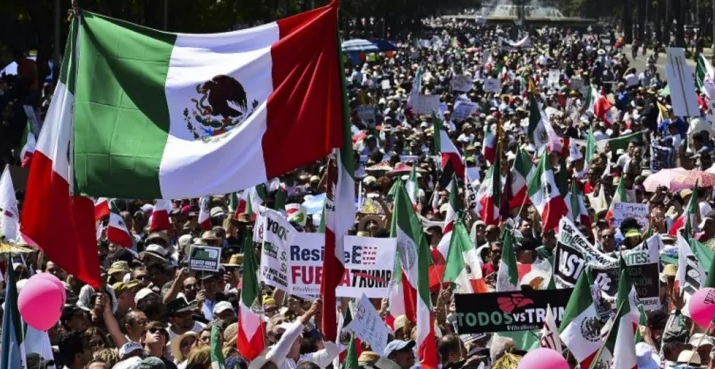
The Latin Freeze movement is a US nationwide spending boycott, specifically targeting companies that have rolled back their policies on diversity, equity and inclusion (DEI) as the Trump administration has ramped up its deportations. When Trump began threatening Canada, Mexico and Europe with tariffs on US imports of their products, consumer boycotts of US products began spreading far beyond US borders.
These boycotts are already having a notable effect on some US products. For example, sales of Teslas are down sharply in some European countries including France and Sweden. In a recent poll, 78% of Swedes said they were willing to boycott US products.
In mid-February, as Trump’s threats of 25% tariffs hung over Mexico’s economy like a sword of Damocles, Mexico’s Ministry of Economy decided to relaunch the famous “Made in Mexico” label, with the aim of promoting and giving greater recognition to the products that are made in the country. The “Hecho en México” seal, in addition to shining a light on national manufacturers, seeks to raise public awareness about the importance of strengthening the local value chain and supporting companies that generate jobs and development opportunities in each region.
However, it’s not just local companies that are blazoning the above stamp on their products. So, too, are US multinationals including Coca Cola and Walmart, which is by far the largest retail chain in Mexico after spending decades buying up most of the local competition. The grocery giant was recently fined by Mexico’s competition authorities a risible $4.3 million for alleged anti-competitive practices involving suppliers. The agency that issued the fine, known as the Federal Competition Commission, cited concerns about “a relative monopolistic practice.”
Like Walmart, Coca Cola may not be Mexican by origin but its suite of products that are consumed in Mexico are certainly made there — using, of course, huge volumes of Mexico’s scarce fresh water supplies. Any product that is manufactured or assembled in Mexico, and has quality and excellence standards that enhance the identity and reputation of the origin of its raw materials, can use the “Hecho en México” label.
For the moment, only two Coca Cola brands will carry the label — the original Coca Cola and Coca Cola Sin Azúcar — but the initiative is expected to be extended to other brands in the coming months.
The Mexican Coca-Cola Industry (IMCC), consisting of 11 companies including FEMSA, which operates the largest independent Coca-Cola bottling group in the world and the largest convenience store chain in Mexico, has 73 bottling plants, 350 distribution centres and more than 13,000 delivery routes, with which it serves its millions of highly addicted customers. It directly employs more than 100,000 people and claims to generate more than 1.6 million jobs indirectly. FEMSA alone directly and indirectly employs 300,000 people.
So large is Coca Cola’s economic footprint in Mexico that some legacy media articles have even begun warning about the potential economic blowback of the boycotts. On social media, the company reaffirmed its commitment to the Latino and Mexican community:
- “Since we were born in Mexico with our first bottling plant in 1926, we have been and are part of every Mexican family.”
- “Our products are produced locally by local hands and hearts. Buying a Coca-Cola product in Mexico directly supports local economies and jobs.”
- “We are proud to support hundreds of thousands of Mexicans, shopkeepers, farmers and retailers.”
What Coca Cola doesn’t mention is that its bottling subsidiary FEMSA, like Walmart’s Mexico unit, essentially refused to pay any of the corporate taxes it owed in Mexico for more than 30 years. They were apparently able to get away with this because the governments prior to that of Andrés Manel López Obrador (2018-24) had essentially no desire to collect taxes from certain companies, as Raquel Buenrostro, who headed the SAT tax authority under AMLO, told El País:
“Some businessmen were surprised to be summoned [to the tax office] because they had never had to pay the taxes. They told me that every three years they would simply waive the unpaid taxes.”
That all changed when Buenrostro took over as the head of Mexico’s SAT tax authority in 2019 and began pro-actively pressuring multinational companies to finally settle their tax bill.
“When we spoke to Walmart the first time, they said, ‘look, as we’re nice guys (buena onda) we’re going to give you $30 million,” Buenrostro recently recalled in an interview. “I told them it’s not a question of what you give us, it’s what you owe us. There was a serious battle with Walmart, which at one point said: I prefer to litigate for 30 years than pay taxes.”
It was only when Buenrostro threatened to hold the companies and their executives criminally responsible for their tax avoidance policies that they finally agreed to cough up. Years-long and in some cases decades-long legal claims were resolved in a matter of days. But not everybody was happy with the new set-up. The American Bar Association lambasted the Mexican government for using heavy handed tactics. Four ambassadors, from the US, Canada, Japan and France, paid Buenrostro a visit, all in the hoping of convincing her to back off a little, to no avail.
Now, with its strategy of joining the “made in Mexico” bandwagon, the Mexican Coca-Cola Industry (IMCC) seeks to reinforce the brand’s identity in the country and strengthen the bond with its millions of heretofore highly addicted loyal customers. However, the success of this strategy will depend on the public perception of the broader political and social context unfolding around the Coca-Cola Company, not just in Mexico but globally.
Just how large the consumer boycotts against large US companies like Coca Cola ultimately grow will primarily depend on how much anti-US fervour and economic nationalism Trump is able to whip up through his tariff tantrums and other threats — including, in the case of Mexico, the constant, overhanging threat of military intervention. But there’s another key trend to watch out for: the public’s shifting perception of Coca Cola as the number of people dying from diabetes and other diseases caused by over-consumption of sugary drinks inevitably increases.
As we are already seeing in the US, the costs of this mushrooming health crisis are becoming almost unbearable — hence, the broad public support behind the overarching goals, if not perhaps the execution, of Robert F Kennedy’s Make America Healthy Again (MAHA) program.
Mexico, if anything, faces an even worse crisis down the road, since its government has a fraction of the financial resources at its disposal. The country already boasts the highest levels of new cases of diabetes in the world — hardly a surprise given it boasts the highest levels of sugary drink consumption. According to recent research published in Nature Medicine, nearly one third of all new diabetes cases in Mexico were linked to sugary drinks. In the case of Colombia, sugary drinks are responsible for almost half of all new cases.
The “Epicentre” of the Soft Drink Epidemic
In Mexico, obesity reached epidemic proportions after it joined NAFTA with the United States and Canada in the early 1990s, making processed food more easily available. As the New York Times reported in a 2017 investigation, the commercial opening of North America turbocharged the growth of convenience stores and US-owned fast food restaurants on Mexican soil. In addition, trade liberalisation allowed “cheap corn, meat, high-fructose corn syrup, and processed foods” from the United States to flood into Mexico.
Incredibly, there is one state in Mexico that consumes Coca Cola in per-capita volumes five times higher than the national average and 32 times higher than the global average: Chiapas, Mexico’s poorest state. In many places, lack of access to drinking water and the relative cheapness of sugary drinks compared to bottled water has left many people, particularly those in the lower economic classes, with few options.
“It is the epicentre of the epidemic of soft drink consumption,” Dr. Marcos Arana, a researcher at the Salvador Zubirán National Institute of Medical Sciences and Nutrition, told BBC Mundo:
Soft drinks are already an essential part of daily life in this state, especially in the Los Altos region of Chiapas, where the majority of its population is indigenous and rural…
“The availability and advertising of something so cheap is so great and omnipresent in Chiapas in the face of vulnerable populations that they have created an addiction that is seen as a necessity,” Arana says.
“Residents told me that before the road to Tenejapa arrived, there was no diabetes or cardiovascular problems there. That all began when the road arrived in town and the soft drinks, the chips…”, says Jaime Page Pliego, anthropologist and co-author of the study.
Local organizations such as the Centre for Training in Ecology and Health for Peasants (CCESC), which Arana directs, point to the “aggressive” commercial practices of soft drink companies and the easy accessibility of their products in the area as the main drivers of this excessive consumption.
“Coca-Cola is the most available product in Los Altos, you have to walk the farther to buy tortillas or anything else. The number of points of sale is excessive, without any control, and with prices reduced by up to 30%,” says Arana.
Meanwhile, the price of bottled water, of which Mexico is the world’s largest consumer*, is generally much higher. These kinds of conditions are replicated throughout the so-called Global South. Dariush Mozaffarian, one of the authors of the paper recently published in Nature Medicine and director of Tuft’s Food is Medicine Institute, said:
“Sugar-sweetened beverages are heavily marketed and sold in low- and middle-income nations. Not only are these communities consuming harmful products, but they are also often less well equipped to deal with the long-term health consequences.”
To try to mitigate the impact Mexico’s government recently launched the “Vida Saludable” (Healthy Life) program to try to improve the nutrition and overall health of Mexican school children. The program has four main pillars: prevent the sale of ultra-processed food and sugary drinks in school settings; promote the consumption of natural drinking water through the provision of water fountains; train educators in healthy nutrition; and promote sports and physical activity.
However, as we noted at the time of its launch, implementing the program, which will become mandatory for all state schools at all levels of the national education system on March 29, is likely to be very difficult:
At most of Mexico’s 255,000 public schools, free drinking water is not available to students. Since 2020, only 4% of them have managed to install drinking fountains. There are also doubts about how the government will enforce the ban on the pavements outside schools, where vendors set up stalls of goods to sell to kids at breaktime. This being Mexico, one can expect a lively black market in comida chattara to spring up in many schools. Enterprising students will no doubt get rich.
“Vida Saludable” is not the first step Mexico’s government has taken to try to improve Mexicans’ food habits. In October 2020, at the height of the COVID-19 pandemic, the AMLO government passed one of the strictest food labelling laws on the planet. From that date, all soft drinks cans and bottles, bags of chips and other processed food packages must bear black octagonal labels warning of “EXCESS SUGAR”, “EXCESS CALORIES”, “EXCESS SODIUM” or “EXCESS TRANS FATS” — all in big bold letters that are impossible to miss.
Today, more than half of Mexican food and beverage products have a nutritional warning label — more than any other country in Latin America. The government also banned cartoon food packaging aimed at children. Big Food lobbies tried to block both of these measures, of course.
The Interamerican Association for the Protection of Intellectual Property and the Mexican Association for the Protection of Intellectual Property complained that food labelling was unconstitutional and violated the provisions that Mexico had signed at the international level such as the North American Free Trade Agreement — a tactic that has apparently been used in other jurisdictions where food labelling laws have been passed.
For almost four years the lawsuits dragged on. Of the more than 100 injunctions filed by companies like Coca-Cola Femsa, PepsiCo, Group Bimbo, Hershey’s, Santa Clara, Herdez, Alimentos del Fuerte, Nutrisa and McCormick, three reached the second chamber of the Supreme Court of Justice of the Nation (SCJN), which, to its credit, ruled – by unanimous vote – that front-of-pack labelling for food and non-alcoholic beverages is a valid measure that protects people’s health and consumers’ right to information.
Local communities could also begin taking independent action. Last month, for example, the local government of a village called Cantinela, in the state of Hidalgo, imposed a ban on the sale and purchase of Coca-Cola and Corona beer brand products. As reported by the community delegation, those who failed to comply with this provision would face economic sanctions that could reach as high as five thousand pesos (around $250). According to the announcement, posted on notices around the village, both merchants and consumers who participate in the marketing or acquisition of these beverages will be subject to fines.
The motives behind the ban are unclear though some commenters have linked it to the consumer boycott against US products. It’s also quite possible that the community delegate has struck a commercial agreement with another soft drink brand, which in exchange for the exclusion of Coca-Cola and Grupo Modelo products, would offer support to the community through social or economic programs. According to Infobae, some residents have expressed support for the decision, citing the harmful health effects of soft drinks such as Coca-Cola.
Whatever the reason for the ban, one thing is clear: the prospect of a consumer boycott taking root in Mexico and other parts of Latin America will be prompting lots of, if you’ll excuse the pun, teeth gnashing at Coca Cola headquarters. As Newsweek reported last month, “Latinos make up a significant portion of Coca-Cola’s consumer base, particularly in the US and Latin America, where the company has over 530 million customers. If the boycott continues gaining traction, it could lead to a notable financial impact.”
(Nick Corbishley is a writer, journalist, teacher, and translator based in Barcelona. Courtesy: Naked Capitalism, an American financial news and analysis blog that “chronicles the large scale, concerted campaign to reduce the bargaining power and pay of ordinary workers relative to investors and elite technocrats”.)
❈ ❈ ❈
What can the Global Left Learn from Mexico – Where Far-Right Politics hasn’t Taken Off?
Thomas Graham
If you were to summarise the 2024 election year, you might say: grim for incumbents, good for the far right. Yet Mexico bucked both trends. Its governing party, Morena, not only retained the presidency but – along with its partners in the Sigamos Haciendo Historia coalition – gained a two-thirds supermajority in the chamber of deputies, the lower house, while the far right failed to even run a candidate. That a self-described leftwing party could have such success by fixing on Mexico’s chasmic inequality has drawn attention from hopeful progressives worldwide. But Morena’s programme has some not-so-progressive elements too. It is not necessarily one others could – or would want to – copy in its entirety.
Morena first notched a historic result in 2018, when Andrés Manuel López Obrador, an old face of the left who ran for president twice before founding the party, won a record 55% of the vote during the general elections. Mexico’s constitution limits presidents to a single term. But this time, Claudia Sheinbaum, a close ally of López Obrador’s, won 60% of the vote. Her victory was reminiscent of the heyday of Latin America’s “pink tide”, when leftist leaders like Hugo Chávez and Evo Morales were reelected for a second term with more votes than their initial victories.
Meanwhile, the far right didn’t even get on the ballot. Eduardo Verástegui, an actor turned activist who produced Sound of Freedom, the surprise box office hit about a US federal agent busting a child-trafficking ring in Colombia, sought to bring Trumpian politics to Mexico but failed to collect the signatures required to run as an independent. Rather than developing a Mexican brand of far-right politics, Verástegui tried to transplant a distinctly American flavour that was heavy with God, guns and individualism. It didn’t take root.
Morena’s success in building a leftwing movement stemmed from the party’s focus on socioeconomic justice. López Obrador developed a simple and powerful populist narrative, arguing that the country had been captured by corrupt elites, including the old political parties and their national and transnational business partners. This resonates for people in Mexico, a palpably unequal country in which roughly 27% of income accrues to the richest 1%.
López Obrador promised to change that. His charisma and his long track record in Mexico made him a convincing vehicle for the message, which he hammered home in trips to every corner of the country and daily press conferences known as the mañaneras. In these, he touted his government’s achievements and lambasted its critics, shaping the media agenda. Morena’s message was amplified through state and social media, creating a kind of personality cult around López Obrador.
And he delivered. López Obrador’s government doubled the minimum wage in real terms, while expanding social programmes and cash transfers for pensioners and the young, among others. It clamped down on the practice of outsourcing workers to avoid paying benefits and legislated that union contracts be put to democratic votes. And it focused infrastructure projects on the historically marginalised south, building trains and a new oil refinery. From 2018 to 2022, the percentage of the population living in poverty fell from roughly 42% to 36%.
By putting inequality at the centre of his discourse, López Obrador created a committed base of supporters who were willing to overlook the shortcomings of his government. Although he came to power promising to improve corruption, insecurity and impunity, he achieved none of these things. His government had its own corruption scandals, and Mexico’s homicide rate remained high, with about 30,000 murders a year. In some ways, the situation worsened: extortion is now rampant. Despite this, large parts of the population felt increasingly confident in democracy. By 2023, 61% of Mexicans said they had faith in their national government, compared with 29% when he took office.
But progressives elsewhere shouldn’t be too sanguine about the prospect of copying Morena’s model. While doing all the above, López Obrador also made expedient moves to the right. He cut deals with big business and swerved on tax reform. He kept fiscal austerity, meaning boosted social spending was funded with cuts elsewhere. He cracked down on US-bound migrants for political capital in Washington, and he refused to take a position on gay marriage or abortion, presumably to avoid limiting Morena’s appeal. And he embraced Mexico’s military, a popular but opaque institution with a record of human rights abuses, relying on them to deliver his programme. And although López Obrador set up several commissions to investigate historical abuses by the army, he later abandoned them.
Criticisms came from across the political spectrum, but López Obrador brushed them off – and often insinuated they came from actors in hock to the corrupt elites of his narrative. By the end of his government, he had lost support from some feminists, environmentalists and victims of violence, to name a few. Yet his base continued to grow. He left power with approval ratings of about 70%.
Once it became clear that Morena was on the up, politicians of all stripes, including some dubious characters, sought to join. Morena welcomed them, diluting principle with pragmatism. This shortcut to electoral success came at the cost of internal tensions. Still, Morena maintains a membership and grassroots activity that no other party can match. It has 2.3 million registered members, and wants to make that 10 million. Sheinbaum has commanded the party’s activists to get out to every part of the country. (It is an article of faith in the party that López Obrador’s success was born of visiting each of Mexico’s nearly 2,500 municipalities.) All of this no doubt helps ground Morena in local realities – in contrast to the fledgling far right.
The party’s connection to local contexts limits how much progressives outside Mexico can draw from Morena’s example. Mexico is marked by its colonial history, and was under one-party rule for most of the 20th century before it transitioned to democracy in the 1990s. Today, organised crime exerts immense influence through violence and corruption, while Mexico’s economic dependence on the US is extreme. This sharp sense of injustice is a mobilising political sentiment.
It would be tempting to frame Mexico’s political landscape as a story about the left successfully resisting the right. But progressives elsewhere must ask themselves how much they would want to draw from Morena. The focus on socioeconomic justice, the narrative control and the party organisation were tied up with some uglier aspects of populism, and an expedient adoption of rightwing positions. It’s hard to say whether the latter were necessary for Morena’s electoral success. But there is dissent on the Mexican left, where some, having weighed the results against their values, are no longer on board with the party.
(Thomas Graham is a freelance journalist based in Mexico City. Courtesy: The Guardian.)