❈ ❈ ❈
Ladakh Violence: How Government Inaction on its Promises on Autonomy has Fuelled Frustration
Ashish Kothari
For the first time in the long Ladakhi movement to demand Constitutional safeguards for its culture, environment and economy, violence broke out on Wednesday.
The Leh Apex Body, one of the two organisations leading the movement (the other being the Kargil Democratic Alliance) had called for a bandh of commercial establishments on the day, which was widely successful.
The youth wings of the Apex Body, and of religious bodies, had called on residents to gather for a protest outside the NDS Memorial Park, where movement leaders had been on a fast for 15 days.
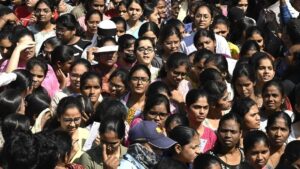
The sequence of events is not entirely clear, but it involved a crowd gathering outside the offices of the Ladakh Hill Council and the Bharatiya Janata Party, the police trying to violently disperse them, stone-throwing by a section of the protesters, the BJP office and some other property being set on fire and the use of teargas by the police.
At least four people were killed in police firing. Several dozen injured people were taken to hospital. The Administration has prohibited gatherings of more than four people.
This turn of events is of serious concern. Leaders of the movement to demand that the Union territory be given statehood and the protections due to tribal areas under the Sixth Schedule of the Constitution status have expressed shock at the police action, but also disappointment at the violence.
Climate activist Sonam Wangchuk and 15 others who had been on fast called off their protest. They asked residents not to resort to violence, which is sensible, given the strong history of commendable restraint that Ladakhis have shown in the face of the Central government’s recalcitrance. They also urged the government to heed Ladakh’s demands and reminded it of why citizens are angry.
The anger has been building up for a long time. Since 2019, when Ladakh was separated from Jammu and Kashmir and given Union territory status, its people have been waiting for New Delhi to honour its commitments to give the region greater autonomy.
Union territory status came without any legislature, effectively leaving the region to be completely controlled by the Central government through its appointed lieutenant governor.
Granting Sixth Schedule status to Ladakh was one of the promises the BJP made in the national elections in 2019 and again in the Hill Council elections in 2020. Prioritising Ladakhi youth for jobs was another.
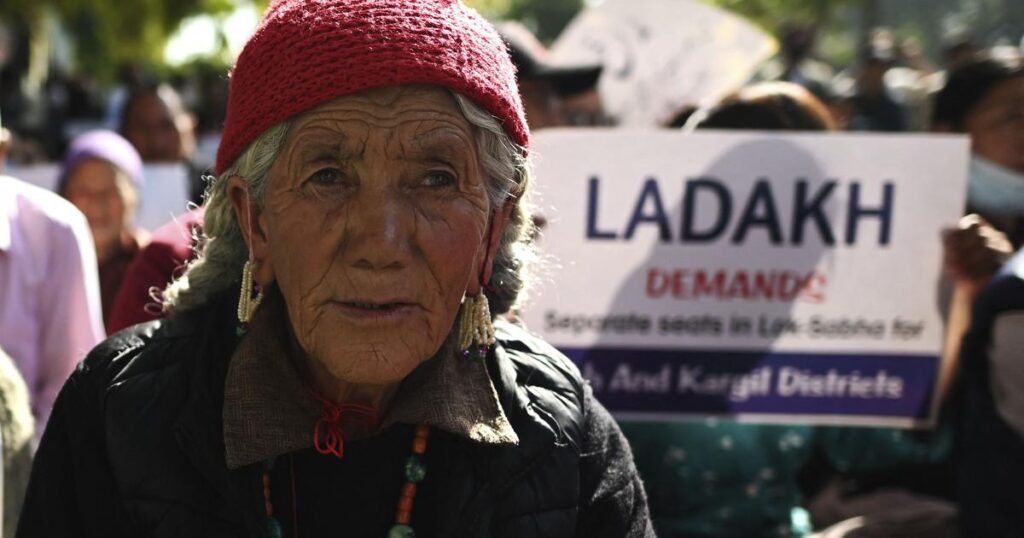
The movement has had other key demands, including a parliamentary seat each for Leh and Kargil districts (rather than the current situation of one for both), and clarity on who has domicile status so that most jobs created in Ladakh could go to Ladakhis.
Of these, the domicile demand was met only in June, but with serious loopholes. There has also been some recent movement on jobs. But the most important demands for Sixth Schedule status and statehood remain pending.
Time and again, the Ministry of Home Affairs has held “high-level” committee meetings with leaders of the moement. But even after several meetings, five hunger fasts and a 1,000-km footmarch from Leh to Delhi by the movement, the government has continued to delay decisions on these demands.
Meanwhile, many more young people have joined the ranks of the unemployed or underemployed Ladakh has a high literacy and education status, making the frustration amongst youth even more intense.
Equally serious, the Central government has repeatedly shown callousness in the way it takes decisions. The Union territory administration has mostly non-Ladakhis in the topmost positions (including all the lieutenant governors appointed so far), contracts for visioning and planning for the region have been given to outside agencies such as Ernst and Young (as if Ladakh does not have relevant expertise), contracts for infrastructure works are going to outside companies, and decisions on land are being taken without consent of relevant villages or often even the Hill Council (which, nominally, is the custodian of most land).
Control over land and possibly other resources – exploration is reportedly underway for commercially valuable minerals – is one of the most cynical games being played here (as it has been in so many other regions with Scheduled Tribes and other marginalised peoples across India).
An example is a proposed mega-solar project in Changthang, one of Ladakh’s most ecologically and culturally fragile areas, home to unique wildlife and crucial grazing land for nomadic pastoralists herding Pashmina goats, sheep and yaks. It will be spread over 48,000 acres, and an additional unspecified amount of land that will go under a huge network of transmission lines.
No consent has yet been obtained from the herders, there is no environmental and social impact assessment, and yet, some preliminary construction has already begun.
It is not helping that the administration has taken some clumsy repressive actions against activists. The latest of these was the cancelling of the land lease of the Himalayan Institute of Alternative Learning that Wangchuk set up in 2017. Immediate public pressure against this has stopped any further action by the administration (including carrying out its threat to demolish all the institute’s buildings).
All it did was to generate more anger. So did the recent introduction of more personnel of the Central Reserve Police Force in places such as Leh suggests to Ladakhis that they continue being ruled from Delhi.
It is also very possible that some of Ladakh’s young people have been influenced by the events in neighbouring Nepal earlier this month (and in Bangladesh last year), where young people took to the streets to express their frustration at a system they saw as unresponsive to their aspirations.
“The scene today was like what we saw on videos from Nepal,” said Tsewang Rigzin, former executive councillor of the Ladakh Autonomous Hill Development Council, who witnessed Wednesday’s violence. “I never imagined that we would see such things in Ladakh. I never thought the administration would use violence against us. What democracy is left?”
Meanwhile, some newspapers have reported that “officials familiar with the matter” have blamed Wangchuk for the violence, making some rather nebulous connections with something he is supposed to have said about an “Arab Spring style protest in Ladakh”. No one in government is taking responsibility for the underlying current of resentment that its inaction has created.
The Central government’s lack of action has ratcheted up the anger. It is also alienating a population that has helped the armed forces to secure the long borders that Ladakh shares with China and Pakistan, as Wangchuk and others have repeatedly pointed out. No amount of commercial gain from land and minerals, or whatever other interests are behind the willful ignoring of legitimate Constitutional demands, is worth these risks.
It is not clear if the next round of talks between the Centre and Ladakhi groups will take place on October 6 as earlier announced. But whatever happens, the government needs to make clear what its intentions are – to grant Ladakh’s legitimate demands, or keep dragging its feet, risking further antagonising an already infuriated population?
[Ashish Kothari is a founder and ex-member of Kalpavriksh, and has been involved in many people’s movements. He has taught at Indian Institute of Public Administration, coordinated India’s National Biodiversity Strategy and Action Plan, served on boards of Greenpeace International and India, and the ICCA Consortium, and been a judge on the International Tribunal on Rights of Nature. He is the co-founder of Vikalp Sangam, Global Tapestry of Alternatives, and Radical Ecological Democracy. He is the co-author or co-editor of Churning the Earth, Alternative Futures, and Pluriverse: A Post-Development Dictionary. Courtesy: Scroll.in, an Indian digital news publication, whose English edition is edited by Naresh Fernandes.]
❈ ❈ ❈
Ladakh at the Crossroads: A Strategic Frontier Seeking Its Voice
Maj Gen Amin Naik
Ladakh occupies a unique place in India’s strategic imagination. Perched between Pakistan-occupied territories to the west and Chinese-controlled Tibet to the east, it stands as both a symbol of India’s territorial resolve and a test of its democratic sensitivity. The icy peaks and barren valleys that form the nation’s northern frontier have long guarded its borders, today, they also guard a simmering discontent among their people.
Since August 2019, when Article 370 was revoked and Ladakh was carved out as a separate Union Territory, the region has experienced a mix of optimism and unease. The move promised direct attention from New Delhi, a long-sought goal for residents who had felt neglected by the erstwhile Jammu & Kashmir administration. Yet six years on, enthusiasm has faded into anxiety over representation, land ownership, and employment rights.
From Hope to Disquiet
Initially, there was a celebration in Leh. Many Ladakhis welcomed the separation from Kashmir, believing that a Union Territory would bring focused development. But the absence of an elected legislature soon dampened that optimism. Ladakh became a UT administered directly by the Centre through a Lieutenant Governor, with no local assembly to shape policy on vital matters such as land, jobs and cultural preservation.
The consequences became apparent quickly. Residents feared the loss of control over ancestral lands and traditional livelihoods. Without constitutional safeguards, they worried that non-locals might purchase property, altering the fragile demographic balance. Environmentalists warned that indiscriminate construction and tourism, if left unchecked, could devastate the high altitude ecosystem.
By 2021, social movements had gained traction. Civil society groups in Leh and Kargil historically divided along religious and regional lines came together for the first time to demand constitutional protections, statehood, and a Public Service Commission. This unity reflected both shared anxiety and a mature political awakening across Ladakh’s districts.
The Strategic Dimension
Ladakh’s internal tensions cannot be separated from its strategic environment. The region sits at the heart of India’s most sensitive frontiers. The 2020 clash in Galwan Valley, which claimed the lives of twenty Indian soldiers, was a grim reminder of the ever present threat from China. Since then, India has enhanced its military infrastructure, strengthened troop deployment, and accelerated road-building across the Union Territory.
While these measures reinforce national security, they also shape the local mood. For many Ladakhis, development is increasingly driven by security considerations rather than local priorities. Strategic importance has become a double edged sword vital for the nation, yet overshadowing civilian governance. The paradox is striking, Ladakh has grown more secure militarily, but less secure politically.
The Local Pulse
In recent months, this sense of exclusion has spelt onto the streets. Peaceful demonstrations demanding statehood and constitutional safeguards turned violent, leaving several injured and sparking curfews. The images of unrest from Leh startled a country that often associates Ladakh with tranquillity and loyalty.
Yet the essence of these protests lies not in rebellion but in participation. Local leaders repeatedly stress that their demands are within the framework of the Indian Constitution. They seek partnership, not separation. Their refrain is simple, decisions about Ladakh should not be made without the Ladakhis.
Equally significant is the emerging unity between Leh’s Buddhist community and Kargil’s Muslims. Their joint front demonstrates that when identity and livelihood are at stake, old divides can be bridged. This inter district solidarity gives moral weight to Ladakh’s demand for representation.
Charting a Simple Path Forward
The answers to Ladakh’s challenges do not need to be complex. What the region seeks is credible political participation and legal assurance achievable without undermining national security. A few well considered steps could restore confidence and stability.
First, establish an elected Ladakh Legislative Council with powers over local subjects, including land use, employment, culture, and environment etc. Such an arrangement would fill the governance vacuum without diluting strategic control.
Second, enact a Ladakh Land and Employment Protection Act to regulate land transfers and ensure job preference for locals. Modelled on existing safeguards in other tribal areas, this would protect Ladakh’s social fabric and address fears of demographic change.
Third, institute a Ladakh Development Compact, a five year partnership between the Centre and local councils, focusing on sustainable infrastructure, renewable energy, and climate resilient livelihoods. Funding under this compact should be tied to transparent, community based monitoring to ensure that development serves local needs.
Fourth, adopt a dialogue and accountability framework. Independent inquiries into recent violence, open consultations with Leh and Kargil leaders, and regular reviews of central policies can replace suspicion with trust.
Finally, balance security with empathy. The region’s heavy militarisation is unavoidable given its geography. Still, routine interaction between defence officials and civilian representatives can ensure that local welfare and national security complement each other rather than contradict.
Listening as Strength
The government’s response will determine the trajectory of Ladakh’s politics for decades to come. A purely administrative or security driven approach may quiet protests temporarily, but it cannot build legitimacy. Genuine engagement, on the other hand, will reinforce both national unity and border stability.
Ladakhis have long demonstrated unwavering patriotism. They have endured harsh winters and isolation, often serving in the very forces that defend their homeland. Their present demands are neither radical nor separatist, they are rooted in a desire for dignity and a fair share in decision making. Meeting them halfway would not weaken Delhi’s authority it would deepen India’s democracy.
A Future Built on Trust
Ladakh’s story is one of belonging, not defiance. Its people do not seek to distance themselves from India, they seek a place within it that recognises their uniqueness. Granting them structured political participation and legal protections will strengthen, not strain, the Union. Ultimately, national security and local empowerment are not competing goals. A secure frontier begins with secure citizens confident that their voices matter in the system they protect. The mountains of Ladakh have stood unshaken for centuries, it is now time to ensure that the faith of its people in the promise of democracy stands just as firm.
[Maj Gen Amin Naik, SM and Arjuna Awardee, a veteran and former Additional Director General at the Army Headquarters, was born and raised in Kashmir. His deep connection to the region gives him an intimate understanding of Ladakh, its people, and its aspirations. His extensive experience and unique perspective offer invaluable insights into the region’s complexities. Courtesy: Countercurrents.org, an India-based news, views and analysis website, that describes itself as non-partisan and taking “the Side of the People!” It is edited by Binu Mathew.]