❈ ❈ ❈
A Himalayan Crisis
Soumya Dutta
A deadly combination of Climate Change Crisis (which itself is a result of the “extractive-expansionist-capitalist” economic model adopted globally) and allround ‘insane developmentalism’ – is wrecking havoc across the Hindukush Himalayas.
Most of these were predicted for over a decade – by many climate scientists, climate & ecological justice activists and few concerned planners, But those warnings were largely ignored.
Now it’s Payback Time.
The year 2025 has most likely seen an increase in climatic disasters in the Himalayan region (excluding Earthquakes, which are not Climate change driven), primarily driven by intensified monsoon rains, cloudbursts, flash floods, landslides, and glacial lake outbursts, exacerbated by climate change and western disturbances. Not to talk about the intensified Heatwaves in the lower Himalayas.
And it’s to be noted, that no La Nina condition (which increases rainfall in the Indian subcontinent) is prevailing in the Equatorial Pacific Ocean now, nor an El Nino. It’s ENSO neutral condition prevailing now. So the entire effects can most likely be attributed to Climate Crisis & local mal-development .
But how does it connect? Global warming is not just a warming of the atmosphere, where most of the meteorological temperature measurements are made (2-metre air temperature). In the past decades, over 92% of the extra heat retained by the whole Earth, has gone into the Oceans, warming this huge ‘thermal storage’. There’s an extra heating of the Oceans through the Atmosphere-Ocean interface. In the years 2023 and 2024, global average Sea Surface Temperatures (SST) broke all records, by a large margin. Warmer ocean waters are evaporating more and pumping extra moisture into the atmosphere. On top of that, every one degree celsius rise in air temperature allows 7% more moisture to be held by that air mass. When this warmer air rise, it expands & gets cooled and can’t hold all that extra moisture, thus quickly condensing this load into larger raindrops, and intense rainfalls / cloud-bursts results. This process happens with more intensity near mountain slopes, as the air mass is quickly pushed up the slopes, a process called Orographic lift. This gives rise to more frequent and severe rainfalls in these mountainous areas – which also trigger flash floods and land/ mud slides . This combination of higher SST and higher Air temperature is also giving rise to much stronger and frequent storms, as the condensing water vapour releases the massive amounts of latent heat to the airmass, giving this higher velocity and destructive power.
Along with these, an insane developmentalism – rampant constructions of highways, ‘four-lanes’, expressways, large concrete structures….. is stripping the vegetative cover of the unstable mountain slopes. Uncovered soil lets the rain water run down the slopes quickly, with little chance of the absent forests holding them back to some degree. The soil on steeper slopes absorbs more water, becomes heavy and chances of landslides increases due to gravitational pull downwards. Slope lubrication also plays a role.
From the better known media reports, no Major Himalayan disasters were reported from January to May 2025, with events ramping up during the monsoon season starting in June. The list below, which is Not an exhaustive list, shows distinct, verified events with available dates or timeframes, noted from news reports and analyses.
Cumulative death tolls for the monsoon period include over 145 in Uttarakhand and Himachal Pradesh combined, 130 in Himachal Pradesh alone (from 74 flash floods, 39 cloudbursts, and 73 major landslides), and around 300 in northwest Pakistan.
A. Late June 2025: Cloudburst in Kullu and Kangra districts, Himachal Pradesh, India
A cloudburst triggered deadly floods near the Indira Priyadarshini Hydroelectric Project, killing 2 people and leaving up to 20 missing, with significant damage to infrastructure in this vulnerable Himalayan area.
B. July 2025 (multiple incidents): Flash floods and landslides across Himachal Pradesh and Uttarakhand, India
Ongoing heavy monsoon rains led to nature’s fury through multiple flash floods and landslides, causing deaths (exact toll unspecified in reports) and widespread destruction in these states, highlighting the region’s increasing vulnerability to extreme weather.
C. July 28-29, 2025: Cloudburst in Mandi town, Himachal Pradesh, India.
An intense cloudburst-type rainfall event, influenced by a western disturbance, triggered a flash flood that killed 3 people and caused localized havoc in the area.
D. August 5, 2025: Flash flood in Dharali and Harsil villages, Uttarkashi district, Uttarakhand, India
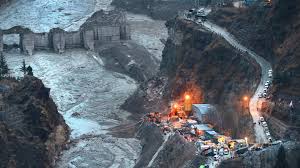
A sudden flash flood, possibly caused by a cloudburst, glacial lake outburst, or glacier collapse, overwhelmed the Kheer Ganga river, submerging markets, destroying 50 hotels and 40-50 houses, and damaging an army camp. At least 5 confirmed dead, with over 70 presumed dead and 43 still missing as of mid-August; a temporary lake formed upstream, raising further flood risks.
E. Early-Mid August 2025: Cloudburst and flash floods in Chashoti, Kishtwar district, Jammu & Kashmir, India.
A massive cloudburst caused devastating flashc floods and landslides along a pilgrimage route in this remote Himalayan area, killing at least 44 people, leaving dozens missing, and requiring extensive rescue operations by NDRF, SDRF, army, and volunteers amid challenging terrain.
F. August 17, 2025: Cloudburst in Kathua district, Jammu, India.
A severe cloudburst led to terrifying flooding, with water and debris surging through the area; army, NDRF, and RSS teams conducted relief and rescue operations, though specific casualty figures were not detailed in initial reports.
G. August 22, 2025: Glacial lake outburst flood in Gilgit-Baltistan, Pakistan.
A GLOF in this northern Himalayan region triggered cascading floods, demonstrating the dangers of warming-induced glacier melt, though specific casualty details were not immediately reported.
H. August 2025 (ongoing monsoon period): Widespread monsoon floods in northwest Pakistan (including Swat River and Mingora)
Torrential rains caused powerful floodwaters and debris flows, killing at least 227 people overall in the region, washing away homes, and triggering landslides; this is part of broader monsoon devastation in the Hindu Kush Himalayas.
I. Summer 2025 (specific dates unspecified, reported in late August): Devastating floods in Kashmir region, India.
Recurring floods highlighted climate instability and human impacts, compounding geopolitical tensions and hindering solutions; exact casualties not specified but part of the season’s havoc.
J. August 26, 2025: Landslide en route to Vaishno Devi shrine, Jammu, India
A landslide, amid monsoon rains wreaking havoc on Himalayan states, killed and estimated 13 people and injured 14, with experts warning of risks from unchecked construction along riverbanks and slopes.
The Himalayas have been ringing the warning bells very loud and clear, for the past few years especially. It’s upto us all to rise to the challenge, restraint the destruction engines and heal the Himalayas. The question is not How to do that, we already know. The main question is will the profiteering juggernaut of extractive- expansionism be called to account and halted in its devastating path ? And that’s – Not a billion dollar question, but a question of choosing between the long-term sustainability of the Himalayan ecosystem and its slow destruction.
[Soumya Dutta is Trustee, MAUSAM (Movement for Advancing Understanding of Sustainability And Mutuality), Executive Member of Friends of the Earth India and Former Advisory Board member, UN Climate Technology Centre & Network. Courtesy: Countercurrents.org, an India-based news, views and analysis website, that describes itself as non-partisan and taking “the Side of the People!” It is edited by Binu Mathew.]
❈ ❈ ❈
India’s Himalayan Hydropower, Infrastructure Push is Having a Deadly Ripple Effect
Diva Sinha
Uttarakhand, referred to as the land of gods, is also known as the energy state of India. It is home to several fast-flowing rivers at high altitudes that serve as the perfect backdrop for harnessing energy from water to produce hydroelectric power.
In this state, the Tehri dam, situated in Garhwal, is the highest dam in India. The amalgamation of rivers and high mountains in this area is ideally suited to producing electricity for rural and urban areas through hydropower and other renewable energy sources such as solar and wind.
In the neighbouring union territory of Ladakh, the Zoji La is one of the highest mountain passes in the world. It’s surrounded by the rugged terrain of Trans-Himalayas, with cold desert slopes, snow-capped peaks and alpine meadows. This biodiverse region is home to snow leopards, Himalayan brown bears, wolves, Pallas cats, yaks and lynx.
Zoji La also serves as a gateway for the movement of Indian military troops, enabling a constant armed force presence at the Indo-Chinese border. The construction of the Zoji La tunnel, poised to become the longest tunnel in Asia, allows India to rapidly deploy troops near the border with China while claiming to promote economic development in rural areas. Existing roads remain blocked by snow for up to six months each year, so without the new tunnel, access is limited.
Its construction, however, uses extensive blasting and carving of the mountain slopes using dynamite, which disrupts fragile geological structures of the already unstable terrain, generating severe noise and air pollution, thereby putting wildlife at risk.
Hydropower harnesses the power of flowing water as it moves from higher to lower elevations. Through a series of turbines and generators, hydroelectric power plants convert the movement of water from rivers and waterfalls into electrical energy. This so-called “kinetic energy” contributes 14.3% of the global renewable energy mix.
However, development of hydropower projects and rapid urbanisation in the Indian Himalayas are actively degrading the environmental and ecological landscape, particularly in the ecologically sensitive, seismically active and fragile regions of Joshimath in Uttarakhand and Zoji La in Ladakh.
The construction of hydropower plants, along with associated railways, all-weather highways and tunnels across the Himalayan mountains, is being undertaken without adequate urban planning, design or implementation.
At an altitude of 1,800m in the Garhwal region, land is subsiding or sinking in the town of Joshimath where more than 850 homes have been deemed as inhabitable due to cracks. Subsidence occurs naturally as a result of flash flooding, for example, but is also being accelerated by human activities, such as the construction of hydropower projects in this fragile, soft-slope area.
Satellite data shows that Joshimath sank by 5.4cm within 12 days between December 27 2022 and January 8 2023. Between April and November 2022, the town experienced a rapid subsidence of 9cm.
One 2024 study analysed land deformation in Joshimath using remote sensing data. The study found significant ground deformation during the year 2022–23, with the maximum subsidence in the north-western part of the town coinciding with the near completion of the Tapovan Vishnugad hydropower project in 2023. Another 2025 study highlights that hydropower projects, particularly the Tapovan Vishnugad plant near Joshimath, play a significant role in destabilising the region.
Dynamite and disaster risk
As part of my PhD research, I’ve been interviewing locals about how this is affecting them. “The subsidence in Joshimath is not solely the result of natural calamities,” said apple farmer Rivya Dimri, who once lived in the town but relocated to Lansdowne due to the inhospitable conditions of her ancestral home. She believes that a significant part of the problem stems from dam construction, frequent tunnelling and blasting, plus the widespread deforestation that has taken place to accommodate infrastructure development.
Farmer Tanzong Le from Leh told me that “the government is prioritising military agendas over the safety and security of local communities and the ecology of Ladakh”. He believes that “the use of dynamite for blasting through mountains not only destabilises the geological foundations of the Trans-Himalayan mountains but also endangers wildlife and the surrounding natural environment, exacerbating vulnerability in these already sensitive mountain regions”.
The twin challenges of haphazard and unplanned infrastructure development in Joshimath and Zoji La represent two sides of the same coin: poorly executed infrastructure projects that prioritise economic, energy, military and geopolitical ambitions over the safeguarding of nature and communities. Hydropower plants, tunnels and highways may bring economic benefits and geopolitical advantages, but without urgent safeguards, India risks undermining the very mountains that protect its people, wildlife, ecosystems and borders.
[Diva Sinha is PhD Candidate, Department of Development Studies, SOAS, University of London. Courtesy: The Conversation, an Australia-based nonprofit, independent global news organization dedicated to unlocking the knowledge of experts for the public good.]