❈ ❈ ❈
India Needs a Cultural Revolution to Get Rid of the American Dream
M.K. Bhadrakumar
September 24, 2025: Afghanistan’s Foreign Minister Amir Khan Muttaqi has snubbed United States President Donald Trump with his forceful rejection of the latter’s demand for the ‘return’ of Bagram air base by the Taliban. Elsewhere, five major Western countries — — the United Kingdom, Canada, Australia, Portugal, and France — have announced their formal recognition of a Palestinian State highlighting their breach with Trump’s seamless support for the Zionist project of Greater Israel.
In between fall a number of shadows also indicative of the waning US influence to enforce its will on the international community. Russia denied the recent airborne incidents against eastern members of the NATO alliance, including the shooting down of Russian drones that entered Polish airspace, but one would, nonetheless, like to believe that Moscow is testing the US-led Western alliance’s limits.
A transatlantic schism of sorts has surfaced over NATO’s impending defeat in the war in Ukraine. It is a parting of ways over the US’ retrenchment, which Europe sees as an existential danger. Even more galling to Europeans is Trump’s declaration that the US intends to annex Greenland. In fact, Denmark suspects that the CIA is undertaking intelligence operations to promote separatist sentiments among natives of Greenland with a view to eventually legitimising Trump’s ‘Anschluss’ as an act of self-determination by the people. But the European resistance to Trump’s best-laid plans is also gaining traction, with France and Germany shifting to a proactive mode to strengthen Greenland’s autonomy and identity.
Amidst these theatrical happenings, from the Indian perspective, the US-South Korea tariff war becomes a case study by itself. After the US imposed a 25 per cent tariff on South Korean imports, Seoul entered talks and, in late July, secured an informal agreement to reduce the tariff to 15 percent. Trump claims that the agreement included a South Korean package worth $350 billion for investments ‘owned and controlled’ by the US (on the pattern of a similar secret US-Japan deal recently, whose details are still kept under wraps).
But Seoul wants to protect national interests while managing a vital economic relationship with Washington. Of course, such a massive outflow of investment funds will put financial stress on South Korea’s economy. What gives a cutting edge to the standoff is the backdrop of an attempt at an aggressive immigration crackdown on South Korean nationals in the US. Images of workers in handcuffs and chains caused deep outrage in South Korea. Indeed, New Delhi has also gone through such a traumatic, humiliating experience. But unlike New Delhi, Seoul decided that enough is enough.
Seoul insisted that its nationals should be unshackled before the flight took off. South Korean President Lee Jae Myung later said modestly, “The US wanted to handcuff our workers, but we insisted it should not be that way.” The South Koreans ultimately prevailed. Vice foreign minister Park Yoonjoo accompanied the detainees to make sure they were not mistreated on the aircraft.
Of course, our government instead drew comfort that women and children were not handcuffed! When a small country like South Korea (population: 5.18 crore) stands up to defend its honour, why the Indian leadership behaved so pusillanimously is baffling.
New Delhi is delusional about Trump. He is hammering India with a master plan while also claiming he has a wonderful personal relationship with Prime Minister Narendra Modi. But respect is a two-way street. And that is not happening here.
On the contrary, when it comes to the US, India’s political elite inexplicably become wibbly-wobbly. They simply lumped the insults meted out by the likes of Treasury Secretary Scott Bessent, Commerce Secretary Howard Lutnick, or senior counsellor to the president Peter Navarro. Equally, they fail to react proportionately to the sanctions on the Indian project in Chabahar Port, which is a patently unfriendly act with potentially profound consequences for India’s geostrategy.
Simply put, why not suspend the so-called Logistics Exchange Memorandum Of Agreement (LEMOA) signed in 2016? It is a one-sided agreement that allows the US military to replenish from our bases, and access supplies, spare parts, and services from land facilities, air bases, and ports. Why should India get entangled in the ‘forever war’ in the Persian Gulf instigated by the US and Israel?
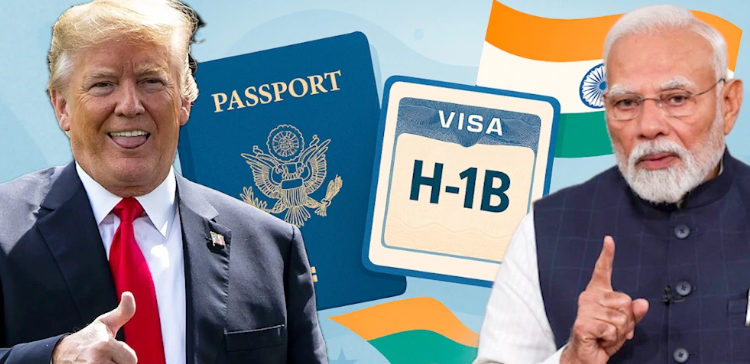
Congress MP Manish Tewari hit the nail on the head when he said, “The US is systematically turning on the screws on India. What happened with regard to the H-1B visa is no coincidence at all. If you look at it in context, the premature ceasefire announcement by the US at the instigation of Pakistan, subsequently, the felicitation and the feting of the Pakistani Army chief in the White House, followed by the 50 per cent tariffs which have been imposed by the US and even the Saudi-Pakistani defence partnership won’t have happened without the tacit support and blessing of the US. So, in a very systematic manner, for reasons which are inexplicable and understandable, the US is deliberately being belligerent towards India.”
The ‘mantra of Swadeshi’ in Modi’s address to the nation on September 21 touches on this issue as an underpinning of the GST reform. But for the mantra to “become the attitude of every Indian”, as the prime minister flagged, there is a formidable attitudinal problem, too. The point is, the ‘American dream’ and the ‘unipolar predicament’ are borne out of the same scenario of infinite regress. Indians need a cultural revolution. And it must begin from the top. Look at the raison d’être of the Trump Gold Card and the planned Trump Platinum Card.
(Ambassador M.K. Bhadrakumar served the Indian Foreign Service for more than 29 years. Courtesy: Indianpunchline, the author’s blog.)
❈ ❈ ❈
India Disavows ‘Tianjin Spirit’, Turns to EU
M.K. Bhadrakumar
September 5, 2025: India found itself in an uncomfortable situation like a cat on a hot roof at the Shanghai Cooperation Organisation event in Tianjin, China, with the Western media hyping up its unlikely role in a troika with Russia and China to chariot the world order toward a brave new era of multipolarity.
The plain truth is, the real obsession of the Western media was to vilify the U.S. President Donald Trump for having “lost” India by caricaturing a three-way Moscow-Delhi-Beijing partnership as an attempt to conspire against the United States. The target was Trump’s insecure ego, and the intention was to call out his punitive trade tariffs that caused mayhem in the U.S.-Indian relationship. Prime Minister Narendra Modi savoured momentarily in Tianjin the role of a key player at the high table, which plays well before his domestic audience of hardcore nationalists, but a confrontation with the U.S. was the last thing on his mind.
In Tianjin, Modi took a hour-long limo ride in Putin’s custom-made armoured vehicle that created a misperception that the two strongmen were up to something really sinister and big. The extravagant display of “Russia collusion” Modi could have done without.
To be fair to Putin, he later made ample amends (after Modi returned to Delhi) to make sure Trump was not put out. In front of camera, when asked about an acerbic aside by Trump in a Truth Social post on September 3 wondering whether Putin was “conspiring against the United States of America,” Putin gave this extraordinary explanation:
The President of the United States has a sense of humour. It is clear, and everyone is well aware of it. I get along very well with him. We are on a first name basis.
I can tell you and I hope he will hear me, too: as strange as it may appear, but during these four days, during the most diverse talks in informal and formal settings, no one has ever expressed any negative judgment about the current U.S. administration.
Second, all of my dialogue partners without exception—I want to emphasise this—all of them were supportive of the meeting in Anchorage. Every single one of them. And all of them expressed hope that the position of President Trump and the position of Russia and other participants in the negotiations will put an end to the armed conflict. I am saying this in all seriousness without irony.
Since I am saying this publicly, the whole world will see it and hear it, and this is the best guarantee that I am telling the truth. Why? Because the people whom I have spoken with for four days will hear it, and they will definitely say, “Yes, this is true.” I would have never said this if it were not so, because then I would have put myself in an awkward position in front of my friends, allies and strategic partners. Everything was exactly the way I said it.
Modi has something to learn from Putin. But instead, no sooner than Modi returned to Delhi, External Affairs Minister S. Jaishankar had lined up the most hawkish anti-Russia gang of European politicians to consort with in an ostentatious display of distancing from the Russia-India-China troika.
In the entire collective West, there is no country today to beat Germany in its hostility toward Russia. All the pent-up hatred toward Russia for inflicting the crushing defeat on Nazi Germany that has been lying dormant for decades in the German subconscious mind has welled up in the most recent years.
The German Chancellor Friedrich Merz recently said Putin “might be one of the worst war criminals of our era. That is now plain to see. We must be clear on how to deal with war criminals. There is no room for leniency.”
Merz whose family was associated with Hitler’s Nazi party, has been repeatedly flagging that a war between Germany and Russia is inevitable. He is threatening to hand over long-range Taurus missiles to Ukrainian military to hit deep inside Russia.
But all this anti-Russian record of Germany didn’t deter Jaishankar from inviting Merz’s foreign minister Johann Wadephul to come to India on a 3-day visit on Monday. Wadephul promptly seized the opportunity to rubbish both Russia and China. He was particularly harsh on China during his joint press conference with Jaishankar.
Wadephul said in Jaishankar’s presence, “We agree with India and many other countries that we need to defend the international rules-based order, and that we also have to defend it against China. At least that is our clear analysis… But we also see China as a systemic rival. We don’t want that rivalry. We increasingly note that the number of areas is increasing where China has chosen this approach.”
Wadephul flouted protocol norms and violated diplomatic decorum by making such harsh remarks from Indian soil so soon after Modi and Xi decided to stop viewing each other as adversaries and instead work in partnership. But the curious part was Jaishankar didn’t seem to mind and Modi indeed received the outspoken German diplomat.
The sequence of events suggest that Delhi is in panic that Modi went overboard in Tianjin. Trump’s close aide Peter Navarro actually used a crude metaphor that Modi “got into bed” with Putin and Xi in Tianjin. Apparently, the poisoned arrow went home.
Meanwhile, Trump continues to pile pressure on Modi to terminate oil trade with Russia and has threatened that a third and fourth tranche of secondary level tariffs could be expected. He is also putting pressure on the European Union to move in tandem to bring India down on its knees.
Possibly, Wadephul carried some terse message from Brussels. At any rate, after receiving Wadephul, Modi made a joint 3-way call with the President of the European Council Antonio Costa and President of the European Commission Ursula von der Leyen on Thursday to emphasise his government’s neutrality in the Ukraine conflict.
Jaishankar himself called his Ukrainian counterpart Andrii Sybih also to discuss “our bilateral cooperation as well as the Ukraine conflict.”
Dumping the “Tianjin spirit” so soon is a huge loss of face for India. But the blowback from the West unnerves the government. The point is, the future is still being written. The Global South whose mantle of leadership India claims is also watching. Governments in Asia, Europe and elsewhere still have choices to make, and those will be shaped by India’s actions as much as China’s.
Why is India’s diplomacy so clumsy-footed? In medical parlance, such clumsiness and foot drop could actually be a nerve condition. So it could be in the practice of strategic autonomy where nerves of steel are required. Modi government freely interprets national interests to suit the exigencies of politics. And it takes ambivalent attitudes without conviction or due deliberation that are unsustainable over a period of time.
The Indian policymakers do not seem to have the foggiest idea where exactly the country’s long-term interests lie at the present juncture when an epochal transition is under way in the world order, as five centuries of western hegemony are drawing to a close. The great lesson of history for us is that resolve brings peace and order, and vacillation invites chaos and conflict.
(Ambassador M.K. Bhadrakumar served the Indian Foreign Service for more than 29 years. Courtesy: Indianpunchline, the author’s blog.)
❈ ❈ ❈
Who’s Afraid of Donald Trump?
Pulapre Balakrishnan
If the Indian government’s response to US President Donald Trump’s trade-related measures imposed on India has been pusillanimous, the reaction of some members of the opposition has been downright embarrassing in terms of its strategic vision.
Recall that the former had consisted of Prime Minister Modi posting conciliatory messages on X, when actually India should have slapped a reciprocal 25% “penalty tariff” on US goods following Trump’s secondary tariff on India for purchasing Russian oil. This tariff is in gross violation of the unwritten rule of the game in international relations, and not just global trade, that a country may choose its partners as it pleases.
By staying quiet at the time, India lost a golden opportunity to assert its sovereignty. Sovereignty is to be viewed as non-negotiable, and not subject to an economic calculus. But reducing it to such transactional terms is precisely how much of the Indian media seems to have viewed the matter.
The consensus within the establishment has been that India should stay calm in the face of Trump’s aggression and “negotiate”, as a member of the diaspora had opined to a fawning television anchor. He seemed to have forgotten that it was Trump who had called off the trade negotiations. How a country can negotiate when the counterparty has reneged from the process is a mystery.
The timidity of the government’s response to the penalty for buying Russian oil may be contrasted with the excited coverage of the hike in the fee for the H-1B visa. An unnamed government official is reported as stating “they are afraid of our talent”. Opposition politicians have besieged the prime minister on the matter. The New York Times cites the chief minister of Telangana as having “implored Mr. Modi to protect the interests of our tech population and skilled workers”.
In a trade war, to retaliate, and not implore, is what a great nation does. There was also a certain parochiality to the chief minister’s response, for a large percentage of the Indian holders of the H-1B visa are from his own state, which has long welcomed some of the ‘Mag 7’, the largest corporates of the American tech industry.
The presence of Indians from most of the other Indian states among H-1B visa-holders is minimal. And this is the point. Trump’s action on visas for tech workers has attracted far greater attention than the impact of his actions on other areas of India’s economy. Think of the diamond workers of Surat and the garment makers of Tiruppur. They have had fewer supporters among politicians as the tariff on Indian gems and textiles, respectively, were hiked.
Actually, for India, the potential economic impact of the oil embargo could be even greater than that of the tariff on goods exports. With US sanctions on purchase of oil from Iran and Venezuela and now the indirect pressure in the case of imports from Russia, a very large swathe of economic activity in India has been rendered vulnerable. It introduces uncertainty on the oil supply chain in the future. It is not that the visa issue should be ignored, but its economic impact must be seen in perspective.
First and foremost, its impact will only be felt at what economists refer to as ‘the margin’. That is, only future hiring of Indian tech workers in the US that will face the 100,000 dollar fee, for visa renewals are not affected. Hence Indian companies can continue to earn the same profits by employing Indian workers onsite in the US, and the currently employed workers can continue to repatriate their earnings to India till such time as Trump may choose to tax repatriation heavily, as his administration has indicated it may do.
So, the H-1B visa fee hike has the potential only of slowing the growth of income for Indian companies and nationals. The hike in the tariff on goods, however, may be expected to have an immediate effect. India’s exports to the US will falter if they lose competitiveness. In every way, the visa issue is dwarfed by the significance of the tariff on goods and the constriction of oil supplies. To get a sense of the numbers involved, note that about 80% of the H-1B visas goes to Indians. With a cap of 85,000 such visas to be issued per year, approximately 65,000 workers face uncertainty with regard to employment in the next twelve months.
So why has the visa issue given rise to so much agitation? Apart from the obvious economic significance of middle-class Indian families bettering their lot through migration, even when it is temporary, there is a cachet to working in information technology (IT). It is considered to be the cutting edge of knowledge today and bestows a prestige on those who are seen as good enough to work in the field. This, combined with the promise of America as a country is a heady mix for the Indian bourgeoisie.
The mainstream English-language media, where the workers belong to this very class, is incensed when access to the United States is no longer assured, in a way that they are not when tariffs are imposed on jewellery or agricultural products. In this context, contrary to the peevishness of the mainstream, the influencer Vembu Sridhar posed a thoughtful question. On the social media site X, he has proposed to those who currently hold H-1B visas that they return to India where they are bound to succeed in time – in his reckoning five years – rather than continue to “live in fear” due to the precarity of their residence status overseas.
He has remarked on the experience of his “Sindhi friends” who came to India after the Partition, and have succeeded greatly thereafter. Mr. Vembu’s advice has value prima facie as he is a highly successful tech entrepreneur with impressive professional qualifications gained in the US, but the comparison he makes does not capture the full picture. In 1947, the Sindhi migrants had left everything behind in their homeland and had to start from scratch, with little assistance from the Indian state.
Today, IT professionals who choose to return are bound to find a niche in the local industry, many having worked here before. In fact, some of them already work for India IT firms, which may now reshore activity to India, to circumvent the 100,000 dollar fee. But above all, many of the H-1B visa holders have received both their initial on-the-job training in India and an expensive publicly-funded education before that. For them, to return to work in India would be no more than a quid pro quo. Indeed it is a puzzle why India’s public engineering institutes have not made working in India even a temporary requirement for their graduates.
While we can expect little political awareness from the Indian bourgeoisie, it is surprising that the self-consciously progressive sections of the Indian diaspora in the US, mainly academics, have remained silent in the face of Trump’s depredations. Their cosmopolitan outlook would surely absolve them of commenting on the blocking of Indian goods and workers from the US market but not of the duty to call out Trump’s violation of democratic norms.
For decades now, India’s liberal establishment has lionised this cohort but in this moment of crisis for the country the liberal cosmopolitans have chosen to maintain a stoic silence. Never hesitating to school their erstwhile compatriots on the precarious state of Indian democracy under Modi, they have acquiesced in Trump’s manipulative, authoritarian, vituperative and wholly unacceptable conduct of international affairs.
[Pulapre Balakrishnan is honorary visiting professor, Centre for Development Studies, Thiruvananthapuram. Courtesy: The Wire, an Indian nonprofit news and opinion website. It was founded in 2015 by Siddharth Varadarajan, Sidharth Bhatia and M. K. Venu.]
❈ ❈ ❈
Related to the above piece by Pulapre Balakrishnan is another interesting piece by Ruchi Gupta, The H1B Paradox: How Brain Drain Became a Symbol of National Pride. She asks the question: While the personal anxieties of Indians on H1B visas are understandable, it is worth asking: why should India actively support the outmigration of its best and brightest? Below is a summary of her article:
India’s lack of a coherent national development strategy is starkly evident in its approach to H1B visas. While the government defends the interests of Indians abroad, this focus masks a deeper issue: why does India fail to provide opportunities for its own talent, forcing so many to leave? Celebrating the success of Indian-origin CEOs and record remittances hides structural failures at home and allows the state to avoid systemic reforms.
The H1B system epitomizes brain drain: India invests in nurturing talent through public institutions like IITs, but the U.S. reaps the benefits. Success stories reflect class privilege and access to elite institutions rather than a level playing field. Relying on overseas opportunities to fuel aspirations sidelines the need to strengthen domestic education and employment, leaving most young people behind.
The cost of this exodus is more than lost talent—it weakens pressure for reform and innovation in India. Despite a vast talent pool, India produces few globally competitive firms or Nobel laureates due to weak institutions, poor governance, and underinvestment in research. This gap is evident in India’s absence from the global AI race.
Instead of celebrating its diaspora, India must create conditions that make staying attractive: better education, infrastructure, transparent governance, and support for innovation. True self-reliance lies not in overseas prestige but in enabling all Indians to fulfill their aspirations at home. Until then, India will remain trapped in the paradox of pride in global success while neglecting domestic opportunity.
[Article published on Ruchi Gupta’s substack (https://rgupta.substack.com). It has also been published in The Indian Express.]