❈ ❈ ❈
Great Nicobar at a Crossroads: Development, Defence, and the Future of an Ancient Island – Some Big Questions to Answer
Mohd Ziyaullah Khan
A Mega Project Raising Big Questions
Deep within the eastern Indian Ocean, bulldozers are beginning to reshape one of India’s most remote and ecologically rich territories. Great Nicobar Island, a tropical paradise covered by ancient rainforests and home to one of the world’s last largely uncontacted Indigenous communities, is at the centre of a massive development plan that promises economic growth, strategic security, and global connectivity.
Backed by Prime Minister Narendra Modi, the ₹1 lakh crore ($12.5 billion) Great Nicobar Island Project has been described as a development of “strategic, defence and national importance.” Supporters see it as a transformative opportunity for India, while critics fear it could irreversibly damage fragile ecosystems and threaten Indigenous cultures that have survived for thousands of years.
As construction preparations move forward, the island has become the focus of an intense debate: Can development and conservation coexist, or will one come at the cost of the other?
Why Great Nicobar Matters
Great Nicobar is the southernmost island of India’s Andaman and Nicobar archipelago. Located just 40 nautical miles from the Strait of Malacca—one of the world’s busiest shipping routes it occupies a position of immense geopolitical significance.
Nearly 30 percent of global trade passes through the Strait of Malacca, including a large share of China’s oil and gas imports. For India, strengthening its presence in this region is viewed as essential to securing maritime interests and maintaining influence in the Indo-Pacific.
Prime Minister Modi has stated that the project will transform Great Nicobar into a major hub for maritime and air connectivity while enhancing India’s defence capabilities.
An Island Rich in Nature and Heritage
Despite its strategic location, Great Nicobar remains one of India’s least developed regions. Covering approximately 910 square kilometres, nearly 95 percent of the island is still covered by dense tropical forests.
The island is home to around 9,000 residents, including Indigenous communities such as the Nicobarese and the Shompen. The Shompen, believed to number around 300 people, are among the world’s few remaining largely isolated tribes. Living as hunter-gatherers in the island’s forests, they have had minimal contact with the outside world and are thought to have inhabited the region for nearly 10,000 years.
Great Nicobar is also a biodiversity hotspot. Its forests, mangroves, coral reefs, and lagoons support numerous endemic species found nowhere else on Earth. The island is particularly important as a nesting ground for the endangered leatherback turtle, the largest sea turtle species in the world.
What Does the Great Nicobar Project Include?
The ambitious development plan is expected to unfold in three phases and continue until 2047. Key components include:
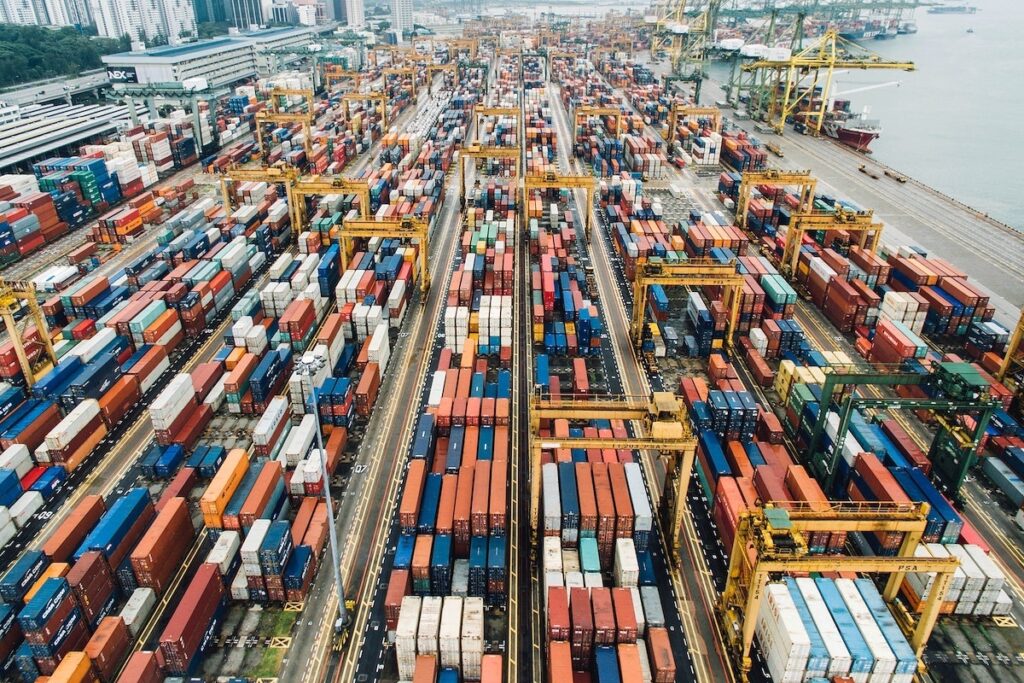
- A Major International Transshipment Port: The centrepiece of the project is a $5.5 billion container transshipment port at Galathea Bay. Once operational, it is expected to handle more than 20 million containers annually, potentially placing it among India’s largest ports and allowing it to compete with regional shipping hubs such as Singapore and Port Klang in Malaysia.
- A New International Airport: An airport at Campbell Bay will improve connectivity for both civilian and defence purposes, making the island more accessible than ever before.
- Defence Infrastructure: Existing military facilities will be expanded to support both defence and civilian operations, strengthening India’s strategic reach across the Indo-Pacific region.
- Urban Development and Tourism: Plans also include a gas-solar power plant, hotels, residential areas, and a new township covering 161 square kilometres.
The island’s population is projected to increase dramatically—from around 9,000 today to more than 336,000 by 2055. Tourism forecasts predict visitor numbers could exceed one million annually by the same year.
The Environmental Cost
While the project promises economic growth, environmental groups warn that the ecological consequences could be severe. Government estimates suggest approximately 711,000 trees will be cleared. However, some conservationists believe the actual number may run into the millions. Environmentalists argue that replacing ancient tropical forests with plantations elsewhere cannot compensate for the loss of ecosystems that have evolved over thousands of years. The government’s plan to offset deforestation through tree plantations in Haryana has drawn criticism because the mainland’s dry landscape bears little resemblance to Great Nicobar’s rainforest environment.
The leatherback turtle is another major concern. Scientists warn that construction around Galathea Bay could disrupt critical nesting beaches. Researchers note that leatherback turtles often return to the same nesting sites throughout their lives. Significant disturbances to these habitats could trigger rapid population declines. Even the LoP Mr. Rahul Gandhi also covered these points in his long video while raising the issue of this island as how the Govt is hell bent on taking up this project and giving it to their corporate friend like Adani.
The Shompen: A Community Facing Uncertain Change
Perhaps the most sensitive issue surrounding the project is its potential impact on the Shompen people. Human rights advocates argue that increased construction, migration, and outside contact could expose the tribe to diseases against which they have little or no immunity. Survival International and other Indigenous rights organisations have warned that large-scale development could fundamentally alter the forests, rivers, and resources that the Shompen depend on for survival. Critics also question whether meaningful consent can be obtained from a community that remains largely uncontacted and has limited understanding of the scale and implications of the proposed project.
Local Concerns Beyond Conservation
The controversy is not limited to environmentalists and Indigenous rights groups. Some settlers and local residents have also expressed concerns about land acquisition and compensation. Several families claim that land allocated to them decades ago is now being reclaimed for infrastructure projects without adequate alternatives or fair compensation. These concerns have surfaced repeatedly in Indian media reports and continue to fuel local opposition. For many residents, the issue is not simply development versus conservation but whether the benefits of development will be shared fairly. But it seems the Modi govt is more committed to Adani than these inhabitants in the island.
The Strategic Argument
Supporters of the project argue that Great Nicobar offers India a once-in-a-generation opportunity. Strategic analysts describe the island as an “unsinkable aircraft carrier” positioned at the gateway to one of the world’s most critical maritime corridors. The project is also closely linked to India’s “Act East” policy, which aims to strengthen economic and security ties across the Indo-Pacific. Many experts see the development as a response to China’s growing presence in the Indian Ocean through what is often referred to as the “String of Pearls” strategy a network of ports and facilities extending across the region. From this perspective, Great Nicobar is not merely an island development project but a cornerstone of India’s long-term geopolitical strategy.
A Nation Divided
The project has become a symbol of a larger national debate about development and environmental protection. As said earlier, opposition leader Rahul Gandhi has described the initiative as “destruction dressed in development’s language,” arguing that it threatens both India’s natural heritage and Indigenous communities. Meanwhile, the government maintains that the project has undergone environmental assessments and poses no significant threat to tribal groups or biodiversity.
Calling it as an important project to counter China’s strategic development in defence and trade perspective but it fails to other concerns among neighbouring countries. the project could raise concerns among neighbouring countries. Great Nicobar lies relatively close to the coasts of Indonesia, Malaysia, and Thailand, and an expanded military and commercial presence could be viewed with caution in the region. So far, however, none of these countries has publicly expressed objections India’s environmental court recently cleared the way for construction to continue, noting the strategic importance of the island and finding no sufficient grounds to halt the project.
The Final Thought – The Challenge Ahead
The future of Great Nicobar will likely shape how India balances growth, national security, environmental stewardship, and Indigenous rights in the decades ahead.
For supporters, the project represents economic opportunity, strategic strength, and a gateway to India’s Indo-Pacific ambitions.
For critics, it raises urgent questions about the price of progress and whether some landscapes and cultures are too valuable to risk and it is straightaway going to the Modi corporate friends like Adani.
As bulldozers move into the forests and plans become reality, Great Nicobar stands at a historic crossroads where the choices made today may determine the fate of one of the world’s last great island wildernesses for generations to come.
[Mohd Ziyauallah Khan is a freelance content writer & editor based in Nagpur. He is also an activist and social entrepreneur, cofounder of the group TruthScape, a team of digital activists fighting disinformation on social media. Courtesy: Countercurrents.org, an India-based independent online journal founded in 2002, publishing articles on peace, democracy, social justice, ecology, secularism, and people’s movements. Edited by Binu Mathew, it is known for giving space to progressive, grassroots, and alternative voices often ignored by mainstream media.]
❈ ❈ ❈
Great Nicobar’s Blueprint for ‘Development at any Cost’
Srijani Datta and Nikhil Kothakota
The debates and judicial proceedings around the Rs.90,000 crore Great Nicobar Island (GNI) project have not run out of steam. The mega project spanning 166 square kilometres at the southernmost tip of the Andaman and Nicobar archipelago includes plans for an International Container Transshipment Port at Galathea Bay, a civil defence airport, a township, and a 450 MVA gas and solar-based power plant. The project requires widespread destruction of rainforests and will result in the loss of habitat of endemic species and the violation of the indigenous rights of the Shompen and the Nicobarese communities.
Opposition to the project is rooted in three concerns: the project’s environmental impact, its social impact on tribal people, and accompanying procedural lapses. The project received forest clearance (FC) and environmental clearance (EC) in late 2022, but these were challenged before the National Green Tribunal (NGT) by the environmentalist Ashish Kothari and Conservation Action Trust in two rounds of litigation.
In Parliament and before the NGT, the government has deployed two tactics to avoid accountability: one, to invoke “strategic and defence” interests, and two, to hide behind formal proceduralism. It claimed that only 7.11 sq km of tribal reserve land would be affected and that there was no project overlap with eco-sensitive zones (ESZs), coastal regulation zones (CRZs), or wildlife sanctuaries. Further, it claimed that the views and rights of Shompen and Nicobarese had been given due consideration. But these claims fall flat on further inquiry.
This lack of transparency did not go unnoticed in Parliament, with 22 project-related questions being raised in the Rajya Sabha and 6 in the Lok Sabha. The three most prominent voices were Saket Gokhale, Mohammed Nadimul Haque, and Jawhar Sircar, all belonging to the Trinamool Congress. No questions were raised by Bishnu Pada Ray, the sole MP from the Andaman and Nicobar Islands, who is from the BJP.
Sircar posed the first question on December 8, 2022, in the Rajya Sabha, asking about the diversion of 131 sq km of forest land for the project. The government replied that the project was of “strategic and national importance” and that half of the land (65.99 sq km) was meant for green development where no tree felling was “envisaged”. If it is “envisaged” that half the proposed area will experience no deforestation, then this pertinent question emerges: why had the project proponent applied for forest clearance for such a large area?
The questions in Parliament also focussed on the rationale behind the compensatory afforestation proposed in Haryana, more than 2,500 km away from the Nicobar archipelago as the crow flies, given the vastly different ecosystems in both the regions. The government replied that the island does not have enough spare land for compensatory afforestation, while the benefits of afforestation in urban and semi-urban areas of Haryana would be immense.
Interestingly, three weeks before the project received official in-principle FC, the then Haryana Chief Minister, Manohar Lal Khattar of the BJP, announced plans for a jungle safari park spread over 10,000 acres to be funded by compensatory afforestation funds from the GNI project, as noted by Pankaj Sekhsaria in The Great Nicobar Betrayal. Procedurally, how was Khattar privy to this information weeks before the official FC? Substantively, how does a tourism project compensate for the deforestation of a tropical evergreen forest?
Impact on tribal communities
The questions also focussed on the impact on tribal communities. The government in 2023 stated that only 7.11 sq km of tribal reserve area fell within the project ambit. But on May 1, 2026, it said that of the total land required for the project (166 sq km), 84.1 sq km falls within tribal reserves and that it would be denotifying 73.07 sq km of this area to make way for the project. As compensation, it proposes to renotify 76.98 sq km in Campbell Bay National Park, Galathea National Park, and the land outside the national parks as a tribal reserve.
Thus, the claim that only 7.11 sq km of tribal reserve is within the project area is not accurate since more than 50 per cent of the project area falls within tribal reserve areas that are being denotified to make way for the project.
This framing is further misleading as not all land is the same in its ecological, social, and economic value. Without understanding the land-use patterns of the Shompen and the Great Nicobarese, such an arbitrary step cannot address the real impact on these communities. More importantly, the Tribal Council of the Little and Great Nicobar Islands also revoked its consent for the denotification of tribal reserves, alleging that their consent was obtained by concealing information about the project and the extent of tribal reserves affected by it.
Some members also posed questions focussed on procedural lapses. Saket Gokhale of the Trinamool asked whether any wildlife sanctuaries or forest land had been denotified for the project, to which the government replied that the National Board for Wildlife had recommended denotifying the Galathea Bay Wildlife Sanctuary.
Pramod Tiwari of the Congress asked why the report of the high-powered committee (HPC) constituted by the NGT was not made public, to which the government replied that the matter related to strategic, defence, and national security and was hence not made public.
One question was on whether claims under the Forest Rights Act (FRA) had been settled and whether the Ministry of Environment, Forest and Climate Change (MoEFCC) had obtained advice of the National Commission for Scheduled Tribes on the project. Another question was on whether the ministry had received a factual report from the Andaman and Nicobar Administration regarding alleged FRA violations and the Tribal Council’s consent withdrawal. To both questions, the government replied the matter was sub judice.
“Strategic importance” bogey
The patterns emerging from the government’s responses in Parliament help us understand some key issues. First, the government continues to rely on the “defence, strategic importance and national security” explanation to evade accountability. Both before the NGT and in Parliament, it argued that the report and minutes of the meetings of the HPC set up to revisit the EC could not be made public.
Further, under the Forest (Conservation) Act, 1980, all proposals for forest diversion must be examined by the Forest Advisory Committee (FAC) and the outcomes made public. However, the Stage 1 FC provided to the project in October 2022 was not preceded by any mention of the project on the agenda or minutes of the 26 FAC meetings held in the two years preceding approval. The MoEFCC told the NGT that the proposal was discussed by the FAC in a separate meeting held on September 22, 2022, but given its “strategic” importance, the minutes were not made public.
In postcolonial India, infrastructure projects framed in the language of “defence” and “strategic importance” automatically gain immunity from public scrutiny and find immediate legitimacy in the public domain. The logic is willingly accepted by the political elite, the media, and the general public, and it grants such projects a high degree of opacity and immunity from procedural scrutiny.
The second pattern that emerges is the recourse to a purely legal and procedural framework. The government has asserted that it followed all procedures and studies as required by law. However, there were serious procedural lapses in each aspect of the clearance process.
How fauna will be affected
Take the case of the leatherback sea turtles. These magnificent animals are the world’s largest turtle species, weighing around 700 kg each. They migrate more than 10,000 km to nest in the Galathea Bay, one of the most important nesting sites worldwide for this endangered species.
In response to a question on whether the transshipment port in Galathea Bay would affect the nesting of giant leatherback turtles, the government confidently replied in the negative. Given the importance of both the species and the site, the Galathea Bay Wildlife Sanctuary was notified in 1997. Yet, in January 2021, the National Board for Wildlife denotified the sanctuary to make way for the port.
The denotification was ratified by the Wildlife Institute of India (WII), the agency tasked with conservation plans for the turtles. When asked through an RTI request about its studies on the species in the Andaman and Nicobar Islands, the WII said that it had conducted none. Pankaj Sekhsaria, who is also an associate professor at IIT Bombay, argued that a mitigation plan is impossible to implement since the construction of breakwaters will leave the turtles only 300 m to reach their nesting site, down from 3 km. Bright lights, loud noise, and big ships in the bay will further complicate conservation plans.
This raises serious questions about the WII’s decision in ratifying the denotification. It also calls into question the independence of an institution officially affiliated with and funded by the MoEFCC.
Notably, all reports and studies considered by the NGT to adjudicate on the EC came from MoEFCC-affiliated bodies, namely the Salim Ali Centre for Ornithology and Natural History, the Zoological Survey of India (ZSI), and the National Centre for Sustainable Coastal Management (NCSCM). It is important to consider whether these institutions end up militating against their own objectives of conservation and protection by virtue of their institutional affiliation with a ministry that seems determined to see infrastructure projects through at any cost.
The government also claimed in court that “the project area does not fall within the boundary of any National Park or Wildlife Sanctuary or their Eco-Sensitive Zones”. However, the project area does fall under precisely those areas. But, in January 2021, nearly two years before the project received the EC, the government denotified the Galathea Bay Wildlife Sanctuary and declared a 0-1 km ESZ for the Galathea and Campbell National Parks, paving the way for the mega project. ESZs are typically no-development zones and create a zone of transition from “low protection” to “high protection”.
The pattern of legal reclassification continued despite the EC explicitly excluding CRZ-1A areas, which are designated as the most ecologically sensitive and critical coastal areas in the country and where port development is prohibited due to fragile ecosystems. The government conducted a ground-truthing exercise later where the same areas once identified as within CRZ-1A were now deemed outside it, enabling the port to be green-lit.
Large-scale legal reclassification of project lands was undertaken to make the project compliant with the law. The fragmentation of the environmental regulation regime by means of separate laws and rules on forests, pollution control, environmental protection, forest rights, and land acquisition has also played a role in allowing these discrepancies and regulatory changes to be presented as separate from each other, rather than as part of a larger interconnected process. Such fragmentation discourages the larger public from connecting the dots and understanding the extent of institutional compromise.
NGT’s rulings
The NGT’s rulings on the project only compound these problems and, worse, encourage such practices. The tribunal adjudicates on matters concerning environmental protection, forest conservation, natural resources, and environmental rights. Its constitutive Act of 2010 sets a clear goal: to dispose of cases effectively and expeditiously, drawing on expert insight into complex scientific decisions. Yet, in practice, the NGT has frustrated both sides of the development debate.
The Supreme Court has repeatedly pulled up the tribunal for arbitrarily imposing penalties on alleged polluters, especially in cases it took up on its own. Meanwhile, a media report that analysed over one lakh NGT orders between 2020 and 2025 found that 80 per cent of cases filed against rejection of project clearances ended in their approval.
One aspect points to overstepping jurisdiction, and another to rubber-stamping project approvals. Both, however, tend to the same conclusion: when science and procedure get in the way of desired outcomes, the NGT quietly sets them aside.
The GNI project was heard in two rounds of litigation by the Eastern Zone bench of the NGT at Kolkata. The first round cleared the FC and the EC but flagged certain “unanswered deficiencies” around the latter.
These concerns relate to translocation of around 93 per cent of the coral reefs in the most ecologically sensitive CRZ-1A area under the Coastal Regulation Zone Notification of 2019; the transshipment port, which would likely extend into the CRZ-1A Zone; and the environmental impact assessment (EIA), which forms the basis of the EC, requiring collection of relevant socio-environmental data from three seasons as opposed to the data of a single season that was collected.
The NGT bench directed the MoEFCC to set up a HPC to file a report on these issues, which would be used to reconsider the EC granted and the conditions imposed.
The decision to restrict the case to three issues was unwarranted when many questions remained unresolved. In the first round, the NGT uncritically accepted compensatory afforestation in another State for the loss of rainforests in GNI but did not anticipate that such afforestation would be slotted in Haryana for a safari project. In fact, the bench sped through the hearing in the first round, ignoring the appellant counsel’s objection that the matter was listed only for completion of pleadings. The bench was also specially constituted for reasons never disclosed; it was drawn from outside the Eastern Zone, with one judicial member taking up a spot mandated for expert members.
Importantly, despite the directions to constitute an HPC to look into “unanswered deficiencies”, it is questionable if the NGT would ever have considered such deficiencies serious enough to revoke the EC granted. This is evident from the first round, where the bench held that “by and large the project is compliant and EC does not call for interference”, a finding the bench took in the second round to mean that “the EC is no longer under challenge in these proceedings”. This made the HPC exercise largely academic: at best, to satisfy a demand for scientific rigour but with no real consequences.
Further, the HPC report was never made available to the appellants due to “strategic, defence and national importance [sic]” and was presented to the bench in a sealed cover, returned to government counsel after an admittedly “brief perusal”, with the appellant given access only to some concluding paragraphs from government affidavits.
The controversy around sealed covers is nothing new. In the past, the Supreme Court has faced plenty of criticism for accepting government information in this manner in cases where transparency matters the most, such as those involving corruption or citizenship rights. The NGT felt comfortable doing the same even though such tribunals were designed to be better equipped to handle technical disputes than regular courts.
When a tribunal starts operating without procedural discipline, by accepting sealed cover submissions, it starts looking like a body without accountability. The NGT did not attempt to reason how the HPC report could impact national defence; it accepted it at face value. Even on the NGT’s own terms, it is hard to see how revealing such information would affect strategic importance.
Controversy around HPC
The composition of the HPC was also deeply problematic. Its chairperson was the MoEFCC Secretary and members were drawn from bodies with an interest in the project. These include bodies such as the WII and the ZSI, with little experience on GNI and both affiliated to the MoEFCC. The Ministry of Ports, Shipping and Waterways and NITI Aayog were also represented, even though both have a direct stake.
The Shipping Ministry stands to gain immensely from the transshipment port, while it is NITI Aayog that originally envisaged the project as part of its “holistic development of identified islands” initiative. The Chief Secretary of the islands was also a member, even though he represents the President of India as the majority shareholder of Andaman and Nicobar Islands Integrated Development Corporation Ltd, the project proponent that sought clearances in the first place.
With such entrenched interests at play, neither the HPC nor the NGT could ever be expected to take “unanswered deficiencies” seriously.
It is thus not surprising that in the second round, the NGT was unwilling to examine the HPC’s conclusions. On the issue of corals, from the excerpts it is clear that the HPC review was confined to only the proposed port’s footprint: 16,150 corals proposed for translocation while 4,518 remain in situ. Keeping aside the scientific basis of this distinction for a moment, it must be recalled that the GNI project is far larger, also consisting of a township, a power plant, and an airport. Coral life will be affected by the surge in tourism, chemical run-off, and thermal pollution caused by the entire project.
Then there was the question of whether the port falls within a CRZ-1A zone. The Andaman & Nicobar Coastal Zone Management Authority had previously said that not only the port but also the airport and the township all map on to a CRZ-1A zone. The NGT, however, preferred the HPC version that used an exercise by the NCSCM that found no part of the port falling in a CRZ-1A zone. How the NGT resolved this contradiction, or if it even tried, is unclear.
Finally, on the issue of data collection, the EC was granted on the basis of one season of data, as opposed to three, but the NGT found no reason to interfere. The demand for scientific rigour then, the tribunal seems to say, has to give way for the project.
Where NGT failed
This is especially disappointing because the NGT has jurisdiction to conduct a merit review. With members being experts in EIAs, biodiversity management, and pollution control, it should be able to decide whether a project clearance rests on defensible scientific reasoning and to examine procedural norms that underpin it. Both are important because formal procedural compliance without scientific credibility falls flat, while scientific credibility is compromised when procedures are abandoned.
The NGT fails on both fronts. It shifts emphasis from the EIA, the scientific process of measuring environmental costs, to the EC, which is its result. Specifically, the bench relies on the conditions in the EC (numbering up to 42) and provides details on mitigation efforts to be carried out. However, the scientific validity of these conditions is not subject to any substantive discussion. Instead, the bench uses the idea that so many conditions were imposed to afford legitimacy to the project.
For example, one condition states that trees with nesting holes of endemic owls shall be identified, geotagged, and safeguarded. Pankaj Sekhsaria has rubbished the possibility of this absurd condition, pointing out that the project area spans impenetrable tropical forests with over 18 lakh trees. Similarly, while the bench accepted that the Nicobarese and Shompen were represented at the public hearing, their systematic exclusion has been documented across a range of hearings related to forest rights, diversion of tribal reserves, land acquisition, and the environment. This is a serious procedural violation that could vitiate the entire EIA process for non-consideration of their concerns.
In both rounds, the NGT quoted extensively from the EC and affidavits submitted by government officials without further discussion or analysis. In other words, the government’s word is recorded and taken as the entire truth, which is perhaps to be expected given that the bench held that while compliance with environmental law is key, a “hyper-technical approach should be avoided, ignoring ground realities about the need of the country for development and national security (sic)”.
Not only do such broad statements represent the NGT abnegating from its responsibility as a tribunal consisting of expert members, such an approach will always be skewed towards infrastructure development. When courts or tribunals refuse to look into “hyper-technical” questions of science, they simply base their reasoning on the apparent benefits of projects. The promise of infrastructure development becomes the only consideration.
This is not to claim that science is neutral; both science and scientists have certainly been weaponised and cornered to downplay the risks involved in this case. It is rather to say that when courts or tribunals string together words such as “development”, “tourism”, “defence,” and “strategic importance” and use them to defeat science, one must wonder whether these terms mean anything. What remains is neither law nor science but the confidence that infrastructure trumps all costs.
The GNI project’s extensive media coverage may make it seem exceptional, but it is indicative of a broader pattern in both its deference to the language of “defence” and “strategic importance”, and its recourse to empty or formal procedural compliance with environmental norms. This allows the government to use the bogey of “national interest” to avoid any and all discussions on the scientific and environmental validity of projects.
Not so surprisingly, this approach has helped the government and NITI Aayog, which envisioned the project, to overlook all objections and present a seemingly clean slate for development. The Andaman and Nicobar Islands and Lakshadweep, where similar such projects are planned, are Union Territories directly under the Centre, without any Assembly at the State level.
In the emerging blueprint of island development, ecological and tribal realities can be written out of the record. Institutions tasked with oversight legitimise violations. If this is the case, will such institutions ever ensure responsible infrastructure development? The answer as suggested by the GNI project is certainly not a reassuring one.
[Srijani Datta is a sociologist and an advocacy officer in Climate and Ecosystems at the Vidhi Centre for Legal Policy. Nikhil Kothakota is a lawyer and assistant professor at the National Law School of India, Bengaluru. Courtesy: Frontline, a fortnightly English language magazine published by The Hindu Group of publications headquartered in Chennai, India.]