❈ ❈ ❈
The Crisis of Campus Harassment
Deepanshu Mohan
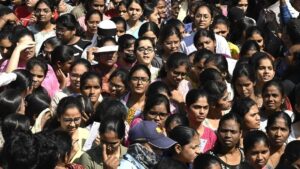
She had already filed her complaint. She had already named her harasser. She had already gone to the internal committee. But nothing happened. So, in utter despair, a 20-year-old college student in Odisha set herself ablaze inside the campus. Her story and plight is not an exception; it is rather emblematic of a broken system that fails to protect its most vulnerable.
For thousands of young women across Indian campuses, speaking out about sexual harassment is a lonely and dangerous act, often met not with justice, but with silence, indifference, or even retaliation. Administrators do little in supporting the victim and often make procedures (safeguarding for justice) the very tool for harassing those seeking it.
According to India’s National Family Health Survey (NFHS-5), 99.1% of sexual violence cases in the country go unreported. On campuses, this gap is echoed and amplified. A 2018 study at Delhi University revealed that one in four female students had experienced harassment. Recently, sociologist Dr. Akriti Bhatia cited a research paper noting that 40% of harassment cases on campuses never even get reported. These figures highlight not only systemic failure but also a culture that erases lived experience.
Broken trust: Institutional apathy and power imbalance
The institutional machinery tasked with ensuring justice on campuses is largely dysfunctional. The 2013 Prevention of Sexual Harassment (POSH) Act mandates every university and college to set up an Internal Complaints Committee (ICC). But as seen in the Odisha case, these committees often exist only in name. The college where the victim studied had no functioning ICC when she filed her complaint. A committee was belatedly formed, but even then, the accused was allegedly reinstated quietly by the principal. Her trauma was treated as a bureaucratic inconvenience.
Advertisement
This is not unusual. In 2015-16, the University Grants Commission (UGC) received harassment data from only 143 of India’s 1,472 universities and 238 of over 45,000 colleges. Elite institutions are no exception: nearly 99% of colleges that report to the UGC claim zero cases of sexual harassment. These numbers do not reflect safety, but silence.
Most survivors confide only in friends or family. Only 15.7% of the students filed an official complaint with any relevant committee in the institutions or police. The reasons are manifold: fear of being disbelieved, the potential damage to their academic future, and the real possibility of becoming social outcasts. In such an environment, the ICC, when it exists, often appears as an extension of patriarchal authority rather than a source of support.
Fear and shame: Stigma, moral policing, and campus culture
Women on Indian campuses walk a tightrope. They are told to chase their dreams, but only within the limits of “propriety.” Hostels impose curfews. Faculty impose dress codes. And society imposes silence. When they are harassed, by classmates, by professors, by administrators, the questions begin: “What were you wearing?” “Why were you out late?” “Did you provoke him?”
As a panellist recently pointed out in a discussion on the subject, moral policing often replaces accountability. Institutions worry more about their “reputation” than the student’s safety. In one case, a professor accused of misconduct was not punished but quietly transferred and then reinstated.
Meanwhile, the victim was left to bear the personal and social consequences.
This culture of apathetic silence is rooted in fear. A survivor who reports her ordeal is often branded a troublemaker or accused of tarnishing the institution’s image. One female student, in a Delhi-based qualitative study undertaken by the Swabhimaan team, described being told by a senior faculty member, “Just forget it, you don’t want this to affect your placement.”
When institutions prioritise optics over justice, they become complicit in abuse.
A former ICC member at a major university recounted: “In one year, we received no complaints. Later, I found out multiple incidents had occurred, but students didn’t trust us.” This lack of trust is born from experience. Students see professors defending their colleagues, principals dismissing allegations, and complainants facing character assassination.
Even students who manage to find the courage to report see little change. In the Odisha case, the ICC held two hearings, but no effective action followed. The student saw her harasser continue with impunity while her complaint was stalled. Her final act, a desperate protest that ended in tragedy, was a response to institutional cruelty as much as personal trauma.
While women’s safety on university campuses continues to be a serious and unresolved concern, it is also important to recognise that the experiences of other marginalised groups, particularly queer and caste-oppressed students, are often even more precarious and invisibilised. These students navigate layered vulnerabilities that extend beyond dominant frameworks of gendered harm.
At Swabhimaan, our student-led committee at O.P. Jindal Global University, we are working on a study Mapping Queer & Trans Safety, Caste Belonging, and Collective Care in Private Universities, focusing on campuses across Delhi-NCR.
Our preliminary findings at this point reveal that although 91% of respondents reported the presence of queer collectives or support groups on their campuses, access and participation were uneven, with many unsure about trans inclusivity and caste accessibility. Just 25% of respondents reported gender-neutral washrooms, and several described these as symbolic or inaccessible.
Counselling services existed on most campuses, but few students accessed them, and even fewer felt comfortable speaking about caste or gendered trauma, citing a lack of trained and sensitive counsellors. Alarmingly, over a third of respondents reported harm from students, staff, or institutional processes, yet most chose not to report incidents due to fear of retaliation or a belief that it “wouldn’t make a difference.” These insights underscore the urgent need to radically rethink what “safety” means on campus, and for whom it is truly designed.
Towards change: Making campuses safe again
Fixing the issues at hand for making women more safe on campus will require more than ink on paper or laws being preached. It requires administrative and political will, integrity, and cultural transformation.
First, universities (and administrators) must face real consequences for non-compliance. The UGC must audit institutions regularly, publish redressal records, and penalise those who fail to form ICCs or process complaints. After the Odisha tragedy, state authorities scrambled to order all colleges to form ICCs within 24 hours. That urgency should be routine, not reactive.
Second, ICCs must be given autonomy, training, and adequate visibility. Every student must know their rights and the process to seek help. Committees should include external members with gender justice expertise, and their decisions must be binding and enforceable. Without these reforms, ICCs will remain ornamental at best.
Most importantly, we must end the culture of shaming survivors. Harassment is not a misunderstanding, it is violence. And any institution that trivialises or hides it is complicit. Students, especially women, must be heard without suspicion, supported without delay, and protected without condition.
Parents send their daughters to colleges with hope, and fear. In return, the least institutions can offer is safety. That is not just a policy issue; it is a moral one. Every time a victim is silenced, every time a complaint is dismissed, every time a harasser walks free, the very idea of education is dishonoured.
The young woman in Odisha did not seek vengeance. She sought justice, which she deserved. When justice and institutional mechanisms ensuring it, failed her, she chose fire. Her helplessness is a wound to our society, one that should haunt every administrator, every teacher, every policymaker. Until we build campuses that uphold dignity, compassion, and truth, her death will not be the last.
[Anania Singhal, Nandita Purvi and Prachee Bharadwaj are researchers with the Swabhimaan Initiative of Centre for New Economics Studies (CNES). Courtesy: The Wire, an Indian nonprofit news and opinion website. It was founded in 2015 by Siddharth Varadarajan, Sidharth Bhatia and M. K. Venu.]
❈ ❈ ❈
Beyond Statistics, The Link Between Institutional Caste Discrimination and Student Suicides in India
Manisha Chachra and Rishiraj Sen
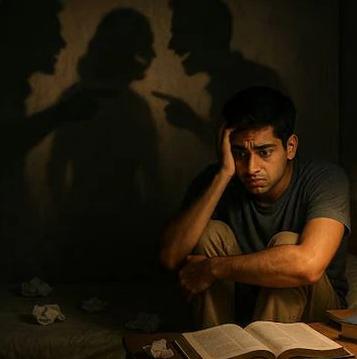
The recent Supreme Court guidelines issued by Justices Surya Kant and Joymalya Bagchi to the University Grants Commission on suicides and caste discrimination in higher educational institutions inform an underreported connection between rising suicides among Scheduled Caste and Scheduled Tribe students and the entrenched social discrimination on campuses. A Rajya Sabha response in 2023 revealed that between 2019 and 2021, 98 students from Dalit, Bahujan and Adivasi communities across central universities, IITs, NITs, IIMs and IISERs died by suicide.
While the response lists “professional concerns, family problems, or mental disorders” as contributing factors, it remains silent on caste discrimination as a driving factor behind such suicides. In the current phase of Hindutva nationalism, we argue, this lack of data further strengthens the discourse of an upper-caste campus eco-system reflected in the exclusionary politics of universities.
Silence on caste in suicide data
In 2023, a Lok Sabha response admitted that there is no official data on linkages between caste-based discrimination and suicide rates among SC/ST students. First-hand narratives, especially recently reported incidents, reveal the stark realities of exclusion as causes for rising instances. These instances have ranged from Rohith Vemula’s death by suicide in 2016 to the most recent suicide case of Ritham Mondal in the Indian Institute of Technology, Kharagpur.
Moreover, the rising number of reported incidents in IIT Kharagpur has been called out by faculty and staff as an outcome of ‘caste tensions’ on the campus. A Lok Sabha response from 2023 indicates that there could be many statistical reasons, such as bankruptcy, marriage-related issues, extramarital affairs, family problems and unemployment, behind the student suicides; however, the linkage between social discrimination and reasons for suicides among the Dalit, Bahujan and Adivasi communities finds no mention.
The suicides of Dalit, Bahujan and Adivasi scholars have indis an M.Phil research scholar in Political Science at the Jawaharlal Nehru University, New Delhi. icated an afflicted relationship between caste discrimination and Indian universities. A research note by the Senthilkumar Solidarity Committee, an informal committee that discussed institutional reasons for Senthil’s suicide case, argues that the dominant academic culture dismisses the purpose of the reservation policy and rather reaffirms the caste hierarchies.
N. Sukumar, professor of Political Science at Delhi University, interviewed 600 students, 188 females and 412 males from the Scheduled Caste in metropolitan and non-metropolitan cities to argue that universities often become ghettoised spaces to perpetuate social exclusion and spaces such as classrooms, laboratories, etc, often become a site of differential treatment. Suma Chitnis’s empirical study conducted in the 1970s in Maharashtra titled ‘Education for Equality: Case of Scheduled Castes in Higher Education’ discussed the preference of Scheduled Caste students towards Arts courses; however, many of them dropped out due to discrimination in grading.
Amid all this research, the institutional factors and reasons for suicide are never transparently linked with the social discrimination on campuses.
Lacunae in institutional redressal mechanisms
A look at Ritham Mondal’s suicide case at IIT Kharagpur, and a statement by the Director, Suman Chakraborty, has called for introducing “a holistic intervention programme combining cutting-edge technology in the form of an AI-powered health monitoring tool”.
The redressal mechanisms to address caste discrimination are indicated in the New Education Policy (2020), providing for counselling systems for handling emotional stress in educational institutions. Further, the University Grants Commission (UGC) has issued guidelines for Promotion of Physical Fitness, Sports, Students’ Health, Welfare, Psychological and Emotional Well-being at Higher Educational Institutions (HEIs).
Nevertheless, despite the existing mechanisms, the institutional apparatus has failed to address the structural discrimination against lower-caste students in academia. The higher educational institutions have been negligent not only in implementing reservation policies but also in addressing subtle, everyday forms of caste bias.
These everyday forms of caste bias are connected with the project of Hindutva nationalism, which has especially seen a rise after the 2014 Lok Sabha elections. This politics has excluded and homogenised the social and political networks in the university spaces. The lack of data and caste-sensitive redressal mechanisms in the current era of Hindutva nationalism is only a symptom of the larger problem that is entrenched in discrimination and exclusion.
Caste, campus and Hindutva
The universities have turned into spaces of ideological contestation and symbols of exclusionary politics under the Hindutva regime. Students who have actively participated in opposing the Hindutva government’s policies and politics have faced severe consequences, like suspension.
One of the larger implications of this is India’s constant decline in the Academic Freedom Index, which is currently ranked as 156th globally. Zoya Hasan, Professor Emerita, Jawaharlal Nehru University, has pointed out that academic freedom has declined drastically under the Hindutva regime because of interference from government, rising pressure from political power and ongoing curbs on research and teaching based on ideology.
The reflection of exclusionary politics is also visible in the practices of vegetarianism in university spaces. Campuses across the country, like IIT Bombay, have witnessed separate seating arrangements between vegetarians and non-vegetarians, reinforcing notions of purity and pollution. This element of disgust further allows the Hindutva regime to intensify communal, caste-based tensions and to appease its core supporters.
In Delhi University, the administration of Hansraj College discontinued serving non-vegetarian food, and in IIT Madras, separate entrances – and even wash basins – were allotted for vegetarian and non-vegetarian students. Further, IIT Bombay’s vegetarian-only tables were marked as ‘This place is designated for vegetarian food ONLY’, thus institutionalising the practice of untouchability through food.
While many would argue in favour of these dietary practices as a way of living, Dolly Kikon, Professor at the Department of Anthropology, University of California, analyses in her study, ‘Dirty food: Racism and casteism in India’ that the food of lower castes and tribal people is connotated as dirty and filthy showing embedded casteist ideological politics at play.
The banning of certain food choices in university spaces thus reasserts the casteist and racist hierarchies that universities, as critical spaces, were created to fight against.
Way forward: A conversation on politics of recognition
The Supreme Court’s recent guidelines offer an opportunity to move beyond rhetoric and establish a university space that allows for freedom of thought and expression with equity.
Further, the dominant-caste faculty and students must acknowledge their privilege and exclusionary practices they might represent in their day-to-day lives. It is worth noting that conversations of recognition of caste politics cannot take place without the dominant caste acknowledging its privilege in the larger society.
The deaths of Dalit, Bahujan and Adivasi students are manifestations of entrenched systemic discrimination. Therefore, at the levels of policies, there is a dire need to move beyond counselling cells or AI-based monitoring tools and issue a call for structural institutional reform.
In this regard, universities must collect disaggregated data on caste-based discrimination and suicides, establish independent redressal bodies with representation from marginalised communities and train faculty and administrators in caste-sensitive practices.
[Manisha Chachra is an M.Phil research scholar in Political Science at the Jawaharlal Nehru University, New Delhi. Rishiraj Sen is a researcher. Courtesy: The Wire, an Indian nonprofit news and opinion website. It was founded in 2015 by Siddharth Varadarajan, Sidharth Bhatia and M. K. Venu.]