❈ ❈ ❈
Gaza… A Phoenix Rising from the Ashes of Death
Amira Al-Zaneen
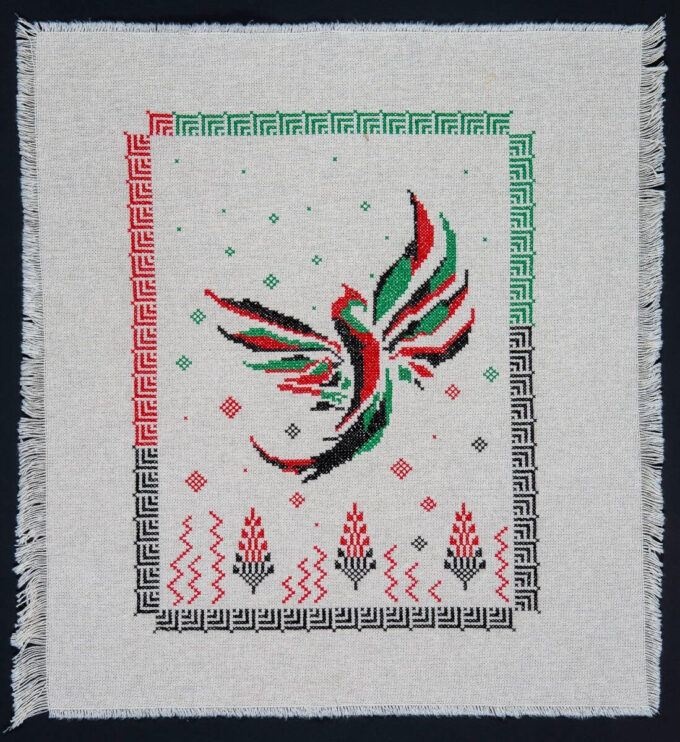
Gaza — a city unlike any other, a place that breathes life even when surrounded by ruin and death. I have always loved to call her the Phoenix, for she rises from her ashes time and again, declaring to the world that light cannot be extinguished, no matter how deep the darkness becomes.
In Gaza, hope never dies. Those who live there cling to life with every ounce of strength. They smile through pain, dream amid rubble, and believe that tomorrow — no matter how delayed — will come brighter and kinder.
We in Gaza do not know surrender. We are masters of finding light in the deepest night, of creating life from scarcity, and art from suffering. That is why we are rightfully called the People of Strength.
Through two long years of war, we have learned how to live despite loss, how to invent ways to ease our daily pain. Indeed, the saying proves true: “Necessity is the mother of invention.”
Gaza, despite all her sorrow, remains beautiful. She smiles amid the blackness, planting hope in hearts worn by fear. She is a hymn to life, even as discord fills her skies.
As for her future — we see it radiant. Because we, quite simply, love life as much as we can. Every stone destroyed will be rebuilt, and every tear will one day be wiped away by a gentle hand that shapes a new dawn.
We know that parting and death are painful, but we rejoice that those who left are martyrs, alive with their Lord, waiting to meet their loved ones in a land without war.
Freedom has a heavy price, but it is worth every sacrifice. We give our most precious — not because we love death, but because we believe true life can only flourish under freedom’s sky.
We will learn, work, build, live, and rise again. For even in our weakest moments, we are among the strongest peoples on earth — rising each time, restoring to the world the meaning of resilience.
Gaza will shine… and she will be the most beautiful.
For indeed, the dawn of tomorrow is near.
“From Gaza, we rise — again and again.”
[Amira Al-Zaneen is a writer in Gaza. She is the co-author of I Am No Longer Afraid to Die: Witness Gaza. Courtesy: CounterPunch, an online magazine based in the United States that covers politics in a manner its editors describe as “muckraking with a radical attitude”. It is edited by Jeffrey St. Clair and Joshua Frank.]
❈ ❈ ❈
Faiz’s Wounds That Built Many Palestines
Hasnain Naqvi
Meray zakhmon ne kiye kitnay Falasteen aabaad
Main jahaan par bhi gaya arz-e-watan…
[My wounds that built many Palestines
The homeland that travels with its exiles…]
Faiz Ahmad Faiz’s Falasteen shuhadaa jo pardes main kaam aaye (Palestinian martyrs who came in handy abroad) was written decades ago, yet its pulse beats in every corner of Gaza today. The poem, composed as an elegy for the exiled and martyred Palestinians who could never return home, transcends time to speak directly to the living ruins of the present.
In Gaza, today “home” means a tent – a patch of cloth staked against the wind, where children sleep in rows and families ration not only food but hope. Faiz’s lines – Main jahaan par bhi gaya arz-e-watan/Teri tazleel ke daaghon ki jalan dil mai liye (Wherever I wandered, O soil of my homeland, I carried the burn marks of the scars of your disgrace) – capture the ache of a people who carry their homeland with them in grief.
Wherever they go, the humiliation of displacement burns within their hearts. The poet becomes the voice of millions who have wandered, haunted by the memory of a land that exists more in remembrance than in reality.
For the Palestinians scattered across refugee camps and exile, Faiz’s vision of a homeland carried “in the heart” is not metaphor but actual endurance – a daily act of survival and remembering.
Falasteen shuhadaa jo pardes main kaam ayay
Main jahaan par bhi gaya arz-e-watan
Teri tazleel kay daaghon ki jalan dil mai liyay
Teri hurmat kay chiraaghon ki lagan dil mein liye
Teri ulfat, teri yaado ki kasak sath gayi
Teray naaranj shagoofon ki mehak saath gayee
Saray un dekhay rafeeqon ka jilo sath raha
Kitnay haathon se hum aghosh mera haath raha
Dur pardes ki bay-mehr guzargahon main
Ajnabi sheher ki bay-naam-o-nishaan rahon mai
Jiss zameen par bhi khula meray lahoo ka parcham
Leh-lahata hai wahan arz-e Falasteen ka Alem
Teray aada nay kiya aik Falasteen barbaad
Meray zakhmon nay kiye kitnay falasteen aabaad.
[For those Palestine Martyrs who never returned home
Wherever I wandered, O soil of my homeland,
I carried the burn marks of the scars of your disgrace
I had in heart the hope of lamps lit in your reverence
Your love, the torment of your memories remained with me
The fragrance of your orange citrus went with me
I had with me support of all my unseen loved ones
My hands remains in company of the hands of my friends
Faraway in the unnamed lanes of unfamiliar lands
At the unnamed streets of a stranger city
Wherever I had opened the flag made of my blood
The flag of my homeland Palestine waved there
Your opponents destroyed one Palestine
But my wounds have given birth to many Palestines.]
– Faiz Ahmad Faiz
Teri hurmat kay chiraaghon ki lagan dil mein liye: Hope amid the rubble
Even in devastation, Faiz finds an ember that refuses to die – the many chiraagh (lamps) lit to revere Palestine’s sanctity. Today, amid Gaza’s broken skyline and pulverised streets, that lamp still flickers. Mothers line up for bread at UN bakeries, children scavenge for water, yet life persists.
In every tent city, where hundreds queue for rationed meals, there is quiet defiance – the belief that survival itself is resistance. The poet’s imagery transforms this endurance into sacred devotion. The lamp, dim but steadfast, mirrors the courage of those who refuse to surrender their humanity.
To the world watching Gaza, Faiz’s verse reminds that Palestine’s struggle is not only about borders or sovereignty – it is about dignity, the right to live with head held high, even amid ruins. The “lamps of reverence” are lit not in mosques or monuments, but in the eyes of mothers who bury their children and still whisper prayers for peace.
Teri ulfat, teri yaadon ki kasak saath gayee: Memory as homeland
In exile, memory becomes both wound and refuge. Faiz’s words, Teri ulfat, teri yaadon ki kasak saath gayee (Your love, your memories, accompanied me) express how remembrance turns into a form of homecoming. For displaced Palestinians, memory is the last possession that no army can confiscate.
They remember the scent of citrus groves – Teray naaranj shagoofon ki mehak saath gayee – a fragrance that, as Faiz wrote, travels into even the most desolate exile. Today, those groves are fields of rubble; yet, the aroma of oranges and olive trees survives in lullabies, in stories grandparents tell children born under the blockade.
In these recollections lies an entire geography of belonging – a map drawn not by cartographers but by the heart. Faiz’s Palestine is not just a place on a map but an idea, eternal and indestructible, reborn wherever its people remember it.
Dur pardes ki bay-mehr guzargahon mein: The exile that never ends
In Faiz’s vision, exile is both literal and metaphysical – an unending journey through the “merciless passages of foreign lands”. Today, millions of Palestinians inhabit that same loneliness. From the refugee camps of Lebanon to the crowded shelters of Gaza, their lives echo Faiz’s haunting description of “unnamed lanes” and “stranger cities”.
Even after ceasefires and humanitarian convoys, the condition of exile endures. Aid offers survival, not return. Gaza’s displaced people may find temporary relief in tents and donated meals, but the dream of home remains deferred.
Faiz’s lament is not only for those who have left Palestine – it is for the world that is complicit in their exile. His poetry indicts silence, exposes the moral fatigue of nations that normalise suffering, as if it were natural like a seasonal occurrence. The “foreign streets without name or mark” are not just physical – they are the corridors of global indifference.
Jiss zameen par bhi khula meray lahoo ka parcham: Blood as testament
Faiz turns martyrdom into a metaphor of renewal. “Wherever I unfurled the flag made of my blood, the flag of my homeland Palestine waved there.” In this verse, he envisions every drop of spilled blood as an act of creation – a defiance that transforms suffering into continuity.
In today’s Gaza, where children’s bodies are wrapped in shrouds bearing the colours of their flag, Faiz’s words ache with prophetic power. Every demolished home, every funeral procession, becomes an assertion that Palestine still lives. The poet’s blood-soaked banner is visible in the rubble, fluttering amid dust and despair.
This is not romanticism but realism of the highest kind: a recognition that when power destroys, poetry rebuilds. Through language, memory and sacrifice, a people assert their existence against erasure.
Teray aada nay kiya aik Falasteen barbaad: The politics of destruction
When Faiz writes, “Your enemies destroyed one Palestine,” he speaks to a historical truth that has been repeating itself. The occupation has changed in methods, but not in intent. Gaza’s siege, the fragmentation of the West Bank, the continued expansion of settlements – each act deepens the dispossession he mourned.
But Faiz does not end with despair. He answers destruction with regeneration: Meray zakhmon ne kiye kitnay Falasteen aabaad. His wounds, he declares, have created many Palestines. This is the poet’s radical optimism that from the ruins of one homeland, countless new homelands arise in hearts, in resistance, in art and in solidarity, across the world.
Today, every protester raising the Palestinian flag in Johannesburg, Istanbul, Delhi or New York fulfills Faiz’s vision. Every voice demanding justice is one of the “many Palestines” his wounds gave birth to.
Kitnay haathon say hum aghosh mera haath raha: The solidarity of the unseen
Faiz’s poetry was never solitary; it imagined a collective embrace: “The hands of my friends remained clasped with mine.” In the present, this fellowship manifests in the global solidarity movement that refuses to let Palestine’s pain be forgotten.
From student rallies to humanitarian campaigns, from artists to journalists risking their lives to bear witness, the unseen companions of Faiz’s dream walk among us. They hold his metaphorical hand, extending compassion where politics has failed.
In a world fractured by borders and ideologies, Faiz’s lines remind us that empathy is a form of resistance. His Falasteen becomes a universal metaphor for all struggles against occupation, silence and exile.
Leh-lahata hai wahan arz-e-Falasteen ka alam: The flag that refuses to fall
Finally, Faiz envisions a Palestine that endures not through power, but through poetry; not by weapons, but by will. The flag of Palestine, made from his blood, “waves wherever it is unfurled”.
Today, amid the ashes of Gaza, that flag still rises – in the drawings of orphaned children, in the songs sung at funerals, in the steadfastness of those who rebuild, again and again.
Faiz’s Palestine is no longer just a nation: it is a conscience. It lives wherever people stand against injustice, wherever compassion outweighs fear.
Epilogue: The many Palestines of the heart
Faiz once wrote that even if his homeland were wiped from the map, it would bloom again in his wounds. That prophecy breathes through every tent in Gaza, every exile’s memory, every act of resistance.
The world may witness one Palestine destroyed, but as long as words, love, and courage endure: Meray zakhmon nay kiye kitnay Falasteen aabaad.
From the ruins rises a republic of resilience – a nation without borders, bound together by memory, poetry and the unyielding will to live.
[Hasnain Naqvi is a former member of the history faculty at St. Xavier’s College, Mumbai. Courtesy: The Wire, an Indian nonprofit news and opinion website. It was founded in 2015 by Siddharth Varadarajan, Sidharth Bhatia and M. K. Venu.]
❈ ❈ ❈
Lancet Study Shows Over 3 Million Years of Human Life Lost in Israeli Assault on Gaza
Jessica Corbett
Nov 03, 2025: As Israeli forces continued to violate a fragile ceasefire agreement with Hamas, killing more people in the Gaza Strip on Monday, the largest Muslim civil rights group in the United States renewed calls for cutting off military aid to Israel, citing a new study in The Lancet.
“This new Lancet study offers more evidence of the catastrophic human cost of Israel’s genocidal campaign against the Palestinian people,” Council on American-Islamic Relations (CAIR) national executive director Nihad Awad said in a statement.
The correspondence published Friday by the famed British medical journal was submitted by Colorado State University professor Sammy Zahran, an expert in health economics, and Dr. Ghassan Abu-Sittah, a British Palestinian surgeon teaching at the American University of Beirut in Lebanon.
Zahran and Abu-Sittah provided an estimate of the number of years of life lost, based on an official death toll list published by the Gaza Ministry of Health at the end of July, which included the age and sex of 60,199 Palestinians. They noted that the list is “restricted to deaths linked explicitly to actions by the Israeli military, excluding indirect deaths resulting from the ruin of infrastructure and medical facilities, restriction of food and water, and the loss of medical personnel that support life.”
The pair calculated life expectancies in the state of Palestine—Gaza and the West Bank, including East Jerusalem—by sex for all ages, using mortality and population data from the United Nations Department of Economic and Social Affairs for 2022. They estimated that a total of 3,082,363 life-years were lost in Gaza as a result of the Israeli assault since October 7, 2023.
“We find that most life-years lost are among civilians, even under the relaxed definition of a supposed combatant involving all men and boys of possible conscription age (15–44 years),” the paper states. “More than 1 million life-years involving children under the age of 15 years… have been lost.”
CAIR’s Awad said, “To speak of 3 million years of human life erased is to confront the true scale of this atrocity—generations of children, parents, and families wiped out. It is a deliberate effort to destroy a people.”
Israel faces a genocide case at the International Court of Justice over its conduct in Gaza, and the International Criminal Court last year issued arrest warrants for Israeli Prime Minister Benjamin Netanyahu and former Defense Minister Yoav Gallant.
“The United States and the international community must end their complicity by halting all military aid to Israel and supporting full accountability for these crimes under international law,” Awad argued.
A report published last month by the Quincy Institute for Responsible Statecraft and the Costs of War Project at Brown University found that the Biden and Trump administrations provided at least $21.7 billion in military aid to Israel since the start of the war.
Federal law prohibits the US government from providing security assistance to foreign military units credibly accused of human rights abuses. The Washington Post last week reported on a classified State Department document detailing “many hundreds” of alleged violations by Israeli forces in Gaza that are expected to take “multiple years” to review.
With President Donald Trump seeking a Nobel Peace Prize, the US helped negotiate the current ceasefire, which began on October 10, after over two years of devastating retaliation for the Hamas-led attack on southern Israel. The head of Gaza’s Government Media Office said Monday that Israeli forces have committed at least 194 violations of the agreement.
As of Sunday, the ministry’s death count was at 68,865, with at least 170,670 people wounded. Previously published research, including multiple studies in The Lancet, has concluded that the official tally is likely a significant undercount.
[Jessica Corbett is a senior editor and staff writer for Common Dreams. Courtesy: Common Dreams, a US non-profit news portal.]