❈ ❈ ❈
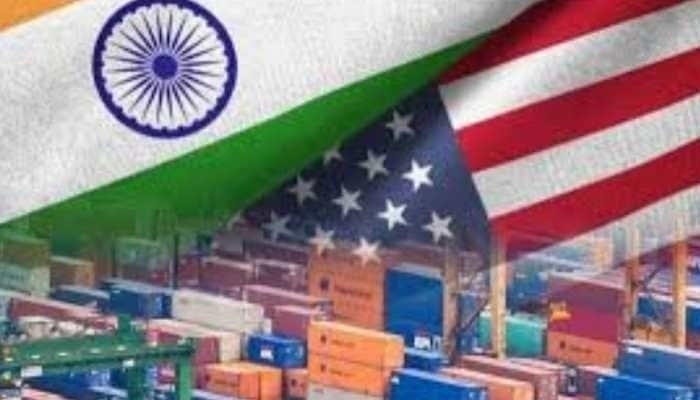
India-US Trade Deal: Five Takeaways from the White House Statements
The Wire Analysis
The White House seems to have again surprised the Indian establishment by coming out with two statements early this morning, before the Indian government could inform its people or parliament. The United States-India Joint Statement and an executive order signed by US President Donald Trump tying India down to being monitored for energy choices entitled, Modifying Duties to Address Threats to the United States By the Government of the Russian Federation.
1. Tariff reduction is not “reciprocal”
The United States’s levy on Indian products stands at 18% now. The statement does not quantify India’s commitment, only saying, “India will eliminate or reduce tariffs on all U.S. industrial goods and a wide range of U.S. food and agricultural products, including dried distillers’ grains (DDGs), red sorghum for animal feed, tree nuts, fresh and processed fruit, soybean oil, wine and spirits, and additional products.” This means a commitment of zero tariff on some (as yet publicly unspecified) US products from day one. The US also commits to “remove the reciprocal tariff on a wide range of goods” such as “generic pharmaceuticals, gems and diamonds, and aircraft parts” “subject to the successful conclusion of the Interim Agreement”. It should be noted that there was no tariff on Indian pharma exports to the US before Trump became president so this is not a new American ‘concession’. Similarly for aircraft parts. Depending on the specific component’s code, aircraft parts often entered the US in the pre-Trump era with single-digit tariffs or even duty-free treatment under standard trade classifications.
The Modi government is celebrating an 18% US tariff rate on the Indian export of goods “including textile and apparel, leather and footwear, plastic and rubber, organic chemicals, home décor, artisanal products, and certain machinery”. But it is doing this by using the pre-deal 50% tariff rate as a reference point instead of the near-zero tariff regime which prevailed before Trump became president. After the Nuclear Deal was signed under then-PM Manmohan Singh, the average tariffs imposed by the US on India were reduced to just 2.93%.
2. India is now committed to $500 billion US purchases
“The purchase of $500 billion of US energy products, aircraft and aircraft parts, precious metals, technology products, and coking coal over the next 5 years.” The US is the only large country that India has a trade surplus with. The trade deficit the US had with India was $45.7b in 2024, Indian imports to the US were $87.4b. $500b or approximately, $100b worth of purchases by India annually upends this dynamic entirely and could have an impact on foreign exchange reserves and the value of the rupee too. [Forex earned through trade is seen as a much more reliable source of reserves than foreign portfolio investment, FPI or foreign direct investment, FDI.]
Notably, there is no clarity on service exports from India, especially IT. The silence is a matter of concern.
3. On agricultural products, the opening is imminent
India has agreed to “eliminate or reduce tariffs on all U.S. industrial goods and a wide range of U.S. food and agricultural products, including dried distillers’ grains (DDGs), red sorghum for animal feed, tree nuts, fresh and processed fruit, soybean oil, wine and spirits, and additional products.” It has also agreed to “address long-standing non-tariff barriers to the trade in U.S. food and agricultural products.” This is tricky terrain for the Modi government and Agriculture minister Shivraj Singh Chouhan was defending his government’s position on this in Parliament, the press release said; “He stressed that no market segment has been opened in a manner that could harm Indian farmers, and all major crops, food grains, fruits and dairy products remain shielded. On the confusion triggered by a recent tweet from the US Treasury Secretary about increased access for American farm products, Shri Chouhan said that Commerce Minister Shri Piyush Goyal has already clarified the facts in Parliament. He reiterated that India has not opened its markets in any way that puts pressure on domestic farmers, and that the protections for key agricultural commodities remain intact.” Union commerce and industry minister Piyush Goyal made a statement in the Rajya Sabha that the Indian government “has taken care of its sensitive sectors like fertiliser and agriculture.”
But the new joint statement leaves the door wide open. Finer details are awaited.
4. Trump orders monitoring of India’s energy choices
The most important and direct conditionality in this is the twin statement issued by the White House, tying India down to being “monitored” over its purchase of Russian oil. If India ‘resumes’ buying Russian oil, USA will reimpose 25% tariff. What happened to India’s sovereignty and India’s energy sovereignty it has boasted about so often, ever since it began to up its purchase of Russian oil in 2022? The “monitoring” by the US puts paid to plans to buy as deemed best in the interests of the Indian public. Oil remains critical to energy security. Earlier this week too, Trump had declared that after its President Maduro’s kidnapping and US establishing control over the country, India had agreed to buy oil from Venezuela and not Iran. The external affairs ministry admitted this week in a briefing that in 2019 itself, India had agreed to not buy Iranian and Venezulean oil, due to US sanctions. “We were importing energy or crude oil from Venezuela till 2019-20 and thereafter, we had to stop,” MEA spokesperson, Randhir Jaisawal had stated.
India has been trying to say this is “Consistent with our approach to energy security, India remains open to exploring the commercial merits of any crude supply options,” but with Trump’s statement on oil purchases by India, whether India has even basic sovereignty on energy choices is in deep doubt. Let alone “strategic autonomy”.
5. White House trumps India on messaging
The manner in which the joint statement has been announced leaves India trailing on messaging or informing the general public. The commerce minister Piyush Goyal had said the joint statement would be worked out in “four or five days” but the White House went ahead and issued the statements. Does that mean India does not even know when the “joint” statement is agreed upon?
[Courtesy: The Wire, an Indian nonprofit news and opinion website. It was founded in 2015 by Siddharth Varadarajan, Sidharth Bhatia, and M. K. Venu.]
❈ ❈ ❈
Minister Piyush Goyal’s Notes Mentioned ‘India’s Calibrated Opening of Agriculture’ – But He Didn’t Tell the Media
The Wire Staff
In his over hour-long press conference, the Union Minister for Commerce and Industry, Piyush Goyal, was in focus over two important questions.
Asked how India had agreed to United States President Donald Trump’s Executive Order setting up a committee to “monitor” India’s oil trade, Goyal said the Ministry of External Affairs would answer.
But on the second important question: what exactly was in the deal on agriculture, Goyal was forthcoming – except he was not.
In his briefing notes, which the cameras caught, it was clearly written, “India’s Calibrated Opening of Agriculture”. There is further text visible too, “safeguarding the interests of producers and farmers”, after a colon. But this crucial aspect, that India would open up its agriculture sector was not mentioned in the briefing by the minister.
At one point, the minister even held up the sheet in his briefing note for mediapersons to see. As he did that, he listed the items in the agriculture sector (“…starch, essential oils, ethanol and tobacco”) which would not be opened up to imports from the US under this agreement. “I can assert that this agreement with the United States will not hurt Indian farmers, handicrafts, small businesses in any way,” he continued.
But as he spoke, the visual struck an odd contrast. The title of the paper he was holding up clearly said: “India’s Calibrated Opening of Agriculture: Safeguarding the Interests of Farmers and Producers (1/2)”
The notes are visible in the video of the press conference put out by the minister himself. While speaking of reassurances and other proclamations about Viksit Bharat, why did the minister skip this?
This is significant, as the notes signify bottomlines on what would have been agreed with the US.
US Agriculture Secretary Brooke Rollins, even before the US-India Joint Statement was made public by the White House, had said, “The new US-India deal will export more American farm products to India’s massive market, lifting prices and pumping cash into rural America. In 2024, America’s agricultural trade deficit with India was USD 1.3 billion. India’s growing population is an important market for American agricultural products,and today’s deal will go a long way to reducing this deficit.”
Last year, the Indian Coordination Committee of Farmers Movements (ICCFM), a body comprising farmers’ groups and movements, had asked the government to exclude all aspects of agriculture from the US trade deal in order to protect the interests of Indian farmers.
In a letter to Goyal, the ICCFM had warned that granting duty-free access to US agricultural products under a trade agreement could have adverse consequences.
The risk to Indian farmers, said the ICCFM was considerable as the US government is among the world’s largest subsidisers of its agriculture. The recent 2024 US Farm Bill allocates USD 1.5 trillion towards farm subsidies to its own farmers.
Samyukta Kisan Morcha has also made its position on pushing US agricultural products into India clear. Farmer leaders such as president of the All Indian Kisan Federation Prem Singh Bhangu were reported saying, “There are around eight lakh farmers in the US who are also very heavily subsidised, while in India there are crores of farmers and we have been demanding a guaranteed law for Minimum Support Price (MSP). If US produce is pushed in the country, our farmers will be finished for good.”
[This is an extract from the main article available on The Wire website. Courtesy: The Wire.]
❈ ❈ ❈
The US-India Trade ‘Deal’ Is Unbalanced and Potentially Devastating
Jayati Ghosh
The first question that pops up on reading the ‘United States-India Joint Statement’ is: why?
Why the timing, the rush on India’s part to declare a trade deal with the US right now, issue such a joint statement, when most other trade partners of the US have decided to wait for the US Supreme Court ruling on the legality of the Trump tariffs?
And why so many massive concessions?
And finally, why would India submit to active monitoring by the US of whether it is continuing to buy any oil from Russia? Why would a once-proud nation sacrifice so much self-respect, dignity and national policy autonomy, especially vis-a-vis a known bully like Trump who will not hesitate to take advantage of such a show of weakness?
This question of “why” becomes all the more pressing the more one considers the document, which remains vague on details but is still startling enough to suggest almost complete capitulation by the Indian government. No wonder US officials are celebrating this “deal”, which could hardly be more favourable for them even before other concessions likely to be demanded (say, on investment rules for US companies and intellectual property rights) are revealed.
Perhaps the government believes that sheer and continuous disinformation will do the trick, as it has served them well in so many other ways before. The official Indian press release on the agreement is breathless in its enthusiasm. It is entitled “India Achieves Landmark Trade Victory, Unlocks $30-Trillion U.S. Market for Exports Across Key Sectors”, which would be impressive if it bore any resemblance to the truth. Unfortunately, it does not.
Consider the supposed “gains” for India. The press statement claims that “India secured preferential access to a US $ 30 trillion U.S. market”, but that is completely misleading since it refers to the total size of US demand for goods and services. Actual preferential access, such as zero tariffs for Indian exports, are provided for only $10 billion worth of Indian exports. Beyond this, we get only the bland statement that “the United States and India commit to provide each other preferential market access in sectors of respective interest on a sustained basis”, which promises nothing.
Meanwhile, the reduction of the “reciprocal tariff” of 25% is being celebrated, but the only sectors where for which India will face tariffs of 18% are identified in the Joint Statement as “textile and apparel, leather and footwear, plastic and rubber, organic chemicals, home décor, artisanal products, and certain machinery”. In fact, this still makes India uncompetitive in key sectors like garments and machinery when compared to rival countries like Malaysia, the Philippines and Vietnam (facing 19 or 20% tariffs), once unit costs and prices are factored in. The other sectors of real export interest for India, such as generic pharmaceuticals, gems and diamonds, and aircraft parts, will get no such benefit now. Instead, they will have to wait and be “subject to the successful conclusion of the Interim Agreement” – and until then, the ridiculous “reciprocal tariffs” will continue to be 25%. So the likely gains in terms of increased access to the US market are likely to be minimal.
The only supposedly saving grace is that the additional tariff of 25% imposed upon India for buying Russian oil has been lifted. But here, the real sting in the tail is not in the official statement, but in the Executive Order signed by President Trump on February 6, giving the US Commerce Secretary the mandate to track India’s oil imports to monitor possible Russian imports, with the threat that either “direct or indirect” imports from Russia would automatically trigger the additional 25% tariff.
What is more frightening – because more immediate and likely – is that “India will eliminate or reduce tariffs on all US industrial goods and a wide range of US food and agricultural products, including dried distillers’ grains (DDGs), red sorghum for animal feed, tree nuts, fresh and processed fruit, soybean oil, wine and spirits, and additional products.”
Read that again: India will eliminate or reduce tariffs on all US industrial goods and a wide range of US food and agricultural products!
The concessions made in agriculture are potentially very damaging, notwithstanding the Commerce Minister’s claims to the contrary. Consider sorghum, a millet that was ironically celebrated and sought to be promoted domestically by this very government. Currently India imports minuscule amounts of sorghum, and is in fact a net exporter. The current tariff on sorghum is 57.75% (50% + 10% Social Welfare Surcharge + 5% Integrated Goods and Services Tax). Now the US, which is the largest exporter of sorghum in the world, with heavily subsidised production, will be allowed to send its sorghum into the country with no or much lower tariffs. This will definitely affect farmers especially in dryland areas in Rajasthan, Maharashtra and Karnataka.
Similarly, just two months ago, the National Mission on Edible Oils, a supposedly flagship programme of the Modi government, reiterated its goal “to strengthen the country’s oilseed ecosystem and achieve Atmanirbharta (self-reliance) in edible oil production”. Yet importing low tariff or duty-free soyabean oil will do precisely the opposite, destroying the viability of soyabean farmers in India. The most affected farmers will be in Madhya Pradesh, Maharashtra, Rajasthan, Telangana, Karnataka and Gujarat, which account for the bulk of such cultivation.
The argument made by apologists is that these imports will provide cheaper animal feed for poultry and other small livestock, along with cheaper imports of dried distillers grains or DDGs. But this can be achieved through other means without destroying the livelihood of farmers engaged in producing crops that are crucially important for food sovereignty and coping with changing climate conditions.
Meanwhile, the impact on horticulturalists will also be severe – from apple growers and producers of dry fruit in Kashmir to those producing fruit and nuts across the country. This sector has been the fastest growing segment of Indian agriculture in terms of value added, so it is quite remarkable that the Indian government has so blithely sacrificed the interests of this group.
We do not yet have other details about the full concessions that have been or could be made in merchandise trade, but there is absolutely no doubt that these will affect small- and medium- sized enterprises in both agriculture and manufacturing, in an economy in which inadequate employment generation and low livelihoods have already emerged as the major problems.
Meanwhile, it is only too likely that the US will demand equivalent or even greater concessions in the form of tighter intellectual property rules (that have already been granted by India in its trade deals with the UK and the EU) and special treatment of its own multinational companies, as it has sought in other deals. Giving on those would have huge negative impacts on people in India, and could affect environmental conditions and access to drugs, along with other fallout.
So once again the question: why?
The answer is obviously not in the economy; there must be other elements in play. These could be geostrategic calculations (although those would be mistaken); they could stem from the need to protect some industrialists currently facing cases in the US; or they could simply be a desperate attempt by the government to divert attention from other growing concerns that people are finally beginning to express. Whatever, the reasoning, it is insufficient justification for an unbalanced and potentially devastating trade agreement.
[This article is an extract from the main article available on The Wire website. Jayati Ghosh is a development economist and a professor at the University of Massachusetts, Amherst. Courtesy: The Wire.]
❈ ❈ ❈
US-India Trade Deal: A Colonial Era-Like Unequal Treaty
Prabhat Patnaik
The Indo-US Trade Agreement, even leaving aside specific provisions, has two unusual features that mark it out as an Unequal Treaty, of the sort that imperial powers used to impose on countries of the Global South that they did not directly rule.
The first is the stipulation that, leaving aside commodities excluded altogether from the purview of the agreement, while the US would impose 18% import duty on Indian goods, India would impose, according to US President Donald Trump’s rough description, zero import duty on American goods.
To have an agreement that officially institutionalises such a difference in tariff rates is most bizarre. It amounts to the US adopting a “beggar-thy-neighbour” policy where the “neighbour” who is being reduced to the status of a “beggar” actually signs an agreement consenting to being reduced to such a status.
The second unusual feature is the stipulation that India must buy at least $100 billion of American goods every year for the next five years. A Trade Agreement providing the minimum amount of goods that one country must buy from another, come what may, flies in the face of the entire free market ideology so beloved of the bourgeoisie.
The actual amounts traded, according to this ideology, must depend upon the choices of the buyers; they cannot be dictated by governments and hence cannot be decisions of governments. To have this amount incorporated in an Agreement is, therefore, utterly bizarre; even more bizarre is the fact that this minimum amount is stipulated for only one country that is a party to the agreement but not the other, which clearly amounts, therefore, to an Unequal Treaty.
Such an Unequal Treaty can only be imposed by one country upon another. The Bharatiya Janata Party-led government, no matter what it pretends, has been arm-twisted by the US into signing this Agreement. This then becomes the first time in the history of post-independence India that the government of our free country has behaved in so craven a manner as to sign an Unequal Treaty that is reminiscent of colonial times.
The two most obvious implications of this Unequal Treaty are, first, with regard to the purchase of Russian oil, and second, with regard to the agricultural sector. The question that immediately arises is: how does the BJP-led government ensure that imports from the US are raised from around $40 billion now, to at least $100 billion in the coming year?
The government cannot obviously be hoping that imports of all kinds of goods and services from the US would suddenly more than double in just a few months, even if tariffs are reduced to zero; it must therefore be banking on a reduction in Russian oil imports and its substitution by American oil, for that is something it can actually bring about. This not only amounts to acceding to what the Americans have been demanding for some time, but would raise our oil import bill and give a push to inflationary pressures. This is because American oil is at least about 20% more expensive than Russian oil.
On average, about one-third of India’s total oil imports comes from Russia; this, of course, was before the government started cutting down on such imports in recent months, but such cutting down itself was a prelude to the Trade Agreement, so that its effect should be counted not separately but along with that of the Trade Agreement.
Now, taking our total oil imports to be around $120 billion, the switch from Russian to American oil, would thus add about $8 billion to our oil import bill. This is just one element of the colonial-style “drain” that the US is imposing on India through the new Trade Agreement.
This “drain” would not be coming out of the pockets of Indian oil companies; they would just “pass it on” to the buyers through higher prices of downstream goods. This means an inflationary push to the economy whose real victims would be the working people since they do not have their money incomes indexed to prices. The shift from Russian to American oil, therefore, is not just a matter of international diplomacy; it is also a very important class question.
As regards the agricultural sector, the government claims that since some important grains, such as rice and wheat, have been kept out of the purview of the Agreement, agriculture will not suffer because of it. But very significant segments of the sector itself or downstream activities, have been opened up, as the Commerce Minister himself has admitted, though not publicly. Notable instances are apple, cotton, tree nuts, fresh and processed fruit, soybean oil, and wine and spirits. Besides, animal feeds like DDGs and red sorghum have been opened up, which would place American companies in a virtual monopoly position in the Indian market. States such as Jammu and Kashmir, Himachal Pradesh, Maharashtra and Gujarat will be particularly adversely affected.
It would no doubt be argued that there is a shortage of animal feed in the country and that larger imports would be beneficial; but acquiring requisite imports to overcome shortage is very different from opening up the entire market for such imports at zero tariffs.
Likewise, the Commerce Minister’s claim that dairy products are left out of this particular Agreement, is of little consolation in view of the fact that they figure in the Free Trade Agreements signed recently with the European Union, New Zealand, and the United Kingdom.
In fact, it is noteworthy that the Trump Administration is talking about the incomes of American farmers rising by billions of dollars because of this Agreement, even as the Indian government is denying any adverse consequences for Indian agriculture. If American farmers are going to obtain a larger market in India, then it necessarily follows that Indian farmers must be getting squeezed out of the market. The only exception can be the case of fresh-credit-financed purchase of some agricultural products used as inputs like animal feed, but these can only be a fraction of the total increase in American farm exports to India in consequence of this Agreement.
Here again, we have an echo of the colonial era. The peasants and agricultural labourers then had been the worst victims of colonial encroachment into the economy, which is why the one slogan above all, inscribed on the banner of the anti-colonial struggle, had been that they would never have to face such a fate in independent India. Exactly the same hardship, however, is being visited upon them once again in complete betrayal of the promise of the freedom struggle, and, not surprisingly, by a government led by a party that had nothing whatsoever to do with the freedom struggle.
Critical commentaries on the Indo-US Trade Agreement tend typically to put the blame for it exclusively on the Narendra Modi government; but this is superficial. Governments, including fascistic ones, act in the interests of particular classes; and it is significant that the news of the Agreement being finalised had enthused the Indian stock market greatly.
The Indian big bourgeoisie and the upper segment of the salariat and professionals want such a tying up with the US even at the expense of the working people of the country.
The Indian big bourgeoisie’s quest to go global gets a fillip with the availability of the American market, albeit with 18% tariffs. Likewise, the upper salariat and professionals’ desire to have their children settled in the US, which had received a setback because of Trump’s animosity, can now have a greater chance of fulfilment.
The fracturing of the anti-colonial class alliance, with the big bourgeoisie and the upper segment of the salariat and professionals willing to sacrifice the interests of the working people to further their own interests, is what underlies this capitulation to imperialism.
This fracturing, however, began even before the BJP-led government came on the scene. In fact, the adoption of the neo-liberal strategy itself was an expression of this fracturing. Here, as in other economic matters, in other words, the government led by the fascistic forces carries forward with a ruthless disregard for the working people, a tendency started earlier with the adoption of neo-liberalism.
The Modi government’s capitulation before US imperialism stands in sharp contrast to the attitude of an earlier Prime Minister, albeit presiding over a bourgeois-led regime, whose rejection of American pressure had been so resolute that an American President had confessed to being afraid of looking her in the eye. The difference between the two situations lies in the fact that she had been the Prime Minister of a dirigiste economic regime, which had emerged from the anti-colonial struggle, and, notwithstanding the bourgeois development it was ushering in, had not been oblivious of the interests of the working people.
[Prabhat Patnaik is Professor Emeritus, Centre for Economic Studies and Planning, Jawaharlal Nehru University, New Delhi. Courtesy: Newsclick, an Indian news website founded by Prabir Purkayastha in 2009, who also serves as the Editor-in-Chief.]
❈ ❈ ❈
Modi’s Skewed Trade Deal with Trump Demolishes the Idea of Swaraj Envisioned by Dadabhai Naoroji and Gandhi
S.N. Sahu
The collapse of cotton trade in Bombay in the late 1860s along with the terrible famine of 1866 that devastated Orissa (now Odisha) deeply pained India’s first economist Dadabhai Naoroji. As a result, for the first time, he demanded Swaraj (independence) for our country in the Calcutta session of Indian National Congress in 1906. Dadabhai traced the collapse of cotton trade to massive influx of cotton to India from the US following the end of American civil war in 1864 and he could understand that the British policies resulted in adversely affecting India when American cotton was allowed to enter Indian market without any check. All these facts have been detailed in the biography of Dadabhai titled “Naoroji: Pioneer of Indian Nationalism” authored by Dinyar Patel.
The book “Poverty and Un-British Rule” authored by Dadabhai traced the drain of wealth of India to the policies of colonial rulers who, among others, made India a victim of unfair trade policies which put our country at a highly disadvantaged position vis-à-vis capitalist countries of that era.
On the occasion of the 200th birth anniversary year of Dadabhai Naoroji, it is salutary to recall his idea of Swaraj to save India from the unfair trade practices of the colonial era.
Piyush Goyal’s announcement on cotton imports
Dadabhai’s deep analysis of the fall in cotton trade in Bombay during late 1860s assumes enormous relevance in the context of the fears of farmers that their earnings from cotton cultivation would fatally decline after the import of raw cotton from the US following the Modi regime’s trade deal with the country. The farmers expressed that fear after Union commerce minister Piyush Goyal’s statement that if India purchases raw cotton from the United States, processes it domestically, makes garments and exports the finished products back to the U.S., then the country can avail itself of a zero reciprocal tariff, similar to a facility reportedly extended to Bangladesh”.
The All-India Kisan Sabha noted with anxiety that “Import of U.S. raw cotton will further reduce the already low domestic price, and the crisis-ridden cotton fields will witness intensifying indebtedness as well as greater peasant suicides.” “If Indian farmers,” it remarked, “are exposed to unrestricted global competition, the likely outcome would be further distress, pushing already crisis-ridden cotton farmers towards abandoning agriculture altogether.”
The existential crises apprehended by cotton farmers following the statement of Piyush Goyal regarding influx of US cotton to Indian market is evocative of the analysis by Dadabhai – India’s first economist – of collapse of cotton trade in Bombay after cotton supplies to India surged following the end of American civil war in 1864.
Remarks of Rahul Gandhi
Rahul Gandhi remarked that “If we import American cotton, our own farmers will be ruined. If we don’t import it, our textile industry will lag behind and get destroyed.” Noting that the textile industry and cotton farming are the backbone of livelihood in India and crores of people’s daily bread depend on these very sectors he said, “”A visionary government that thinks in the national interest would have negotiated a deal that protects and ensures the prosperity of both cotton farmers and textile exporters.”
Dictations in Trump’s executive order
It is indeed tragic that the Modi regime’s steps for scripting a trade deal with the USA do not inspire confidence to protect national interest. It is demonstrated by its lack of protest or rejection of President Donald Trump’s claim in his Executive Order of February 6, 2026 that “India has taken significant steps to ….. align sufficiently with the United States on national security, foreign policy, and economic matters.”
The Order also states that “Specifically, India has committed to stop directly or indirectly importing Russian Federation oil, has represented that it will purchase United States energy products from the United States, and has recently committed to a framework with the United States to expand defense cooperation over the next 10 years.” It also provides that the US would monitor if India imported Russian oil directly or indirectly.
Such claims of Trump and Modi’s regime not refuting it imperils Swaraj and our sovereignty in conducting our trade and commerce based on national interest.
Gandhi’s vision on imports
As stated earlier Dadabhai conjured up such an idea of Swaraj in 1906. Fifteen years later on August 14, 1921, Mahatma Gandhi authored a piece “Definitions of Swaraj” in Navajivan. He wrote, “Swaraj, therefore, means the complete control by the people of the country’s imports and exports, of its army and its law courts”.
Tragically, as stated above, India’s exports and imports are now being dictated and the idea of Swaraj envisioned by Dadabhai and the Mahatma must be upheld to safeguard our independence, sovereignty, unity and integrity.
[This article is an extract. The full article is available on The Wire website. S.N. Sahu served as Officer on Special Duty to President of India K R Narayanan. Courtesy: The Wire.]
❈ ❈ ❈
Is the Corporate Conquest of Indian Agriculture Complete?
Indra Shekhar Singh
The recent announcement of the Indo-US trade deal has sparked much concern in the agrarian field.
This is mainly because there appears to be two versions when it comes to agriculture. First, the Union government’s version claiming “Indian agriculture and dairy” are protected under the recent trade deal. The second version is the US counterpart’s, which has been saying that it will now send in “more farm products to India’s market, [thus] lifting prices, and pumping cash into rural America.” This is a significant moment in Indian agriculture, because if the US has its way, India’s agrarian protections will finally have been dismantled after what the ministry appears to call a “calibrated opening of Indian agriculture”
Keep in mind that it is not just agriculture that our government is gambling on in this trade deal-FTA roulette, it is risking the lifeline of our civilisation and the livelihoods of 600 million Indians for US corporate profits.
Calibrated opening of agriculture
So let us begin with the government’s promise – doubling farmers incomes, which was the “liberalisation” agenda for agriculture in India.
During COVID-19, our current regime tried to bring the vision to “liberalise Indian agriculture” from “middlemen” into legislation and introduced the three contentious farm laws. The government had hoped to “liberalise” or privatise and “open up” agriculture, and provide more market access for producers and corporations. The farmers quickly grasped the government’s intentions and began massive protests against the government and tycoons “Ambani and Adani”. Farmer leaders also claimed that US corporations like “Walmart and Cargill” were the key drivers for this step. After the 13-month long blockade in which 750 farmers reportedly died, the laws were rescinded. But our regime’s intention of opening up India’s agriculture sector did not die.
As the subsequent bustle around the farm laws was completely extinguished with later police evictions at the Shambu and Kinnaur borders, the movement was weakened. Meanwhile the government started to open doors to allow foreign corporations to enter India. The pivotal shift began with the seed sector in 2022. Foreign seed companies can now be registered at par with Indian companies and will have access to Indian germplasm – genetic resources – without needing prior approval by National Biodiversity Authority. Earlier, to prevent stealing, foreign firms needed prior approval before using Indian germplasm. This amendment of the National Biodiversity Act was spearheaded ostensibly to increase the ease of doing business for foreign corporations.
Was this liberalisation of the seed sector needed? India does not allow for patenting of seeds and life forms. But many other countries allow for intellectual property rights through patents on seeds too. In the past, foreign corporations have stolen Indian germplasm, grown plants in their home countries, and then tried to get a patent on the plant. This illegal transfer of seeds, life forms, and indigenous knowledge for private profit goes against international biodiversity laws and is called biopiracy.
Foreign corporations have tried to patent Indian plants and seeds like neem, Basmati rice, turmeric and Darjeeling tea in the past. So it is clear that opening our native germplasm to foreign corporations is not really the fairest step and is akin to paving the way for biopiracy.
Furthermore, in the run up to the US trade deal, India, at the International Treaty on Plant Genetic Resource on Food and Agriculture (ITPGFRA), appears to have surrendered its vast reserves of seed diversity for use of foreign corporations. Next came the Seed Bill 2025 which was called out by the Samyukta Kisan morcha (SKM) leaders who said the “bill surrendered the seed sovereignty of India and it is aimed at predatory pricing by corporate monopolies.”
The next wave of privatisation came with the historic model of public-private partnerships. The government, while decreasing research and development funds annually for public agricultural institutions, like the ICAR-Agricultural Technology Application Research Institute, is allowing corporations like Bayer access to our public agrarian systems. Handling everything from spices and pomegranates, to agri-inputs, and creating mobile platforms for farmers for rice and wheat, Bayer is the example of one a gigantic transnational agri-chemical corporation profiting from the demise of India’s public agriculture research. Remember that the American corporation Monsanto and German Bayer are now one company, and Monsanto/Bayer is not alone in this great game to monopolise Indian agriculture. Foreign giants like Amazon, and Microsoft have also been given access to our agriculture policy making with little information on the extent of their involvement in the government’s ambitious agristack ecosystem.
We cannot forget the personal access and influence that was given to Bill Gates and his Bill and Melina Gates foundation. They have made multiple trips to the various agrarian institutions under the current regime, despite civil society groups’ protests against this new friendship. The high privatisation and technological impulses of the Modi government towards AI- and information-based high-tech agriculture may very well carry a Bill Gates imprint. This move has further signalled to foreign investors that India is pliable and open for business.
Besides, the NITI Aayog has always championed the cause of corporatisation and liberalisation of agriculture in its many research papers.
The great game
While the Narendra Modi government was silently changing legislations and policy to prepare for the corporate reintegration of Indian agriculture, Trump played a big move – the trade wars. Trump imposed upto 50% tariffs on Indian agrarian produce, hoping that India will bend the knee and accept American farm produce and reject Russian oil. After the agri-trade war with China ended poorly for Trump, he was desperately looking for newer markets for American agri produce.
Despite assurances, India had hoped to get a concession from the US started by slashing import duty on cotton to zero last year. After months of negotiations it is reported that “vast array” of American farm produce – from sorghum to cotton, apples to tree-nuts, barring genetically modified foods, dairy and some other minor items, will freely enter Indian markets with zero import tariffs or highly reduced tariffs . More details are awaited. Meanwhile Indian agri-produce reaching the USA will be tariffed at 18%. The Indian government cannot even cushion the tariffs imposed on our agri-exports to the US.
We don’t know if the Indian government can guarantee that India will not be forced to accept more US government-subsidised American farm surpluses in the coming years.
While Indians are being shackled and deported under the Trump government, India has also pledged to add $500 billion dollars in the next five years into the US economy, bringing India into about a $40-billion trade deficit with the US. Farm groups are already protesting this step as the US provides 100% subsidies to its farmers, thus making the agri-dumping easier and turning the domestic market into a graveyard for domestic producers.
US farmers receive income support alongside a bunch of other forms of financial support. Along with those in the European Union, US farmers are guarded by a strong and cloistered policy. This is why, Trump, aligned with this protectionist view, has been keen to impose heavy tariffs on agri-produce too. These nations even provide export subsidies and oftentimes use their geopolitical strength to almost bully countries to accept US or EU agri goods. An agri-deal has been on the agenda for almost all US presidential visits to India.
But was the USA given special treatment? Of course. But if we analyse the Indo-EU free trade agreement (FTA), we begin to see not a unique case, but rather a “disastrous” paradigm shift. Previously, the Indian state has tried to protect her farmers, thus risking the ire of the World Trade Organisation, but the new mode of negotiations are opening up the Indian agriculture market to foreign players bit by bit. Like with the US, India has opened its markets for agrarian surplus from the EU by slashing tariffs across the categories. This step naturally gives more advantage to European companies like Bayer, Glencore, etc. who already have much control of the Indian markets and make multilateral agreements like WTO redundant.
One may also ask, what about India’s agri-produce reaching the US or EU – that could be to our bilateral advantage? The answer is no. Currently, India’s food system is highly contaminated with toxic agri-chemicals, packing issues and adulterations. The problem is so grave that the USDA once canceled the organic certification equivalence with India. The EU, each year, rejects multiple food shipments including rice and spices from India and it will be a long time before Indian farmers’ can upgrade to adopt more sustainable agri-chemicals or farming techniques. It now looks like a one way agri-import street from the EU and the US.
Concluding from the events before us, it is clear that the current regime has primed Indian agriculture for a corporate takeover. The US and EU have both used geopolitical pressures to push harder, and we have opened the gates to our agricultural markets. Sadly, it is only a matter of time before cheap imports flood our market, farm incomes plummet further, and foreign corporations profit from India’s hunger.
[Indra Shekhar Singh is an independent agri-policy analyst and writer. Courtesy: The Wire, an Indian nonprofit news and opinion website. It was founded in 2015 by Siddharth Varadarajan, Sidharth Bhatia, and M. K. Venu.]