❈ ❈ ❈
From Palestine to Iran: What Arab and Muslim Silence Really Reveals
Ramzy Baroud and Romana Rubeo
I have always found it interesting, and at times revealing, when seasoned activists and intellectuals in the West, including those who see themselves as deeply committed to Palestine, raise the same familiar point: Arab governments must stand up to Israel and the United States in solidarity with their brethren in Palestine.
The argument often comes wrapped in a perplexed question: why are Arabs and Muslims not doing anything for Palestine?
What makes this particularly puzzling is that the question is often posed by respected analysts and historians—people who should recognize that the issue is far less sentimental than structural.
At first glance, the question may not seem bizarre. Palestinians are tied to their neighbors through history, geography, demography, religion, language, collective memory, and a shared experience of Western domination and Israeli colonial violence.
Additionally, Israeli leaders speak openly in expansionist terms, and they act accordingly, whether in Palestine, Lebanon, Syria, or elsewhere. The people on the receiving end of this violence are often the same native communities of the region: Arabs, Muslims, and Christians alike.
Indeed, Arab and Muslim institutions themselves constantly invoke Palestine as a central cause. Arab summits still describe Palestine as a core issue, and public opinion across the region remains overwhelmingly aligned on that point.
For example, the 2024-25 Arab Opinion Index found that 80% of respondents across 15 Arab countries agreed that “the Palestinian cause is a collective Arab cause”, not solely Palestinian. The same survey found that 44% viewed Israel as the greatest threat to Arab security and 21% named the United States, far ahead of Iran at 6%.
So yes, the question of Arab and Muslim solidarity does not emerge from nowhere. On the level of popular feeling, it is entirely rational. It reflects a moral and political intuition that Palestine should be a point of unity.
But here is what that argument misses. Sentimental expectations aside, many Arab governments are not neutral actors waiting to be persuaded into solidarity. They are already positioned, structurally and strategically, within the US-led regional order. Some are client regimes in the classical sense. Others are so dependent on American protection, validation, or military partnership that calling them “partners” barely conceals the hierarchy embedded in the relationship.
The problem, then, is not hesitation. It is alignment.
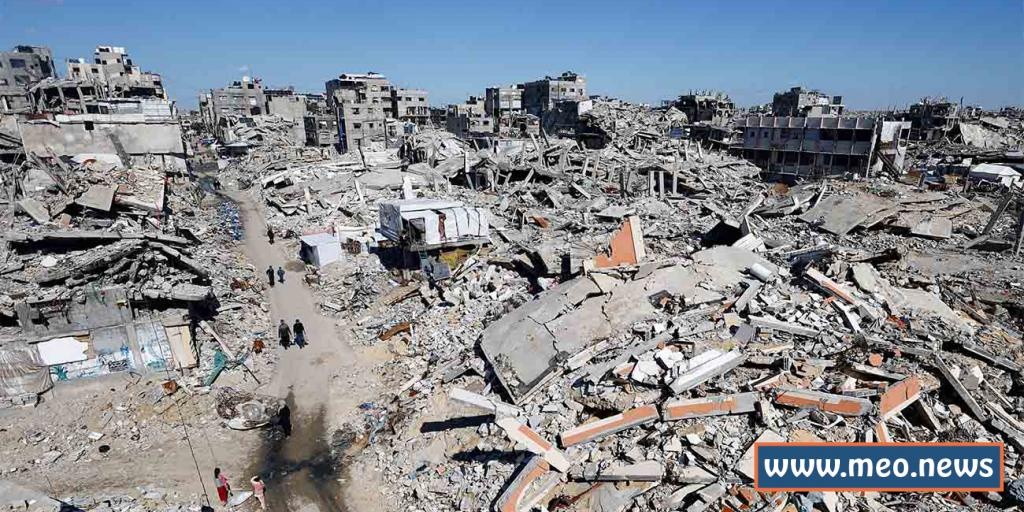
The Gaza genocide offered a devastating example of this reality. While Palestinians were being starved and bombed, official Arab responses remained fragmented, cautious, and largely subordinate to Washington’s strategic priorities.
Some governments hardened their rhetoric later, but the early reactions were deeply revealing. Bahrain, for example, publicly condemned Palestinian resistance for October 7, rather than, at least, taking a position even remotely proportionate to the scale of Israeli violence and genocide. Egypt, meanwhile, allowed the narrative to circulate that it had warned Israel beforehand of “something big,” a framing that shifted attention toward Palestinian action rather than Israeli impunity.
Even more revealing was the economic dimension. As Ansarallah’s Red Sea operations disrupted maritime access to Israel in declared solidarity with Gaza, a land corridor developed to move cargo by truck from ports in the Gulf all the way to Jordan and finally to Israel.
Whatever diplomatic language Arab governments employed in public, trade and logistics were being quietly adapted in ways that helped Israel absorb the pressure and maintain continuity.
This was not an anomaly. It was continuity.
For decades, major Arab regimes have been deeply implicated in sustaining American military power in the region. US installations in Kuwait, Qatar, Bahrain, the UAE and elsewhere have long served as the infrastructure through which Washington projects force across the Middle East. These bases are now the lifelines for the US-Israeli war on Iran.
This is why the constant demand that Arab regimes “develop” a stronger position on Palestine is ultimately misleading. Their position has already been developed. In many cases, it has taken the form of normalization, security coordination, military hosting, logistical facilitation, and political adaptation to US priorities. The action has already been taken. It is simply not taken in favor of Palestine.
And yet, despite this reality, the question continues to resurface. Why does it persist?
Part of the answer lies in the enduring belief that Arab and Muslim solidarity with Palestine is both historically logical and politically defensible.
Another lies in the fact that Israel’s ambitions do not stop at Palestine. Israeli leaders and institutions repeatedly articulate visions that implicate the entire region, whether through permanent military superiority, fragmentation of neighboring states, or the normalization of endless war.
These realities make the question emotionally and strategically compelling—even if it is ultimately misplaced when directed at regimes rather than peoples.
There is also a deeper reason: the historic failure of the West. Western governments are structurally biased toward Israel, and many intellectuals, activists, and ordinary people have concluded—reasonably enough—that if justice will not come from Washington, London, Berlin, or Paris, then surely it must come from the Arab and Muslim worlds. The instinct is understandable. But it confuses publics with regimes.
That misplaced expectation makes the current war on Iran all the more consequential.
The war on Iran may indeed become a wake-up call. As the joint US-Israeli assault on Tehran is faltering, new realizations may be emerging in Arab capitals that neither Washington nor Israel can ultimately guarantee regime survival or regional stability.
At the level of ordinary people, the war has also generated a familiar sense of pride in resistance, not unlike what many felt during the steadfastness of Gaza and Lebanon. That may yet produce new conversations, perhaps even a new collective political imagination.
Until then, we would do better to understand Arab regimes according to their actual priorities, not our expectations. They are not “betraying” Palestine in the emotional sense, because Palestinian freedom, the defeat of Zionism, and the dismantling of imperial domination were never central to their governing agenda in the first place.
To the contrary, their overriding priority is the preservation of the regional status quo, whatever the human cost. And if maintaining that order requires the slow destruction of Palestine, many of them have already demonstrated that they are willing to pay that price.
[Ramzy Baroud is a journalist and the Editor of The Palestine Chronicle. He is the author of five books. His latest is “These Chains Will Be Broken: Palestinian Stories of Struggle and Defiance in Israeli Prisons” (Clarity Press, Atlanta). He is a Non-resident Senior Research Fellow at the Center for Islam and Global Affairs (CIGA), Istanbul Zaim University (IZU). Romana Rubeo is an Italian writer and the managing editor of The Palestine Chronicle. Her articles appeared in many online newspapers and academic journals. She holds a Master’s Degree in Foreign Languages and Literature, and specializes in audio-visual and journalism translation. Courtesy: CounterPunch, a U.S.-based independent left-wing magazine known for sharp commentary on war, imperialism, labour, environment, and civil liberties. It was co-founded by Alexander Cockburn and is currently led editorially by Jeffrey St. Clair and Joshua Frank.]
❈ ❈ ❈
The Fragility of Gulf States
L. Ali Khan
Four Gulf States—Kuwait, Qatar, Bahrain, and the United Arab Emirates (UAE)—are structurally fragile and may not survive a prolonged U.S.–Israel–Iran conflict. They were carved out of the region and established in the late 20th century, following the decline of the British Empire. Located on the western coast of the Persian Gulf, they face Iran across the water on the eastern coast. The other two Gulf States, Saudi Arabia and Oman, are relatively secure. Saudi Arabia, the largest in both land area and population, faces no significant threat to its existence.
The four fragile states, Kuwait, Qatar, Bahrain, and the UAE, gained independence in 1961 (Kuwait) and 1971 (the other three). These countries quickly became what might be called migrant states because their populations were largely composed of migrant workers. Foreign nationals in some of these states account for up to 90% of the total population. In contrast, Saudi Arabia and Oman, despite having large foreign-national populations, are mostly composed of native-born residents.
As of 2026, expatriates make up approximately 88.5% of the UAE’s total population (around 10.24 million out of 11.57 million) and about 88% of Qatar’s population (roughly 2.87 million foreign workers out of 3.2 million). In Kuwait, expatriates account for about 67–70% of the population (roughly 3.7 million out of around 5.5 million), while in Bahrain, the foreign population is around 52% (approximately 849,000 non-Bahrainis out of 1.59 million in 2024).
To understand their fragility, one must first analyze the legal and demographic makeup of these four Gulf States, since they are essentially migrant states.
Migrant States
A migrant state is not the same as an immigrant state. The United States and Canada, for example, are immigrant states in the sense that a large share of their populations are immigrants. An immigrant state allows immigrants to become citizens after meeting certain residency, moral, and other requirements. Even if the road to citizenship is made harder, the road is never closed. After naturalization, immigrants have the right to vote, run for office at the state and federal levels, and, for all practical purposes, are treated at par with born citizens.
Society in an immigrant state may discriminate against legal immigrants and naturalized citizens based on nationality, race, language, and religion. Still, the law and the constitution of an immigrant state make no distinction between born and naturalized citizens, granting extensive rights even to legal immigrants. For example, the 14th Amendment of the US Constitution states:
“All persons born or naturalized in the United States, and subject to the jurisdiction thereof, are citizens of the United States and of the State wherein they reside. No State shall make or enforce any law which shall abridge the privileges or immunities of citizens of the United States; nor shall any State deprive any person of life, liberty, or property, without due process of law; nor deny to any person within its jurisdiction the equal protection of the laws.”
This constitutional commitment to equal protection of the laws is a hallmark of most immigrant states. Even though President Trump has challenged the integrity of the 14th Amendment in the Supreme Court, a case widely predicted to fail, the Gulf States have no law resembling the 14th Amendment. In fact, migrant states are governed by unequal laws. Some critics compare these states to apartheid-like stratification, as inequality among groups is legally validated and enforced.
A migrant state comprises two distinct groups of people. One is the native inhabitants who are the citizens of the state. The other group is the workers recruited from other nations, which may be called migrant workers, for they are not immigrants qualified to become citizens as a matter of law under clear standards. The workers may belong to any field, from construction to banking, and may be blue-collar or white-collar. Furthermore, each worker is tied to an employer under the notion of kafala. The kafala system may bind the worker to the employer, restricting the freedom to change jobs.
Therefore, what sets a migrant state apart from an immigrant state is the legal framework for granting citizenship. A worker might work for decades, live with their family, and even have children born in a migrant state. Yet, they or their children would not automatically become citizens by law. Even if a migrant state grants citizenship to a few residents, that is a special executive favor, not a legal entitlement available to other residents.
Since 2005, Qatar has granted citizenship, with a cap of 50 per year. The grant is highly discretionary. Since 2021, the UAE has granted limited citizenship to investors and professionals by presidential decree. Kuwait and Bahrain are similarly restrictive, requiring a long residency of over 20 years, fluency in Arabic, and ownership of registered property. These characteristics, however, do not guarantee citizenship because it is a discretionary executive order. These policies ensure that citizenship remains a rare privilege granted primarily by ruling authorities, rather than a path accessible to most expatriate workers, even after many years of residence and economic contribution.
Migrant workers have virtually no influence on the government, even if they work for it. They are barred from holding certain jobs and positions. They can work as bureaucrats but not as policymakers. They lack access to the legislative branch and have no say in creating the laws of the migrant nation. Even the judiciary is not accessible to migrant workers, so they cannot serve as judges or magistrates. If there are any exceptions, those are favors granted by the rulers rather than positions available by law. Additionally, migrant workers cannot become the country’s envoys or ambassadors to other nations. In short, migrant workers have no role in shaping the migrant nation’s domestic or foreign policy.
This broad exclusion of foreign nationals from state affairs is not only objectionable on civil rights and political liberty grounds; it also directly affects the migrant state’s ability to defend itself.
Foreign Security Dependence
As a rule, the migrant state is militarily weak.
A regular state, even with a large immigrant population, is primarily defended by its born and naturalized citizens, even if immigrants are eligible for military recruitment. Citizenship has no inherent magic except that it strengthens the bonds between the individual and the state. If the country is attacked, particularly for an unjust reason, citizens have an emotional commitment to defend their country.
Military equipment is critical for both defensive and offensive warfare. Yet who operates the equipment is also relevant. Here, loyalty and the will to fight do not stem from equipment alone, no matter how sophisticated it is. In addition to competence, emotional attachment to defending the nation is needed to be effective soldiers and officers in the armed forces.
A migrant state may have sophisticated weapons, but the migrant workers, if recruited to fight, will not have the same mindset as the citizens. Since the Gulf migrant states have very few native-born soldiers and officers in their defense forces, their defenses remain vulnerable, no matter how good their equipment is.
The Gulf States had hosted American bases on their territory in the hopes that if attacked, the American defense forces would protect them. This assumption may be overly optimistic for at least two reasons. First, why would an army assume primary responsibility for defending a foreign nation? Second, if the foreign soldiers are attacked, they may prioritize withdrawal over sustained engagement. The American soldiers will kill and die for their own country, but they will be hesitant to fight with the same spirit for a foreign client state.
In the ongoing US-Iran war, when Iran attacked the US bases in the Gulf States, the resident soldiers relocated for safety, a course of action perfectly understandable. These bases were established to protect American geopolitical and economic interests. The Gulf States erroneously assumed that these military bases would protect them.
Recent Iranian strikes on U.S. bases in the Gulf, including Al Udeid in Qatar, bases in Kuwait, and facilities in the UAE and Bahrain, have caused an estimated $800 million in damage and made several installations largely uninhabitable, showing the limited protective value of foreign military presence.
If the migrant state’s security depends on external resources, its economic stability also relies on external confidence.
Foreign Investments and Tourism
The four Gulf States might have built their economies primarily on hydrocarbons (oil and gas), but now real estate, tourism, and foreign capital constitute a significant share of their GDP.
The UAE, for example, promoted itself as a place to buy real estate and park money for investment worldwide. Non-oil sectors contribute approximately 75–77% of GDP, with real estate, construction, finance, and tourism as key drivers. Bahrain’s non-hydrocarbon GDP runs close to 85%. Qatar’s GDP is around 65% non-hydrocarbon. Kuwait is still an oil and gas economy, though it, too, is moving to real estate.
The British, Indians, and Pakistanis, among others, move their money from their home countries to buy property in the UAE and keep it in UAE banks. Indians have been the largest investors in the UAE for some time, which has led to the construction of a spectacular Hindu temple in Abu Dhabi, the first in the Middle East, inaugurated in 2024 by Indian Prime Minister Narendra Modi.
Turning the desert into New York-style real estate wonders means very different things in Manhattan compared to Dubai. Manhattan is part of a large and complex country called the United States. Dubai and Abu Dhabi, on the other hand, shape the nation and are standalone marvels of real estate and capital; each is a separate emirate ruled by a different family within the United Arab Emirates federation.
Foreigners dominate real estate activity in the Gulf States. In Abu Dhabi in 2024, foreigners accounted for approximately 78% of the total property sales value. In Dubai, foreign nationals hold around 43% of the total value of all residential properties. In the other three Gulf States, foreigners own real estate in designated areas, and foreign real estate investment totals billions.
The Gulf States also greatly benefit from sovereign funds guaranteed by their respective governments. The UAE, Qatar, and Kuwait maintain some of the world’s largest sovereign wealth funds. The Abu Dhabi Investment Authority is valued at over $1.1 trillion, and the Kuwait Investment Authority at approximately $1 trillion, both of which have historically buffered against economic shocks but remain vulnerable to shifts in investor confidence during conflict. The Qatar Investment Authority (QIA), Qatar’s primary sovereign wealth fund, manages assets recently valued at approximately $580 billion.
These trillion-dollar funds rely on the safety of the states. When the state is vulnerable, the funds are also at risk. The value of these funds can fall sharply if investors perceive the states as unsafe, not to mention the possibility of their dissolution.
Money moves to safety, and that has been its character ever since it was created as a means of exchange and an alternative to assets. Money moved to the Gulf States because there was the illusion of safety created by military bases and the inflow of foreign capital. Nothing works more effectively than an illusion supported by durability. The Gulf States successfully created the illusion of safety for foreign capital, and it worked until Iran attacked these states, though with restraint. Islamic ties and Islamic law might have restrained their hands from destroying the infrastructure of the Gulf States. Since the war has not yet ended, there is no way to tell the future of the skyscrapers in the Gulf States.
The ongoing conflict has made the Gulf States unsafe for capital or real estate investments. Tourism may be the biggest casualty, taking years to recover. The illusion of safety is gone. This perceptual damage is more devastating than the physical destruction these states have endured or might face in the future.
Conclusion
A migrant state, like the four Gulf States, is fragile because most of its residents are non-citizens who might return to their own countries out of fear or lack of economic incentives, or be expelled for any reason by the rulers of the migrant state. Due to law-based discrimination, a migrant state does not treat foreign nationals with the same respect as its native-born population. As a result, migrant workers, regardless of how much money they earn, do not develop the same bond and sense of loyalty to a migrant state as they do to their home country.
Furthermore, a migrant state is fragile because it depends mainly on foreigners for its defense. A mercenary force might fight for money or other benefits, but there is a limit to their loyalty and commitment. A nation can only be protected by a people who develop a deep patriotic bond with their country. The natives in the Gulf States have little incentive to join the armed forces when they have other opportunities to start businesses with expatriates.
A migrant state might have a thriving economy, as seen with the Gulf States, but this prosperity depends on the fragile illusion of safety. The US-Israel-Iran conflict has shattered the idea that the Gulf States are secure places for capital and that their real estate offers reliable growth. Foreign capital has no loyalty to any nation, moving where it feels safe and can grow continuously.
Even if the Gulf States’ desalination plants are not attacked, which would make it hard for people to survive without water, the US-Israel-Iran war has significantly damaged the concept of a migrant state where workers and capital owners come for economic gain. In an immigrant state, immigrants who can become citizens on equal footing with native-born residents present a much safer model. In contrast, in migrant states, workers can leave in fear or be expelled, leaving behind a small population of natives raised in luxury.
The same forces that create a strong illusion of safety and prosperity in these four Gulf States—such as foreign labor, US protection, and capital inflow from both rich and poor countries—also make them fragile.
[L. Ali Khan is the founder of Legal Scholar Academy and an Emeritus Professor of Law at the Washburn University School of Law in Topeka, Kansas. Courtesy: CounterPunch, a U.S.-based independent left-wing magazine known for sharp commentary on war, imperialism, labour, environment, and civil liberties. It was co-founded by Alexander Cockburn and is currently led editorially by Jeffrey St. Clair and Joshua Frank.]