Historically, welfare has been synonymous with public goods—especially education, health, justice, and a clean environment—supplied in a spirit of solidarity. Welfare so conceived is twice blessed: benefits are shared fairly and societies make rapid economic advance. India has, through its post-Independence years, rejected such a universal notion of welfare. And the consequences are evident: only about 15 per cent of Indian children are functionally literate for a modern economy (compared with 85 per cent in China); high levels of stunting persist, a dismaying symbol of poor nutrition and public health systems; justice is cruelly delayed; and the nation’s commons—air, parks, lakes, and rivers—are in a dire condition. The evidence on India’s failures is not controversial.
Instead of following the historically successful path, Indian leaders chose early to appease voters with minimal support systems. Chief among these were rural work programmes for livelihood and food subsidies. A new phase of delivering personal benefits began in the 2000s: cycles for schoolgirls in Bihar, and laptops for students or gold coins for brides in Tamil Nadu.
The personalisation grew frenzied with the election of the Aam Aadmi Party in Delhi in 2013 and the BJP at the Centre in 2014. All political parties have given up on public goods and are, instead, making fiscally irresponsible promises to gratify voters.
Redefining ‘welfare’
Mirroring the political practice, an intellectual and media chorus has redefined the word “welfare”. Arvind Subramanian, former Chief Economic Adviser to the Narendra Modi government, and co-authors have celebrated the offerings as “new welfarism”. For them, the newness lies in the supply of “private” rather than public goods. The political analyst Yamini Aiyar argues that India has emerged as a site of “innovative welfare policy”.
Words matter. They frame the debate and set expectations. The breathtaking claim is that bicycles, laptops, gold coins, toilets, gas-fired cooking stoves, and free bus rides for women amount to a social programme of education, public health, and female empowerment—an assertion that legitimises political expediency. A new received wisdom hides behind cynically emotive labelling such as “Ladli Behna” and the intellectual respectability of “new” and “innovative”.
In fact, the redefinition of “welfare” as private support mechanisms has imposed the tyranny of low expectations. Private goods in the guise of welfare breed patron-client ties, perpetuating dependence and short-changing beneficiaries.
Because Subramanian et al. and Aiyar insist that India has skilfully adapted to its unique needs, I hold up the mirror of history in this essay. For over two centuries, diverse nations—without invoking uniqueness—have worked towards a collective rather than individualised vision of welfare. Governments played a role but principally as instruments of a shared will.
Empowering individuals
True welfare through public goods has embodied the far-reaching idea that a market economy’s success relies on a durable, resilient human grid. Two key community-driven capabilities have arisen from that holistic vision: human capital, especially education, and greater gender equality—or at least greater female agency. Welfare in this form empowered individuals to stand on their own feet, rather than merely meeting essential needs or pandering to voters.
The bottom line: True welfare through public goods rests on a sense of community where members see their futures as intertwined. That solidarity yields equity with efficiency. Private goods do little for equity; they undermine efficiency.
Consider two exemplary historical trajectories: democratic, advanced Western nations and, ironically, East Asia’s autocratic regimes. Indian elites’ rejection of such paths places the country’s future in grave peril.
The new working class in western Europe’s rapidly industrialising countries helped forge their welfare states. The outcome was what we know today as social democracy. Responding to the lure of Russian communism, workers—in a cooperative relationship with employers—became agents of social change. Together, they were in search of social justice with material progress in a market economy, as the historian Tony Judt has explained.
The European model
European social democracy flowered in the early 20th century, most fully and durably in Sweden through the Social Democratic Party (SDP). Although at the start, the party’s working-class membership sought to advance its own welfare and security, that struggle soon became emblematic of helping one’s neighbour.
As the Swedish sociologist Göran Therborn has written, “the working class and its organisations and mouthpieces thought, demanded, and fought for the welfare state”.
An organic evolution occurred from the demands for worker protection and insurance to social insurance for all of society. Notably, Sweden focussed early on human capital and female agency, beginning with maternity benefits and support for widows and children.
This evolution from working-class organisations to the broader helping of one’s neighbour was not unique to Sweden. It occurred, in a more modest way, a century earlier in Britain (given its earlier industrialisation) in the form of mutual aid societies. Similarly, in the US in the 1930s and 1940s, President Franklin Delano Roosevelt’s administration empowered trade unions, which became champions of social welfare programmes.
Sweden’s uniqueness
But Sweden’s uniqueness lies in the idea that members of society must act together to foster a nation’s human capital. The most forceful statement of this idea came from Gunnar and Alva Myrdal, two intellectual giants who were also members of the SDP. Gunnar, an economist, won the Economics Nobel Prize, while Alva, a sociologist and diplomat, won the Nobel Peace Prize.
In 1938, Gunnar Myrdal summarised the vision he and Alva had advanced. He emphasised that public human capital—including housing, nutrition, healthcare, and education—benefited society far more cost-effectively than family-level aid. Also, by socialising the task of bringing up children, public welfare provision eased women, especially married women, into the workplace. Myrdal thus linked female empowerment and national prosperity.
He later argued that community-level collective action should take the lead as the state scaled back its involvement to enabling policies. Note the thread that holds together the Myrdals’ thinking: collective rationality to promote the welfare of a society. The Myrdals did not advocate for the support of individuals.
This distinction is crucial. For, as Therborn points out, a post-war shift towards individual rights gathered momentum in the 1980s. The shift blended with the market-as-king mantra neoliberalism, which insists on individual utility and rationality as the economic motive force. That shift pushed “welfare” to handouts for individuals and families deemed worthy, while rising inequalities excluded the weak and vulnerable from all but the crumbs of wealth accumulation, foreshadowing developments in India.
Sweden and other Nordic welfare states withstood the individual rights-market shift the longest. Universalism, solidarity, and active labour market policies persisted with education as a central pillar. Investments in universal, free, and egalitarian schooling—including early childhood, secondary, higher, and adult education—were seen as both a social right and a means to maintain a skilled, competitive workforce.
Post-war Britain
Collective rationality was also the centrepiece of early post-war Britain, before it gave way to Prime Minister Margaret Thatcher’s assault on the sense of a shared common good. From wartime solidarity emerged the 1942 Beveridge Report, which called for comprehensive social insurance to defeat the “Five Great Evils”: Want, Disease, Ignorance, Squalor, and Idleness.
Implemented by Clement Attlee’s Labour government, this vision created a universal National Health Service (1948), expanded family and unemployment benefits, and increased council housing. Educational reform had kicked off under Winston Churchill’s wartime coalition through the 1944 Education Act. Attlee was then Deputy Prime Minister; his post-war government broadened the initiative, making education a central pillar of an equality agenda.
Nehruvian India had ample reason to act on the key European lesson: a collective commitment to human capital and female agency is essential to produce broad societal gains. India did not have a socially activist industrial working class, but as the history of the US before the Civil War of 1865 and East Asia in the 20th century show, newly industrialising nations can achieve the same goals as Europe did.
In the US, after the War of Independence, the founding fathers articulated a vision for publicly supported school education, seeing it as a safeguard of liberty, protection against tyranny, and a way to impart practical skills for self-reliance in a new republic. As Thomas Jefferson wrote in 1816: “If a nation expects to be ignorant and free, in a state of civilisation, it expects what never was and never will be.”
Although advocated by national leaders, States and counties built the schools, with the property tax as the fiscal backbone. By the time the Civil War ended in 1865, the “common school” movement had spread widely in the North and the Midwest, with boys and girls typically taught together in the same classrooms. Black Americans were excluded, and girls sometimes received shorter or less advanced education, but for white children, the US offered universal primary education and, thus, the world’s most inclusive public schooling system.
American schooling
Locally championed and run schools were integrated into community-level democracy, a form of decentralised governance that dazzled Alexis de Tocqueville, the French philosopher, politician, and traveller. Thus, America, undergoing early industrialisation, relied not on worker solidarity as a foundation for social welfare but community consensus and funding.
The emphasis of India’s founding fathers on elite higher education, rather than universal schooling, stands in stark contrast to the intense focus of American founding fathers on universal school education.
The chronology now requires a shift to Japan and East Asia, but a final word is necessary on America. In the early 20th century, the US achieved universal secondary education, and the momentum carried forward to the G.I. Bill, which brought inexpensive higher education to veterans returning from the Second World War. Across this arc—from the Civil War to the Second World War—the country became the world’s technological leader, generating material progress with social justice, without ever labelling itself a social democracy.
After the Meiji Restoration of 1868, Japan’s new leaders sent a young envoy to the US to study its education system. He returned with an American adviser, and himself played a leadership role in building Japan’s school network. Japanese education evolved step by step—from primary to secondary schools and only then to colleges and universities, representing an egalitarian contrast to India’s elitist emphasis on university education. Initially, Japanese girls received schooling deemed suitable for wives, but by the 1920s gender equality in education was reasonably established. The skilled participation of women in textile factories drove innovations and Japan’s surge in global textile leadership.
Rabindranath Tagore was greatly impressed by the Japanese education system, which he witnessed on repeated visits to that country. Nehruvian India failed to heed Tagore’s call to emulate successful experiences such as Japan’s. Other East Asian nations picked up that baton.
East Asian playbook
The essential East Asian playbook has been the same. From Taiwan and Korea in the 1960s, China in the 1980s and 1990s, through to Vietnam today, East Asian nations have invested in excellent primary and secondary school education and brought women to work in factories producing for the world economy. Female labour force participation has ranged between 60 and 80 per cent. In this pack, China stands out for its size and the magnitude of its achievements.
China overtook India in per capita income only around 1981, but by then it was already a league ahead in school education, primary health, nutrition, and life expectancy. Mao Zedong, the founder of modern China, ensured that women were active in the workforce and the Chinese Communist Party. With these assets, China did not just leap ahead of India, it integrated itself into the world economy as the global manufacturing hub.
As if to seal the argument in favour of collective provision of public goods, the World Bank found in a 1993 study that East Asian nations had achieved their rapid economic growth along with more equality among its citizens. That benign confluence of equity and growth applies as much to Europe and the US during their social democratic phases. That is the pinnacle of collective rationality: what is good for all is good for the individual.
Indian naysayers, nevertheless, continued to dismiss East Asian success as the result of autocracy. Many, notably the political scientist Ashutosh Varshney, argued that autocratic regimes can advance quickly but have fragile structures liable to crumble on themselves. Few have paused to ask what the East Asians used autocracy for. To be sure, these were repressive regimes, but across these nations, prosperity was achieved not through autocracy itself but through disciplined, collective investment in people.
China and other East Asian economies have maintained their focus on human capital. Today, they have the world’s top-performing school students. China also has the world’s best universities in mathematics and computer science. Western nations (rightly) complain about China’s aggressive industrial policies, but they forget that the country’s outstanding human capital has already made it the world’s leader in a whole range of frontier technologies.
Undoubtedly, much about East Asia’s repressive regimes is abhorrent. And, yes, the countries’ breakneck growth has created economic fragilities that could come to haunt them. Some worthy scholar will one day resolve the mystery of how alongside the repression and macroeconomic fragilities, East Asia has maintained to this day its unflinching collective commitment to human capital even as Western nations began neglecting that social obligation. The US, where it all began after its 1776 War of Independence, is destroying its storied legacy. East Asia’s steadfast investment in education and female labour force participation underscores how India’s neglect of collective human capital has left it lagging behind its regional peers.
Indian lacunae
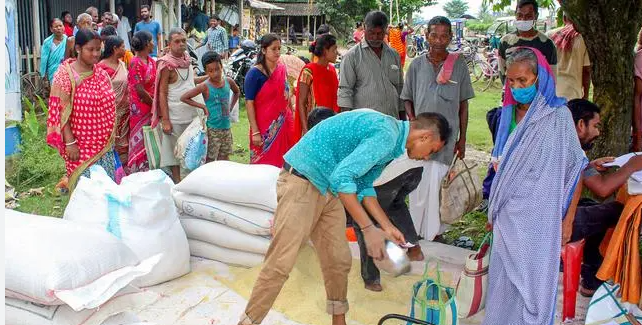
Post-Independence India has never had institutions to promote solidarity for collective progress. Amid acute job scarcity, workers’ unions have typically tried to preserve their privileges rather than speak for social reform and progress. Also, decentralisation of governance has remained only an abiding aspiration. And while non-governmental grassroots organisations have proliferated, the government’s hostile attitude towards them has ensured that they cannot scale up. Where publicly established collective initiatives exist, they are treated with cruel contempt. Anganwadi workers (for childcare) and Accredited Social Health Activists (for public health services) are paid pitiful wages or not paid at all for long durations. Not least, missing institutional data compromises even the delivery of handouts: millions have not received assistance from the country’s free food programme because the government has unconscionably delayed the 2021 Census.
That lacuna of collective institutions has led individuals to fend for themselves. And the Central and State governments have jumped in to create corrupt patron-client relationships in the guise of welfare. The bidding war on such welfarism is distressing, with parties trying to outdo each other in the promises of goodies that they make.
It is true that some of the so-called welfare provides valuable relief to recipients: bicycles for girls, toilets, gas-fired cooking stoves, free bus rides for women. But these do not give people the wherewithal to stand on their own feet; they do not open a valve to sustainable intergenerational upward mobility. And that lack of effectiveness leads, in the graphic language of the economist Raghuram Rajan, to “venal” politicians, who have a strong incentive to provide minimal relief that maintains the status quo in which they enjoy patron status.
The hurdles to jump are high. The economists Abhijit Banerjee, Esther Duflo, and Garima Sharma gave farming aids and cash to “ultra-poor” households in India and tracked them for a decade. Recipient families experienced short-term gains from targeted aids—migration, health, consumption—but these faded within a decade.
Corruption and inequalities
Brazil’s far-reaching Bolsa Família similarly improved consumption and health metrics marginally but did not break the “intergenerational cycle of poverty”. Brazil’s horrific inequalities remained virtually undented. As another Brazilian study explains, unless the benefit is large enough to eliminate economic vulnerability, weak households will require ever-new infusions of “private” goods, keeping them the clients of political patrons. Recall Gunnar Myrdal’s observation nearly a century ago: benefits can only be truly transformative when collective energies and institutions are at work. Only then can people become self-reliant, not needing repeated assistance with basic necessities.
Sadly, India is in a bad equilibrium where low expectations and corrupt politics reinforce each other. The equilibrium runs deep because handouts are immediately visible and pay quick political dividends while human capital forms invisibly across decades. India’s political and intellectual leaders have legitimised this state of affairs by labelling it “innovative” and “new”. Such words have shaped the political imagination, and the herd-like media has cheered on.
The history is clear: collective progress demands a societal commitment to the joint provision of public goods—education, health, justice, and a clean environment—to promote dignity and opportunity. All else is flim-flammery. Even well-meaning targeted schemes form a patchwork that does not build capability. They siphon resources from public goods and keep the weak afloat yet vulnerable. They buy voter loyalty, laying fertile ground for Rajan’s “venal politician”. That is not welfare; it is not solidarity. It is dependency by design.
[Ashoka Mody recently retired from Princeton University. Previously, he worked at the World Bank and the IMF. He is the author of EuroTragedy: A Drama in Nine Acts (2018) and India is Broken: A People Betrayed, Independence to Today (2023). Courtesy: Frontline magazine, a fortnightly English language magazine published by The Hindu Group of publications headquartered in Chennai, India.]