❈ ❈ ❈
Dear Didi, It’s Not Night That Endangers Women
Priyanka Ishwari
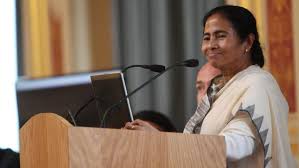
West Bengal Chief Minister Mamta Banerjee’s remark on the Durgapur gangrape case has caused much uproar offline and online. The outrage is justified and very much valid. It’s 2025 and women have had it with all the moral policing and the victim blaming.
But hand to heart, while Banerjee, who has since claimed that her statement was distorted, was wrong to question why the survivor was out late at night, but ask any woman, the nature of the remarks are unfortunately not too unfamiliar.
Our parents discourage us from venturing outside at night, our partners need us to share our live location while taking a cab in the dark, our girlfriends would have us crash at their place rather than travel at night, we turn down jobs because we may have to work night shifts. You get the drift.
It won’t be wrong to say that most Indians do not think it is safe for women to step outside late in the dark. Most women do not think they are safe when they are out late at night. And like it or not, if something does happen to a woman, among things like the perpetrator, the location of the incident, one thing that concerns us is the timing of the incident.
It is not just our uncles or aunts, or other boomer relatives who believe that women should not be out at night if they want to avoid untoward incidents, much of the younger generation also believe that women are safer in the day.
As someone who worked two years of her post-graduate life to get universities in Delhi to rollback discriminatory rules and regulations, I spent most of my time convincing other female students that having a 8 p.m curfew time to enter the hostel was no way of ensuring women’s safety. Several women, well above the age of 18, were convinced that to prevent themselves from sexual harassment and assaults, it was important to step outside only in the comfort of sunlight.
Conversations around safety, our social conditioning have taught us that it is in the comfort of gloomy darkness that dangerous strangers find the best opportunities to assault women. However, the reality is way more revolting.
In nearly 97.5 cases of rape, the offender was known to the survivor, highlights the 2023 National Crime Records Bureau report. In six Indian states, the offender is known to the survivor in all the cases. This data is not an anomaly to surface exclusively in the latest figures. Take official crime data for the past 10 years, and the percentage of offenders known to survivors in rape cases is at least 93%.
Unfortunately, an Indian woman is more likely to be sexually assaulted by a co-worker, employer, live-in partner, boyfriend than a stranger in the dead of the night.
In fact, if the latest findings of the National Family Health Survey were taken into account, the proportion of women who reported being sexually assaulted by a stranger was just 0.4. (The NFHS figures – recorded over five years periodically – on sexual violence are considered more exhaustive as they also include instances which are not recorded by the police.)
Fear mongering about after sunset hours aside, to suggest that women’s mobility is what needs to be kept in check for their safety should be considered blasphemous in a country where most women barely have any agency on their mobility to begin with.
Consider this, according to the NFHS, only in 10% cases, it is the wife who mainly gets to make decisions about visiting her own family or relatives. Nearly 20% of Indian men insist on knowing the whereabouts of their wives at all times, and a similar percentage of men also do not permit their wives to meet female friends.
At least 51.6% of women aged between 15 to 49 years in India are not allowed to step outside their village or community area alone. There is little difference on this between urban areas (46% not allowed) and rural regions (52%).
This lack of agency over their mobility is not only detrimental to women’s emotional wellbeing, academic growth and career development, it also puts the physical health of a significant portion of females at risk. Over 13.5% women in India do not even get permission to go out for medical treatment, finds the NFHS.
Exercising one’s own will also comes at a great cost for women. According to NFHS, At least 14.8% of Indian men think that it is okay to hit or beat up their wives if the latter goes out without informing their husbands. Once again, urban India (13.1%) or rural India (15.7%) report similar trends.
Alarmingly, over 19% of women also believe that a man is justified in hitting his wife if she steps outside the house without letting him know, highlighting how it is not just the men’s attitude alone that needs to be changed for women to be able to move more freely.
And even if we believe that the ‘outside’ is a more dangerous space and where to go and when to go are variables that if controlled cautiously can keep women safe, how do we keep them safe inside their homes? If we need to protect women from strangers lurking in the night, do we not need to protect them from their husbands who don’t mind using force against their spouse over a meal they do not like?
At least 44.2% of men think they are justified to hit their spouse over at least one reason or the other. The reason for violence you ask? Wife argues with husband; Wife doesn’t cook properly; Wife refuses to have sex with husband; Wife disrespects in-laws among other justifications.
In the safety of their own homes, over 31% of married women have been physically or sexually assaulted, points out the NFHS. It’s 2025, and still only 82% of Indian women believe they can say no to their husbands for sex. Over 12% of men still believe it is their right to use force to have sex if the wife refuses.
But we are yet to hear any public concern from a politician, male or female, over domestic violence or marital rape.
However, shifting the onus on safety away from societal norms, patriarchal attitudes, inadequate infrastructure, ineffective law and order mechanisms, popular culture that thrives on objectifying the female body and blaming free movement of women is how many Indians respond to sexual violence.
Not just private individuals, public institutions also practice policing women through various rules and regulations. Be it central universities like the Delhi University in the Capital, or a state university in Himachal Pradesh or private college in Kerala, most places of higher education in India still do not allow female students to leave the hostel premises after a certain time. In some cases, this curfew can be as early as 4 pm.
It was only in the past decade that several states, including Andhra Pradesh, Assam, Haryana, Maharashtra, Punjab, Uttar Pradesh and others, allowed women to work night shifts in factories and several other commercial enterprises. States like Jharkhand and Odisha removed such prohibitions only this year.
All this is not to imply that Indian women are safer at night than the day or will not get assaulted outside their homes. Unfortunately, the road to women’s safety is a long one. However, it also doesn’t have to be rocky.
Over the years, women’s campaigns like Pinjratod and scholars like TISS professor Shilpa Phadke have repeatedly asserted that good infrastructure can go a long way in making women more safe in public places. Street lighting, cheap and accessible public transport, adequate public toilets, and sensitive police personnel can make public places safer and inclusive and thereby also increase female participation in education and employment.
Rather than focusing on why a woman was out at night or who she was with, something politicians have earlier too evoked such a response to sexual violence. However, they could make a hell lot of difference by taking care of the public’s basic needs — working street lamps, cheaper bus and Metro services, more patrol cars, quicker police response. Is that too much to ask?
[The writer is a Delhi-based independent researcher. Courtesy: Newsclick, an Indian news website founded by Prabir Purkayastha in 2009, who also serves as the Editor-in-Chief.]
❈ ❈ ❈
Izzat has No Daughters: How Women Pay the Price of Honour
Niharika Dwivedi
“They kill us in the name of honour – but whose honour is it, if not the men’s?” That was Kausalya Shankar, an Indian women’s rights activist who survived the brutal 2016 caste-based “honour” killing of her husband, Sankar, in Tamil Nadu. The couple had married across caste lines – she from the Thevar community, he from the Dalit Pallar caste. When her family hired men to murder Sankar in broad daylight, Kausalya refused to bow to silence or fear. She testified against her parents in court, ensuring convictions for the killers, and later became a campaigner for inter-caste marriages and women’s autonomy.
Some inherit land. Some inherit legacy. In South Asia, women inherit honour – not as pride, but as punishment.
Izzat. The word rolls softly off the tongue, as if made of silk. But in too many homes in India, Pakistan and Afghanistan, it clangs like iron against bone. It is whispered over newborn daughters, screamed at teenage lovers, and carved into the headlines of yet another “honour” killing. Izzat sounds like virtue but behaves like a verdict.
It is not merely a social construct – it is a geography mapped onto women’s bodies. It is treated like an heirloom men possess – but women must protect with their lives. From the courtyards of rural Uttar Pradesh to the mountainous valleys of Kohistan, a woman’s conduct, chastity and conformity are seen as repositories of familial dignity. Her body becomes the vessel through which men negotiate respect, lineage, even political allegiance.
The irony lies in its inversion: while men own honour, women are made to become it. Their silence, movement and desires are disciplined into symbols of respectability, their bodies transformed into the moral scaffolding of patriarchy. This gendered idea of honour is not timeless in its cruelty – it has merely adapted, reshaping itself through Partition’s wounds and the postcolonial hunger to appear modern while remaining in control.
Partition’s bitter legacy for women
During the Partition of 1947, the bodies of women became literal battlegrounds upon which “honour” was reclaimed and avenged. As historian Urvashi Butalia recounts in The Other Side of Silence: Voices from the Partition of India (Viking, 1998), over 75,000 women were abducted, raped and mutilated across modern-day India and Pakistan. Families, fearing “dishonour”, often killed their own daughters rather than allow them to be taken by men of another religion.
In Punjab, Sikh families drowned their women in wells. Muslim families slit throats before fleeing. Hindu women leapt into flames. These were not isolated incidents but acts sanctioned by collective sentiment – “Better dead than defiled.” One haunting testimony from Butalia’s book describes a father leading his daughters to the village well: “He said, ‘Our honour must not fall into Muslim hands.’ The daughter smiled. She jumped first.”
The state later reinforced this logic. India’s Abducted Persons (Recovery and Restoration) Act, 1949, mirrored by Pakistan’s Recovery of Abducted Persons Ordinance, 1949, aimed to “restore” abducted women to their “rightful” religious communities – denying them any choice if they had remarried or converted. In these formative years of nationhood, the idea crystallised: women are vessels of social dignity and their violation is shame incarnate.
Decades later, the ghost of Partition persists – in dusty courtrooms and remote valleys of Pakistan’s Kohistan District. In 2012, a mobile video surfaced of five young women clapping while two men danced during a wedding celebration. What followed was an extrajudicial order by the tribal jirga: all five women and two men were sentenced to death for “dishonouring” the community. The camera that captured their joy became their death warrant. Their laughter became evidence. Despite international outrage, justice stumbled. The case lingered for years, entangled in silence, intimidation and threats. Even after reports confirmed their murders, officials insisted the women were alive. The state’s complicity in preserving male honour over female life was complete.
And once again, men decided what “honour” meant – and who must die for it.
Surviving abuse and loss
In 2014, in front of Pakistan’s Lahore High Court, Farzana Parveen Iqbal – pregnant and eloping with the man she loved – was stoned to death by her father and brothers. Police records show her father’s defence was chillingly simple: she had “dishonoured all our family by marrying without [our] consent”. Four family members were later convicted.
Across the border, India repeats the same story in different accents. Khap panchayats – local caste councils – justify killings in the name of “family reputation”. Neha Rathore, a 23-year-old woman from Greater Noida, met such a fate in 2024. A day after she married her boyfriend at an Arya Samaj temple, Neha was strangled to death with the same blue dupatta she had worn for her wedding.
She belonged to the Teli caste; he was Jat. That difference – two syllables, two hierarchies – was enough to snatch her life. Before dawn, Neha’s family hurriedly cremated her and burned her clothes, as if erasure would restore honour. Her father and brother were later arrested, but their silence spoke louder than the evidence: in a world where love defies caste, death is still the family’s preferred apology.
A Dalit boy murdered in Delhi for dating an elite-caste girl. A young woman and her husband found hanging from a tree in Uttar Pradesh after marrying outside her community. Police records label them “personal disputes”, but the families call it “justice”.
The Taliban’s return has turned honour into law in Afghanistan. Women who flee abusive husbands are jailed for “moral crimes”. Those who speak out face public lashings. The mere act of seeking freedom is branded as fitna – chaos.
These tragedies are not isolated; they are structural. What is striking about them is that they are not about women at all. They are about men – about the fragile architecture of masculinity that crumbles when confronted with female autonomy. Whether through khap, jirga or sharia, the language of honour across South Asia serves the same patriarchal function: to police women’s autonomy under the guise of preserving social order.
As anthropologist Deniz Kandiyoti once wrote, patriarchy in South Asia “rewards women who uphold the system and punishes those who defy it.” The price of rebellion is public shaming, exile or death. But the reward – obedience – is nothing more than survival. In other words, their purity determines the moral legitimacy of a community. That is why violence against women is rarely about sex – it is about control and maintaining hierarchies of caste, religion and gender.
Counting “honour” killings is notoriously difficult: families and officials rename them into respectability – accident, suicide, personal dispute. The language itself conspires to protect the killer. Even so, India’s crime records now carry a column for “honour”, as though a spreadsheet could measure shame.
In Pakistan, the 2016 murder of social media star Qandeel Baloch by her brother – who claimed she had “brought shame” with her posts – forced parliament to close the forgiveness loophole that once allowed families to pardon killers. The new law requires judges to impose life imprisonment even when relatives seek to absolve the murderer.
Yet society still counts the bodies each year: hundreds of daughters, sisters, and wives quietly erased in the name of reputation. When Qandeel’s brother, Waseem, was asked why he did it, he answered without remorse: “She was destined to die. Our honour was at stake.” He smiled when he said it.
In Afghanistan, the arithmetic collapses altogether. There, the state itself performs the counting by silencing women before they can speak. Statistics can measure corpses, but never the tremor in a woman’s hand as she unlocks her phone, nor the pause before she steps outside, nor the ghost of fear that settles into her breath.
Still izzat, just redefined
What, then, is izzat? Once it was a word of sunlight – of respect, nobility, grace – spoken softly by elders, carried gently in poems, stitched into the fabric of courtesy. Somewhere along the way, it was forged into a blade. Izzat became the currency of control, traded in whispers and upheld with fear. It redrew the borders of belonging along the contours of women’s bodies, turning affection into surveillance, love into law. It became the anthem men sing to drown the tremor of their own insecurities – the sound of fragility disguised as pride. And in its echo, daughters learned to fold themselves into silence, to shrink just enough to fit inside a family’s fragile honour, while sons learned to confuse cruelty with courage, and violence with virtue.
The region’s redemption will begin only when izzat returns to its truest form – not as a weapon, but as compassion; not as fear, but as dignity shared by all. Until then, izzat will remain what it has too often been: a ledger that balances itself in women’s blood. For what is izzat, if not fear disguised as morality? A code that teaches men that dignity lies in domination, and women that survival depends on silence. It is the most fluent word in our languages – one we have all been made to speak, even when it means choking on our own tongues.
The women who died in the name of honour did not choose to be symbols. They were individuals with names, futures, hopes. To write their story as one of shame is to erase their humanity. True honour is not in a woman’s chastity, but in a society’s compassion.
Qandeel Baloch once said, “They said I have no shame. But I have courage. That is my honour.”
And maybe, just maybe, that’s where South Asia’s redemption begins – when courage finally replaces control.
[Niharika Dwivedi is a student at The British School, New Delhi, passionate about Modern History and Gender Studies. Courtesy: The Wire, an Indian nonprofit news and opinion website. It was founded in 2015 by Siddharth Varadarajan, Sidharth Bhatia and M. K. Venu.]