Were early Indian nationalists – people like Dadabhai Naoroji, Gopal Krishna Gokhale, Romesh Chunder Dutt, and Mahadev Govind Ranade – a bunch of staid men with fusty, conservative ideas?
A previous generation of historians was quite unkind to them, dismissing them as Anglophiles and self-interested elites. But if one dives into the archives, one quickly discovers that that the nineteenth century in India was fertile ground for some remarkable, even radical, political agendas which embraced vast swathes of Indian society.
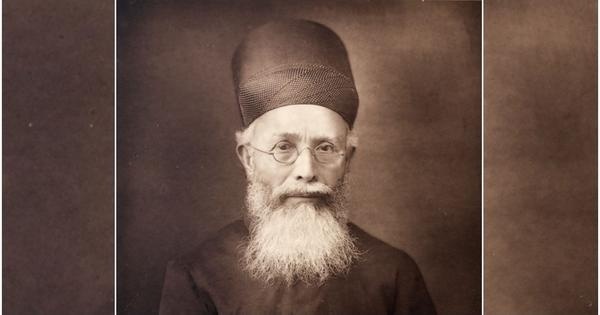
Today is a particularly appropriate day to recall early nationalist ideas. Two-hundred years ago, on September 4, 1825, Dadabhai Naoroji was born in the city then known as Bombay. Perhaps the most consequential nationalist leader before Mahatma Gandhi, Naoroji shepherded the Indian National Congress through its early decades, fought for Indian rights in the British Parliament, and forged ties with numerous other emancipatory movements around the world.
His life and lifework were shaped by one of the most ambitious programmes of early nationalism: popular education. On his 200th birth anniversary, it is worthwhile to recall how nineteenth-century Indian leaders championed quality, state-supported education – and to ask why post-Independence India has been so delinquent in delivering this essential public good.
Naoroji was born into relative poverty. His parents had migrated from Dharampur in Gujarat, perhaps because of a famine stalking the region. Sometime in the early 1830s, young Dadabhai’s mother, illiterate and now widowed, took the critical decision to enroll her son in an innovative experiment in free public education administered by the Bombay Native Education Society. The Society, a quasi-governmental body jointly operated by Britons and Indians, placed Naoroji in an English-medium school.
Although dressed in ragged clothing, he quickly distinguished himself amongst his more affluent peers. He was eventually selected to attend Elphinstone College, the premier higher educational institution in western India, on a scholarship which covered school fees – the princely sum of Rs 16.
This experience of free education left a profound mark on Naoroji. In the short term, in the 1840s and 1850s, Naoroji threw himself into activities to further extend education in western India. Along with a band of plucky Parsis and Maharashtrians, he opened a network of girls’ schools in Bombay in 1849 – fully taught and financed by Indians rather than the government.
Despite virulent opposition from orthodox fathers, these schools helped kickstart a wider movement for female education from Ahmedabad through Ahmednagar. He helped establish publications, such as Dnyan Prasarak and Rast Goftar, to spread knowledge and reformist ideas amongst those who had no access to schools. Many of the editions were distributed for free. Rast Goftar might have briefly become the highest-circulating newspaper in India.
In the long term, free education shaped Naoroji’s lifework. Just before he turned 79, Naoroji penned a brief reflective essay where he described his nationalist career as a sort of debt repayment for his public schooling.
“I realised that I had been educated at the expense of the poor, to whom I myself belong,” he wrote. “The thought developed itself in my mind that as my education and all the benefits arising therefrom came from the people, I must return to them the best I had in me. I must devote myself to the service of the people.”
A significant part of early Indian nationalism, therefore, was the indirect product of a Bombay classroom that was need-blind.
While developing the institutions and ideas of early nationalism, Naoroji never lost sight of how mass education fit into India’s development ambitions. In 1882, he submitted a statement to the British Indian government which excoriated its woeful underspending on schools. In particular, he pointed out just how few girls were enrolled in primary institutions. Female education, for Naoroji, was an essential component of India’s social transformation: with more girls in school, Indians would “understand that woman had as much right to exercise and enjoy all the rights, privileges, and duties of this world as man.”
Education, therefore, was much more than a tool for augmenting Indian human capital: it was a way to inculcate a more democratic culture, one which included women’s rights and gender equality.
Naoroji was hardly alone in championing mass education. Indeed, some leaders were making sweeping demands from the 1840s onward, when Naoroji was still a college student. In 1848, Shahamat Ali, a resident of Delhi and an advocate of Indian political reform, traveled to Great Britain. Here, he was evidently influenced by Chartism, the working-class movement which campaigned for ideas like universal male suffrage. Ali endorsed the democratising spirit of Chartism, recognising that popular education was an essential element.
In a pamphlet issued while he was in Britain, he criticised the East India Company for underfunding Indian education and only educating a select few. Instead, he held up “the great object of educating a population of a hundred millions”. As an example, Ali turned to the educational reforms of Muhammad Ali in Egypt, demonstrating how Indians looked beyond Europe for reformist inspiration.
Not long after Shahamat Ali returned to India, citizens in Calcutta, Bombay, and Madras formed the first modern political associations in the country. These associations submitted petitions to the British Parliament in 1853, hoping to liberalise colonial rule. Each petition called for the extension of education in India.
But reformers in Bombay went the farthest. Their petition (influenced by Bhau Daji, Navrozji Fardunji, and, quite possibly, Naoroji) declared that mass education should be the government’s first priority. “All the reforms and all the improvements sought for,” the petitioners stated, “are but secondary in importance compared with the necessity of introducing a complete system of education for the masses of the people.”
This demand was quite ahead of its time: it was only in 1870 that compulsory public education began in fits and starts in Great Britain, and Indians therefore had to look to public educational experiments in other countries, like the United States and Prussia.
As the Indian nationalist movement gathered pace in the late nineteenth century, these early rumblings for mass education were woven into its platform. It is no coincidence that some of the most towering leaders of early nationalism – including Naoroji, Ranade, and Gokhale, were also teachers and professors.
While they protested against state underfunding of schools, they helped establish educational institutions, looking to charitable Indians for financial assistance. They lent support to public educational experiments in princely states, such as in Travancore from the 1860s and in Baroda starting in the 1890s.
Nationalists also looked beyond India for models: they studied the development of technical and commercial education in Europe and the remarkable educational advancements of Meiji-era Japan.
By the turn of the twentieth century, one particular nationalist leader, Gokhale, was thinking of how to force the colonial government to concede popular education. A professor at Fergusson College in Poona, Gokhale declared that primary education meant “the future salvation of our country”. In 1911, he introduced a bill into the Imperial Legislative Council of India for free and compulsory primary schooling.
Gokhale’s bill drew upon various precedents: Irish education, primary education in England, and the experiences of Japan and the Philippines (then an American colony). It also recognised India’s multilingualism, allowing for instruction in any Indian language, and devolved responsibility to local governments.
The colonial authorities, while recognising surging public support for mass education, balked at its implications. George Clarke, the governor of Bombay, believed that Gokhale’s bill was designed “to make our Rule impossible”, while others predicted popular uprisings from the newly-educated poor.
They could turn to the bill’s sponsor to justify some of their worries: Gokhale had argued that popular education would have a democratising effect, promoting “individual autonomy, empowerment and freedom of choice so that criticising the government and protesting against unjust measures would become a duty”. With little surprise, Gokhale’s bill was defeated in 1912.
It is a rather straightforward task to criticise colonial authorities for stymieing educational initiatives such as Gokhale’s bill. It is a far more difficult and painful undertaking to acknowledge the yawning gap between early nationalist visions for mass education and independent India’s woeful track record in educating its citizens. What happened?
The Indian Constitution set a target for 1960 for providing compulsory primary education for all children up to the age of 14. This goal, however, was enshrined in the Directive Principles, and hence non-enforceable. Curiously, mass education fell out of favour in various five-year plans, while governments chronically underspent on primary and secondary schools.
As economists like Amartya Sen and Jean Drèze have pointed out, independent India followed a dramatically different trajectory from many of its Asian neighbors, which wisely invested in public goods like education.
By 1975, JP Naik, a prolific author of works on Indian education, declared that “the goal of universal primary education remains as elusive as before”. Myron Weiner, an American political scientist, charged in 1990 that the Indian government was simply “unwilling” to educate the masses. It was beholden to casteist and classist notions and designed its educational system – with a top-heavy focus on higher education – to reinforce rather than break down social divisions.
The result was that India became “the largest single producer of the world’s illiterates”.
To an extent, we can see some of this caste and class prejudice in the educational schemes of early nationalists. It is astonishing that Naoroji and his fellow Bombay reformers seem to have had no contact with Jotirao and Savitribai Phule, despite their shared interests in the promotion of learning as well as their geographic proximity.
In the early 1890s, several nationalist organs critiqued a non-Brahmin manifesto for free and compulsory education. Some early political thinkers, like Harish Chandra Mukherjee in Bengal, argued for a focus on higher education rather than mass education, clinging to the slender hope that knowledge would somehow trickle down to the “lower classes”.
Despite these shortcomings, early nationalists would likely be shocked to see the state of public primary and secondary education in India after 1947. They would be shrewd enough to identify educational policies as a key factor behind India’s hobbled economic growth in the first decades following Independence. And they would no doubt recognise that, despite the commendable strides India has taken towards universal education in the past few decades, the abysmal quality of government schools further hampers India’s productivity and economic growth today.
We thus confront a rather ironic turn of events. Figures like Naoroji and Gokhale convincingly argued for the three-fold benefits of quality public education at the primary and secondary levels: the creation of a skilled Indian population, the generation of jobs, and, consequently, increased national prosperity.
This view enjoyed wide popularity amongst the political elite of the time. Independent India has consistently underinvested in quality public education at the primary and secondary levels, which, as the economist Ashoka Mody notes, has produced a three-fold result: a vast portion of the population lacking essential skills, an endemic jobs crisis, and, therefore, curtailed national prosperity. This fact continues to elude much of the elite today.
Perhaps the best way to commemorate Dadabhai Naoroji on his two-hundredth birth anniversary is to continue asking uncomfortable questions about Indian educational policy – and how an ambitious vision from the nineteenth century still remains largely unrealised.
Free public education allowed for a poor child from Bombay to become one of the most significant global political actors in the Victorian era. How many millions of poor children are there in India today who, like young Dadabhai, await the necessary means to realize their potential?
[Dinyar Patel is an associate professor of history at the SP Jain Institute of Management and Research in Mumbai. His award-winning biography of Dadabhai Naoroji, Naoroji: Pioneer of Indian Nationalism, was published by Harvard University Press in May 2020. Courtesy: Scroll.in, an Indian digital news publication, whose English edition is edited by Naresh Fernandes.]