Agriculture in the Age of Inequality
The corporate hijack of agriculture, achieved by predatory commercialisation of the countryside, is India’s actual agrarian crisis.
India’s oldest Socialist Weekly!
Editor: Dr. G.G. Parikh | Associate Editor: Neeraj Jain | Managing Editor: Guddi
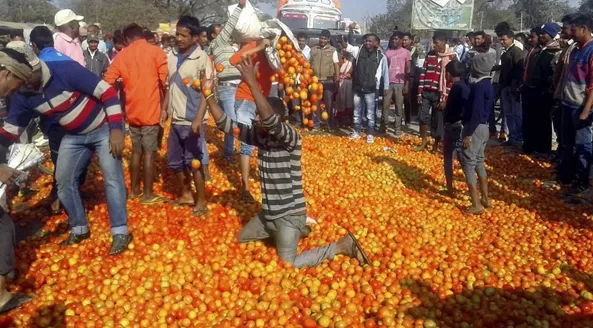
The corporate hijack of agriculture, achieved by predatory commercialisation of the countryside, is India’s actual agrarian crisis.

“In DU’s Daulat Ram College, Students Witness Saffronisation of a ‘Safe Place’”; and: “A Controversial ‘Book Launch’ and Delhi University’s Descent Into Party Propaganda”: It is certainly not the job of our our academic leaders to open the gates of universities to those in power and join them in trampling the garden of knowledge.

Farmers from Punjab have protested at the Khanauri and Shambhu borders since February 2024, demanding legally guaranteed minimum support prices for crops. Agitation has intensified with Jagjit Singh Dallewal’s fast-unto-death and three farmer suicides, as the Centre maintains its wait-and-watch policy.
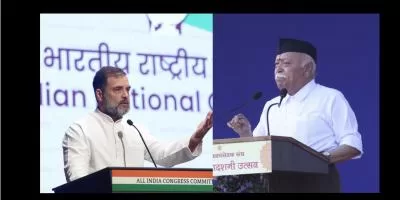
What the RSS chief said a few days ago is that India indeed got political independence in 1947 and real freedom came with the consecration ceremony of the Ram temple in Ayodhya.

Gandhi’s disapproval of ‘Hindu water’ and ‘Muslim water’ and superstitions and hypocrisy of sadhus on the occasion Kumbh Mela in 1915 offers lessons in the context of the 2025 Kumbh Mela. Also: Will the Ganga be able to heal or nourish anyone for very long after the Kumbh Mela?

The narrative that the transparency activists and applicants are troublemakers must be challenged.

Anti-colonial third world nationalism is entirely different from the nationalism that developed in Europe in the 17th century. It is best reflected in the difference between the nationalism of a Hitler, which is descended from European nationalism, and that of a Ho Chi Minh, which exemplifies anti-colonial nationalism.

More than 24,000 ‘instructors’—teachers on contract—are paid Rs 7,000 per month to teach classes one to eight in Uttar Pradesh, making up 4% of government school teachers. Many now moonlight as salesmen, tailors, rickshaw drivers and workers in a state with India’s fifth lowest literacy rate.
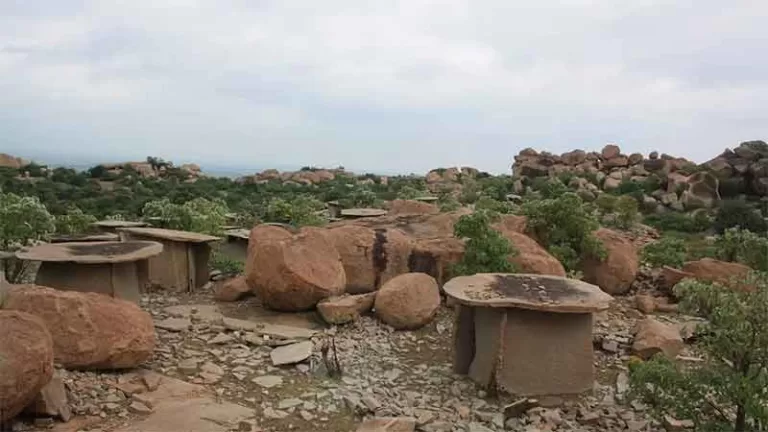
People around Arshinakeri (Koppal Dt, Karnataka) are concerned about government’s proposal to construct a nuclear power plant (NPP) in their vicinity. They fear for their health and safety due to nuclear contamination from the NPP proposed there.
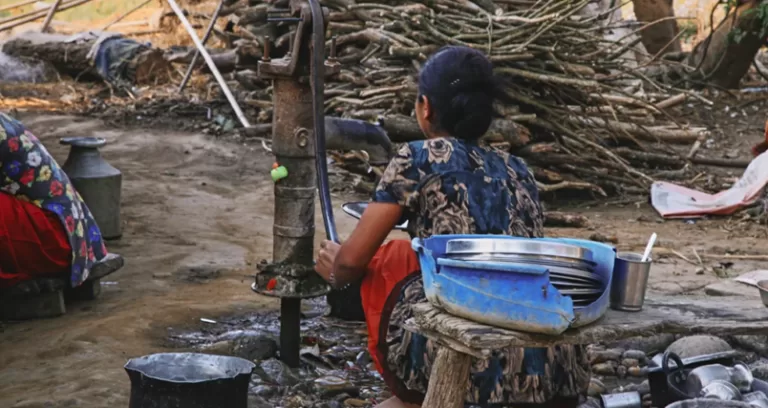
The Central Ground Water Board’s latest report on groundwater quality in the country reveals widespread contamination, with nearly 20% of samples exceeding permissible pollutant limits. Major pollutants include nitrates, fluoride, arsenic and uranium.
Help us increase our readership.
If you are enjoying reading Janata Weekly,
DO FORWARD THE WEEKLY MAIL to your mailing list and
invite people to subscribe for FREE!