Democracy Damned by Doctored Data
When growth numbers flatter power, hide job scarcity, and mute rising costs, bad data stops disciplining policy and democracy pays a hefty price, writes the famed economist professor.
India’s oldest Socialist Weekly!
Editor: Dr. G.G. Parikh | Associate Editor: Neeraj Jain | Managing Editor: Guddi
When growth numbers flatter power, hide job scarcity, and mute rising costs, bad data stops disciplining policy and democracy pays a hefty price, writes the famed economist professor.
‘The Hidden Cost of India’s Economic Boom: Inequality at Historic High, as Wealth and Income Growth Leave Out Millions’; ‘G20 Report Says Top 1% Indians Grew Richer by 62% in 2000–23’; ‘World Bank Miracle: How to Show Rising Poverty as Declining!’; ‘India’s Wealth Gap Grows and Average Wealth Falls, But Millionaires Surge’.
The Centre’s push for PSB consolidation and foreign investment prioritises bank profitability over financial inclusivity.
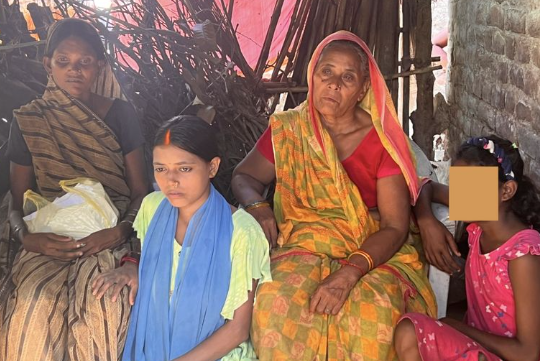
‘Micro Loans are Driving an Already Forsaken Population Further Into Distress’: Despite the fact that the poor today are cash starved and are desperate for loans to make their ends meet, our credit apparatus and banking system seem to have forsaken them. Also: ‘Debts to Death: How Microfinance Companies are Crushing the Poor in Bihar’.
India’s large capitalists and India’s people are both facing problems at present. These problems appear to be direct opposites of each other; but in fact they are two faces of the same phenomenon. The first part of this article described the financial situation of the corporate sector. This part describes the financial situation of the people.
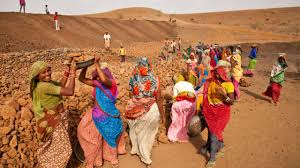
A budget of Rs. 86,000 crore in FY26 is grossly insufficient and clearly shows that livelihood security for rural poor is not a priority for the Modi government.
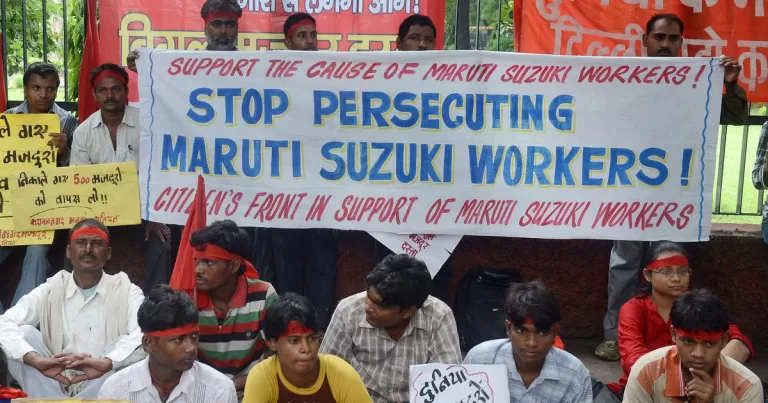
Formed with the backing of employees dismissed in 2012, the Maruti Suzuki Non-permanent Workers Sangh will seek job security and better pay.
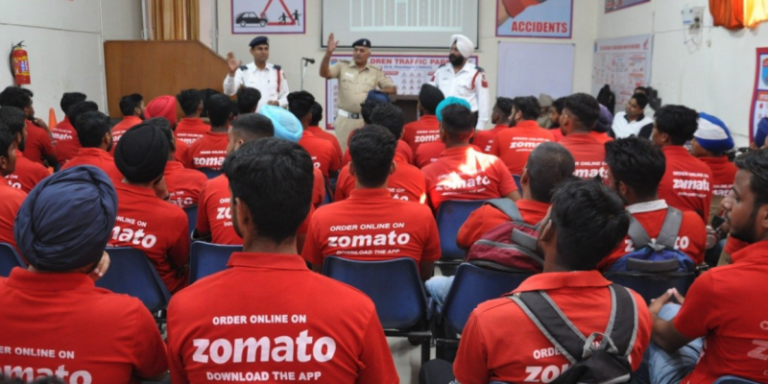
There are only estimates of India’s gig workforce, and this lack of data is one of the reasons why gig workers are largely bereft of social security in a little-regulated gig sector, say experts.
Migrants are often unable to cast their votes due to systemic exclusions and economic constraints. This has made them invisible as a vote-bank and heightened their marginalisation.
In this third part of our review of the economic situation of the country in early 2024, we take a look at India’s poverty levels, and the hunger and malnutrition situation in the country.
Help us increase our readership.
If you are enjoying reading Janata Weekly,
DO FORWARD THE WEEKLY MAIL to your mailing list and
invite people to subscribe for FREE!