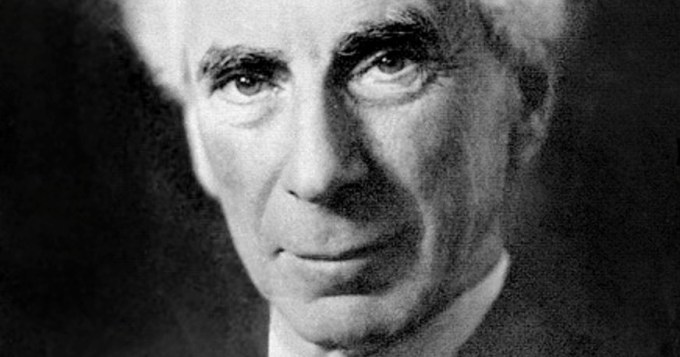
That is what the Nobel-winning philosopher and mathematician Bertrand Russell (May 18, 1872–February 2, 1970) explores in The Conquest of Happiness (public library) — the 1930 classic that gave us his increasingly urgent wisdom on the vital role of boredom in flourishing.
Russell writes:
The world is vast and our own powers are limited. If all our happiness is bound up entirely in our personal circumstances it is difficult not to demand of life more than it has to give. And to demand too much is the surest way of getting even less than is possible. The man* who can forget his worries by means of a genuine interest in, say, the Council of Trent, or the life history of stars, will find that, when he returns from his excursion into the impersonal world, he has acquired a poise and calm which enable him to deal with his worries in the best way, and he will in the meantime have experienced a genuine even if temporary happiness.
In a sentiment he would expand in his final years as he contemplated what makes a fulfilling life, he adds:
The secret of happiness is this: let your interests be as wide as possible, and let your reactions to the things and persons that interest you be as far as possible friendly rather than hostile.
(Maria Popova is a Bulgarian-born, American-based essayist, book author, poet, and writer of literary and arts commentary and cultural criticism. She is the creator of the blog, The Marginalian, that features her writing on books, the arts, philosophy, culture, and other subjects. Courtesy: The Marginalian, Maria Popova’s blog.)